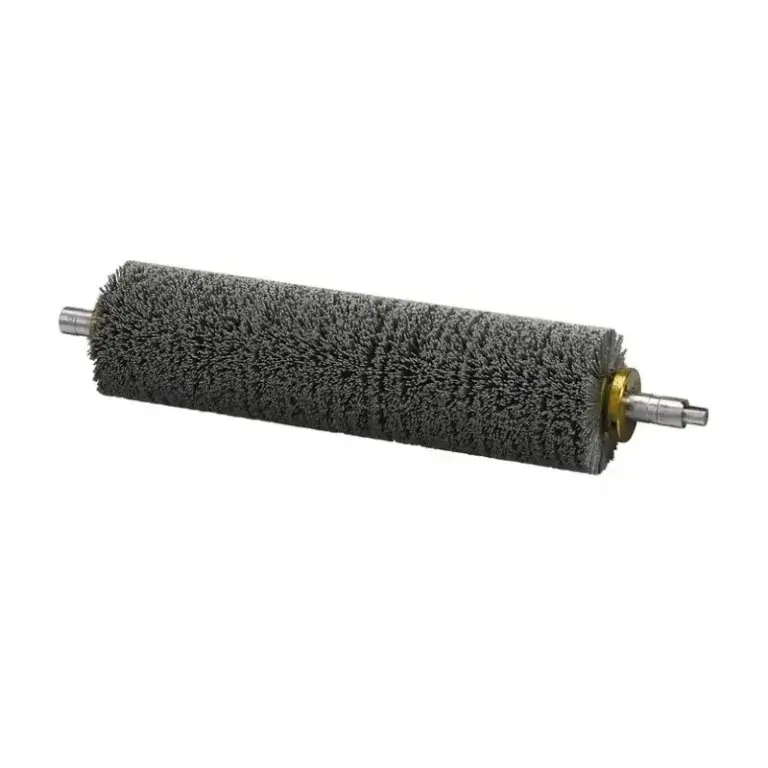
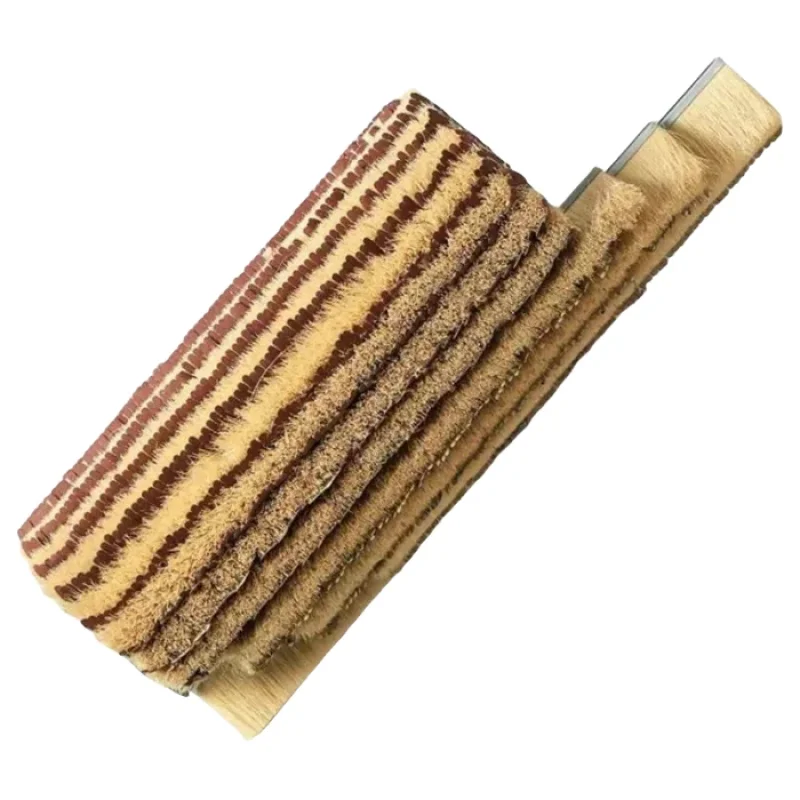
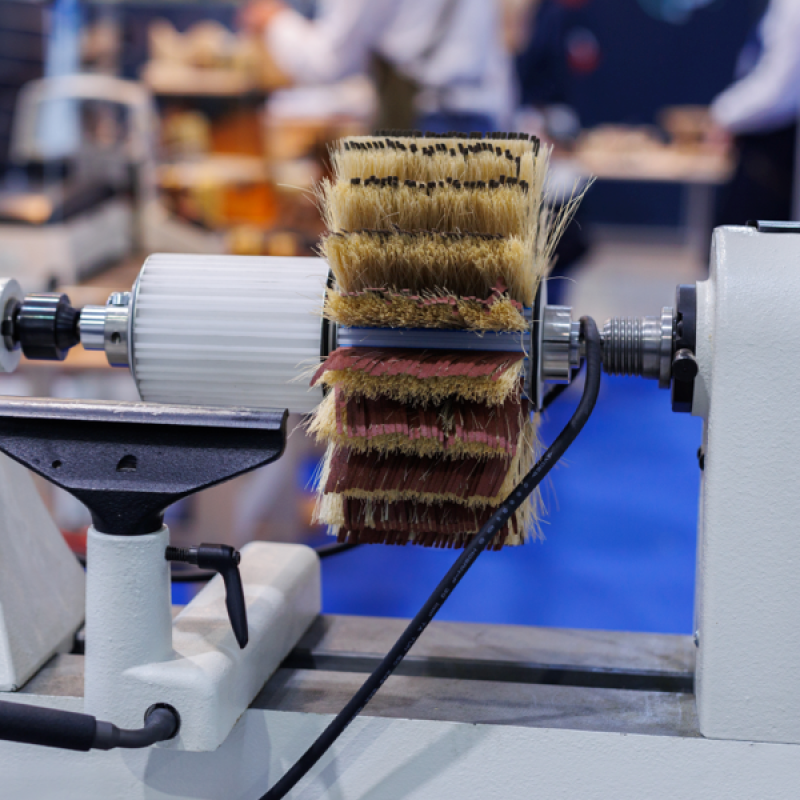
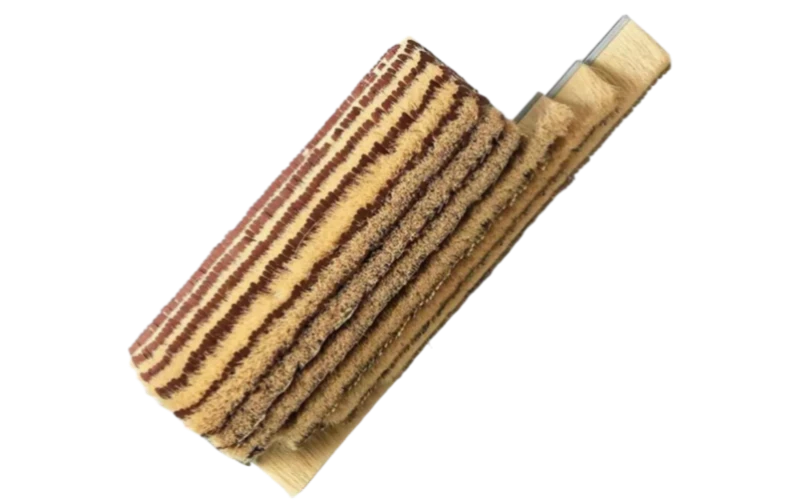
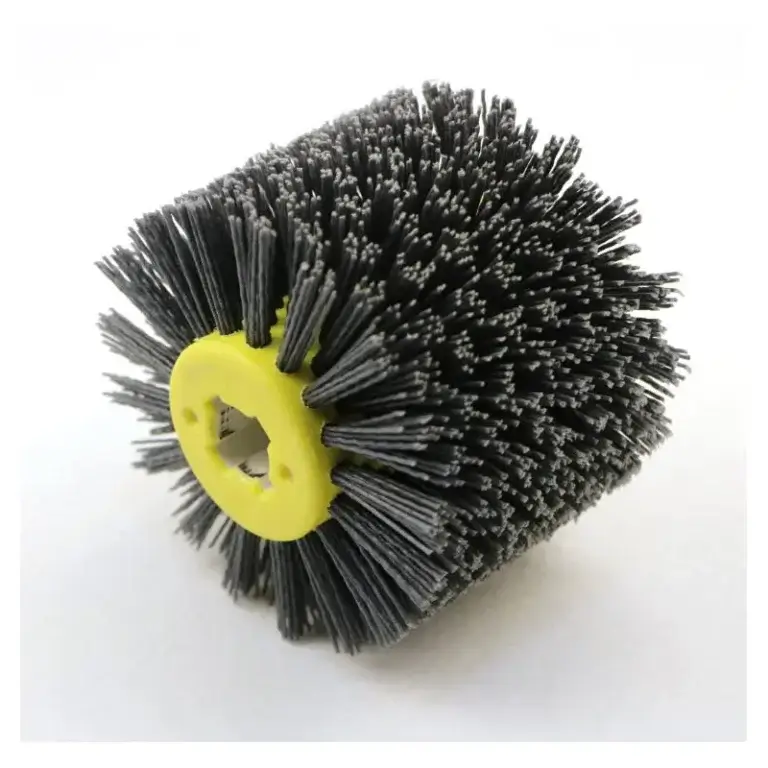
Sandpaper and sisal bristle roller for woodwork

Abrasive Wood Brushes — Sisal Roller Brush for Wood & Metal Finishing

Customizable Size & Density

The Abrasive Wood Brushes combine natural sisal fibers with abrasive cloth strips for controlled sanding, denibbing, edge breaking, and surface blending on wood and selected metals, while following profiles more evenly than rigid sanding heads.
• Natural sisal provides flexible, profile-following support for abrasives
• Controlled sanding across flats, edges, grooves, and contours
• Custom grit and shaft options match production lines

  • Home /
  • Abrasive Wood Brushes — Sisal Roller Brush for Wood & Metal Finishing

Key Features of Abrasive Wood Brushes

icon3

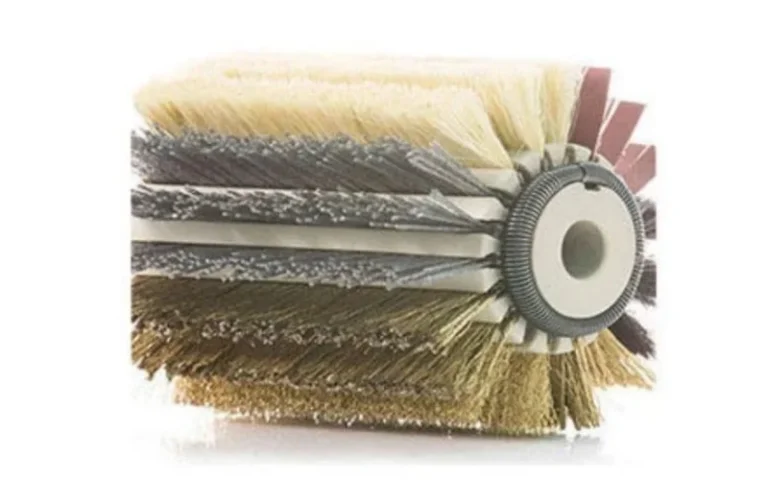
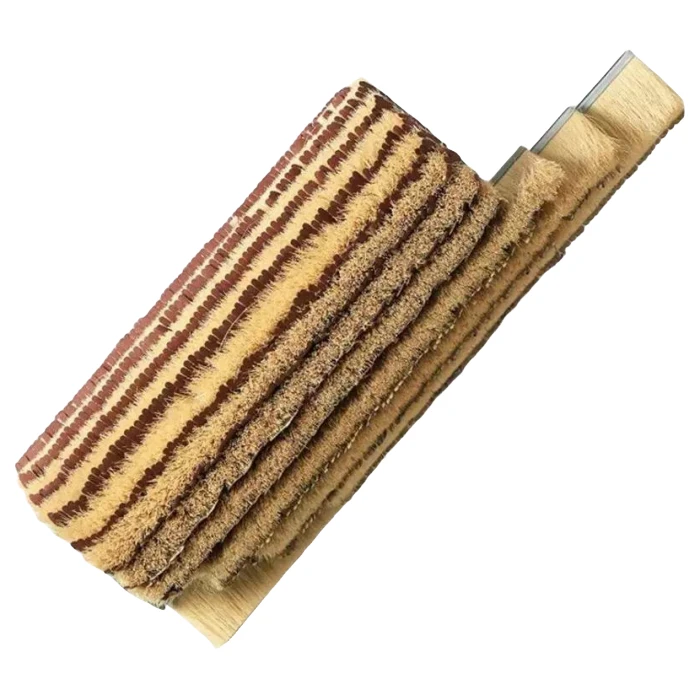
Sisal–Abrasive Construction

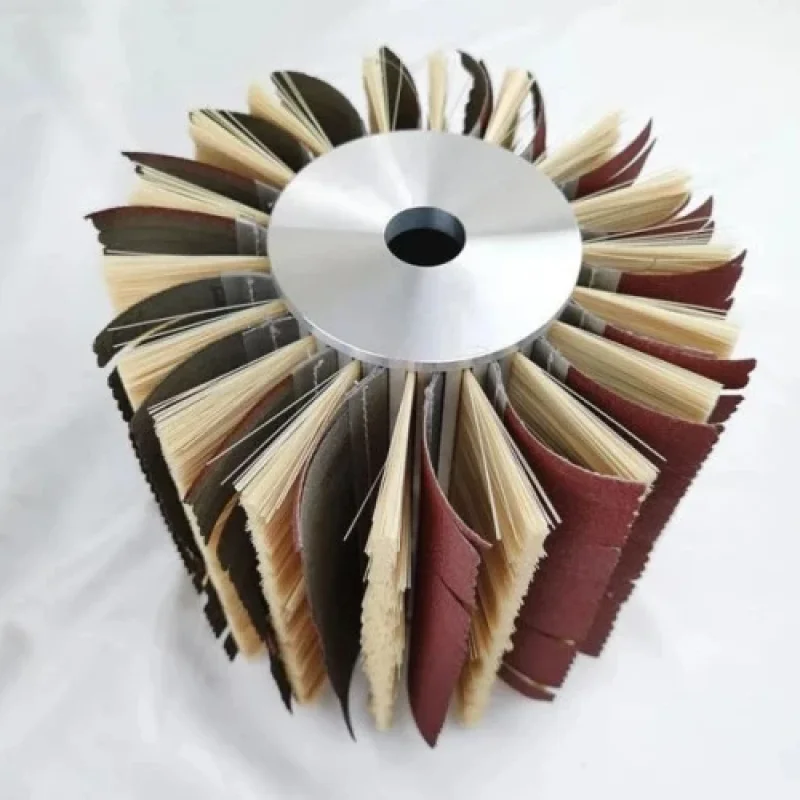
Alternating natural sisal sections support flexible abrasive-cloth strips during rotation. The abrasive provides the cutting action, while the sisal stabilizes contact and helps clear sanding dust for a more uniform finish across repeated production runs.

icon5

Profile-Following Contact

The compliant strip pack reaches routed edges, moldings, recessed panels, and shallow contours that rigid drums may bridge. Controlled deflection smooths raised grain and coatings without flattening decorative profiles or excessively rounding edges.

app-icon4

Controlled Surface Finishing

Specified with the correct abrasive mineral and grit, the roller handles wood denibbing, intercoat sanding, and edge breaking, plus light deburring and surface blending on selected metals. It is not intended for heavy rust, weld slag, or thick scale.

icon6

Production-Line Compatibility

Each Sisal Roller Brush can be matched to the machine through its working width, outside diameter, core, strip density, trim length, and shaft interface. Replaceable strip designs are available to reduce changeover cost while retaining the balanced roller body.

Material & Technical Specifications

PROPERTYSISALABRASIVE FILAMENTSANDPAPER
Wear ResistanceModerateHighModerate to High
Sanding AggressivenessGentleControlledStrong, Grit-Dependent
FlexibilityExcellentVery HighGood in Strip Form
Contour AdaptabilityExcellentExcellentGood with Narrow Strips
Recommended UseAbrasive Support & Fine PolishingDenibbing & Profile FinishingStock Removal & Surface Leveling

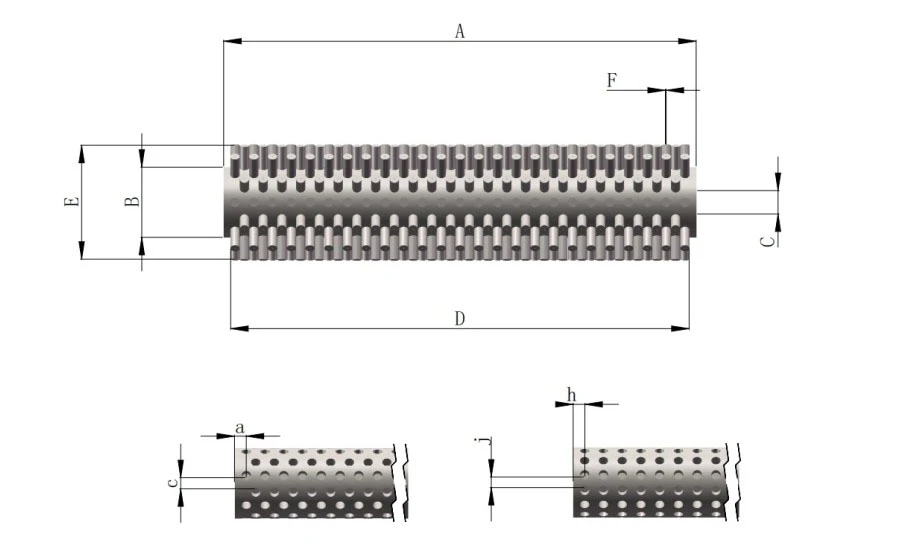
Customizable Specifications

A=overall brush length

B=core diameter

C=core inner diameter

D=brush face length

C=core inner diameter

C=core inner diameter

custom tufted cylinder brush Specifications
Sandpaper and sisal bristle roller for woodwork

Customized Bristle Profile & Pattern

Choose straight, spiral, staggered, or segmented sisal-and-abrasive layouts to match flat panels, moldings, grooves, and edge-focused finishing paths.
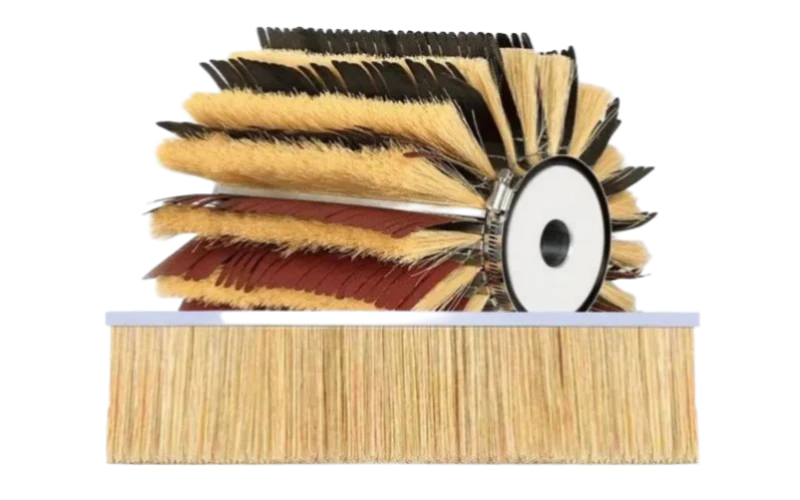
Sanding machine brush

Sisal & Abrasive Selection

Select natural sisal grade and trim length with aluminum-oxide or silicon-carbide abrasive strips; strip width, slotting, backing, and grit are customizable.

Industrial Brush for Sanding

Bristle Density & Trim Pattern

Adjust sisal-to-abrasive ratio, strip count, trim height, and spacing to balance cut rate, profile conformity, dust release, and target surface quality.
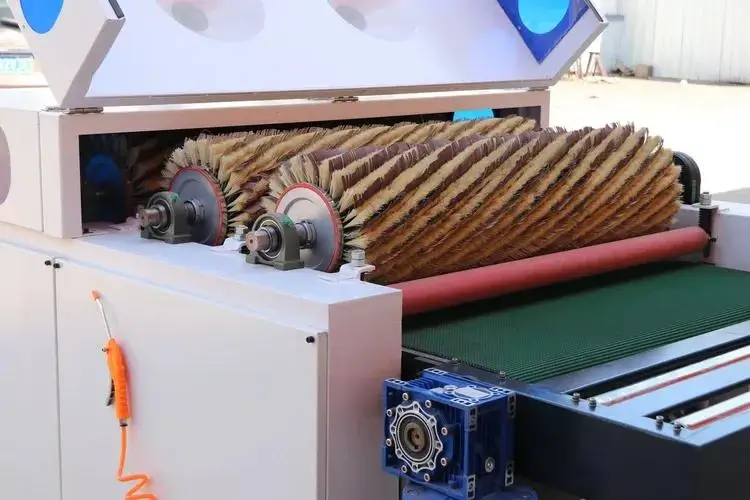
sisal brush for wood

Mounting & Shaft Configuration

Customize working length, OD, core bore, keyed hub, shaft ends, bearings, and drive interface from machine drawings for secure, balanced installation.
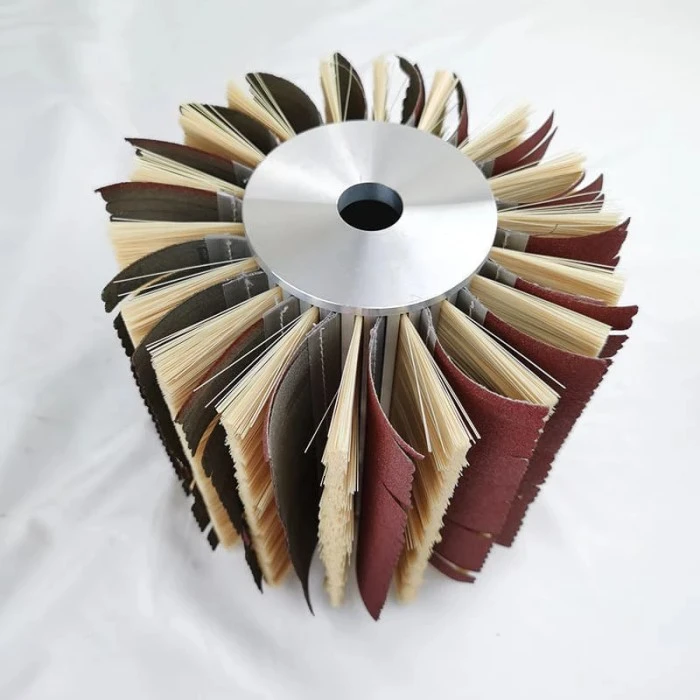
The Right Brush for Your Machine

Abrasive Wood Brushes for carved-door, moulding-profile, and primer/intercoat sanding lines.

CNC Carved Door Sanding Machine

Flexible sisal-supported abrasive strips enter recessed carvings and routed edges, removing machining fuzz without flattening raised panels or decorative details.
Learn More

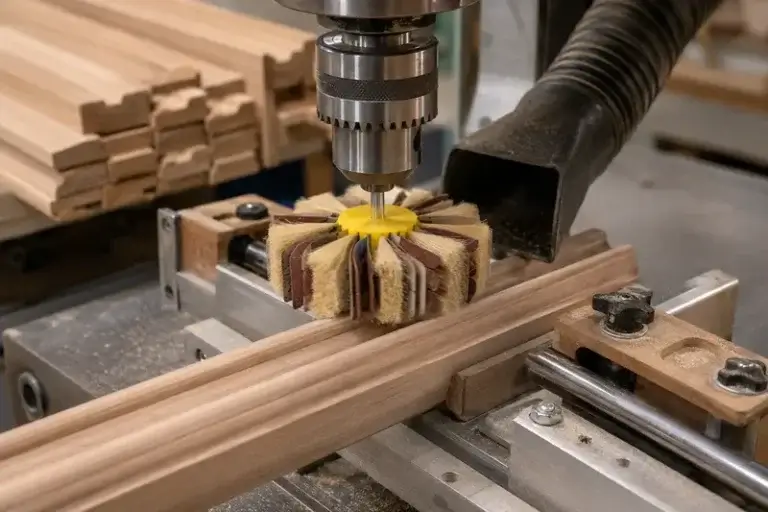
Moulding Profile Sanding Machine

The roller follows beads, coves, grooves, and narrow linear profiles, smoothing cutter marks while preserving crisp moulded geometry at production speed.
Learn More

Primer & Intercoat Sanding Line

Fine-grit abrasive strips denib cured primer and level coating imperfections, while resilient sisal maintains even pressure before the next finish coat.
Learn More

Manufacturing & Quality Control

Production Lines
0 +
Countries Served
0 +
Skilled Employees
0 +
Workshop Area
0
Year Founded
0

Why Partner With Us

When you partner with us, you gain more than a supplier — you gain a complete team behind your brush.

Trusted Sourcing Advisor

Constant support from material selection to final delivery, backed by professional technical guidance and strict quality oversight.

Professional Brush Designer

Comprehensive assistance from initial sketching to prototype validation, driven by customized engineering and advanced structural design.

Full-Scale Brush Manufacturer

Seamless execution from high-capacity manufacturing to secure shipment, guaranteed by rigorous testing and robust production management.

As Your Custom Brush Manufacturer

We'd Like to Work With You

At Fortex Brushes, trust is defined by execution — proven by the quality of our products and the integrity of our partnerships.


More than a manufacturer, we provide advanced, sustainable solutions designed to optimize your facility for superior safety, cleanliness, and operational productivity.”

Contact Us

FAQ

Q1:What information should I provide for an OEM quotation?

Send the machine model, working width, outside diameter, core or shaft drawing, operating speed, workpiece material, abrasive grit, and target finish.

Q2:How do we choose the correct grit and strip density?

Selection depends on material, coating condition, removal rate, profile depth, and finish target; sample trials are recommended before volume production.

Q3:Can the same roller process both wood and metal?

Technically yes, but use dedicated brush sets to prevent cross-contamination. Confirm abrasive type, pressure, and speed through trials on each material.

Q4:What RPM can the customized roller safely run?

The allowable speed depends on diameter, core, strip construction, and shaft design; request a configuration-specific maximum RPM before commissioning the brush.

How to Choose Cylinder Polishing Brush

Choosing the right cylinder polishing brush depends on the workpiece material, desired finish quality, and production conditions. This guide covers the key factors every buyer should evaluate.

Read More
Scroll to Top

GET A QUOTE

Fill out the form below,  and we will be in touch shortly.

GET A QUOTE

Fill out the form below,  and we will be in touch shortly.

Custom Solution

Drag & Drop Files, Choose Files to Upload