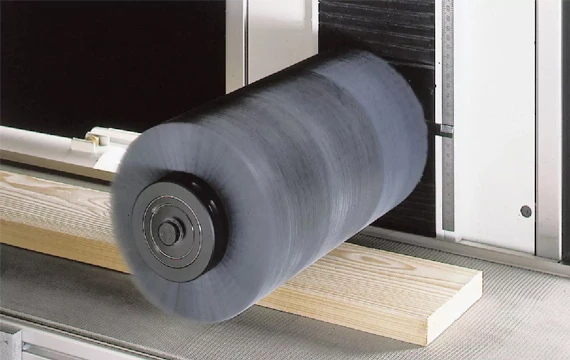
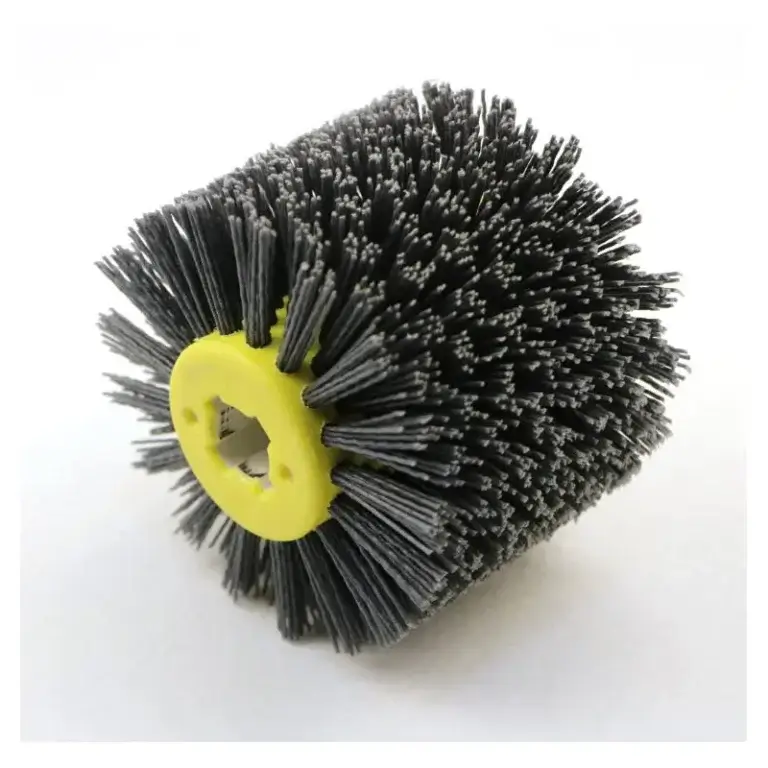
Furniture refinishers face one decision every time a power buffer spins up: what to put on the spindle. Pads and wool wheels are the default choices, yet a bristle brush solves a narrow set of problems that flat media cannot reach. Whether a furniture polishing brush belongs on a power buffer turns on mounting, speed, and finish compatibility.
Yes, you can use a furniture polishing brush with a power buffer, but only when three conditions hold: the brush is rated at or above the tool’s maximum speed, its bore or shank matches the spindle or chuck, and its material suits the finish. A bristle brush is not a drop-in replacement for a foam pad but a complementary head for carved, turned, and profiled surfaces, and for waxing recesses a cloth cannot reach.
Below: where a brush beats a pad, how to match it to a machine, and the limits that protect the finish.
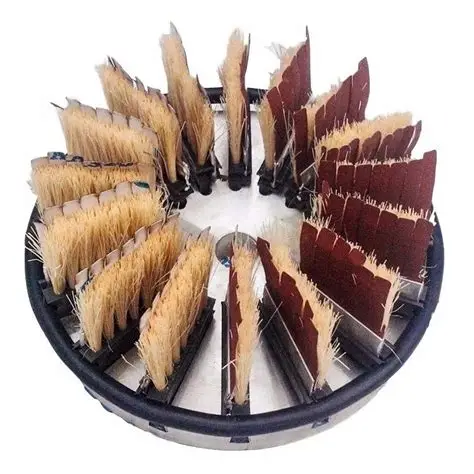
What a Furniture Polishing Brush Does That a Buffing Pad Cannot
A buffing pad contacts only the high points of a surface, while a bristle brush bends into grooves, carvings, and profiles, so the two heads are not interchangeable.
A pad acts like a compliant plane, pressing evenly across whatever it can reach, which suits flat panels and fails inside a flute or rosette. A brush is a field of filaments that splay outward at speed, softening pressure so the tips follow a contour.
Bristles Versus Pads
| Head type | Best surface | Typical role |
| Foam or microfiber pad | Tabletops, flat panels | Leveling, high-gloss polish |
| Wool bonnet | Large flat panels | Wax removal at high sheen |
| Bristle brush | Carvings, turned legs, moldings | Waxing, cleaning, abrasive prep |
Where Bristles Excel on Furniture
- Turned legs and lathe profiles
- Carved panels with undercut edges
- Chair frames and moldings
Matching the Brush to Your Power Buffer or Polisher
The brush must fit the tool and be rated for its speed, or the head will run out of balance, shed filaments, or come apart.
Most failures begin at the mount: as the reference on brushes explains, performance depends on how filaments are anchored to a core, which must seat squarely on the machine.
Mounting Interfaces and Bore Matching
| Machine | Interface | Notes |
| Bench buffer or grinder | Tapered spindle | Wheel brushes: match bore to taper |
| Drill or rotary tool | Chuck or collet | Cup and small radial brushes |
| Orbital polisher | Hook-and-loop plate | Rated for the tool’s orbits per minute |
| CNC or automated line | Keyed spindle | Cylinder and coil brushes, balanced |
Flanges and spacers hold the head true, and run-out after mounting means the assembly is wrong. The safety standard for power-driven brushing tools treats a mismatched accessory as unacceptable.
Speed Ratings and Surface Speed
Surface speed matters more than revolutions per minute: SFPM = (pi x D x RPM) / 12, with D in inches.
| Brush diameter | At 1800 RPM | At 3600 RPM |
| 6 in | 2827 SFPM | 5655 SFPM |
| 8 in | 3770 SFPM | 7540 SFPM |
| 10 in | 4712 SFPM | 9425 SFPM |
Wood finishing sits below these bands, and above its range a brush burnishes or melts the film. Hog bristle softens near 80 C, nylon near 120 C, and tampico near 140 C.
Choosing the Right Bristle Material for Power Buffing
Natural bristles apply and buff wax, while synthetic and abrasive-filled bristles clean, strip, and cut. Confusing the two roles is a common cause of a spoiled finish.
Material choice follows the job, not the machine: a soft wax brush merely glazes over a milling mark.
Natural Bristles for Wax and Final Sheen
Horsehair, hog bristle, and tampico are porous, so they hold paste wax and release it evenly, reaching into recesses without marking the surface. Then, use a lint-free cloth to wipe along the grain.
Synthetic and Abrasive Bristles for Prep and Cutting
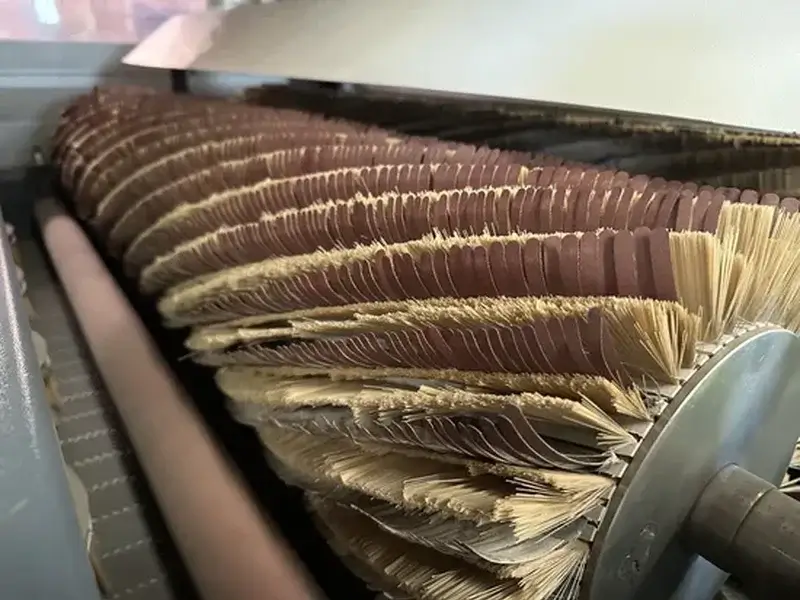
Nylon and abrasive-filled nylon handle stripping, grain opening, and machining marks, while sisal with abrasive strips finishes evenly without deforming profiles.
| Stage | Grit range | Purpose |
| Coarse | P80 to P120 | Stock removal, milling marks |
| Medium | P180 to P320 | Leveling, refinement |
| Fine | P400 to P600 | Smoothing before coating |
Hardwoods tolerate a coarser start, while softwoods need finer grits and softer filaments.
Operating the Brush Correctly on a Power Buffer
Correct Speed, Pressure, and Movement
Run the head at the low end of its rated range, keep the pressure light enough that the bristles bend only slightly, and keep it moving, because heat damages finishes.
Test on a scrap first, then work in overlapping passes. If bristles flatten against the surface, the head is overloaded, and friction is going into the finish rather than the wood.
Preventing Burn Marks and Swirl Marks
| Problem | Likely cause | Correction |
| Burn or milky haze | Excess pressure, high speed, dwelling | Reduce speed, wet sand, re-buff |
| Swirl marks | Contaminated brush, skipped grits | Rake clean, follow the sequence |
| Uneven sheen | Incomplete prep, uneven wax | Sand through all grits, thin coats |
Wear eye, hearing, and dust protection, clamp the workpiece, and stop if the brush snags.
When a Brush Is the Wrong Choice
For large flat panels chasing a uniform gloss, a foam pad works better with less risk, and delicate veneers, thin finishes, and fragile inlays should stay in hand.
Large Flat Panels and High-Gloss Targets
A brush leaves a faint directional pattern that must be evened out with a cloth, which is slow across a full tabletop. Pads maintain constant contact and are suited for leveling and final gloss.
Delicate Antiques and Thin Finishes
Thin films, veneers, and worn finishes burn through quickly under a powered head. A natural-bristle hand brush and a cloth give the control they need.
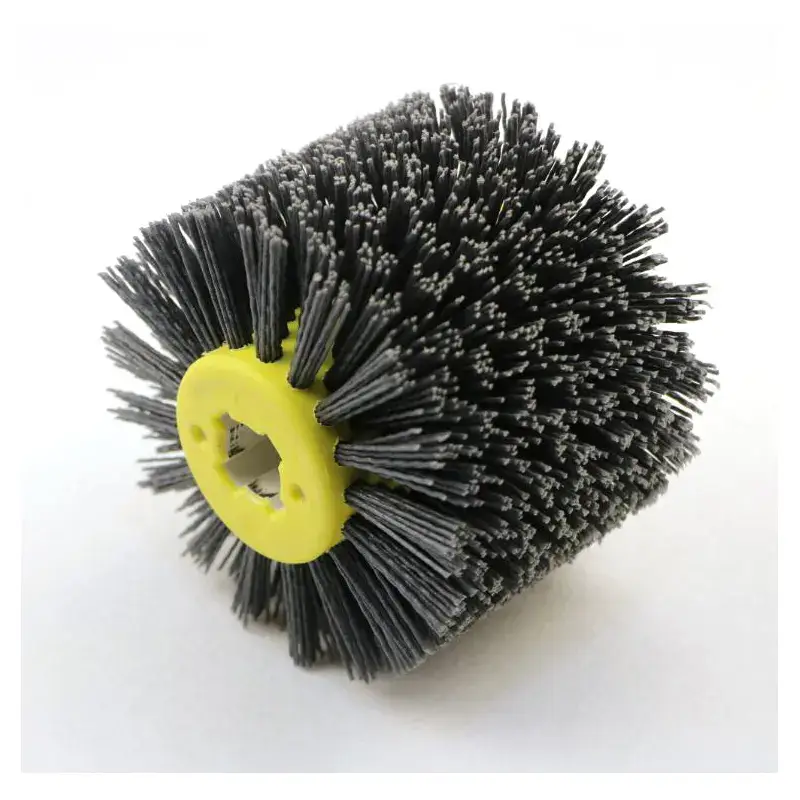
Buying Checklist and Maintenance for a Power-Tool Polishing Brush
Specify the brush in order: interface, rated speed, diameter and bristle length, material, and density. Maintain it after each session.
Specification Checklist
| Specification | Why it matters | Common range |
| Bore or shank | Matches the spindle or chuck | 8 mm, 1/4 in, M14 |
| Maximum speed | At or above tool speed | Stamped on the brush |
| Bristle length | Longer is softer, more conforming | 10 to 50 mm |
| Material | Sets aggressiveness and heat limit | Natural, nylon, abrasive nylon |
Cleaning, Storage, and Replacement
Wash synthetic bristles with mild soap after water-based work, and use mineral spirits for wax residues, since harsh solvents degrade natural fibres. The American Brush Manufacturers Association publishes further selection and care guidance. Dry the brush fully, store it flat, and replace it when it sheds filaments or loses cut.
FAQ
Q1: Can any furniture polishing brush be used on a power buffer?
No. The bore or shank must match the spindle, and the brush’s rated maximum speed must be at least the tool’s top speed. An under-rated brush that fits is more dangerous than one that does not.
Q2: Is a bristle brush better than a buffing pad for waxing furniture?
They serve different surfaces. A brush wins on carvings and recesses, where its filaments reach what a pad cannot, while a pad wins on flat panels because it holds even contact and a uniform gloss.
Q3: How often should a power-tool polishing brush be replaced?
Replacement is condition-based, not time-based. Retire it when the bristles splay permanently, shed, or no longer cut predictably, and replace any brush that has been dropped.