Wire rope is one of the few load-bearing components in industrial equipment that is expected to fail slowly, predictably, and quietly. In ports, mines, construction sites, and elevator shafts, maintenance teams routinely replace rope on a calendar schedule rather than on condition, because condition is hard to read and the consequences of guessing wrong are severe. The recurring frustration is that a rope can look healthy on the outside while its internal wires have already been corroding and fretting for months. That gap between appearance and reality is exactly where a wire rope cleaning brush earns its place in a maintenance programme.
Yes, a wire rope cleaning brush can meaningfully extend cable service life, but not because the brush itself does anything remarkable. A brush extends service life because it removes the abrasive particles, trapped moisture, and hardened residue that accelerate internal wear, and because it opens the strand valleys so fresh lubricant can actually reach the core where most rope failures begin. On its own, cleaning is a partial measure. Cleaning combined with proper lubrication and inspection is the combination that consistently produces gains of two to four times the service interval compared with neglected rope. A brush that is wrongly sized, or whose bristles are too aggressive for a galvanised or stainless surface, can damage the protective coating and do more harm than good.
This article walks through the failure mechanisms a brush can influence, the evidence behind the longevity claims, why cleaning must precede lubrication, how often to clean in different environments, how to select the right tool, and the techniques that turn a simple cleaning step into genuine lifecycle extension.
What Does a Wire Rope Cleaning Brush Actually Do?
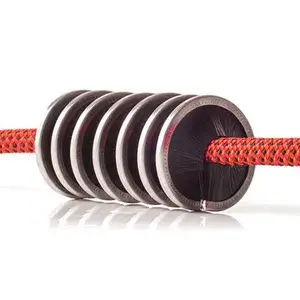
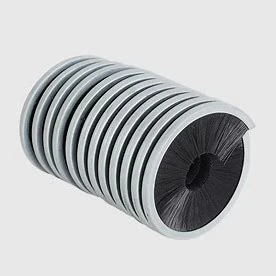
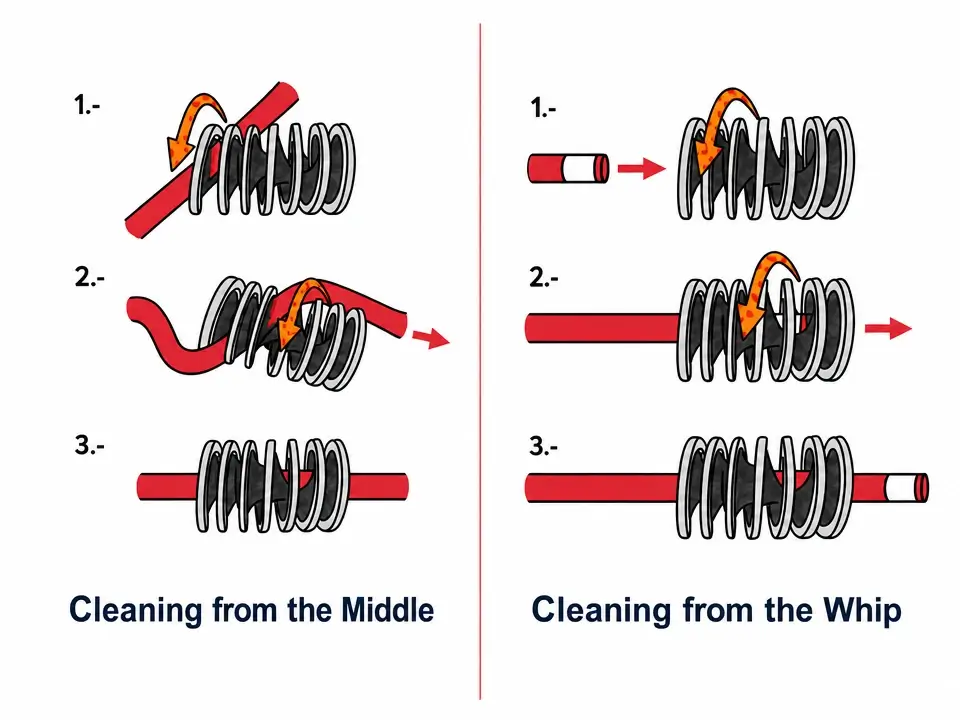
A wire rope cleaning brush is a spiral, inward-coiling brush that wraps around the circumference of a rope and scrubs contaminants out of the strand valleys as the rope is drawn through it or the brush is slid along the rope. Its job is not to polish the rope or restore worn wires, but to remove the abrasive and moisture-retaining material lodged between strands so the rope’s internal lubrication film can be re-established. It influences wear rates and corrosion rates; it cannot reverse fatigue damage that has already occurred.
Wire rope is a mechanical system rather than a solid member. Many individual wires are laid into strands, and those strands are laid around a core. Every time the rope bends over a sheave or spools onto a drum, individual wires slide against each other, and that sliding motion requires a lubricant film between contact surfaces. When the film breaks down, metal-to-metal contact produces fretting, wire diameter loss, and eventually fatigue cracking. Meanwhile, the crevices between strands act as capillaries that draw in water, salt, and fine grit, which then stay trapped because there is no easy path out. A brush is the tool that opens those crevices and lets contamination escape.
The Three Failure Modes a Brush Influences
Understanding which failure modes cleaning can affect prevents unrealistic expectations:
- Internal friction and fatigue. Wires flexing against each other under load generate fretting at contact points. A brush influences this indirectly by making it possible to restore internal lubrication, the factor that reduces friction at those points. It cannot undo cracks already formed.
- Internal corrosion. Moisture that migrates into the rope and becomes trapped creates ideal conditions for hidden rust. Cleaning removes the contamination and clears the path for a penetrating lubricant to displace residual moisture and leave a protective film. This is the failure mode where cleaning delivers the largest measurable return.
- External abrasion and corrosion. Outer strands face salt spray, sheave contact, and surface contaminant build-up. Cleaning plus a coating lubricant addresses this layer directly, and a clean surface is far easier to examine for broken wires.
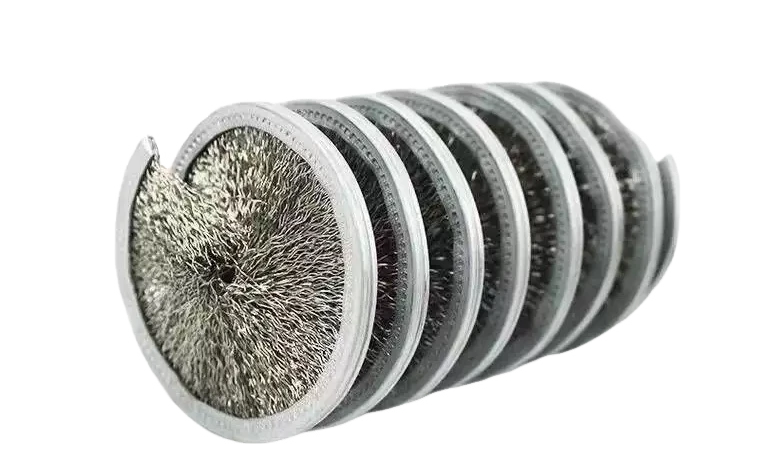
On larger ropes, a round steel wire brush in a coil configuration is commonly used because dense steel filaments reach into the valleys and dislodge hardened, dried lubricant that softer bristles would glide over. The practical implication is that the wire rope cleaner is a maintenance enabler: the value it unlocks depends entirely on what happens after the brush has passed.
Does Cleaning Really Extend Service Life? The Evidence
Cleaning extends service life in measurable, documented ways, but the gains come from the maintenance sequence as a whole rather than from abrasion removal alone. Field data from lubrication studies consistently show that when contaminated rope is cleaned and then properly lubricated to the core, service intervals roughly double or more, and in some operations triple. When cleaning is skipped, the same lubricant is applied over an abrasive paste and the benefit largely disappears.
The most commonly cited figures in this field come from operations that moved from surface-only lubrication to a clean-and-penetrate routine. One widely referenced study reported average rope life rising from 18.5 months to 43 months, an increase of more than 130 per cent. A separate industrial case involving a rail-car shunting installation documented replacement intervals stretching from three years to five years after switching to a clean, lubricate, and protect routine, with an accompanying reduction in unplanned downtime. Lubrication equipment suppliers have published claims of service life improvements as great as several multiples of baseline, though those figures assume the rope is otherwise in good condition and correctly loaded.
The honest framing is that cleaning is a multiplier, not an additive benefit. It multiplies whatever the lubrication programme was already capable of delivering. If the programme was poor, the multiplication factor is large. If the programme was already rigorous, cleaning consolidates the result by removing the one remaining weak point, the contaminated interface between old residue and new lubricant.
A Comparison of Maintenance Approaches
The table below contrasts the three realistic maintenance postures. Figures are indicative ranges drawn from published case data and should be treated as directional rather than guaranteed.
| Maintenance Approach | What Happens Internally | Typical Service Life Outcome | Recurring Cost Profile |
| Neglect: no cleaning, occasional surface grease | Grit and moisture remain trapped; old grease hardens and stops migrating; core runs dry | Baseline, often 40 to 60 per cent of design life | Highest total cost; frequent replacement and unplanned downtime |
| Cleaning only, no relubrication | Abrasives removed, but internal surfaces left dry and unprotected | Modest improvement; internal corrosion continues | Low material cost, but limited and short-lived benefit |
| Clean, dry, then lubricate to the core | Abrasives flushed out, moisture displaced, protective film restored across the full cross-section | Commonly 2 to 4 times the baseline interval | Higher labour per cycle, lowest cost per operating hour |
What Limits the Gains
Three variables determine whether a team sees the upper end of that range or the lower end:
- Corrosion severity of the environment. Marine, offshore, coastal, and mine sites with chloride exposure consume rope faster no matter how well it is maintained. Cleaning frequency must increase, not stay constant.
- Original rope construction. Ropes with independent wire rope core (IWRC) constructions and higher strand counts behave differently from simple six-strand ropes. Compacted ropes have tighter crevices that resist contaminant ingress, which reduces fouling but also makes cleaning less frequently necessary once a protective film is established.
- Irreversible damage already present. Cleaning cannot restore a rope that has lost significant metallic cross-section to pitting or that has developed a complete strand fracture. Once those conditions exist, the correct action is removal from service.
Why the Rope Must Be Cleaned Before It Is Lubricated
Applying fresh lubricant over a contaminated rope seals abrasive particles, metal debris, and moisture against the wire surfaces and turns the lubricant into an abrasive paste. Cleaning first removes that material and opens the strand valleys so the new lubricant can penetrate inward to the core. The sequence is not a matter of preference; it is the difference between protecting the rope and grinding it from the inside.
This principle appears consistently in maintenance literature and manufacturer guidance, and it is one of the few points on which virtually every source agrees. Used rope should be cleaned at frequent intervals to remove accumulated dirt, grit, rust, and foreign matter, and rope should always be thoroughly cleaned before it is lubricated.
What Happens When You Skip Cleaning
The failure of a cleaning-skipped lubrication cycle plays out in three ways:
- The lubricant cannot penetrate. Its intended path runs through the gaps between outer strands and down into the core. When those gaps are packed with hardened residue, the lubricant sits on the surface as a cosmetic coating while the core stays dry.
- Contamination is sealed in rather than flushed out. Old grease typically holds grit, fine metal particles shed from fatigue wear, and moisture. A fresh coat over the top holds all of it against the wires and creates a lapping compound that accelerates internal wear.
- The inspection is blinded. A rope coated in fresh grease is harder to examine than a clean one. Broken wires, early pitting, and strand displacement that would be obvious on a clean surface can hide under a smooth film of lubricant.
Drying Before Relubrication
Water left on or inside the rope after cleaning is itself a corrosion source, and any solvent residue will dilute or displace the lubricant film. After solvent cleaning, allow full drying time before relubrication; in moderate ambient conditions this commonly takes twenty to forty minutes, longer in cold or humid weather. Compressed air can accelerate drying of surface contamination, but should be used at controlled pressure and never forced into the strand structure hard enough to drive moisture deeper. After steam or pressure washing, thorough drying is mandatory rather than optional.
The reliable sequence is therefore: clean, dry, inspect, then lubricate. Reversing any two of these steps undermines the purpose of all of them.
How Often Should Wire Rope Be Cleaned?
There is no single universal cleaning interval. The correct frequency is driven by how quickly contamination accumulates in your specific environment and by how much of the rope surface is exposed to sheave and drum contact. When scheduling inspections, include checks for wear on your inside-coil-brush. As a working baseline, ropes in marine or heavily contaminated settings may need cleaning and inspection weekly, general construction and mining ropes monthly, and protected indoor installations quarterly or at longer documented intervals.
Cleaning should be condition-triggered rather than purely calendar-driven. Well-run operations set a maximum calendar interval and then clean sooner whenever a trigger signal appears. This dual approach prevents both under-maintenance in aggressive environments and wasted labour on protected equipment.
Cleaning Frequency by Operating Environment
| Operating Environment | Dominant Degradation Mechanism | Suggested Cleaning Interval | Suggested Inspection Level |
| Marine, offshore, coastal | Salt spray, chloride corrosion, lubricant wash-off | Weekly cleaning and corrosion check; fresh-water rinse after salt exposure | Frequent visual check each shift; documented monthly examination |
| Mining, quarrying, earthmoving | Abrasive dust, mud, impact loading, heavy cycling | Monthly, and immediately after working in dust or slurry | Documented monthly; broken-wire counts on worst sections |
| General construction and lifting | Mixed grit, weather exposure, moderate cycling | Monthly to quarterly depending on site conditions | Daily visual; documented periodic examination |
| Manufacturing and indoor overhead cranes | Low contamination, heat and cycling dominant | Quarterly, or at each lubrication interval | Documented periodic examination per site policy |
| Elevators and fixed hoisting equipment | Low external contamination, internal fatigue dominant | At each lubrication service | Per applicable statutory inspection regime |
Cleaning Frequency Signals You Should Not Ignore
Certain conditions mean the rope should be cleaned now rather than at the next scheduled point, regardless of the calendar:
- Visible grit, sand, or dried mud in the strand valleys.
- Grease that has turned black, tacky, or tar-like instead of remaining pliable.
- A rope that feels dry to the touch despite a recent lubrication cycle.
- Any visible rust bloom, discolouration, or reddish powder.
- Rope that has been submerged, flooded, or heavily splashed with salt water or process chemicals.
- Rope that has run through a dusty, abrasive, or slurry-laden operating zone.
- Rope just returned from storage or reinstallation after extended downtime.
Choosing the Right Wire Rope Cleaning Brush
Correct selection comes down to three decisions: matching the bore to the rope diameter, choosing a bristle material appropriate to the rope surface and contamination type, and choosing a deployment method that suits the access you have. A brush whose bore is too large will skip over the strand valleys; one whose bristles are too aggressive for a galvanised or stainless surface will abrade the protective coating and create the very corrosion path you are trying to prevent.
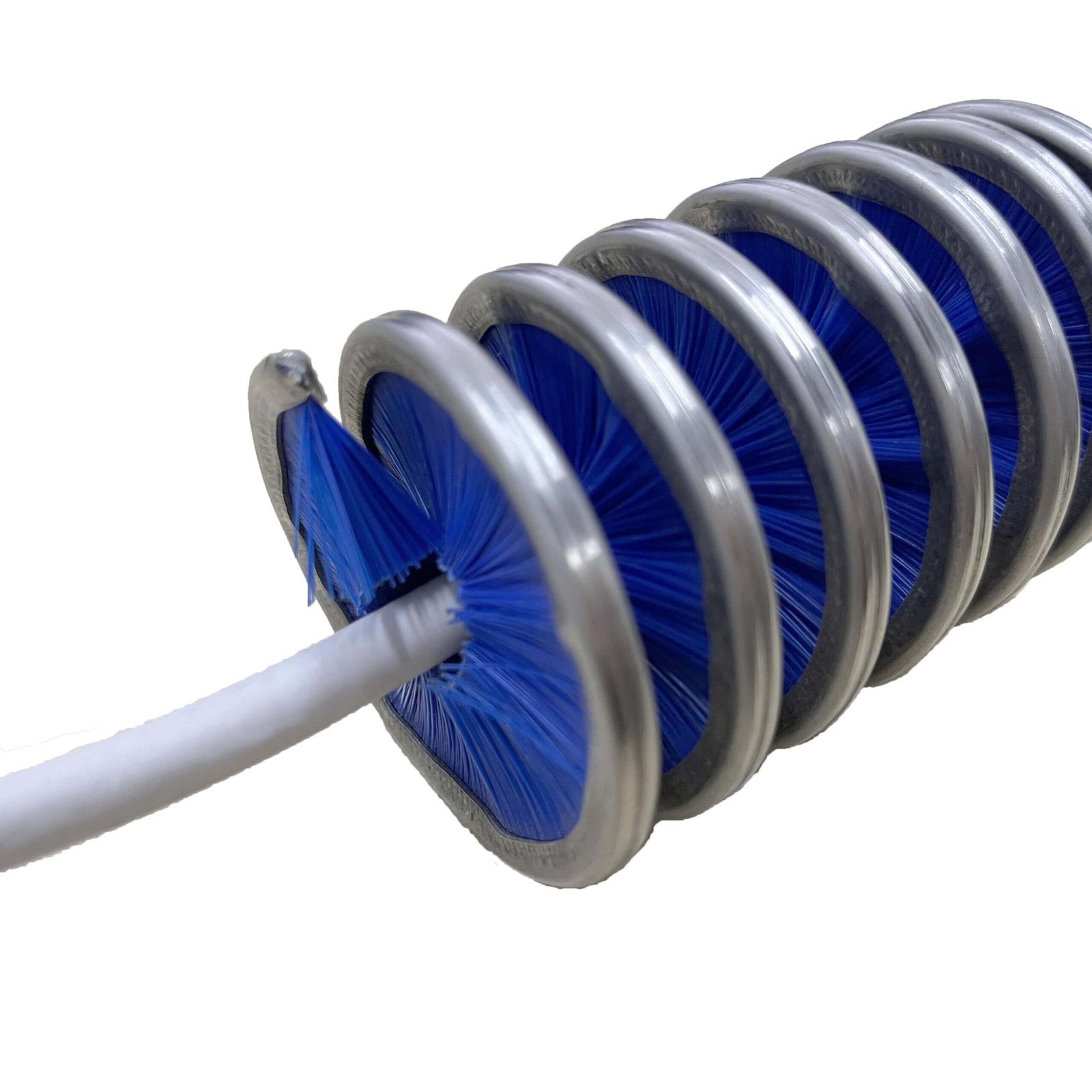
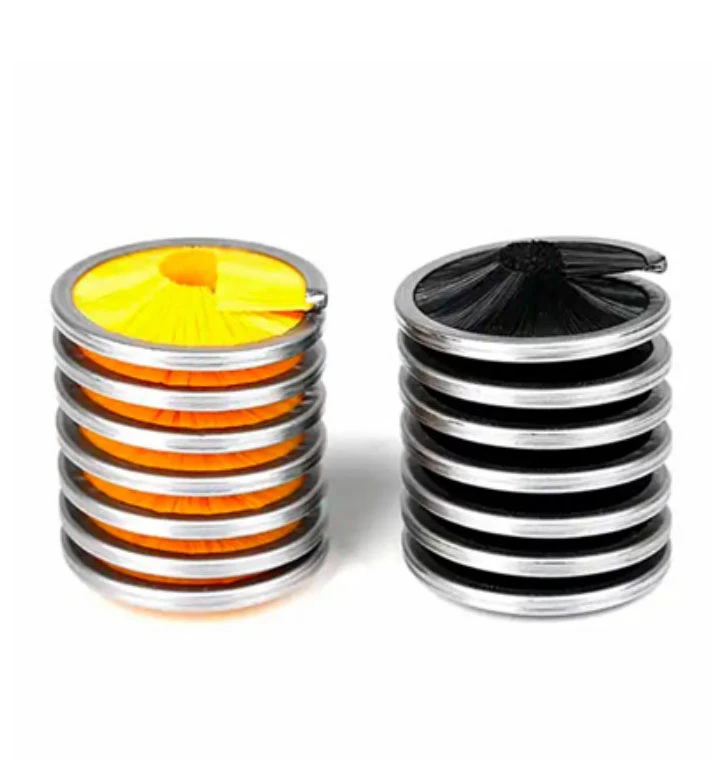
Most purpose-built rope cleaning brushes use an inward-coiling spiral construction. A strip brush is wound into a spring-like coil with bristles facing the central bore. The rope passes through that bore, so the bristles contact the full circumference in a single pass rather than only the side facing the operator. The open coil form also flexes, which lets the brush follow the helical lay of the strands and accommodate slight diameter variation along the rope’s length.
Matching Brush Bore to Rope Diameter
- The brush bore should allow full bristle contact with the strand crowns without requiring excessive force to move along the rope.
- Note the rope construction and lay direction before ordering, since a 6×19 and a 6×36 rope of the same nominal diameter present different surface geometry.
- Many coil brushes can be trimmed, stretched, or compressed within a limited range, which lets one brush cover a small band of rope diameters, though long-term use outside the intended band reduces cleaning consistency.
- For ropes that must be cleaned in place, a split or clamp-style arrangement is usually more practical than threading the entire free end through a closed coil.
Bristle Material Selection
| Bristle Material | Best Suited To | Cautions |
| Carbon or galvanised steel wire | Heavy rust, scale, and hardened dried lubricant on plain carbon steel ropes | Can abrade galvanised coatings and stainless finishes if over-applied |
| Stainless steel wire | Marine, offshore, and chemical exposure where the brush itself must resist corrosion | Higher cost; still abrasive to softer rope surfaces |
| Brass wire | Situations requiring non-sparking action or protection of a softer rope surface | Less aggressive; may not fully remove hardened scale |
| Nylon or polypropylene | Light surface contamination, ropes with sensitive coatings, synthetic ropes | Will not cut through rust or hardened grease |
| Hybrid steel and nylon | General industrial maintenance where scrubbing and surface protection both matter | Requires correct bristle proportion to avoid over-abrasion |
Manual, Stationary, and Powered Setups
| Deployment Method | Throughput | Suitable Rope Diameter Range | Relative Cost | Notes |
| Manual slide-along brush | Low | Small to moderate | Lowest | Practical for short runs and spot cleaning; labour-intensive |
| Fixed brush station at a known travel point | Moderate to high | Moderate to large | Low to moderate | Cleans continuously as the rope pays in and out; requires mounting provision |
| Powered rotary cleaning unit | High | Moderate to large | Highest | Suits high-cycle operations and long runs; needs clearance and guarding |
Manual cleaning is adequate for low-cycle equipment and short rope runs. As rope diameter and duty cycle rise, a fixed station at the drum or sheave entry becomes more efficient, because the rope cleans itself each time it travels. Powered rotary units achieve the highest throughput and are common in ports, mines, and heavy lifting fleets, but they require proper guarding and clearance and should be operated only by trained personnel.
Techniques That Clean Effectively Without Damaging the Rope
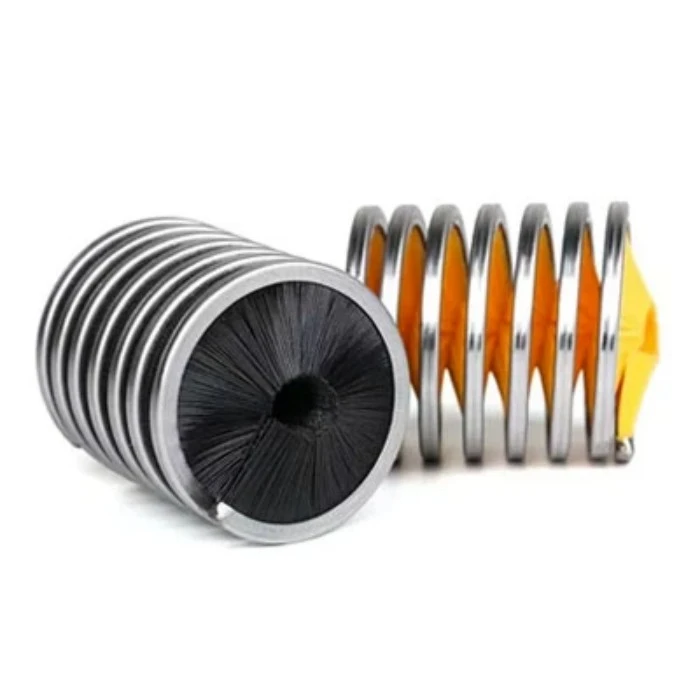
Effective cleaning means removing contamination from the strand valleys while leaving the wire surfaces, the protective coating, and the rope geometry intact. Move the brush along the direction of the lay, apply light to moderate pressure, and avoid concentrating abrasive action on one spot. In practice, the safest technique is also the most useful, because a controlled cleaning pass doubles as the best inspection opportunity the rope will ever get.
Over-cleaning is a real failure mode. Repeated aggressive brushing of the same section removes the zinc or lubricant protection from the outer wires and creates a bright, unprotected surface that corrodes faster than the surrounding rope. The goal is clean steel with an intact protective film, not bright steel.
Step-by-Step Manual Cleaning Procedure
- Isolate and secure the equipment. Lock out the drive, release tension where the procedure permits, and confirm the rope cannot move during cleaning. Never clean rope on a live, moving system unless the cleaning station is purpose-built and guarded for it.
- Put on personal protective equipment. Gloves against broken wires and bristle injuries, plus eye protection against flying grit.
- Perform a preliminary inspection. Spool the full length and look for obvious deformation, broken wires, corrosion bloom, or damage near terminations before doing anything else.
- Clean in sections. Work along the rope in manageable lengths, drawing the brush in the direction of the lay. Rotate it slightly between passes so bristles reach both crowns and valleys.
- Loosen hardened residue where necessary. Stubborn dried grease may need a compatible solvent applied before brushing rather than more pressure on the bristles.
- Remove loosened material. Wipe or blow off the dislodged contamination so it does not simply resettle into the valleys.
- Dry completely. Allow full evaporation of any solvent or water before any lubricant is applied.
- Inspect again on the clean surface. This pass is where hidden defects become visible, and it should be documented.
- Relubricate with a compatible product. Match the lubricant type to the application and work it into the strand valleys rather than laying it only on the surface.
- Record the cycle. Note the date, rope section, findings, and lubricant used so deterioration trends become visible over time.
Cleaning as an Inspection Opportunity
A wire rope cleaning brush is effectively an inspection tool that happens to remove dirt. Contaminants that hide defects are stripped away by the same action, so the clean surface that emerges should be examined carefully for the conditions that require removal from service:
- Broken wires within a lay length. The count limit depends on rope construction, lay direction, and duty class, and it applies to the worst section rather than an average across the rope.
- Broken wires near terminations. Defects in sockets, wedges, ferrules, and thimbles are disproportionately serious because the load transfer zone is highly stressed and hard to inspect fully.
- Diameter reduction. Measured crown to crown at multiple points and compared with the original diameter, not judged by eye.
- Corrosion state. Surface rust that wipes away, pitting, and internal corrosion signalled by reddish powder exuding from the valleys when the rope is flexed. Pitting and internal corrosion are typically treated as immediate grounds for removal from service.
- Deformation. Kinks, birdcaging, core protrusion, flattening, basket distortion, and unusual strand looseness are never acceptable conditions to monitor rather than act on.
- Heat damage. Discolouration or loss of internal lubricant caused by exposure to high temperature or welding spatter.
Regulatory regimes reinforce this. In the United States, wire rope slings must be inspected for damage or defects before each use and removed from service immediately when defective, as set out in the applicable provisions of 29 CFR 1910.184. Equivalent requirements in lifting and crane standards worldwide follow the same logic. The rope structure and the mechanisms of internal wear that make cleaning necessary are described in general reference material on wire rope construction, while corrosion and discard criteria for in-service crane rope are addressed by international standards such as ISO 4309. Cleaning is the practical step that makes compliance with all of them easier, because a clean rope can be assessed properly.
Common Mistakes That Cause Damage
- Using stiff steel bristles on galvanised or stainless rope until the protective layer is scuffed bright.
- Selecting a solvent that attacks the rope’s existing lubricant film and leaves the core unprotected before relubrication.
- Directing high-pressure water or air into the strand structure hard enough to drive contamination and moisture deeper toward the core.
- Applying lubricant before the rope is fully dry.
- Cleaning only the visible, easily accessible sections and never the drum crossover zones, sheave contact zones, or areas adjacent to terminations, which are the highest-risk regions.
- Treating a cleaning pass as a substitute for a documented inspection.
Preventive Maintenance Habits That Compound the Benefit
A wire rope cleaning brush produces its most durable results when it is part of a documented cycle rather than an improvised action. Cleaning, inspection, lubrication, and record-keeping reinforce each other: cleaning makes inspection possible, inspection decides whether lubrication is worthwhile, lubrication protects what the inspection cleared, and records reveal whether the whole cycle is working. Operations that formalise these four steps typically find the brush pays for itself many times over through extended replacement intervals and fewer unplanned stoppages.
The cost case is straightforward once replacement intervals lengthen. Large diameter rope is expensive, and a rope change on critical equipment often means hours of downtime plus rigging labour on top of the rope itself. A routine that adds a modest amount of maintenance labour per cycle can defer that event by years.
Building a Simple Maintenance Schedule
A practical schedule layered by frequency rather than by equipment type keeps the discipline intact:
| Frequency | Action | Owner |
| Each shift or before use | Visual scan of accessible rope for obvious damage, kinks, broken wires, and lubricant condition | Operator or equipment user |
| Weekly | Clean and check exposed sections on ropes in aggressive environments; rinse after salt or chemical exposure | Maintenance technician |
| Monthly | Full-length cleaning and documented examination of accessible rope, including sheave and drum zones | Competent person |
| Quarterly or at lubrication interval | Full clean, dry, inspect, relubricate cycle with written record | Competent person or specialist |
| Annually or per statutory regime | Complete condition assessment against applicable discard criteria, replacing rope when any criterion is met | Qualified inspector |
The critical element is the record. Without written history, an inspector cannot tell whether a wire break count is stable or growing, whether lubricant is being consumed faster than before, or whether a particular section of rope keeps returning to attention. Records convert a series of isolated cleaning jobs into a measurable maintenance programme.
Storage, Handling, and Relubrication
Between cleaning cycles, the way a rope is handled and stored determines how quickly it degrades:
- Spool rope onto a reel for storage. This prevents kinks and tangles that permanently alter load sharing between strands.
- Store reels clear of the floor. Elevate the base and keep the reel in a cool, dry, ventilated area away from corrosive substances and pooled water.
- Avoid dragging rope across rough surfaces. Longitudinal abrasion from dragging damages outer wires and creates sites for corrosion to start.
- Keep suspended rope under appropriate tension. Slack invites kinks, which create stress concentrations that cannot be straightened out again.
- Match the lubricant to the application. Penetrating lubricants reach the core and protect each wire against internal wear; coating lubricants seal the exterior against moisture; combination products do both. Coastal and marine operations need demonstrable salt spray resistance, while hot environments require lubricants that will not thin and drain off the rope.
- Re-inspect before returning stored rope to service. Rope that has sat idle for an extended period should be cleaned and examined before it takes load again.
FAQ
Q1: Does a wire rope cleaning brush replace lubrication or inspection?
No, and it should never be treated as a substitute for either. Cleaning creates the conditions that make lubrication effective and inspection reliable, but the rope still needs a fresh protective film and a proper condition assessment after every cleaning cycle. Think of cleaning as the preparatory step that allows the other two to work, not as an alternative to them. A rope that is cleaned but never lubricated will corrode internally faster than one that was left with its original film intact.
Q2: Is a wire rope cleaning brush worth it for a small operation?
Yes, and often more so than for large fleets. Smaller operations tend to run fewer ropes under less predictable conditions, which means an unexpected rope failure is disproportionately disruptive and a scheduled replacement interval is harder to justify. A single correctly sized coil brush is an inexpensive tool, and even a modest extension of rope life changes the cost equation, because the dominant expense in rope ownership is not the brush or the lubricant; it is the replacement event and the downtime around it.
Q3: Can I just use a regular hand brush instead?
A flat hand brush can remove surface debris, but it cannot clean the strand valleys, where the contamination that actually drives internal wear accumulates. A flat brush contacts only the outer crowns of the strands and leaves the crevices packed. A coil brush encloses the rope so bristles reach the valleys from all directions in a single pass, and it adapts to the twist of the lay as it moves. On ropes with light contamination in protected indoor environments, a soft bristle brush may be adequate between proper coil cleaning cycles, but it is not a replacement for one.