Consumers judge a raised fabric in the first two seconds, before they read a fiber content label or a care tag. A fleece jacket, a flannel shirt, or a coral fleece blanket either feels plush and warm in the hand, or it feels thin and scratchy, and that verdict comes almost entirely from the fiber layer standing above the yarn structure. Mills chase that hand feel through softeners and finishing chemistry, yet the layer itself is built mechanically by the tool that lifts fiber out of the yarn in the first place.
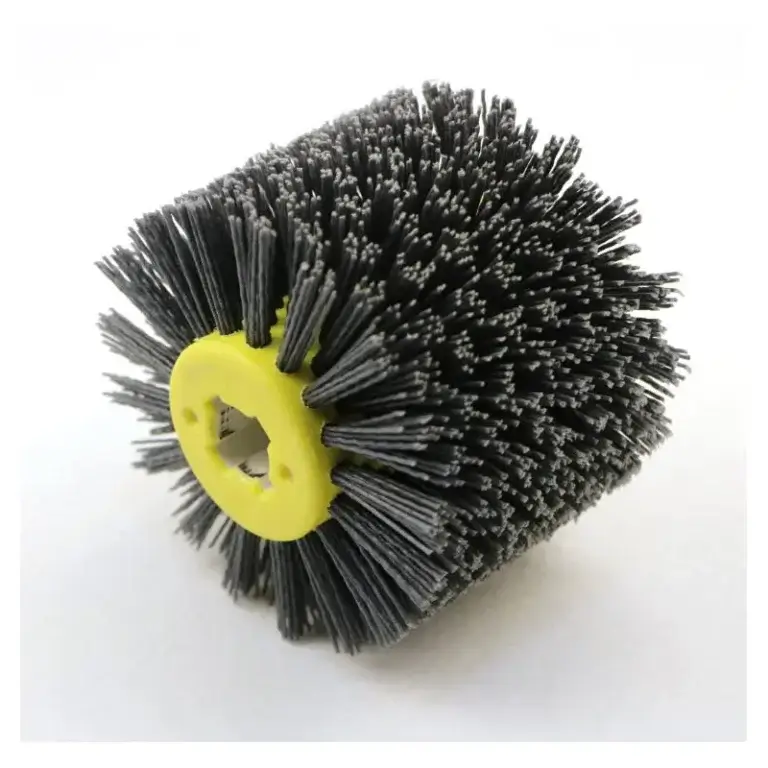
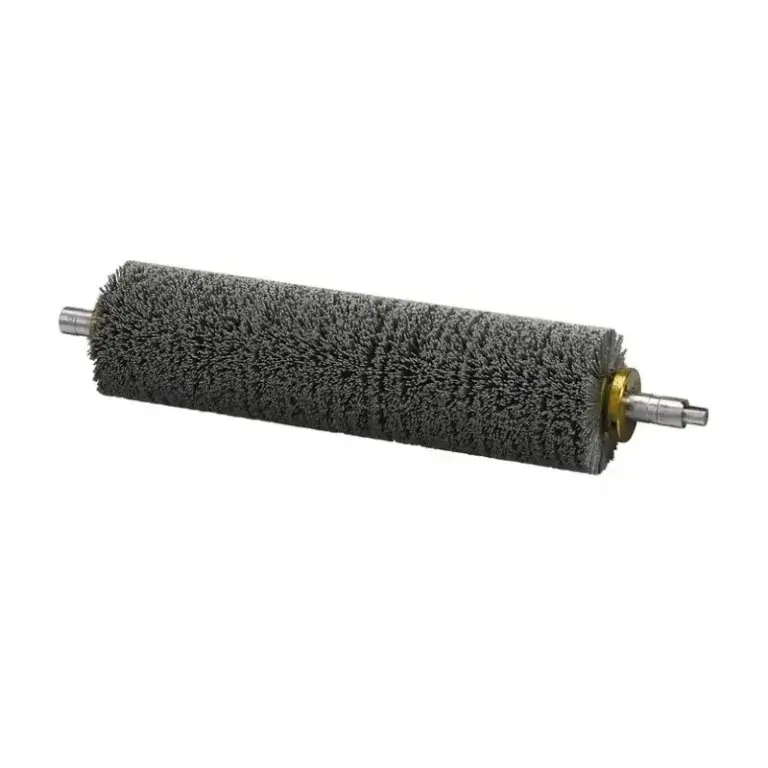
An abrasive roller brush raises a soft, fluffy pile by driving angled filament tips into the yarn surface, catching protruding fiber ends, and pulling them outward so they stand above the base structure as a continuous raised layer. That layer traps air, and trapped air is what the hand reads as softness and warmth. Pile quality therefore depends on three things the brush controls directly: how effectively each filament tip catches and lifts fiber, how uniformly that action is applied across the full fabric width, and how far the process is carried before fiber damage and shedding begin to outweigh the gain in loft.
The sections below cover what actually makes a pile feel soft, how raising differs from sueding, how the brush performs the lift, which machine variables govern the result, and how to match the brush and fiber to a target pile.
What Makes a Pile Feel Soft and Fluffy
A pile feels soft and fluffy because raised fiber ends stand away from the yarn surface and create a layer of trapped air between them. Softness is the tactile result of many fine, loosely anchored fiber tips contacting the skin, and warmth is the result of that air layer slowing heat loss. Both properties scale with pile height and pile density rather than with fiber fineness alone.
Pile height is the most visible variable and the easiest to measure. A short pile gives a subtle surface change, a medium pile develops a warm, full hand, and a deep pile delivers real insulation but approaches the point where fiber is no longer well anchored, and shedding becomes a quality risk. Density operates alongside height: a dense pile of short fibers feels smooth and substantial, while a sparse pile of long fibers feels airy but weak and tends to flatten with use.
Pile Height, Density, and Trapped Air
Why the Fiber Must Be Lifted, Not Just Cut
There is a meaningful difference between a surface that has been smoothed and a surface that has been raised. Abrasive cutting shortens and polishes fiber ends in place, which softens the fabric and reduces sheen but leaves the structure essentially flat. Lifting pulls whole fiber ends outward so they project above the yarn, and only that projection creates the air gap that produces loft. A mill specifying softness alone can sometimes accept the flattened route; a mill specifying fluffy pile cannot, because pile is a structural condition rather than a surface condition.
Raising Versus Suing: A Mechanism Comparison
Raising and sueding both modify the fabric surface and are frequently confused, but they work by opposite mechanical principles. Raising grips and pulls fiber out of the yarn, producing a longer and visibly fluffier pile, while sueding applies abrasive contact that lifts and partially severs fiber ends, producing a shorter and finer surface. The distinction determines which fabric constructions each process can safely treat.
Lifting Action Versus Abrasive Cutting Action
The clearest way to picture the difference is that raising behaves like pulling fibers up, whereas abrasive finishing behaves like refining the topmost layer. Raising relies on a gripping and pulling action that engages fiber ends and draws them upward. Abrasive finishing, by contrast, uses abrasive particles that lift and cut the very ends of surface fibers.
That difference has a practical consequence for construction. Abrasive friction on a knit can cut the loops and start a run, while a lifting action that simply draws fiber from those loops preserves the structural integrity of the knit much better. Conversely, tightly constructed wovens and fine-gauge fabrics often cannot release enough fiber length for lifting to work well, and abrasive treatment suits them better.
Effect on Pile Length, Structure, and End Use
How the Brush Lifts Fiber Into Pile
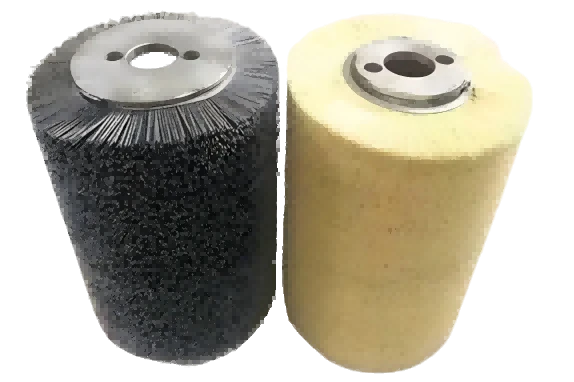
The brush performs raising through a repeating sequence of capture, lift, and release. Each filament tip penetrates slightly into the yarn, hooks a protruding fiber end, carries it outward as the roller passes, and releases it standing above the surface. Thousands of these cycles per revolution build the pile, so any factor that reduces capture efficiency or consistency shows up directly as a thinner or more uneven pile.
Filament Tip Geometry and Attack Angle
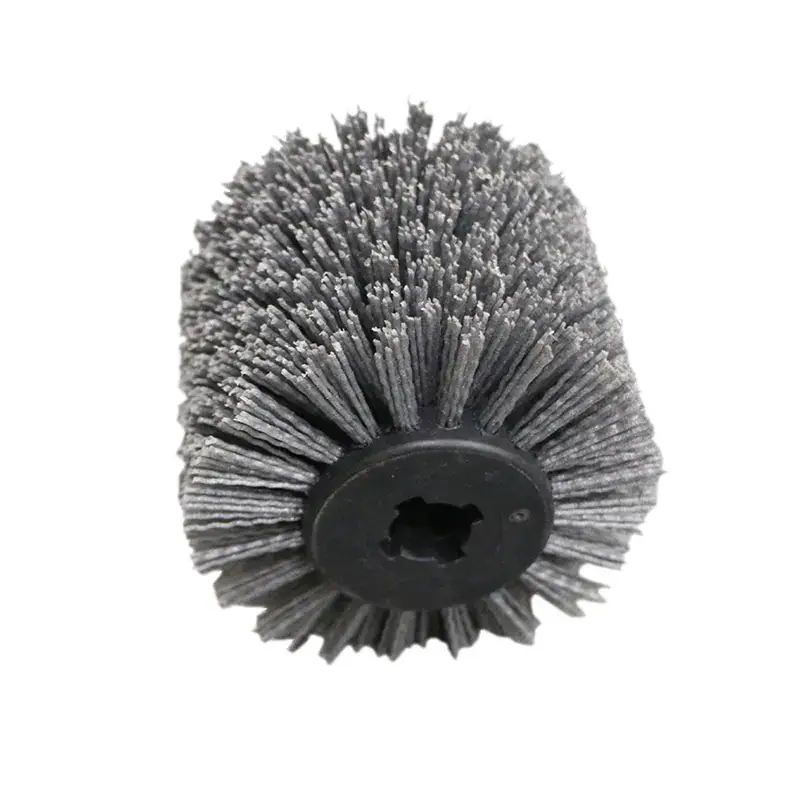
Filament tips set at an angle to the surface are what allow the brush to enter the yarn rather than merely brush across it. The attack angle determines whether a tip slides over the yarn or digs in and catches fiber, which is why angle is specified rather than left to chance.
Tip condition matters just as much as tip geometry. A worn or damaged tip cannot hook fiber cleanly; instead, it drags across the surface and scratches it, producing a flat, abraded patch rather than raised pile. This is why filament inspection belongs in routine maintenance rather than being left until pile quality visibly drops.
Density, Fill Pattern, and Spiral Rows
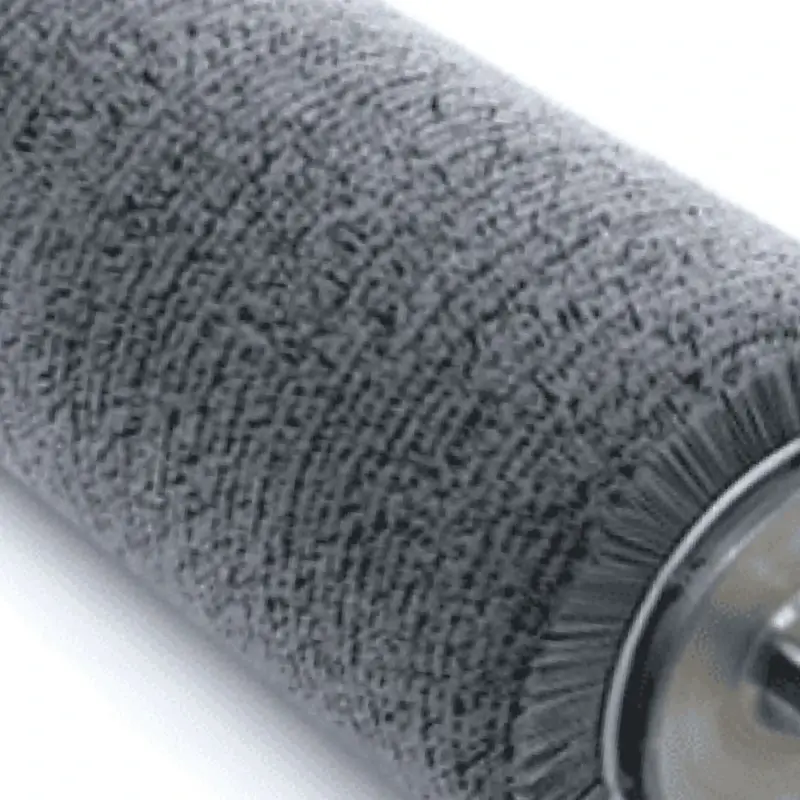
Uniform density is the property that makes streak-free finishing possible, because a zone with sparse filament captures fewer fibers per revolution and produces a thinner pile than its neighbors. Bonding individual strands to the core maintains uniform density across the brush face and supports even wear over the life of the tool, so pile character stays stable from the start of a batch to the end.
Row pattern shapes how the raising action is applied. Spiral rows present filament to the fabric progressively and distribute the action evenly across the working width, while a two-way spiral arrangement helps apply even tension across the fabric. A practical benefit is that spiral construction also clears debris more effectively, which keeps the abrasive surface working evenly rather than loading in patches.
Abrasive Versus Wire Filament for Pile Effects
Both abrasive and wire-based tools can raise pile, and the choice depends on the target effect and the fabric. Abrasive filament suits situations calling for a shorter, denser, and more uniform raised layer, and it holds its cutting character through wear because fresh grain is progressively exposed as the filament is used. Abrasive surfaces also differ among themselves: emery-based surfaces remove a layer of fabric for a heavier effect, while other abrasive constructions produce a softer, more gentle result on fabrics that cannot tolerate aggressive treatment. Wire-based tools, by contrast, are the reference point for the long, loose pile associated with classic fleece and flannel.
Process Variables That Control Pile Quality
Brush specification sets the ceiling on pile quality, but machine settings determine whether that ceiling is reached. Roller speed relative to fabric speed, tension, pass count, and moisture are the four variables that decide pile height, density, and uniformity, and they must be tuned per fabric style rather than carried over from the previous order.
Roller Speed, Fabric Speed, and Pass Count
The most common process error is attempting to reach a target pile in one aggressive pass instead of building it gradually across several. Progressive raising through multiple passes develops height and density more evenly and keeps fiber damage lower at every stage.
Tension, Moisture, and Pile Uniformity
Raising requires lower, controlled tension than abrasive finishing. Fiber has to be drawn upward without snapping the base yarns, so the fabric must be held flat and stable without being pulled tight enough to stretch it. Excessive tension flattens the surface and produces a misleadingly smooth result, while tension that is too low invites wrinkles and folds that are then raised into permanent marks.
Moisture is the quiet variable. Variation in moisture content within a batch, or across the width of a single layer, changes how fiber responds to the raising action and produces pile height differences that appear as shade variation in the finished goods.
Finishing the Pile and Managing the Trade-Offs
Raised pile is not a finished surface. Fibers standing above the yarn are loosely anchored, so the pile must be equalized and stabilized, and raising always trades strength and pilling performance for loft. Shearing, extraction, and dimensional stabilization are what convert a raised surface into a saleable one.
Shearing for Uniform Nap Height
Shearing passes the raised fabric under a rotary blade that trims protruding fiber to a uniform height. Because raising tends to leave the longest and most variable fibers standing, shearing is what removes widthwise variation and delivers the clean, even surface associated with quality fleece and flannel. It also partially recovers the pilling performance lost during raising, since the most mobile fiber ends are cut away. Shearing height sets the final character: a closer cut produces a denser, firmer pile while a higher cut leaves longer, softer fiber tips.
Strength Loss, Shedding, and Pilling Risk
The fiber ends that make a raised surface feel warm and soft are the same fiber ends that form pills during wear and washing, so the two properties move in opposite directions. Over-processing amplifies the problem: excessive raising, an overly coarse abrasive grade, or too high a speed differential can tear fiber instead of lifting it cleanly, causing substantial tensile strength loss and increasing pilling in blended synthetics. A quality raised fabric scores well on a pilling assessment that rates resistance to surface pilling and fuzzing under controlled friction on a five-point scale. Mills that promise both maximum loft and top pilling performance without explaining the sequence are usually relying on unsupported claims; the finishing route, not the fiber alone, decides the balance.
Matching the Brush and Fibers to the Target Pile
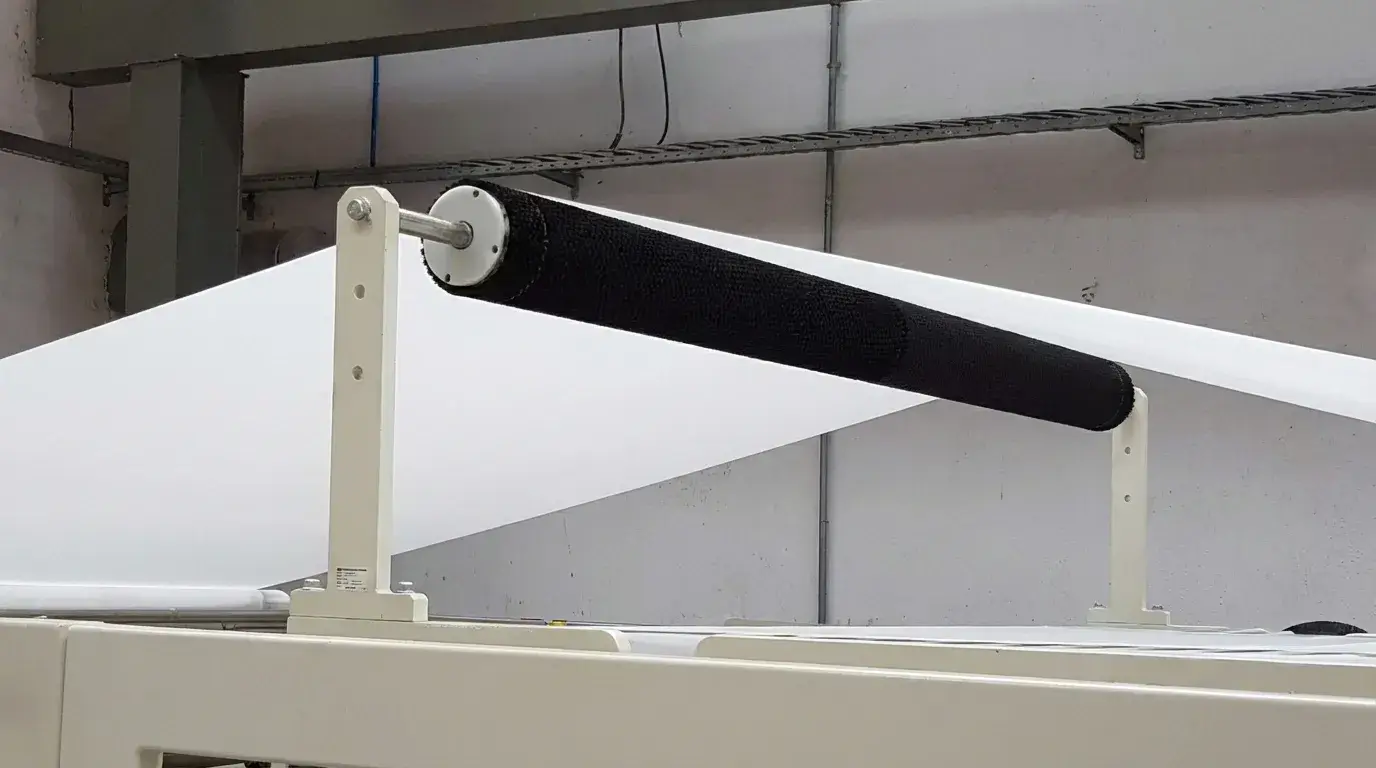
Fiber type, yarn twist, and fabric weight determine what pile a given construction can actually produce. Long staple fibers and low-twist yarns release enough length for a full, fluffy pile, while tightly constructed and fine-gauge fabrics hold fiber where it is and need finer, less aggressive filament to avoid surface damage.
Fiber and Fabric Suitability
Natural fibers with crimp and surface scale structure respond well to raising, and wool in particular develops a dense, warm pile because its crimp gives the fiber natural loft and its surface structure helps the filament grip. Wool blends and acrylics are also common raising candidates. Fabric weight matters as much as fiber: midweight knit and woven constructions have enough body to hold a raised layer, while very light fabrics tend to distort. As a general rule, settings should never be copied between styles, because cotton, wool, polyester, and their blends each respond differently to the same roller speed and engagement depth. A short sample run on a new style will reveal problems that specifications alone cannot predict.
Building a Repeatable Pile Recipe
Once a style is approved, the settings that produced it should be recorded rather than remembered. A workable production sheet captures fiber and construction, brush grade and filament type, roller speed and speed ratio, engagement depth, tension setting, number of passes, moisture condition, extraction status, and the inspection result. Recording the sequence in this way turns a successful sample into a repeatable process, and it makes troubleshooting a failed batch a matter of comparing a value against a known-good reference instead of re-testing every variable.
Frequently Asked Questions
Q1: Can a soft, fluffy pile be produced on synthetic fabrics?
Yes, with the right approach. Polyester and acrylic develop a good pile when the yarn twist and fiber specifications allow the fibers to be released, and acrylic is widely used for fleece-effect fabrics. Synthetic blends tend to pill more readily than wool, so they are usually paired with a shearing step.
Q2: Why does the pile look uneven at the selvedges after raising?
Uneven piles at the edges usually point to entry tension that is not balanced across the width. When edge tension differs from center tension, engagement depth varies and produces a thinner pile where the fabric is tighter. The standard remedies include spreader elements and width measurement at entry, in the working zone, and at exit.
Q3: How is pile height measured on the production floor?
Pile height is commonly checked with a height gauge, combined with surface inspection under angled light where small differences become visible. A hand check and a fabric weight comparison add useful evidence, since visual inspection alone can miss shallow or inconsistent raising.