
Today’s market for manufactured products relies heavily upon having good surface finish quality to decide if the product conforms to the current market standards or if it is rejected entirely from the market. Automated finishing lines contain many different tools to accomplish top-quality results; however, sisal cylinder brushes have developed a strong credibility for delivering consistently repeatable finishing results when used in many different industries.
Different brushes are required for different types of applications. Knowing the distinctions between brush types in order to properly direct your procurement team and/or manufacturing team when making purchasing decisions can help the team be successful in those purchases. Therefore, this article will provide an overview of the most commonly found industrial applications of brushes and provide some examples from actual production environments.
Why Sisal Fiber Works So Well in Industrial Brushing
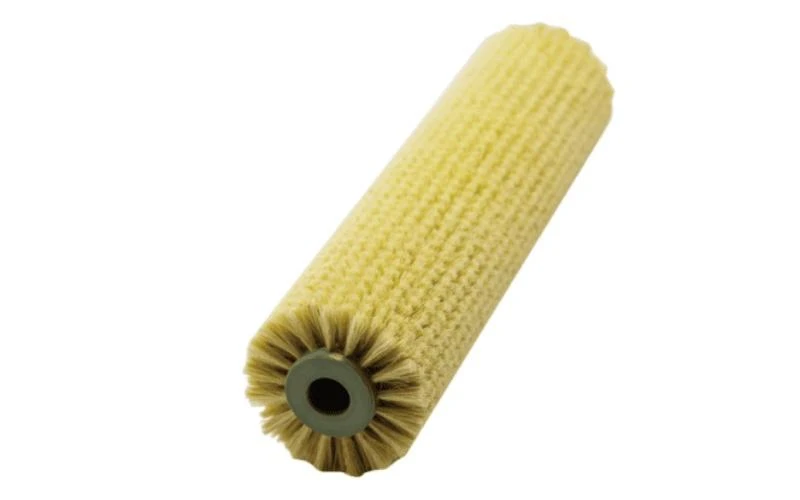
The Agave sisalana plant produces Sisal—an all-natural plant fiber material that is stiff and strong enough to withstand high-speed rotation’s heat buildup (and therefore occurs naturally based on its ability to withstand high-speed rotation). Due to these properties, it is often used in applications requiring moderate levels of abrasive wear without causing damage to the workpiece’s finish.
Sisal, in comparison to man-made materials, has the perfect blend of being able to cut and protect the surface being worked on. Experienced operators have observed how much less static is created from using sisal and the uniformity of the scratch pattern compared to a man-made material; this is extremely important in the finishing processes where visual consistency is of utmost importance.
When mounted to a cylinder core, sisal fibres become a sisal cylinder brush, which can be integrated directly into either fully or partially automated production lines, allowing them to handle continuous workloads with minimal fibre deterioration.
Top 3 Industrial Applications
1. Furniture Surface Polishing
The surfaces of furniture must be free from defects and smooth before they can be lacquered or painted. As part of the flat panel production process, a furniture polishing brush is frequently used to eliminate dust, light mill marks, and raised grain from the wood after it has been sanded for the first time.
Sisal cylinder brushes are often ideal for this application because they polish without creating swirl marks. In production environments that process MDF, particleboard, or solid panels, these brushes typically operate at 1,200 to 1,800 RPM, based on the hardness of the material being processed.
Benefits associated with furniture polishing consist of:
- Uniform preparation of surfaces throughout several batches of larger panels
- Reduced need for hand-painting the top surface ahead of the coating application
- Longer lifetime of brushes when compared to softer, natural fiber types
Cabinet door, table top and shelving manufacturers who process high numbers, typically see significant increases in first-time quality after making the switch to properly specified sisal brushes.
2. Wood Panel Finishing
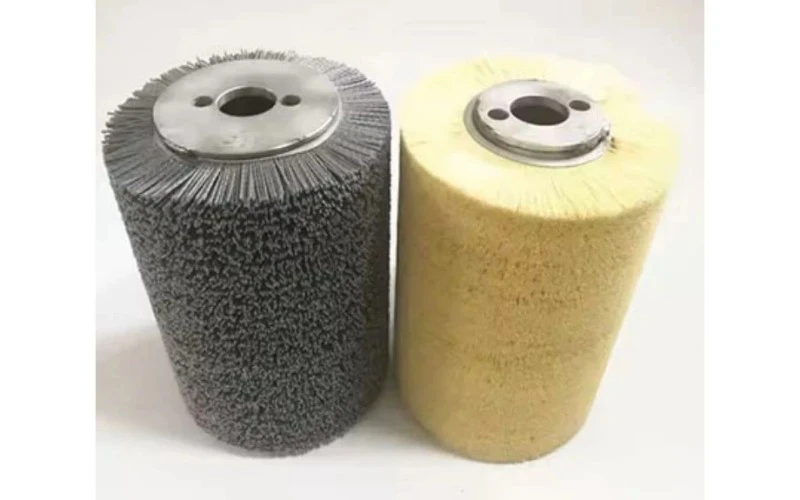
In addition to furniture, finishing with cylinder brushes is a vital part of general wood panel finishing processes. A wood polishing brush system is usually positioned after the planer or sander in the production timeline; this process prepares a wood panel for the final finish for lamination or coating.
This brush application will eliminate fine dust particles in the wood grain as well as help to smooth any micro-scratches left by previous sanding stages. Sisal can provide both of these functions because its natural rigidity allows it to penetrate the grain without causing gouges.
Common wood types processed with sisal cylinder brushes include:
- Pine and spruce (softwoods)
- Oak and maple (hardwoods)
- Plywood and engineered wood composites
When production teams are using mixed species of wood, they generally find that sisal’s ability to accommodate various levels of hardness while not needing to be adjusted for speed frequently makes it an ideal choice for their purposes. When evaluating other brushes, it is useful for producers to choose the right sisal brush according to the density of the fiber as well as the length of trim for the type of wood they are working with during production.
3. Surface Preparation and Sanding
The third major function includes preparing wood surfaces with sandpaper brushes or sisal cylinder brushes to prepare surfaces to be sanded or allow various stages of sanding before they are actually sanded.
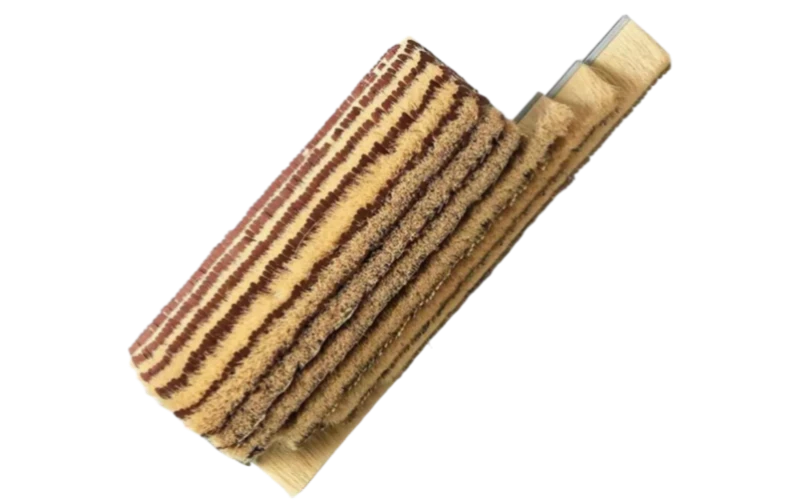
This application serves two functions:
- Remove loose debris and remove any loose particles from the wood surface
- Open the surface of the wood slightly to allow for greater sanding efficiency on the next stage of sanding
This method is critical for production lines because if sandpaper becomes clogged, it causes finishes to be inconsistent and sandpaper belts to wear out quickly. At most manufacturing facilities that have adopted this type of method, it has been found that the addition of a sisal brush before the sanding station has produced 15%–25% longer life of the sandpaper belt, and produced uniformly finished surfaces.
Comparison of Applications at a Glance
| Feature | Furniture Polishing | Wood Panel Finishing | Sanding Preparation |
| Primary Function | Surface preparation prior to coating | Removing dust from surface and conditioning micro scratches | Cleaning debris and opening grain |
| Typical RPM Range | 1,200–1,800 | 1,000–1,500 | 800–1,200 |
| Recommended Fiber Density | High | Medium to High | Medium |
| Best Suited Materials | MDF, solid wood, particleboard | Softwood, hardwood, plywood | All wood types |
| Key Benefit | Eliminates swirl marks | Adapts across wood species | Extends sandpaper belt life |
Matching the Right Brush to Your Production Line
The selection of the appropriate sisal cylinder brushes for your application is not based purely on the fibre type, but also by the following factors; core diameter, overall brush length, trim length and fibre density all affect the performance of the brush. A brush that is well suited for polishing a piece of furniture may not have the same performance characteristics if used to prepare a surface for sanding if the specifications do not match.
Managers managing production examining cylinder brushes for the initial time – or optimizing existing processes – should ask for sample brushes to trial-run prior to committing to orders. Those suppliers of good repute will usually provide custom options on core material, fiber blend ratio, and dimensional specs.
Frequently Asked Questions
Is it possible to build a custom size for a brush?
Most manufacturers will provide custom core diameters, lengths of the brush, and trim thicknesses that are compatible with the specifications of existing production machinery and processes.
What is the MOQ for wholesale orders?
It varies for each supplier. Many suppliers provide an MOQ of 10–50 pieces depending on how much custom work is done and what type of brush specifications are needed.
Are sisal brushes appropriate for usage on both types of timber (softwood and hardwood)?
Yes, sisal is a very stiff fibre, making it suitable for use with both softwoods and hardwoods – it is the density of the fibre which must be correct for the particular type of wood in order to achieve optimum results!