
Introduction
The global utility-scale solar photovoltaic (PV) market surpassed 1,000 GW of cumulative installed capacity in recent years, and with it, the operational demands of managing expansive solar farms have intensified. Among the most persistent challenges facing PV farm operators is soiling loss—the accumulation of dust, sand, pollen, bird droppings, and industrial particulates on solar panel surfaces. Studies indicate that soiling can degrade panel efficiency by up to 25% in arid and high-pollution environments, making regular panel cleaning an essential component of operational maintenance rather than an optional expense. For large-scale installations spanning hundreds of acres, manual cleaning methods are neither practical nor economical, driving the adoption of mechanized solutions such as rotary solar panel brushes.
When selecting a rotary solar panel brush for a large photovoltaic farm, procurement managers and O&M directors must evaluate three critical factors: brush material and bristle technology, rotary system specifications and operational efficiency, and long-term durability coupled with total cost of ownership. Each of these factors directly influences cleaning effectiveness, panel longevity, and overall return on investment.
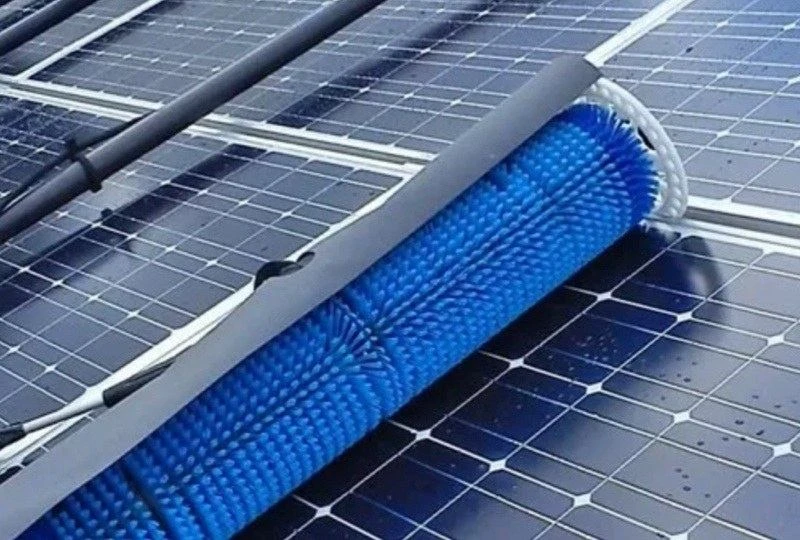
Choosing the wrong brush system can lead to micro-scratches on panel surfaces that degrade anti-reflective coatings, reduced energy yield from incomplete cleaning, and unplanned downtime from equipment failure during peak generation seasons. The decision involves balancing upfront capital expenditure against ongoing operational costs while ensuring the selected system can withstand the environmental conditions specific to each installation site, whether that is a desert farm in the Middle East, a coastal installation in Southeast Asia, or an agricultural PV site in Europe.
This guide examines the three major factors in depth, providing technical insights and practical procurement considerations to help you make an informed decision. Below is a structured overview of the topics covered:
- Factor One: Brush Material and Bristle Technology
- Factor Two: Rotary System Specifications and Operational Efficiency
- Factor Three: Durability, Maintenance, and Total Cost of Ownership
- Integrating the Three Factors: A Holistic Selection Framework
Factor One: Brush Material and Bristle Technology
The brush material is the single most important determinant of cleaning safety and effectiveness. For large PV farms, nylon (polyamide) bristles are the preferred choice due to their superior flexibility, excellent bend recovery, and low abrasiveness on glass surfaces. Polypropylene (PP) bristles, while more affordable, are harder and less forgiving, making them suitable only for environments where aggressive scrubbing is necessary and panel coatings are rugged enough to withstand higher contact pressure.
The bristle material directly governs the mechanical interaction between the brush and the solar panel surface. Modern solar panels are manufactured with anti-reflective (AR) coatings and textured glass surfaces designed to maximize photon capture. These coatings are typically only a few hundred nanometers thick and can be irreversibly damaged by abrasive contact. Nylon bristles, with a tensile strength of 75 to 90 MPa and a medium-soft hardness profile, offer sufficient cleaning power while minimizing the risk of micro-scratching. In wet conditions, nylon bristles absorb small amounts of moisture and become even more pliable, further reducing the risk of surface damage during cleaning operations.
Beyond material composition, bristle diameter and density are equally important parameters. Thinner bristles (0.1 mm to 0.3 mm) penetrate surface textures more effectively and remove fine particulate matter without requiring excessive pressure. Denser bristle arrangements improve coverage and reduce the number of passes needed to achieve thorough cleaning. For rotary brush systems operating at speeds between 600 and 900 RPM, bristle density must be calibrated to maintain consistent contact force across the entire brush width while allowing water and debris to flow through the brush head rather than being trapped against the panel surface.
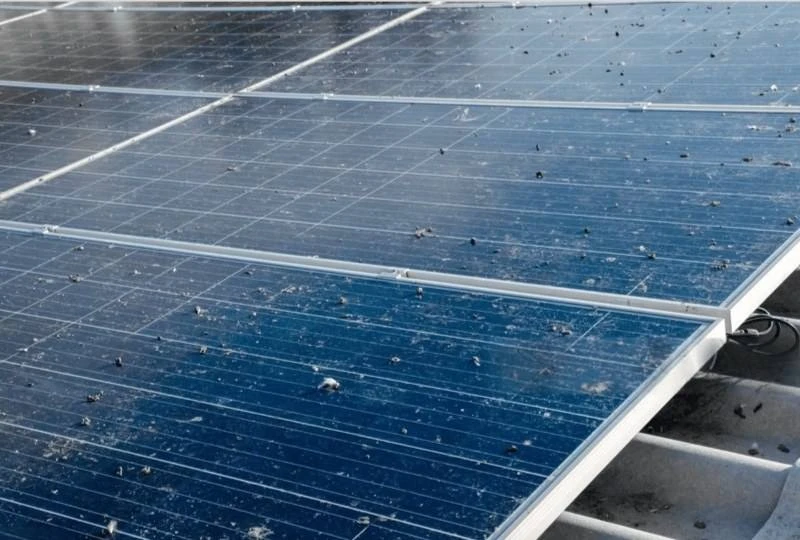
The following table summarizes key performance characteristics of the two primary bristle materials used in rotary solar panel cleaning systems:
| Property | Nylon (PA) Bristles | Polypropylene (PP) Bristles |
| Hardness | Medium to soft | Higher, more aggressive |
| Flexibility and bend recovery | Excellent | Fair, slow recovery |
| Wear resistance | Excellent | Good |
| Wet performance | Becomes more flexible when wet | Dimensionally stable, does not soften |
| Tensile strength | 75 to 90 MPa | 30 to 40 MPa |
| Risk of surface scratching | Low | Moderate |
| Typical service life | Longer | Shorter |
| Relative cost | Higher | Lower |
For operators of utility-scale farms, the modest premium for nylon bristles is almost always justified by the extended service life and reduced risk of panel damage. The long-term cost of replacing damaged panel glass or suffering incremental efficiency losses far outweighs the initial savings from selecting a less expensive bristle material.
Factor Two: Rotary System Specifications and Operational Efficiency
The operational efficiency of a rotary solar panel brush system is determined by a combination of rotational speed, cleaning width, water consumption rate, and working pressure. For large PV farms, systems delivering a cleaning width of 600 mm to 1,000 mm, operating at 600 to 900 RPM under 4 MPa (40 bar) working pressure with water consumption of 3 to 4 liters per square meter, represent the optimal balance of speed, thoroughness, and resource economy.
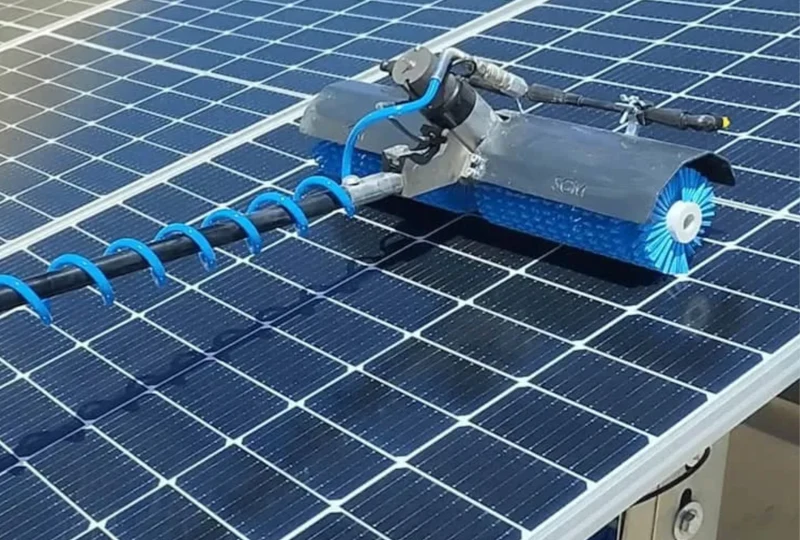
Rotational speed is a critical variable because it influences both cleaning effectiveness and the mechanical stress applied to panel surfaces. Systems operating between 600 and 900 RPM generate sufficient centrifugal force to dislodge adhered particles while maintaining brush contact patterns that do not cause dwell-time damage on any single point of the glass. Speed that is too low leaves residue and requires multiple passes; speed that is too high increases the risk of micro-abrasion and accelerates bristle wear. Water-driven rotary systems, which use high-pressure water flow to spin the brush head, offer the advantage of synchronizing water delivery with rotational cleaning action. This integration eliminates the need for electric motors and batteries, simplifying maintenance and reducing the weight of the cleaning head.
Cleaning width directly determines area coverage rates and labor requirements. A single-head rotary brush with a 300 mm diameter typically covers 150 to 200 square meters per hour. A dual-head configuration with two 300 mm brushes achieves a combined working width of 600 mm and can cover 200 to 400 square meters per hour. For reference, a 1 MW solar installation covers approximately 4,000 to 5,000 square meters of panel surface, meaning a dual-head system operated by a three-person crew can clean roughly 1 MW in two working days. For a 100 MW utility-scale farm, fleet sizing must account for the required cleaning frequency, which varies by location from bi-weekly in dusty regions to quarterly in moderate climates.
Water consumption is both an operational cost driver and, in arid regions, a resource constraint. Modern rotary systems consume approximately 3 to 4 liters of water per square meter of panel surface, translating to roughly 20 metric tons of water per megawatt of installed capacity per cleaning cycle. Systems that integrate water recycling, deionized water filtration, or rainwater harvesting can materially reduce water procurement costs. Operators should also evaluate nozzle design, as multi-angle spray nozzles serve three functions simultaneously: pre-wetting panels to reduce static friction, transporting dislodged debris away from the brush path, and moderating panel surface temperature to prevent thermal shock during daytime cleaning.
The table below provides a comparative overview of typical rotary brush system configurations and their corresponding operational metrics:
| Configuration | Working Width | Area Coverage (per hour) | Water Consumption | RPM Range | Crew Size |
| Single-head (300 mm) | 300 mm | 150 to 200 m² | 3 to 4 L/m² | 600 to 900 | 2 to 3 |
| Dual-head (600 mm) | 600 mm | 200 to 400 m² | 3 to 4 L/m² | 600 to 900 | 3 |
| Wide-format (800 to 1,000 mm) | 800 to 1,000 mm | 300 to 350 m² | 3 to 4 L/m² | 500 to 800 | 3 to 4 |
For procurement decisions, operators should match system specifications to their farm’s layout and terrain. Ground-mounted installations with uniform panel rows and adequate vehicle access benefit from wide-format, vehicle-mounted systems. Sites with uneven terrain, such as hillside installations or agrivoltaic configurations, may require lighter, manually maneuvered dual-head units that can adapt to varying panel heights and angles.
Factor Three: Durability, Maintenance, and Total Cost of Ownership
Durability in a rotary solar panel brush system is defined by corrosion resistance, structural integrity under continuous use, and the availability of replaceable wear components. The total cost of ownership (TCO) extends beyond the purchase price to include bristle replacement frequency, water and labor costs, and the financial impact of cleaning-related downtime. Systems built with stainless steel and anodized aluminum components, featuring field-replaceable brush heads and sealed bearing assemblies, deliver the lowest TCO over a typical 5- to 7-year equipment lifecycle.
Corrosion resistance is particularly important for PV farms in coastal and high-humidity environments where salt-laden air accelerates metal degradation. Brush frames, connectors, and rotating assemblies should be constructed from stainless steel (grade 304 or 316 for marine environments) or anodized aluminum. Plastic components exposed to UV radiation must be manufactured from UV-stabilized polymers to prevent embrittlement and cracking from prolonged sun exposure. Bearings and seals should be rated for continuous wet operation and protected against water ingress, as bearing failure is one of the most common causes of rotary brush downtime.
The replaceability of wear components significantly impacts long-term maintenance costs. Brush heads, being the primary wear item, should be designed for quick field replacement without specialized tools. Operators should evaluate the expected bristle service life under their specific environmental conditions: abrasive desert sand can reduce nylon bristle life by 30 to 50 percent compared to typical agricultural dust. A well-designed system allows individual brush heads to be swapped in minutes, minimizing the number of spare assemblies that must be kept in inventory and reducing mean time to repair.
Water delivery systems also contribute to TCO. High-pressure pumps and hoses represent significant capital investments, and their maintenance costs must be factored into lifecycle calculations. Systems that operate at lower minimum pressures (2 MPa rather than 4 MPa) provide greater flexibility in pump selection and can reduce energy costs associated with water pressurization. Additionally, the weight of the cleaning head affects operator fatigue and the number of crew members required. Lighter heads (3 to 6 kg for single-head units and 6 to 10 kg for dual-head configurations) enable longer continuous operation with fewer rest intervals, improving overall daily throughput.
Integrating the Three Factors: A Holistic Selection Framework
A structured evaluation framework that scores rotary brush systems across bristle material, operational specifications, and durability metrics provides the most reliable path to selecting equipment that maximizes cleaning effectiveness while minimizing total cost of ownership.
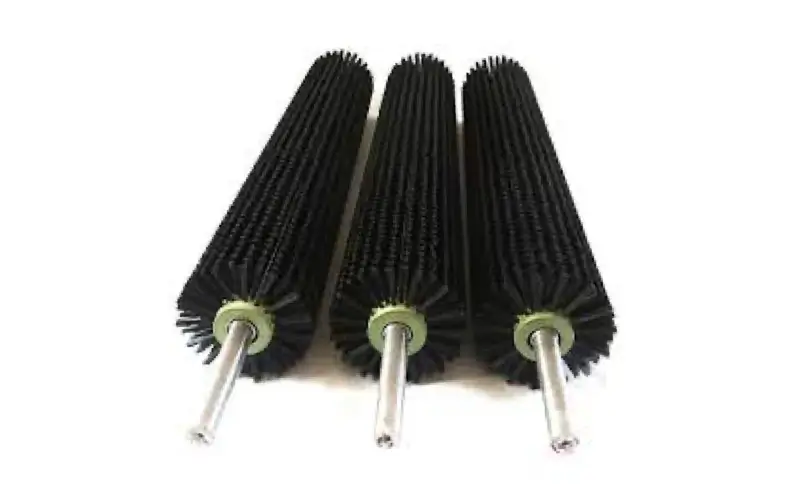
When evaluating competing systems, procurement teams should follow a systematic process:
- Define the farm’s specific requirements: panel surface area, cleaning frequency, water availability, terrain type, and environmental conditions such as dust load and humidity.
- Establish minimum acceptable thresholds for each of the three major factors. For example, a desert installation might require nylon-only bristles, a minimum cleaning width of 600 mm, and a fully stainless-steel construction.
- Score candidate systems against each factor using a weighted scoring model where bristle material (safety) carries the highest weight, followed by operational specifications (efficiency), and then durability (TCO).
- Request field trial data or reference installations from suppliers operating under similar environmental conditions. Laboratory specifications do not always translate to real-world performance, particularly for bristle wear rates under abrasive dust conditions.
- Calculate the 5-year TCO for each shortlisted system, incorporating purchase price, estimated bristle replacement intervals, water consumption costs, labor requirements, and anticipated maintenance downtime.
Conclusion
Selecting the right rotary solar panel brush for a large photovoltaic farm is a multifaceted decision that directly impacts both short-term operational efficiency and long-term asset performance. The three major factors—brush material and bristle technology, rotary system specifications and operational efficiency, and long-term durability coupled with total cost of ownership—are deeply interconnected. Prioritizing nylon bristles protects panel surfaces from micro-damage and extends cleaning intervals. Matching rotational speed, cleaning width, and water consumption to site-specific conditions ensures that cleaning operations remain both thorough and resource-efficient. Investing in corrosion-resistant construction and field-replaceable wear components reduces lifecycle costs and minimizes unplanned maintenance events.
Ultimately, the most effective procurement strategy involves site-specific evaluation using the framework outlined above, supported by real-world performance data from comparable installations. By treating brush selection as a strategic operational investment rather than a routine commodity purchase, PV farm operators can safeguard panel performance, extend asset lifespan, and maximize energy yield throughout the operational life of their installations.