
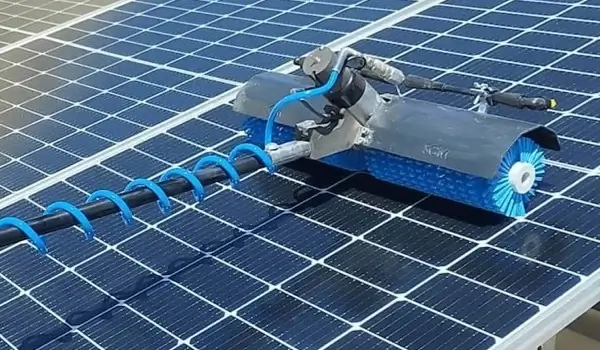
Solar panel maintenance operations increasingly rely on automated cleaning systems equipped with rotating brushes. Off-the-shelf brushes rarely meet the exact requirements of specialized robotic platforms, panel coatings, or environmental conditions. Custom specifications ensure that the solar panel cleaning brush delivers consistent cleaning performance without risking surface damage or premature wear.
Specifying a custom brush involves more than selecting a diameter and length. The interplay between bristle material, filament density, core construction, and mounting configuration determines whether the brush will effectively remove dust, bird droppings, and fine particulates while preserving the integrity of photovoltaic glass surfaces.
Why Customization Matters for Solar Panel Cleaning
Standard brushes are made for general purposes but may not consider the unique needs of cleaning solar panels. Photovoltaic glass has a tendency to scratch easily, and even very light scratches will reduce the amount of light that goes through it and the amount of energy obtained. At the same time, brushes will be used every day outside, exposed to ultraviolet rays, changing temperatures, and abrasive dust.
At big-scale solar power facilities it has been seen that ‘standard’ type brush components can break down far too early; this is often due to incompatible or incorrect diameter of the rod and/or length/rebound characteristics of the carbon ‘filaments’, and/or incorrectly designed/compatible mounting systems. The use of custom cylinder brush has solved these problems through customizing brush specifications to match each cleaning system’s parameters & environmental condition where they will be deployed.
Core Specifications to Define
Bristle Material Selection
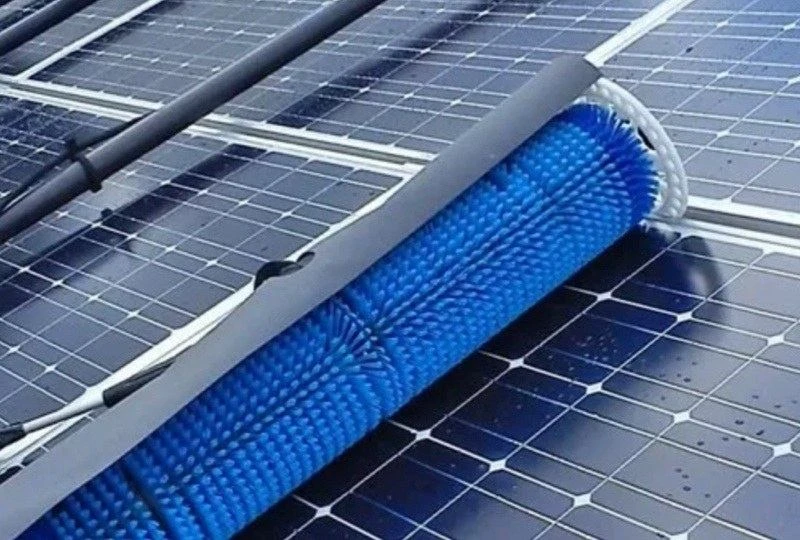
The cleaning effectiveness and safety of the surface are affected by which type of bristles you use to clean your solar panel cleaning brush. The leading fibre used for solar cleaning brushes is nylon because of its combination of flexibility, durability and resistance to chemicals. All nylon filaments (PA) have the same level of stiffness in both hot and cold temperatures and will not deteriorate when they come into contact with detergents or UV rays.
There are several alternatives that can be considered:
- PBT (polybutylene terephthalate): Has higher stiffness compared to nylon and is ideal for removing dried and hardened residues or mineral build-up.
- PE (polyethylene): Softer and more flexible than nylon, it is appropriate for use on delicate coatings or anti-reflective surfaces.
- PP (polypropylene): Lower-cost alternative for cleaning lightweight surfaces in low-abrasion areas.
- PVC: Generally not used due to concerns about its durability and environmental impact.
For typical solar panel applications, PA nylon with a filament diameter ranging from 0.15mm to 0.25mm provides the best overall performance balanced by cleaning power and surface protection.
Core Material and Construction
Types of Core Materials That Affect the Brush Weight, Corrosion Resistance and Rotational Balance. The specific type of core material that is chosen has an impact on the overall brush weight, the resistance to corrosion, and the balance when rotated. Some common core material options are:
| Core Material | Weight | Corrosion Resistance | Cost | Best Use Case |
|---|---|---|---|---|
| Plastic (PVC/ABS) | Light | Excellent | Low | Typically for locations that are indoors or have a roof covering |
| Galvanized Steel | Medium | Moderate | Medium | General purpose outdoor applications |
| Stainless Steel | Heavy | Excellent | High | Coastal/high humidity applications |
| Aluminium | Light | Good | Medium-High | Applications that require a weight-sensitive robotic system |
Using plastic as the core material will reduce the load being placed on the robot actuator while also eliminating any potential for the core to corrode, which is the best option for most lightweight cleaning robots, while only using stainless steel cores on any other type of very heavy duty application where they will be exposed to corrosive conditions.
Filament Pattern and Density
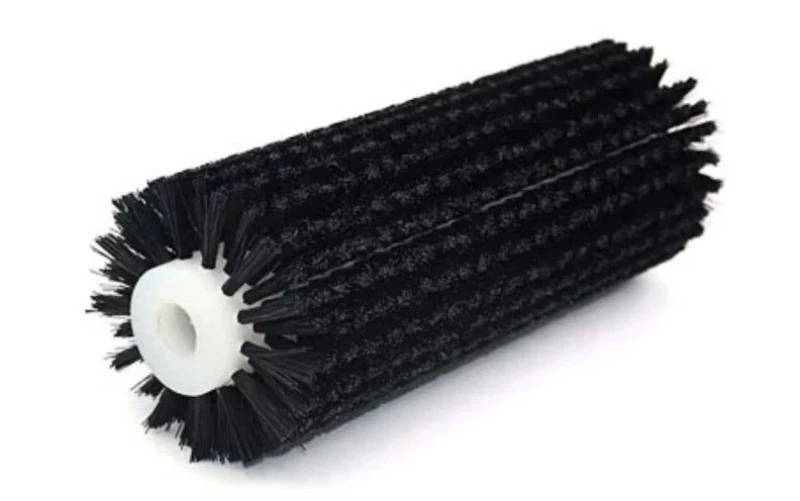
The filament design of bristles on brush cores affect how water flows, how debris is expelled from the brush, and how well a brush cleans. Common filament arrangements (patterns) include:
- Spirals/Helices: Filaments wrap uniformly around the brush core so that there is even contact from all angles and that the brush will rotate smoothly.
- Herringbones/Chevrons: Filaments that are arranged at an angle to one another, enabling water and debris to move outward through the channel.
- Stripes: Filament rows that are oriented parallel to the axis of the core to maximise contact pressure.
- Waves: Filament patterns that have an undulating shape, allowing for less friction; thus, increasing the life of brushes.
Rotary cleaning systems utilize tufted cylinder brush with clusters of filaments placed in an arrangement that allows channels to be created between each tuft (rather than employing a continual wrap). This provides improved water drainage, and prevents the build-up of dirt and debris. Tufted cylinder brushes provide excellent performance when used in a rotary brush solar panel cleaning system that operates at high speeds or in dusty conditions.
When determining how to specify filament density (measured in tufts per square inch or filaments per linear inch), consider the type of cleaning being performed. Increasing filament density generally creates more contact points for cleaning and produces more cleaning force; however, increasing filament density could also trap dirt and obstruct the flow of water during rinsing operations. Decreasing filament density provides improved rinseability, but can result in streaks on heavily soiled surfaces.
Dimensional Tolerances
Accurate dimensions will guarantee a suitable fit between the part and cleaning system, as well as contact to the surface of the photographic panel at all times. Some key measurements are as follows:
- Outer diameter (OD): Determines both the amount of pressure applied to the surface layer when cleaning as well as the area that is being covered when cleaning.
- Core diameter (ID): Must coincide with the matching mounting shaft of the robotic system.
- Brush Length: Must cover the entire panel or path being cleaned.
- Trim Length: Distance from the core to the tips of the filament – determines the amount of pressure that is being applied by the filaments to the surface of the panel.
Precision applications typically have an outer diameter tolerance of +/- 0.5mm and a core diameter tolerance of +/- 0.2mm. However, tighter tolerances may be necessary for fast-moving systems or panels that are uneven.
Mounting Configuration
The brush should be mounted in such a way that it integrates well with the robotic cleaning system. Common mounting methods include:
- Keyed Shaft: Prevents brush from slipping when rotating.
- Threaded End Caps: Provides for quick brush replacement.
- Snap Fit Collars: Tool Free Installation For Field Repairs.
- Custom Flanges: For Use With Proprietary Robot Systems.
Specifying the exact shaft size, keyway dimensions and the end cap threading guarantees compatibility and minimizes the installation time.
Environmental and Operational Factors
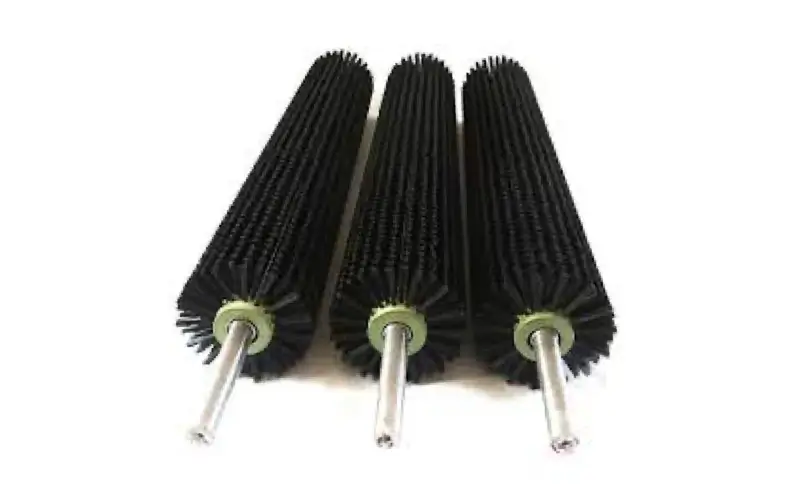
Environmental conditions play an important role in determining the choice of materials used and the manner in which the component is constructed in addition to physical specifications.
UV Resistance: Extended exposure to the sun degrades some plastics and filaments. UV-stabilized nylon or PBT have been incorporated into the brush’s construction for outdoor installations to extend the life of the brush.
Operating Temperature Range: The flexibility of nylon solar panel cleaning brush can be as low as -40°C and as high as 120°C while polyethylene will lose most of its hardness in extremely cold conditions. This must be treated carefully to allow for consistent operational capability.
Abrasive Loads: Fine sand and fine dust created by desert operations will wear out filaments more quickly than if dirt were not present; the use of larger diameter filaments or abrasion resistant nylon compounds can increase the service life of filaments dramatically.
Water Quality: Wash water hardness is the result of dissolved minerals from the wash water that become deposited on brush filament surfaces. The application of hydrophobic coatings or using wider spacing between filaments minimizes this deposited buildup.
Working with Manufacturers
An experienced brush manufacturer will be able to provide technical assistance to help you translate your operational needs into accurate specifications. You can expedite the customization of your brush by providing your brush manufacturer with the following key information:
- The proper cleaning robot or system for the application needs to be identified
- Cleaning system panel dimensions / panels and types of surface coating
- Frequency of cleaning / cleaning cycle time
- Cleaning Environment (Temperature, humidity, dust level)
- Cleaning Contaminants (dust, bird droppings, pollen, etc.)
- Expected brush life / timing to replace brushes
If the manufacturer would like to test fit or verify cleaning system performance, they can request (samples of panels and/or access to the cleaning system). Prototyping with a small number of panels will allow for any adjustments to be made before production.
Modular brush systems that have an interchangeable core and filament assemblies will result in a simplified inventory for facilities managing multiple solar arrays that utilize different types of panels. To enhance the use of custom brushes, examine nylon cylinder brush solutions in various applications across the industrial environment.
Quality Control and Testing
Custom brushes need to pass quality assurance criteria prior to being put into service:
- Dimensional verification: Verifying the outer diameter, inner diameter, and length dimensions meet the specification.
- Balance Testing: Confirm the brush will rotate smoothly without vibration at all operating speeds.
- Filament retention: Confirm that tufts are secure even under rotational forces.
- Surface compatibility: Test out on sample panels to determine that there are no scratches or streaks on the surface.
Reputable manufacturers provide certification documentation including material composition, dimensional tolerances and test results to verify the quality of their products.
Frequently Asked Questions
Q1: What is the normal lead time for custom solar panel cleaning brushes?
Lead times typically range from 2-4 weeks for standard customizations (core diameter and length) and 6-8 weeks for more complicated or proprietary filament patterns or for specialized materials.
Q2: What is the minimum order quantity for customized brushes?
Typically a manufacturer will have a minimum purchase requirement of 20-50 units; however, there may be opportunities to create prototype samples or small production runs at higher per unit prices.
Q3: Can existing brushes be fitted with a different type of bristle/plastic?
Generally speaking, retrofitting is not an economically viable option, and replacing the entire brush assembly will help ensure that the filament holds properly and is made to the correct size. Please contact your manufacturer for information related to any programs for exchanging or recycling worn brushes.