Understanding and Preventing Bristle Wear in Rotating Solar Panel Cleaning Brushes
The Soiling Problem and the Role of Rotating Solar Panel Cleaning Brushes
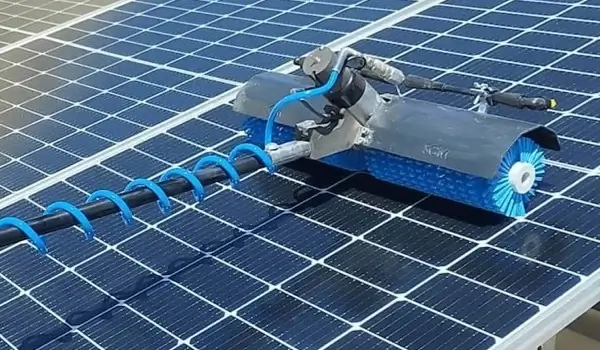
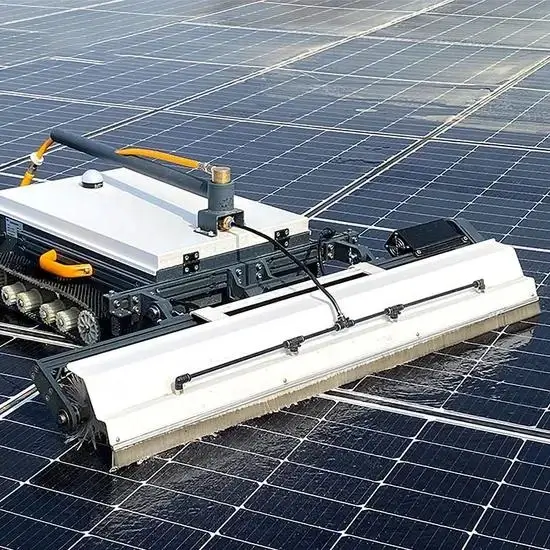
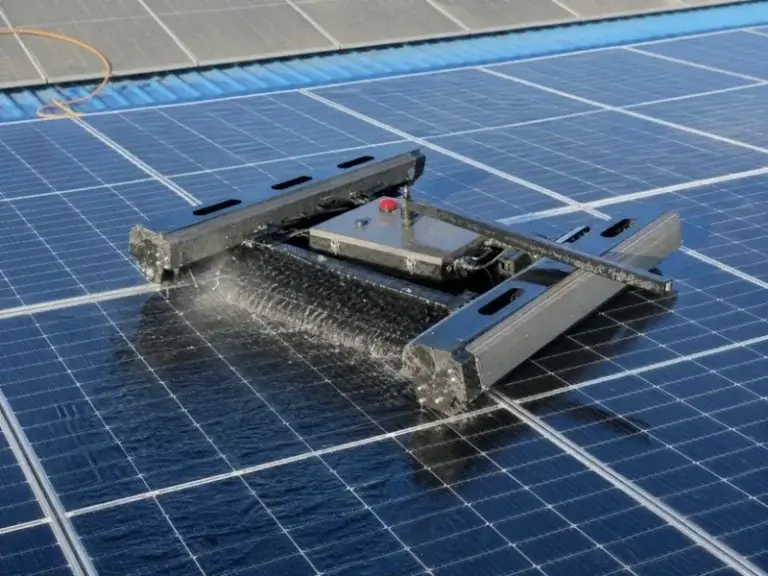
Solar panel soiling is a persistent drain on photovoltaic system output. Dust, sand, bird droppings, and airborne particulates accumulate on module surfaces, blocking light and reducing energy generation by 15 to 25 percent across utility and commercial installations. The rotating solar panel cleaning brush has become the frontline tool for O&M teams managing this problem, whether mounted on robotic cleaning platforms, tractor-driven systems, or semi-automated poles.
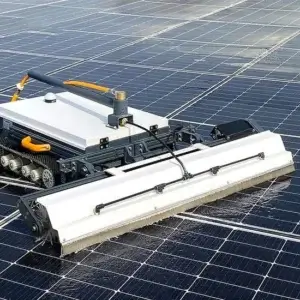
What many operators discover, however, is that brush bristles do not last as long as expected. A brush that starts with uniform, full-length filaments can show thinning, hooked tips, or uneven wear after only a few months of regular use. This wear does not just affect cleaning quality. It creates a chain of problems: reduced dirt removal, higher friction against the glass surface, and in the worst cases, micro-abrasion of anti-reflective coatings that permanently degrades panel output.
The Four Interacting Factors That Drive Bristle Wear
A rotating solar panel cleaning brush loses bristle material through a combination of abrasive particle entrapment, excessive rotational speed or contact pressure, use of the wrong filament material or diameter for the site environment, and insufficient water lubrication during cleaning cycles. These factors interact: a brush that is already worn traps more grit, which accelerates further wear, which then forces operators to increase pressure to compensate, compounding the problem.
Preventing Wear Through Proper Specification, Operation, and Replacement
The good news is that bristle wear is measurable, predictable, and largely preventable through proper specification and maintenance. Understanding each wear mechanism lets procurement and O&M teams select brushes that last longer, clean better, and protect the long-term value of solar assets. Below, we examine the technical factors behind bristle thinning and what can be done at each stage of brush specification, operation, and replacement to keep rotating cleaning systems performing as designed.
How Abrasive Particles Accelerate Bristle Wear
The single largest contributor to premature bristle wear is not the mechanical action of the brush itself, but the abrasive particles that become trapped between the bristles and the panel glass. Fine silica dust, sand, and mineral grit act as a lapping compound that grinds filament tips down with every rotation.
Field observations across desert and arid-region solar farms show that brushes operating in high-dust environments wear two to three times faster than identical brushes used in cleaner conditions. The mechanism is straightforward. When a rotating solar panel brush spins against a dusty panel surface, loose particles embed themselves into the bristle bed. Rather than falling away, these particles are dragged across the glass and the bristle tips simultaneously. The silica particles, which have a Mohs hardness around 7, are significantly harder than nylon filaments, which sit at roughly 2 to 3 on the same scale. Each pass grinds a microscopic amount of material off the filament tips.
This effect gets worse when water flow is too low. Water acts as a flushing medium that suspends dirt particles and carries them away from the contact zone. Without enough water, the grit stays trapped in the bristle pack and abrades the same surfaces repeatedly. Research from IIT Bombay using a cleaning cycle simulator documented measurable bristle diameter reduction after 3,700 abrasion cycles, with bristle tip hardness also dropping significantly, indicating structural degradation of the filament material beyond simple material loss.
The density of the bristle pack also plays a role here. A brush that is too dense creates a bristle bed where sand grains cannot escape. The particles remain embedded and act as a permanent abrasive layer grinding against the panel. A brush that is too sparse concentrates all downward pressure onto fewer filament tips, increasing the force per tip and accelerating tip wear. This relationship between bristle density and cleaning results is one of the least understood but most impactful variables in brush service life.
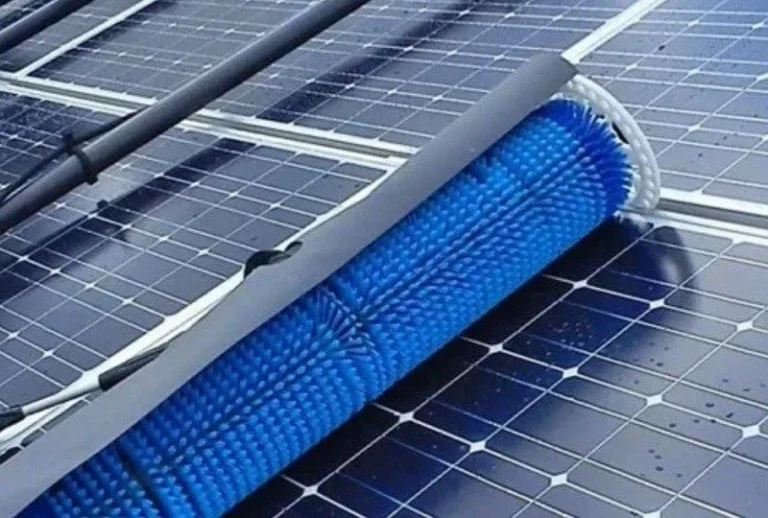
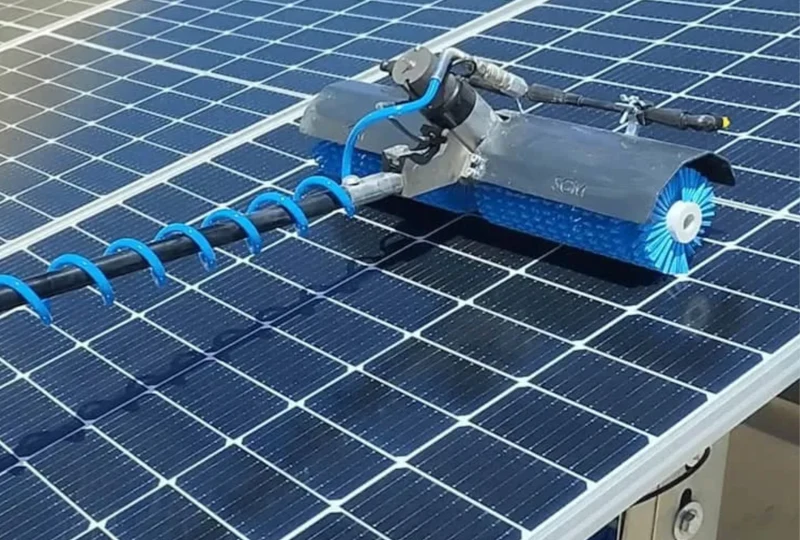
Operators in sandy environments should specify brushes with staggered or spiral tuft patterns. These configurations create natural channels for debris ejection, letting grit fall away from the brush instead of accumulating. Combined with consistent water delivery through the brush core, this design approach reduces abrasive particle retention and extends filament life measurably.
The Role of RPM and Contact Pressure in Bristle Degradation
How Excessive Speed Accelerates Bristle Wear Through Heat and Mechanical Cycling
Running a rotating solar panel cleaning brush at excessive speed or pressing it too hard against the panel surface are two of the fastest ways to thin bristles. Both conditions generate friction heat and mechanical stress that break down filament material well before its natural wear life.
Rotational speed, measured in RPM, directly controls how many times each bristle tip strikes the panel surface per minute. At 400 RPM, a bristle contacts the glass roughly 400 times per minute. At 600 RPM, that jumps to 600 contacts, a 50 percent increase in mechanical cycling. Each contact involves a brief but real bending stress on the filament. Over thousands of cycles, this repeated flexing causes fatigue at the base of each bristle and gradual material loss at the tip.
The Chinese academic literature on photovoltaic roller brush cleaning identified an optimal working speed of approximately 200 RPM for nylon bristles on standard PV glass, balancing cleaning effectiveness against filament preservation. European manufacturers of cleaning robots report similar findings, with 300 to 400 RPM proving effective when paired with adequate water flow and light contact pressure. Higher speeds generate heat through friction. Nylon filaments soften slightly as temperature rises, making them more susceptible to deformation and accelerated wear.
The Impact of Excessive Contact Pressure on Uneven Wear Patterns
Contact pressure is equally important. When a nylon cylinder brush is pressed too firmly against the panel, the bristles bend at their midpoints rather than making contact only at the tips. This sidewall contact increases the total surface area engaged in friction, traps more particles, and distributes stress unevenly across the filament. The result is faster, uneven wear: bristles in the center of the brush wear faster than those at the edges, creating a concave wear pattern that then requires even more pressure to clean effectively.
Tip-Only Contact: The Optimal Operating Mode for Filament Preservation
A properly engineered system lets the bristle tips just flick the panel surface. The filaments should make light, brief contact at their very ends, relying on tip speed and water lubrication to remove dirt. This tip-only contact mode minimizes both filament stress and the risk of grit entrapment. Operators should check brush-to-panel clearance regularly and adjust mounting height as bristles wear to maintain the correct contact geometry.
Why Filament Material and Diameter Determine Brush Longevity
Not all nylon is the same. The specific polymer grade, filament diameter, and cross-sectional shape of each bristle directly control how long a solar panel washing brush lasts before showing measurable thinning.
The most common filament materials used in solar cleaning brushes are polyamide, or nylon, in grades such as PA6, PA66, and PA612, plus polypropylene (PP) and PBT for specialized applications. Each behaves differently under repeated mechanical stress.
PA612 nylon offers high elasticity and recovery. When a PA612 bristle bends against a panel surface, it springs back to its original shape quickly and consistently. This recovery property matters because a bristle that stays bent after contact will, on the next rotation, strike the panel at a different angle, creating uneven contact and concentrated wear zones. PA6 nylon provides a slightly different balance of stiffness and flexibility at a lower cost point. PP bristles hold their shape well but are inherently harder than nylon. This hardness makes them more resistant to deformation but also more likely to scratch coated glass and less forgiving when grit becomes trapped in the bristle pack.
Filament diameter is the variable that most directly predicts wear behavior. A 0.15 millimeter nylon filament applies far less force per contact point than a 0.30 millimeter filament made from the same material. The thinner filament is gentler on coatings and wears more evenly because stress is distributed across more individual contact points in a dense bristle pack. The thicker filament resists deformation longer but concentrates force on fewer, larger contact zones, which can accelerate both brush and coating wear in abrasive environments.
For standard tempered PV glass with anti-reflective coatings, filament diameters between 0.15 and 0.20 millimeters offer the safest and longest-lasting balance. Finer than that, and cleaning efficacy drops because the filaments lack the stiffness to dislodge bonded contaminants. Coarser than that, and micro-abrasion risk accumulates over multi-year maintenance cycles. For choosing a panel-safe brush, operators should match filament diameter to both the module surface type and the dominant soiling type at the site.
UV exposure also degrades filaments over time. Nylon grades vary in UV resistance. PA66 offers better UV stability than standard PA6 at equivalent diameters, an important consideration for brushes stored on rooftop systems or vehicle-mounted equipment that sits in direct sun between cleaning cycles.
The Connection Between Water Lubrication and Bristle Life
Three Functions of Water That Reduce Bristle Wear
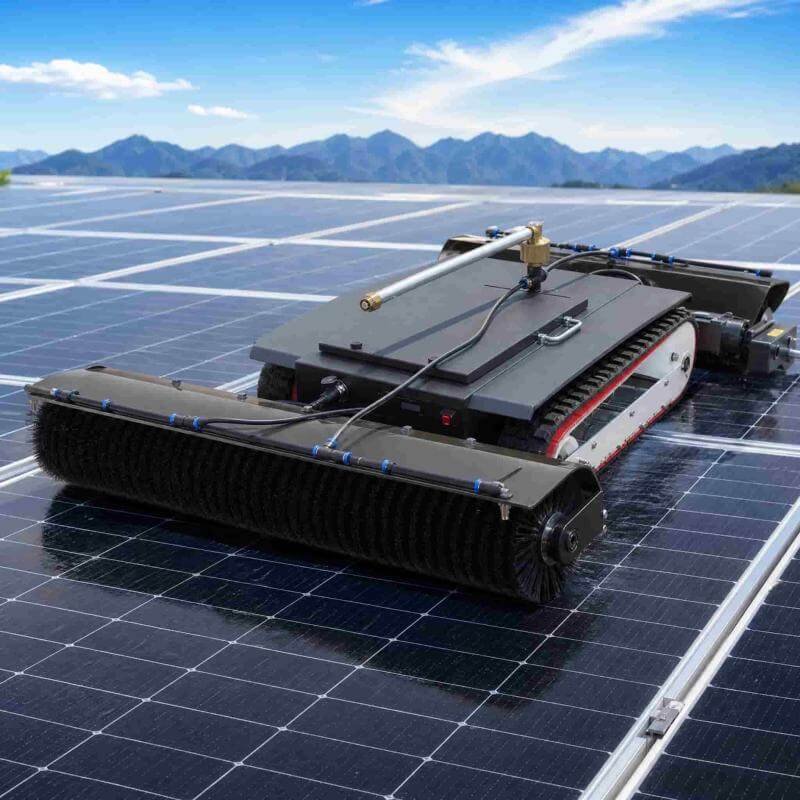
A water-fed rotating solar panel cleaning brush lasts significantly longer than one used in dry or near-dry conditions. Water serves three functions that directly reduce bristle wear: it cools the filament tips, it flushes abrasive particles out of the bristle pack, and it reduces the coefficient of friction between the brush and the glass.
Without water, the interface between nylon bristles and dry solar glass generates friction heat. At rotational speeds above 300 RPM, this heat softens the filament material slightly with every pass. A softened bristle tip deforms more easily on contact and loses material faster. Over hundreds of thousands of rotations, this thermal cycling accelerates structural fatigue in the polymer chains that make up each filament.
Flushing Action: Keeping Grit Out of the Contact Zone
More important than cooling is the flushing action. Water injected through the brush core or sprayed ahead of the rotating head suspends loosened dirt in liquid and carries it off the panel surface before the bristles make their next pass. This keeps grit out of the contact zone entirely. Operations that run with insufficient water flow see the opposite: dirt that is knocked loose by the first pass gets dragged back and forth by subsequent rotations, grinding against both panel and bristles.
Water Flow Rate and Quality Requirements for Effective Wet Cleaning
The minimum effective water flow varies by environment. In regions with fine, powdery dust, 1.5 to 3 liters per square meter typically provides enough flushing. In areas with heavier, caked-on soiling or sticky organic residue like pollen and bird droppings, higher flow rates combined with pre-soak passes produce better results. Water quality also matters. High-mineral content or recycled wash water can leave deposits on bristles that attract and hold dust between cleaning cycles, partially undoing the benefit of wet cleaning.
Maintenance Practices That Extend Rotating Brush Service Life
Regular Inspection for Hooked or Matted Bristles
The difference between a brush that lasts six months and one that lasts eighteen months often comes down to three maintenance habits: regular inspection for hooked or matted bristles, cleaning the brush itself after use, and replacing brushes based on measured wear rather than a fixed calendar schedule.
Bristles that become hooked, meaning their tips curl into a J-shape, trap grit far more aggressively than straight tips. A single cleaning cycle with hooked bristles can cause more coating abrasion than ten cycles with healthy filaments. Operators should inspect brush heads at least weekly during high-use periods. Any brush showing more than 10 to 15 percent hooked or matted bristles should be replaced immediately.
Post-Use Cleaning and Proper Drying of the Brush
The brush itself needs cleaning. After each shift, rinse the bristle pack thoroughly to remove accumulated dirt and mineral residue. Let the brush dry in a vertical position so water drains away from the core rather than pooling inside, which can corrode metal components and encourage mold growth on natural-fiber blends. For operations using detergent additives, flush the brush with clean water at the end of each day to prevent chemical residue from attacking filament polymers over time.
Measured Wear-Based Replacement Rather Than Calendar Scheduling
Replacement timing should be based on measurement, not guesswork. Some manufacturers provide wear indicator cards that let operators compare bristle length against a reference standard. A reduction of 20 to 25 percent in bristle length from original specification is a practical threshold for replacement. Waiting until bristles are visibly thin or cleaning performance drops noticeably means the brush has already been operating in a degraded state, potentially causing coating damage for weeks.
For sites ordering replacement brushes in volume, custom brush specifications that match the exact filament grade, density, diameter, and core mounting interface of the original equipment eliminate compatibility issues that can cause uneven wear patterns on a new brush head.
When to Replace Worn Bristles Before They Damage Your Panels
Three Conditions That Trigger Immediate Brush Replacement
Replace a rotating solar panel cleaning brush when bristle length has decreased by more than 25 percent, when more than 15 percent of bristles show hooked or split tips, or when the brush no longer removes dirt in a single pass at the same speed and water flow that worked when the brush was new. Any of these conditions indicates the brush is past its effective service life.
The cost of a replacement brush is a fraction of the cost of degraded panel output or coating repair. Consider the arithmetic. A 5 megawatt installation losing 3 percent of output because of cleaning that is progressively less effective loses roughly 150 kilowatts of peak generation capacity per day. At typical utility rates, this loss exceeds the cost of a set of replacement brushes within a few weeks. If worn bristles cause micro-scratching that permanently reduces light transmission by even 1 percent, that loss compounds across every hour of sunlight for the remaining 20-plus year life of the module.
Recognizing Normal Wear vs. Warning Signs of Brush Failure
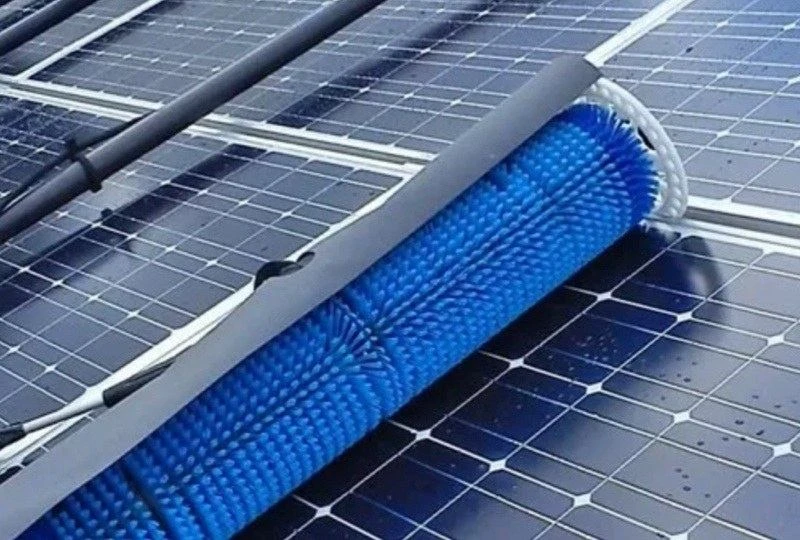
Some wear is normal. All filaments lose material over time, and a brush that shows uniform, gradual thinning across all bristles after months of use is performing as designed. The warning signs are uneven wear, localized patches of broken or missing bristles, and bristle tips that have changed shape from straight and round to flattened, hooked, or split. These patterns indicate that the brush is no longer making consistent, safe contact with the panel surface.
The Long-Term Value of Advanced Brush Technology and Disciplined Replacement
Rotating solar panel cleaning brush technology continues to improve, with newer filament formulations, optimized tuft patterns, and integrated water delivery systems all contributing to longer brush life and better panel protection. For O&M teams managing utility-scale or commercial solar assets, the right brush specification and a disciplined replacement schedule keep cleaning systems performing safely across thousands of operating hours.
Frequently Asked Questions
Q1: How can I tell if my rotating brush bristles are wearing too fast?
Measure bristle length weekly and track the rate of change. A healthy brush in typical conditions loses roughly 5 to 10 percent of bristle length per 500 cleaning cycles. If you are seeing 20 percent or more loss in the same number of cycles, one of three things is likely off: the filament material is too soft for the soiling type, the RPM is too high for the available water flow, or the brush is being pressed too hard against the panels.
Q2: Does bristle color affect wear rate or cleaning performance?
Bristle color itself does not directly affect wear rate, but it can serve as a useful visual indicator. Light-colored or white bristles make it easier to see accumulated dirt and grit in the bristle pack during inspections. Some manufacturers add UV-stabilizing pigments to darker filaments, which can slightly improve outdoor durability. The underlying polymer grade and filament diameter are far more important than color for actual wear performance.
Q3: Can I use the same rotating brush for wet and dry cleaning?
Most brushes are optimized for one mode or the other. A brush designed for wet cleaning relies on water for lubrication, cooling, and debris flushing. Using it dry will accelerate wear significantly. A brush designed for dry or waterless cleaning typically uses softer filaments and lower-density tuft patterns to reduce friction, but it will not perform as well when water is introduced because the filaments may become too limp. Match the brush to the cleaning method your site uses.