Glass fabrication plants produce enormous volumes of fine silica dust during cutting, scoring, and edge grinding. Each linear meter of processed glass sheds microscopic particles that settle on sheet surfaces, infiltrate machinery bearings, and hang suspended in factory air. If left unmanaged, this dust creates three problems at once: quality defects from particles trapped between stacked glass panels, accelerated equipment wear from abrasive contamination, and respiratory hazards for operators working near edging lines.
The dust particle size distribution after edge grinding skews heavily toward the sub-10-micron range. Particles this small adhere to glass surfaces through electrostatic attraction and van der Waals forces. They do not simply fall off when sheets are tilted or tapped. Removing them requires mechanical agitation at the glass surface combined with controlled airflow or fluid flushing. A blower alone redistributes dust without capturing it. A static scraper leaves behind the finest fraction and risks scratching the polished edge.
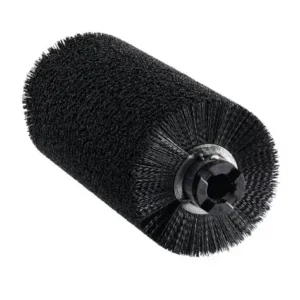
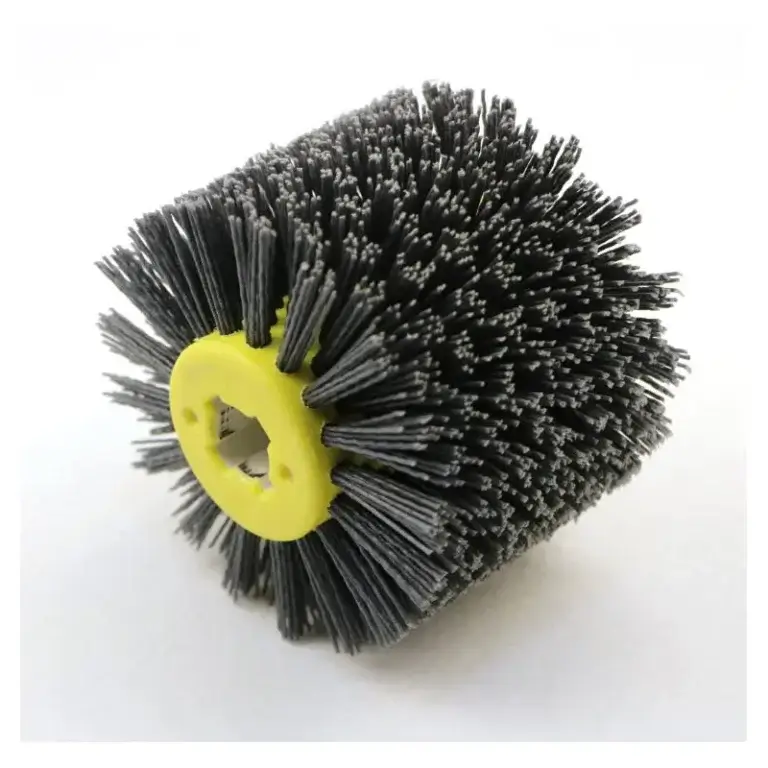
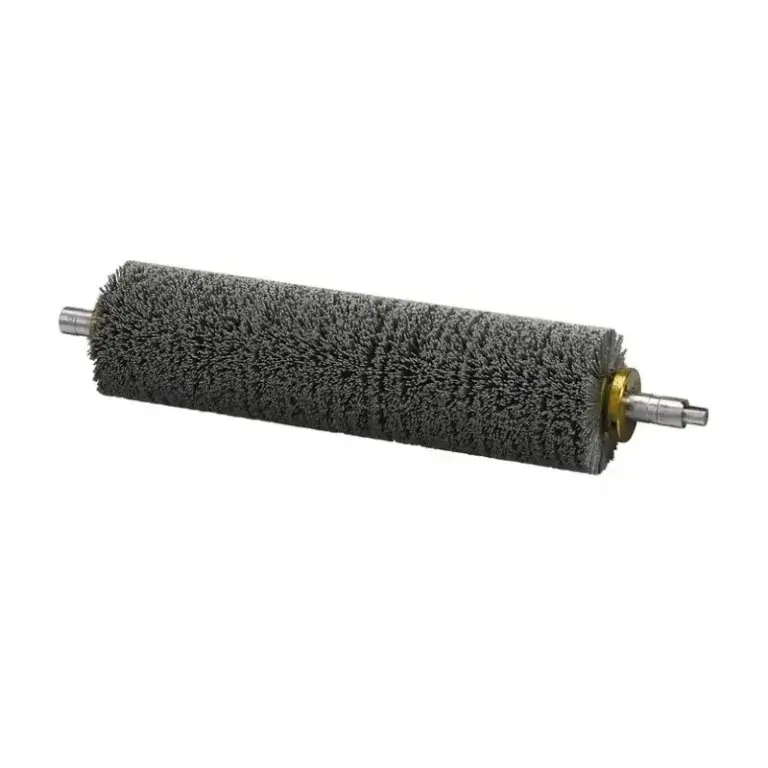
Industrial nylon roller brushes remove glass dust after cutting and edging by rotating thousands of independently flexible filaments against the glass surface at controlled contact pressure and surface speed. Each filament tip flicks adhered particles loose through mechanical scrubbing action while the brush rotation generates airflow that directs loosened dust toward extraction hoods or wash-down drainage. Nylon filaments do not scratch glass, absorb minimal water in wet processing environments, and recover their shape after millions of flex cycles, making them the default cleaning element in automated glass washing and dedusting machines.
The working principle sounds straightforward, but the engineering behind effective dust removal goes deeper than mounting a spinning brush above a conveyor. Filament material selection, brush diameter, rotational speed, contact depth, and bristle density all interact to determine whether a glass sheet emerges clean or carries a thin film of residue into the next processing stage. Understanding these parameters helps production engineers specify the right brush configuration for their line speed and glass type.
The dust problem also varies by glass product. Flat architectural glass generates relatively uniform particulate distribution across wide surfaces. Automotive glass with curved profiles and printed edges traps dust in contours that linear brushes miss. Thin display glass demands gentler brushing to avoid flexing the substrate. Each scenario calls for different brush characteristics, though the core mechanism remains the same: nylon filaments sweeping glass clean.
Why Is Glass Dust So Difficult to Remove After Edging
Small Size and Strong Adhesive Forces
Glass dust particles are small, electrostatically charged, and mechanically adherent. They range from sub-micron fines to coarse 50-micron chips, with the majority falling between 1 and 10 microns. At this scale, adhesive forces, including van der Waals attraction and electrostatic bonding, exceed gravitational pull, meaning dust stays on the surface unless an external force actively dislodges it.
The physics of particle adhesion on glass has been studied extensively in semiconductor wafer cleaning research, and the same principles apply to architectural and automotive glass processing. A 5-micron silica particle experiences van der Waals forces roughly 100 to 1,000 times stronger than its own weight. Tilting a glass panel at 90 degrees removes nothing from this size fraction. The particles remain attached until something mechanically disturbs the bond.
Angular Particle Shapes Increase Adhesion
Glass edging introduces an additional complication. The grinding wheel does not produce clean, uniform spheres. Edge grinding fractures glass along conchoidal patterns, generating angular, sharp-edged particles. These irregular shapes increase the contact area between particle and substrate compared to a perfect sphere, further strengthening the adhesive bond. Angular particles also interlock with each other on the glass surface, forming multi-layer dust deposits that a single pass of low-pressure air or a soft wiper cannot break apart.
Electrostatic Charge Keeps Dust Attached
Electrostatic charge builds during grinding as well. Glass is an electrical insulator with surface resistivity in the 10^12 to 10^15 ohm per square range. Friction during grinding generates triboelectric charge on both the glass surface and the dust particles. Opposing charges cause particles to cling. Even after the glass leaves the edging station, residual charge keeps dust attached for minutes to hours depending on ambient humidity. In dry factory conditions below 30% relative humidity, electrostatic adhesion dominates, and manual wipe-downs become the only fallback.
Health and Regulatory Pressures
The health dimension adds regulatory pressure. Respirable crystalline silica, classified as a Group 1 carcinogen by the International Agency for Research on Cancer, forms a significant fraction of glass edging dust when quartz-containing raw materials are processed. Regulatory limits in many jurisdictions cap respirable silica exposure at 0.05 mg per cubic meter averaged over an 8-hour shift. Effective dust capture at the point of generation, including brush-based removal systems integrated with local exhaust ventilation, is the engineering control that most standards specify.
What Makes Nylon the Right Filament Material for Glass Dust Removal
Key Properties of Nylon for Glass Processing
Nylon filaments combine scratch-free glass contact, high elastic recovery, low water absorption in PA612 grades, and chemical resistance to cleaning agents. These properties let a nylon roller brush maintain consistent contact pressure across its entire working width through millions of rotation cycles in both wet and dry glass processing environments.
PA66 vs. PA612: Understanding the Difference
Nylon is not one material but a family of polyamides with distinct properties tailored to different operating conditions. The two grades most commonly specified for glass industry brush rollers are PA66 and PA612. Understanding the difference matters because choosing the wrong grade for a wet glass washing line leads to premature filament softening, dimensional swelling, and lost cleaning performance.
PA66 offers high stiffness and excellent abrasion resistance at a moderate price point. Its tensile strength sits around 80 MPa dry, with flexural modulus near 2.8 GPa. These mechanical properties translate to bristles that hold their shape under sustained contact pressure and resist wear from continuous rubbing against glass edges. PA66 absorbs approximately 2.5% moisture at saturation in 50% relative humidity, which is acceptable for dry dedusting stations but becomes a problem in wet washing tunnels where filaments spend hours submerged or continuously wetted.
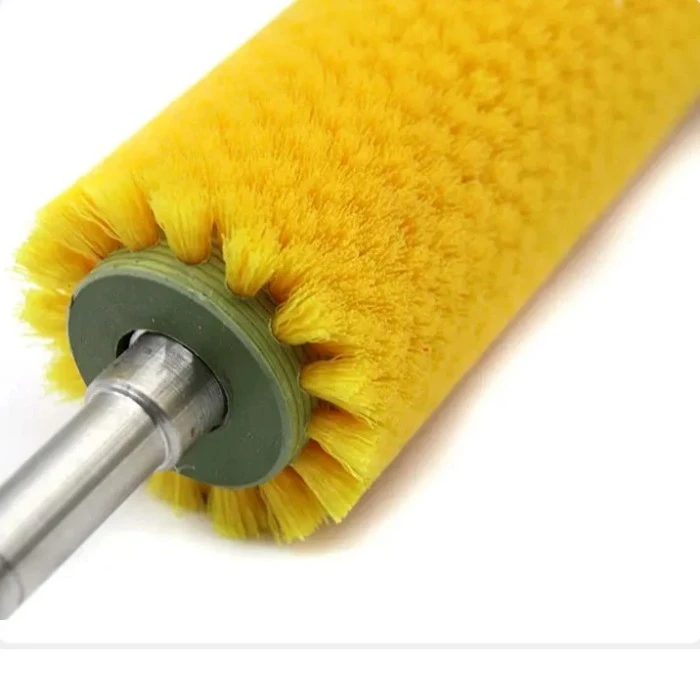
PA612 absorbs only 0.6% water at saturation. This low moisture uptake means a nylon cylinder brush built with PA612 filaments maintains its stiffness and diameter within tight tolerances even after months of continuous wet operation. The dimensional stability of PA612 prevents the softening that causes wet PA66 brushes to flatten against the glass surface and lose their flicking action. For glass washing machines where brush rollers sit partially submerged in water tanks or receive constant spray, PA612 is the standard recommendation.
Chemical Resistance of Nylon Grades
Both nylon grades resist the mildly alkaline detergents and rinse aids used in glass washing lines. Neither degrades significantly in pH ranges from 4 to 10, covering the full spectrum of industrial glass cleaning chemistry. This chemical inertness means a single brush set lasts through daily wash-down cycles without filament embrittlement or surface pitting.
Filament Diameter: Balancing Density and Scrubbing Force
Beyond material chemistry, nylon filament diameters for glass dust removal typically range from 0.08 mm to 0.30 mm. Finer filaments in the 0.08 to 0.15 mm range produce denser bristle packing and more contact points per square centimeter, which improves fine dust pickup but reduces the scrubbing force per filament tip. Thicker filaments above 0.20 mm deliver more mechanical energy to dislodge stubborn edge-grinding debris but leave larger gaps between bristles where the smallest particles can pass through. Many glass lines settle on 0.15 to 0.20 mm as a compromise that catches both fine dust and larger chips.
PA66 vs. PA612: Key Properties Comparison
The following table compares the key properties of PA66 and PA612 in the context of glass processing:
How Do Nylon Roller Brushes Mechanically Dislodge Glass Dust
Three Distinct Actions in the Contact Zone
A nylon roller brush dislodges glass dust through a combination of tip impact, filament flicking, and surface scrubbing. Each bristle strikes the glass at an angle determined by brush rotation and contact depth, momentarily deforming against the surface before snapping back to its original shape. This snap-back motion flicks adhered particles into the surrounding airflow or water curtain, where extraction systems capture them.
The brush mechanics can be broken into three distinct actions happening simultaneously across the contact zone.
Tip Impact: Overcoming Adhesive Forces
First, filament tips impact the glass surface at the leading edge of the contact patch. The impact energy depends on filament stiffness, tip speed, and the angle of approach. For a 250 mm diameter brush running at 350 RPM, tip speed is approximately 4.6 meters per second. At this velocity, each filament tip delivers enough mechanical impulse to overcome the van der Waals bond holding a sub-10-micron particle to the glass.
Filament Flicking: The Snap-Back Motion
Second, the filament bends as the brush core continues rotating and the contact point moves deeper into the bristle pack. This stored elastic energy builds until the filament exits the trailing edge of the contact zone. At that moment, the bent filament releases its stored energy as a rapid straightening motion. The tip accelerates back toward its neutral position at speeds exceeding the brush surface speed, creating the flicking action that propels loosened particles away from the glass.
Surface Scrubbing: Redundant Contact Across the Full Width
Third, the dense bristle pack produces a scrubbing effect across the entire contact width. With bristle densities of 15 to 30 filaments per square centimeter, each square millimeter of glass surface receives multiple filament passes per rotation. A contact zone 20 mm wide under a 250 mm diameter brush running at 350 RPM delivers roughly 40 to 80 filament tips across every point on the glass surface per second. This redundancy ensures no particle escapes purely by sitting in a gap between bristles.
Contact Depth: Balancing Scrubbing Force and Filament Life
The effectiveness of these three mechanisms depends heavily on contact depth. The brush should be set so filament tips just touch or lightly depress against the glass surface, typically 0.5 to 2.0 mm of interference. Deeper contact produces more scrubbing force but risks permanent filament deformation. A cylinder rotary brush with spiral-wound construction distributes this contact pressure evenly across its full face width, eliminating the pressure bands and gaps that cause streaky cleaning results.
Wet vs. Dry Dust Removal: How Do Nylon Brushes Perform in Each Environment
Overview: Effective in Both Environments
Nylon roller brushes operate effectively in both dry dedusting stations and wet glass washing tunnels. In dry applications, the brush rotation generates enough airflow to entrain loosened dust and direct it toward extraction hoods. In wet applications, water or cleaning solution floods the brush contact zone, flushing particles into drainage while the filaments scrub the glass surface. PA612-grade nylon handles both environments with minimal property drift.
Dry Dedusting Stations: Airflow and Extraction
Dry dedusting stations appear most often immediately after the edging line, before the glass enters the washing machine. The brush sits in a ventilated housing above the conveyor, spinning opposite to the glass travel direction to maximize relative surface speed at the contact point. A vacuum extraction port positioned near the trailing edge of the brush captures airborne dust before it can resettle on the glass. System design for dry stations must account for the dust explosion risk that arises when silica particle concentrations in air approach 30 to 40 grams per cubic meter. Proper airflow, grounded brush cores, and anti-static filament treatments mitigate this hazard.
Wet Glass Washing: Water-Flooded Chambers
Wet glass washing machines integrate brush rollers directly into water-flooded chambers. The glass sheet passes between upper and lower brush rollers while spray nozzles flood the contact zone with water or detergent solution. The brush filaments scrub the wetted surface, loosening dust that immediately suspends in the water film and drains away. Wet systems eliminate the airborne dust problem and add the benefit of removing cutting oil residues and fingerprint marks alongside particulate contamination.
Brush Construction Differences: Dry vs. Wet
The brush construction for wet service differs from dry. Stainless steel cores replace plain steel to resist corrosion. Filament density runs higher, typically 25 to 35 filaments per square centimeter, because water reduces the effective friction between bristle tips and glass. The added density compensates for the lubricating effect of water. Tufted cylinder brush designs anchor filaments in pre-drilled holes with metal staples, providing the filament retention strength needed when water pressure adds drag force to the already significant centrifugal loading at operating RPM.
Key Configuration Differences: Dry vs. Wet
The table below outlines the key configuration differences between dry and wet glass dust removal setups:
What Brush Parameters Control Dust Removal Performance
The Five Primary Parameters That Define Cleaning Performance
Brush outer diameter, filament diameter, bristle density, rotational speed, and contact depth are the five primary parameters that determine how effectively a nylon roller brush removes glass dust. Adjusting any one of these changes the cleaning energy delivered to the glass surface, and the right combination depends on line speed, glass thickness, and dust loading.
Brush Diameter: Setting the Tip Speed Range
Brush diameter sets the tip speed for a given RPM. A larger brush produces higher tip speed at the same rotational speed, delivering more impact energy per filament strike. For glass lines running at 3 to 8 meters per minute, brush diameters between 150 mm and 300 mm cover the required tip speed range of 3 to 6 meters per second without exceeding practical RPM limits. Going above 8 meters per second risks filament overheating and accelerated wear, while dropping below 2 meters per second reduces the flicking action that separates particles from the surface.
Filament Diameter: Balancing Stiffness and Density
Filament diameter controls the stiffness of individual bristles and the density of the bristle pack. A 0.10 mm filament produces roughly 100 filaments per square centimeter at a typical packing density, each delivering light contact force suited to thin display glass. A 0.25 mm filament at the same packing density yields about 25 filaments per square centimeter but each one strikes with roughly 15 times the bending stiffness of the finer filament. Thicker filaments clean more aggressively but leave larger gaps in the bristle pattern.
Rotational Speed and Tip Speed Ratio
Rotational speed interacts with brush diameter to set tip speed. The target tip speed should be 1.5 to 2.5 times the glass line speed to create the relative motion that generates effective scrubbing. For a line running at 6 meters per minute with a 250 mm brush, the RPM range works out to roughly 230 to 380 RPM. Higher RPM within this range improves cleaning but reduces filament life. The upper practical limit is set by centrifugal force: at the point where centrifugal force exceeds filament bending stiffness, bristles splay outward before contacting the glass, shrinking the effective contact zone.
Uneven Surface Contact: A Common Cause of Cleaning Inconsistency
Uneven surface contact is a common source of cleaning inconsistency. When brush rollers develop uneven bristle wear or when mounting brackets shift out of alignment, some sections of the glass get aggressive scrubbing while adjacent areas receive almost no contact. This pattern appears as longitudinal streaks on the glass surface and is often misdiagnosed as a water quality or detergent problem. The underlying cause is a mechanical contact issue that requires brush inspection and realignment. A detailed troubleshooting guide for fixing uneven brush contact covers filament selection, RPM adjustment, and alignment procedures that restore uniform contact across the full working width.
The Financial Impact of Getting Brush Parameters Wrong
Getting brush parameters wrong has financial consequences. A brush set too aggressively against the glass wears out in 800 hours instead of 3,000. A brush spinning too slowly leaves dust on the glass that downstream coating processes reject, producing scrap that costs far more than the brush itself. Production engineers who understand these five parameters can adjust their brush setups to maximize cleaning quality while extending brush service intervals.
How Are Nylon Roller Brushes Integrated into Automated Glass Processing Lines
The Glass Processing Sequence: Where Brushes Fit In
Nylon roller brushes mount into glass processing lines as modular components within dedicated cleaning stations. In a typical flat glass line, the sequence runs: cutting table, edging machine, dry dedusting brush station, wet washing machine with integrated brush rollers, air knife drying section, and inspection. The brushes operate continuously, synchronized with line speed through variable-frequency drives.
Dry Dedusting: The First Line of Defense
The dedusting station that sits between the edger and the washer does the heaviest work. Glass sheets emerge from edge grinding with a visible coating of white dust concentrated along all four edges and spread across both faces. The dry brush station tackles this dust load before it can contaminate the washer water, which would otherwise turn into an abrasive slurry that etches the glass surface during washing.
Station Layout: Upper and Lower Brushes with Dust Extraction
The station layout places one brush roller above the conveyor and one below, both spinning opposite to glass travel. The upper brush cleans the top face. The lower brush, mounted between conveyor rollers, cleans the underside. Both brushes sit inside a sheet metal enclosure connected to a dust extraction system pulling 1,500 to 3,000 cubic meters per hour of airflow depending on line width. The extraction inlet positions within 100 mm of the brush contact zone to capture dust at the point of generation.
Wet Washing: Sequential Brushes for Progressive Cleaning
Downstream, the wet washing machine contains three to five pairs of brush rollers arranged sequentially. The first pair runs coarser filaments at higher contact pressure to scrub off residual edge grinding dust. The middle pairs use medium-density filaments for general surface cleaning. The final pair, often fitted with the softest filaments in the 0.10 to 0.12 mm range, performs a final polish pass that leaves no visible streaks or water marks before the glass enters the air knife zone.
Water Management and Maintenance Schedules
Water management in the washing section directly affects brush performance. Recirculated wash water carrying suspended glass particles acts as a lapping compound when trapped between brush filaments and glass. Progressive filtration down to 10 to 20 microns keeps the recirculated water clean enough that the brushes remove particles rather than grinding them into the surface. Brush maintenance schedules typically call for filament inspection at 500 operating-hour intervals and full brush replacement at 2,500 to 4,000 hours depending on filament grade and dust loading.
Line Speed Synchronization: Maintaining Consistent Performance
Line speed synchronization prevents the brush from dragging against stationary glass during line stops. Variable-frequency drives linked to the main conveyor tachometer ramp brush RPM up and down in proportion to line speed. This linkage maintains the correct tip-speed-to-line-speed ratio regardless of production rate changes, avoiding both under-cleaning at high speed and over-brushing at low speed.
Summary
Removing glass dust after cutting and edging is a mechanical cleaning problem that nylon roller brushes solve through controlled filament impact, elastic flicking, and dense surface scrubbing. The physics of particle adhesion demand more than airflow or water alone. A 5-micron silica particle stuck to glass by van der Waals forces needs mechanical energy to break free, and thousands of independently flexible nylon bristles deliver that energy across the full sheet surface without scratching, streaking, or degrading the polished edge.
Material selection separates good results from poor ones. PA612 nylon with its 0.6% water absorption rate maintains filament stiffness through months of wet operation where PA66 would soften and lose cleaning effectiveness. Filament diameter, brush density, contact depth, and rotational speed work together as a system. Changing one parameter shifts the balance that determines whether the glass comes out clean. Production engineers who treat brush setup as an adjustable process rather than a fixed installation get more consistent quality and longer brush life from the same equipment.
The integration picture matters as much as the brush itself. A correctly specified nylon roller brush mounted in a poorly ventilated housing recirculates dust instead of removing it. A brush running at the wrong tip-speed ratio drags particles across the glass rather than flicking them off. Getting the complete system right, from brush specification through extraction design to maintenance scheduling, turns a basic cleaning component into a reliability tool that keeps glass quality high and downstream reject rates low.
FAQ
What is the difference between a wound and tufted nylon cylinder brush for glass cleaning?
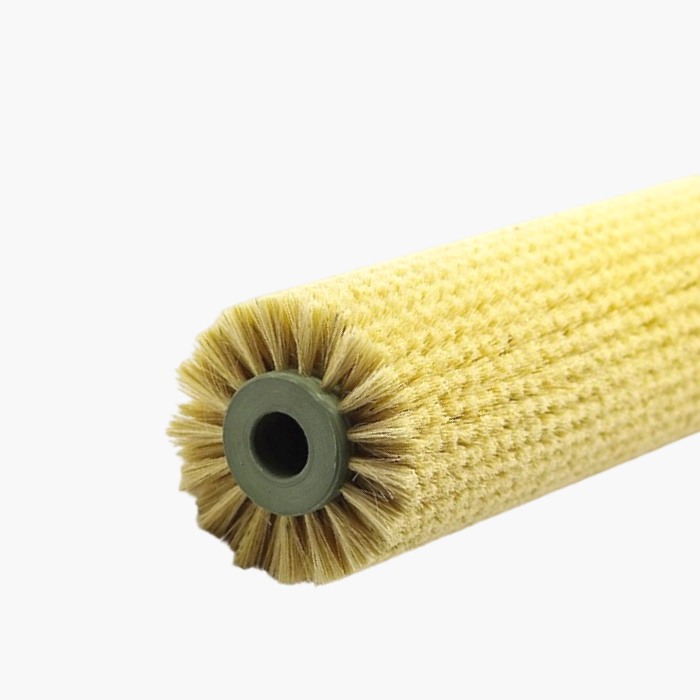
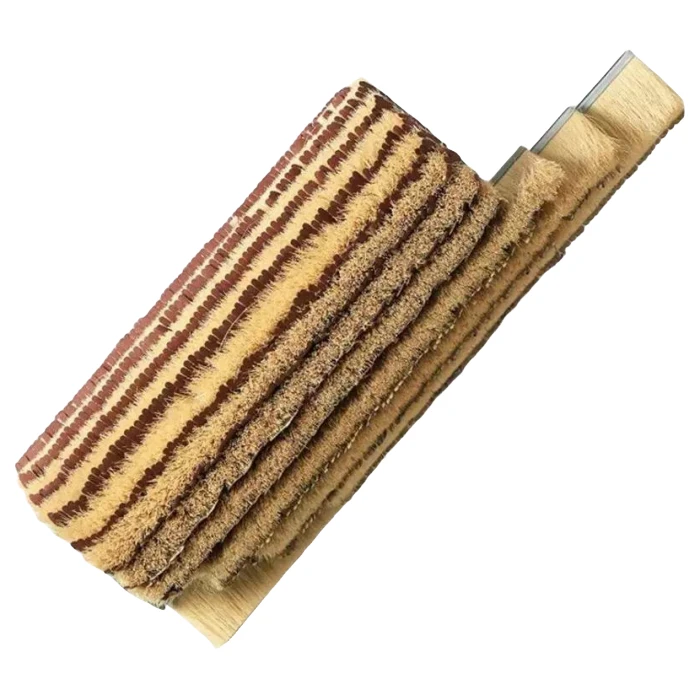
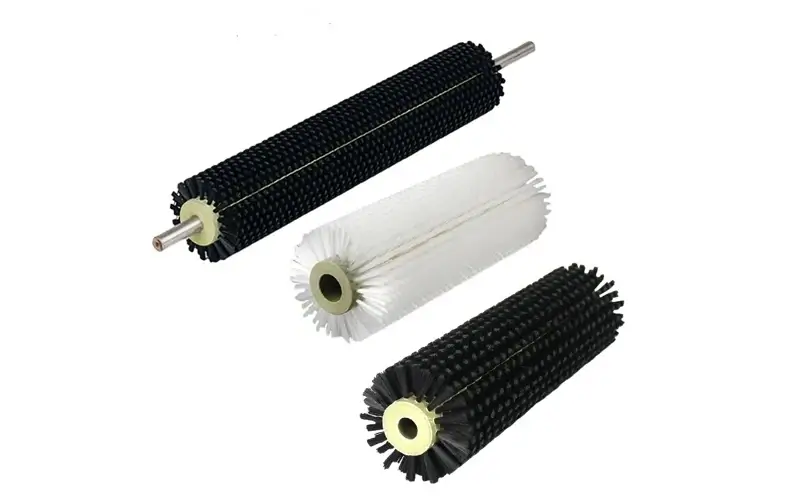
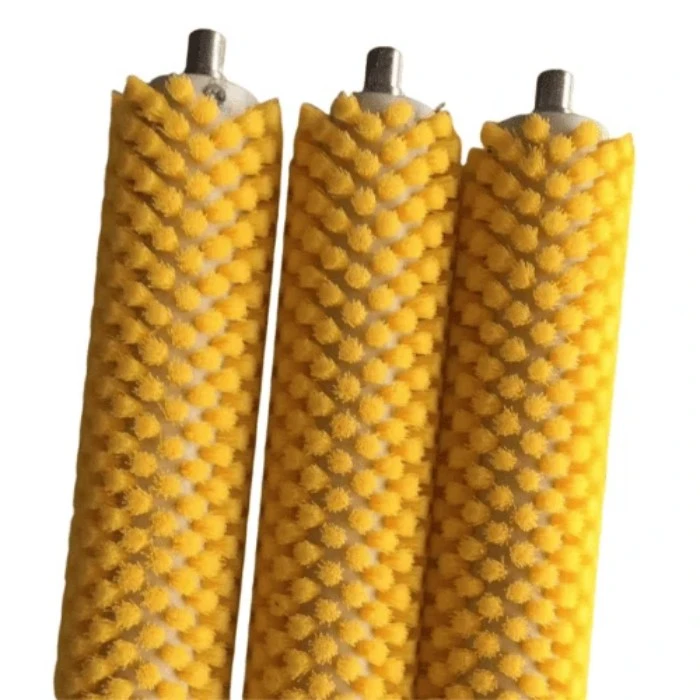
A wound brush has filaments crimped into a metal channel strip that is helically wound around the core, creating a continuous spiral bristle surface with no gaps. This construction delivers uniform contact pressure across the full face width and is preferred for wide glass sheets where streaking is a concern. A tufted brush has bristle bundles anchored into individually drilled holes, producing a patterned surface with small gaps between tufts. Tufted construction offers higher filament density per tuft and is easier to re-tuft during refurbishment. Wound brushes dominate in glass washing machines. Tufted brushes appear more often in dry dedusting applications where the gap pattern helps channel dust toward extraction ports.
Can nylon roller brushes handle tempered glass with surface coatings?
Yes, but filament selection becomes more critical. Low-E coatings and anti-reflective treatments applied to glass surfaces are softer than bare glass and more susceptible to micro-scratching. Brushes for coated glass use finer filaments in the 0.08 to 0.12 mm range with rounded tip profiles rather than cut-flat tips. Contact pressure is reduced to 0.5 to 1.0 mm of interference. Some lines processing coated glass also reduce brush RPM by 15 to 20% relative to uncoated glass settings to extend coating life through the washing process.

How does brush maintenance affect glass dust removal quality over time?
Filament wear follows a predictable pattern. During the first 200 to 500 operating hours, filament tips wear in, and the brush settles into its working geometry. Cleaning performance is stable from roughly 500 to 2,000 hours, depending on filament material and dust loading. After 2,000 hours, PA66 filaments in wet environments begin to show measurable softening and diameter reduction. The first sign of end-of-life is longitudinal streaks appearing on washed glass that cannot be corrected by increasing contact pressure. At this stage, the brush should be replaced. Running a worn brush beyond this point produces quality defects that cost more in rework and scrap than the replacement brush.