Nylon Brush Rollers for Irregular Surfaces: Achieving Uniform Cleaning Through Bristle Mechanics
The Real-World Challenge: Industrial Surfaces Are Never Truly Flat
Industrial cleaning lines process surfaces that are far from flat. Conveyor belts develop wear patterns. Root vegetables come in irregular shapes with deep crevices. Glass panels carry edge profiles. Solar modules accumulate debris in textured patterns. A cleaning tool designed for a perfectly flat surface leaves these uneven areas half-cleaned, forcing operators to choose between running slower or accepting inconsistent results. The gap between expected cleaning performance and real-world outcomes often traces back to one component: the brush roller and whether it matches the surface it has to scrub.
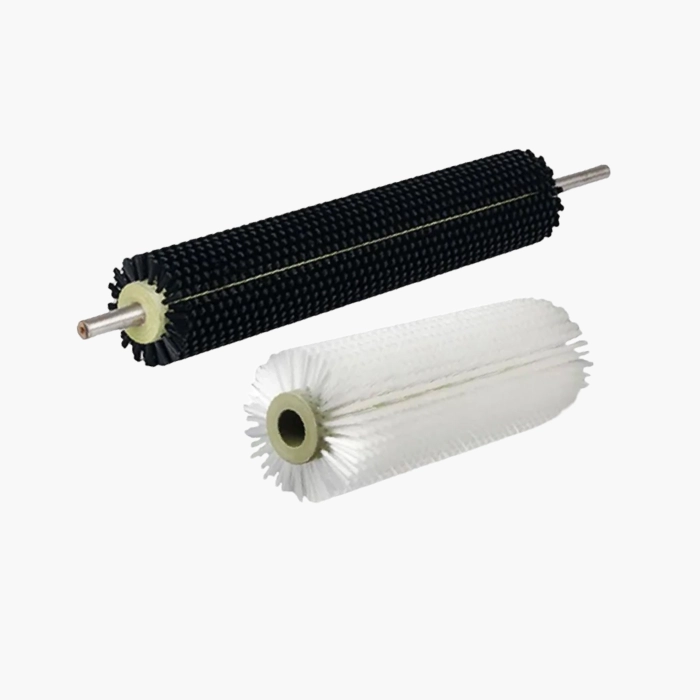
How Nylon Brush Rollers Achieve Uniform Cleaning Through Distributed Compliance
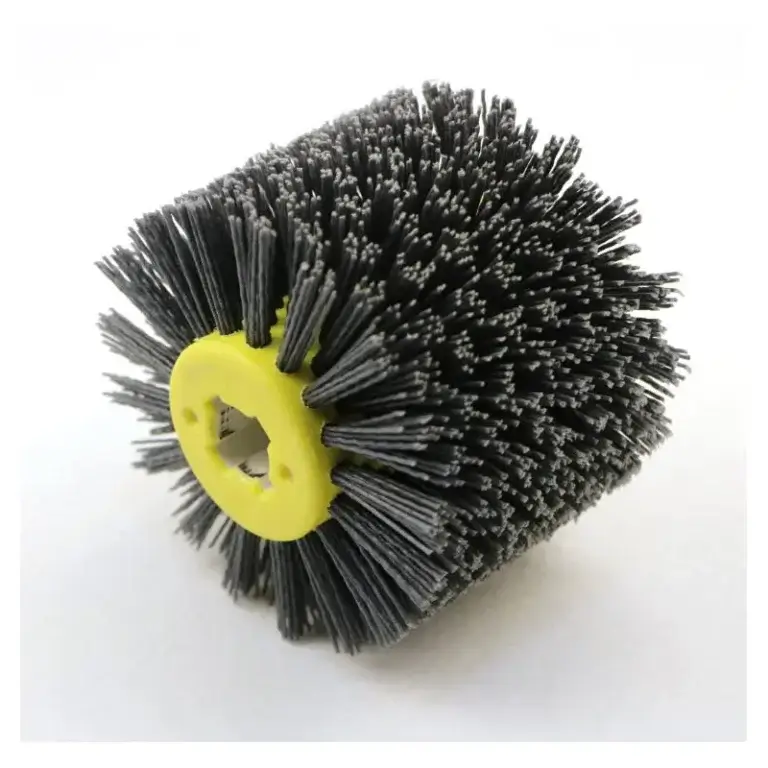
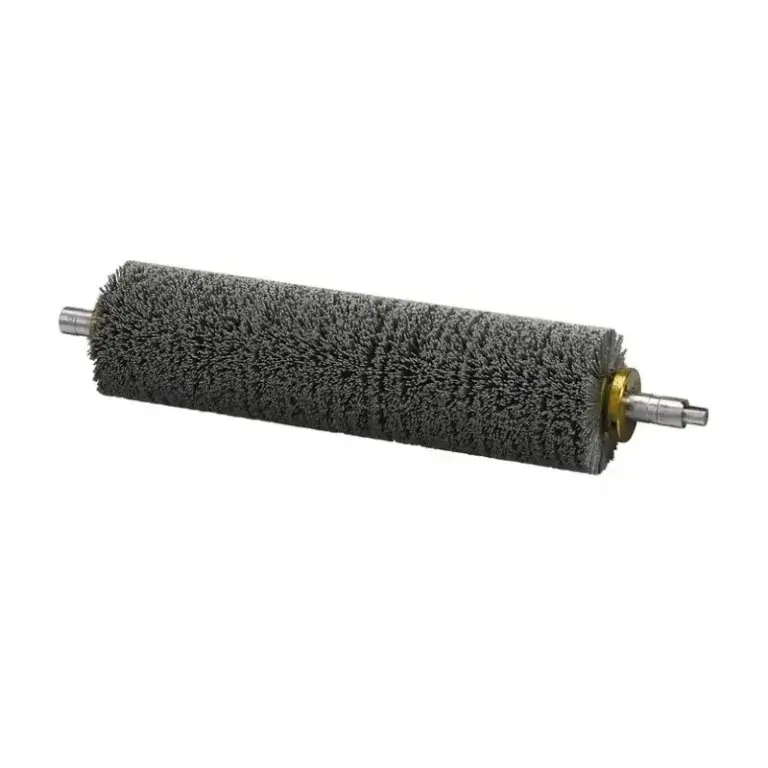
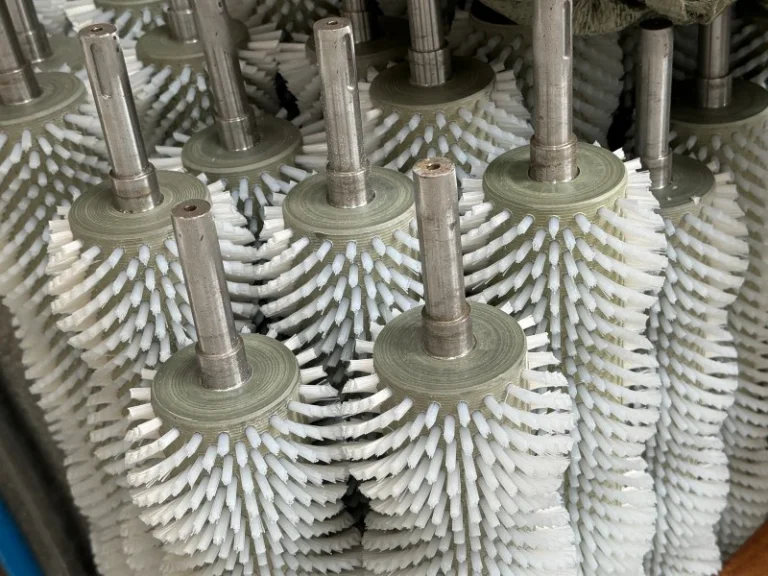
A nylon brush roller solves uneven surface cleaning because its filament bundle behaves like thousands of independent spring-loaded contact points. Each bristle compresses, bends, and rebounds independently based on the local surface contour it meets. High spots push filaments deeper, generating more cleaning force. Low spots and crevices are reached by longer bristles that flex into recesses that rigid tools cannot enter. This distributed compliance means the nylon brush roller maintains consistent contact pressure across the entire surface profile, from peak to valley, eliminating the patchy cleaning that fixed-geometry scrapers and flat pads produce.
Bristle Mechanics: Diameter, Trim Length, and Packing Density in Practice
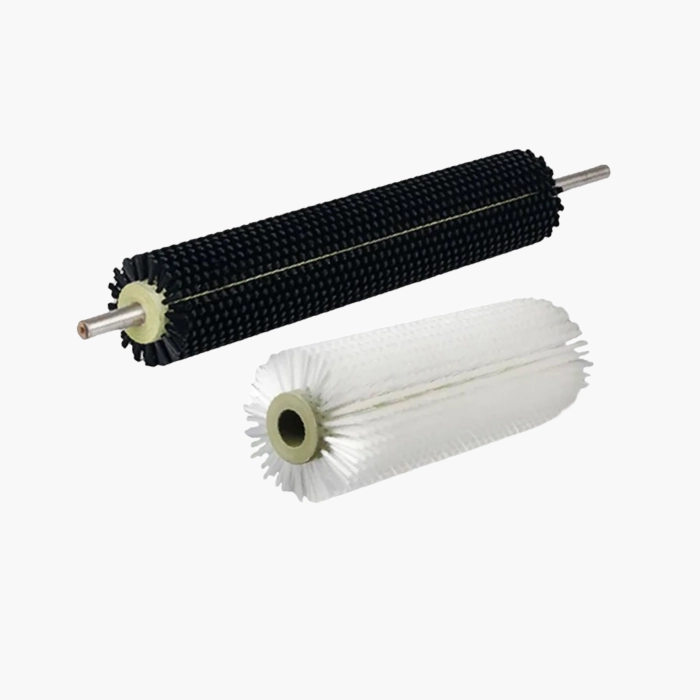
The difference between a brush that skims the high points and one that scrubs every millimeter of an irregular surface comes down to bristle mechanics. Nylon filaments with the right diameter, trim length, and packing density create a brushing zone that conforms to the workpiece in real time. Understanding how these parameters work together lets production engineers specify a nylon brush roller that matches the specific unevenness of their application, whether that means cleaning potato skins off a conveyor belt or removing adhesive residue from a textured metal panel.
What Causes Uneven Surface Cleaning in Industrial Lines
The Problem: Why Non-Flat Surfaces Cause Uneven Cleaning
Uneven cleaning occurs when the cleaning tool cannot maintain consistent contact force across all points of a non-flat surface. The result is over-cleaned high spots and under-cleaned recesses, a pattern that grows worse as the surface profile becomes more irregular.
Every industrial surface has microscopic and macroscopic variations. A used conveyor belt shows raised edges, worn center grooves, and embedded debris pockets. A carrot has an irregular cylindrical shape with tapered ends, eyes, and fine root hairs. A solar panel has a textured glass surface with raised busbars and edge seals. Traditional cleaning methods treat these as flat surfaces because that is what the equipment was designed for.
Three Factors That Drive Uneven Cleaning: Pressure, Density, and Stiffness
Three factors drive uneven cleaning in practice. Contact pressure variation means rigid cleaning tools apply force only to the highest surface points, and any area recessed by even 0.5 mm receives substantially less cleaning energy. Bristle density mismatch occurs when low-density brushes cannot bridge surface gaps: the filaments fall into depressions without reaching the bottom, leaving debris undisturbed. Filament material stiffness also plays a role. Stiff bristles from metal or hard plastics deform too little to follow surface contours, so they ride over the peaks and skip the valleys.
The Compounding Effect and the Practical Solution
The compounding effect of these factors means that even a small surface irregularity creates a disproportionately large cleaning gap. A brush that addresses all three simultaneously is the practical solution.
How Does a Nylon Brush Roller Adapt to Irregular Surfaces
A nylon brush roller adapts through filament compliance. Each bristle acts as an independent spring that deflects according to the local surface height. The combined effect of thousands of independent springs creates a conformable cleaning zone that matches complex surface geometries without active adjustment.
The adaptation mechanism is purely mechanical. When a nylon bristle contacts a surface peak, it compresses further into its mounting channel, storing elastic energy. When it passes over a valley, it springs outward to maintain contact. This passive compliance happens in milliseconds as the brush rotates, creating a continuous sweeping action that follows the surface profile.
Key factors that control conformability:
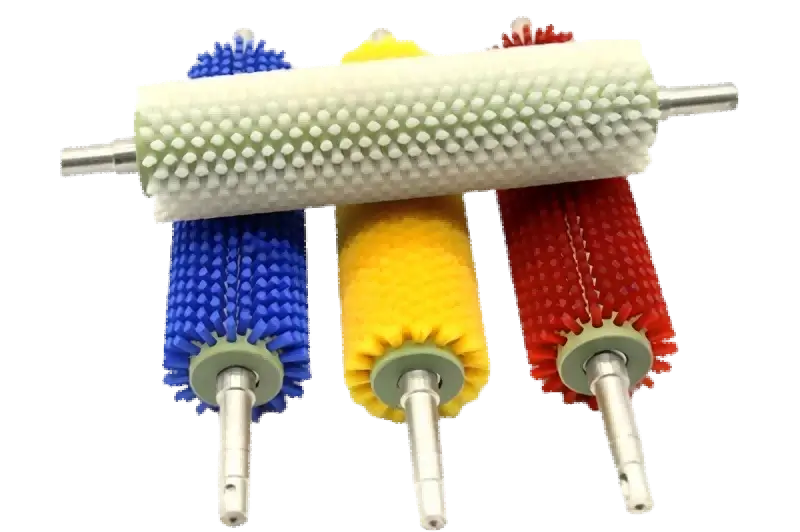
Industrial brush manufacturers measure a filament’s ability to maintain this adaptive performance through recovery angle testing. High-quality PA612 filaments demonstrate recovery angles above 85 degrees after 10,000 bend cycles at 40 degrees Celsius. A filament with poor recovery develops a permanent set, where bristles remain bent in the direction of rotation, leading directly back to uneven cleaning. When specifying a brush for continuous production lines, include recovery angle data in the technical evaluation alongside standard dimensional specifications.
Matching Filament Properties to Surface Irregularity Profiles
The surface irregularity type dictates the filament specification. Rough, macro-scale unevenness requires longer, stiffer bristles to generate cleaning force at depth. Micro-scale texture demands finer, denser filaments that can penetrate small crevices without damaging the substrate.
Surface irregularity falls into three broad categories, each requiring a different nylon brush roller configuration.
Macro-Contour Surfaces
Surfaces with variation measured in centimeters, such as conveyor belt cleats, corrugated panels, or whole root vegetables. These surfaces need bristles long enough to span the vertical difference between high and low points. A recommended filament trim of 40 mm to 80 mm with a diameter of 0.5 mm to 1.2 mm at a moderate density of 300 to 500 filaments per cm² provides the mechanical range needed. The core hardness must prevent bottoming out on peaks, which would transfer impact force back into the filament root and accelerate breakage.
Meso-Texture Surfaces
Surfaces with millimeter-scale features, such as embossed metal, textured plastics, and eggshell surfaces. These require a balance between conformability and scrubbing force. Filament trim in the 25 mm to 45 mm range with diameters of 0.2 mm to 0.5 mm at a medium-high density of 500 to 800 filaments per cm² lets the brush reach into shallow depressions without losing the stiffness needed to dislodge attached debris. Slightly softer filaments reduce impact on surface features.
Micro-Feature Surfaces
Surfaces with sub-millimeter texture, such as polished glass, thin-film coatings, and painted panels. The priority shifts to gentle contact with high coverage density. Trim lengths of 15 mm to 25 mm with fine diameters of 0.15 mm to 0.3 mm at a high density of 800 to 1200 filaments per cm² provide the necessary delicacy while keeping contact points close enough to avoid missed spots. Softer nylon grades like PA612 deliver the elastic recovery needed for sustained operation.
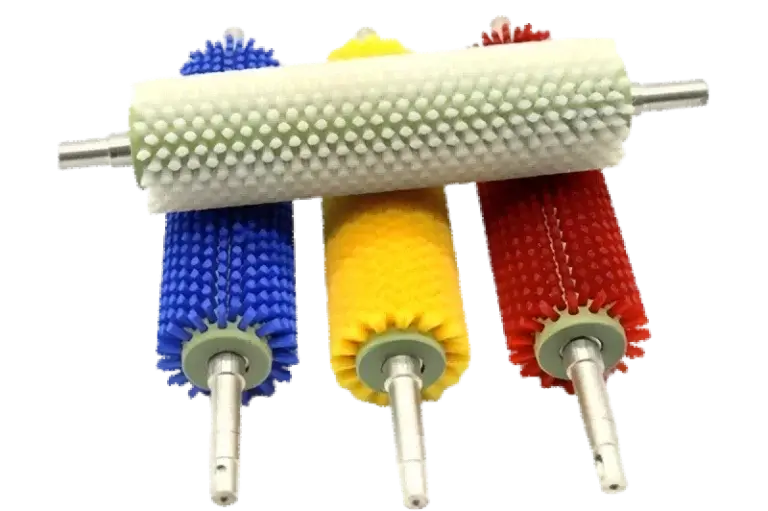
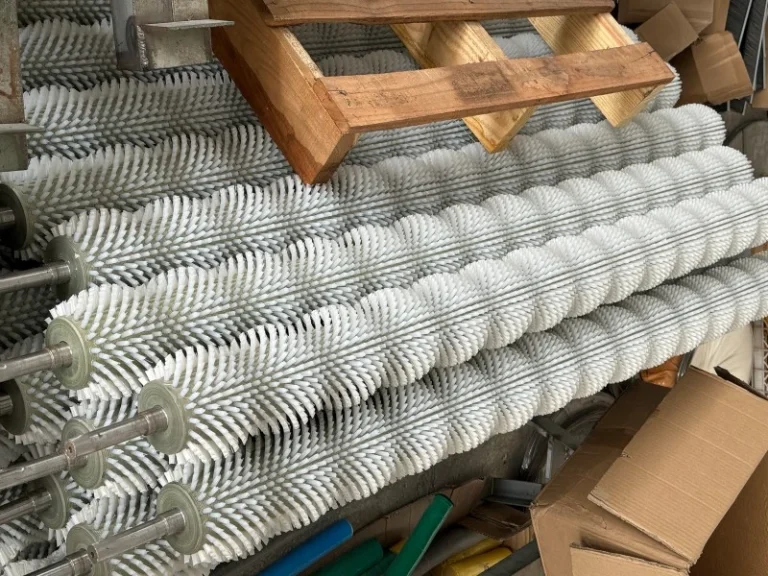
The same nylon cylinder brush platform can be configured across all three categories by adjusting these parameters. This is why specifying the right brush for the surface is more effective than trying to adjust RPM or pressure to compensate for a mismatch.
Nylon Brush Roller vs. Alternative Methods for Uneven Surfaces
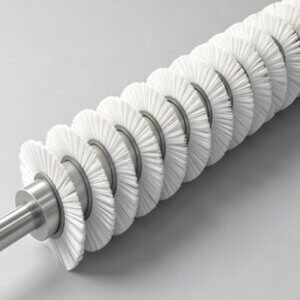
Nylon brush rollers outperform fixed-geometry alternatives on uneven surfaces because they combine independent bristle compliance with consistent wiping action across the entire surface profile. No single cleaning method matches this combination for both effectiveness and material safety.
Application environments matter as much as surface geometry. Wet processing lines require nylon grades with low water absorption, such as PA612, which maintains dimensional stability and bristle stiffness even after extended immersion. Dry abrasive applications benefit from PA66 filaments that resist wear from particulate friction.
Operators looking to extend roller brush lifespan should pay close attention to contact pressure. A brush pressed too hard against the surface bends filaments past their elastic limit, causing permanent deformation within hours. The correct setup has bristle tips just touching the workpiece at rest, with the brush rotating at a surface speed roughly double the workpiece or belt speed. This combination maximizes cleaning energy at the contact zone while keeping the filaments within their elastic recovery range.
The most common setup mistake is cranking up contact pressure until the brush visibly loads against the surface. Maintenance crews see residual debris and assume more pressure equals better cleaning. In practice, excessive pressure bends filaments past their recovery point, causing permanent deformation. Once bristles take a set, they lose the flicking action that removes material. The brush drags across the surface instead of sweeping it, and wear accelerates sharply.
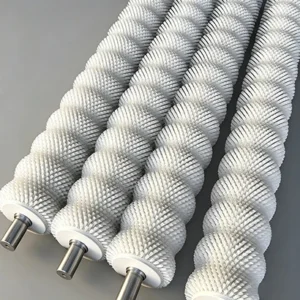
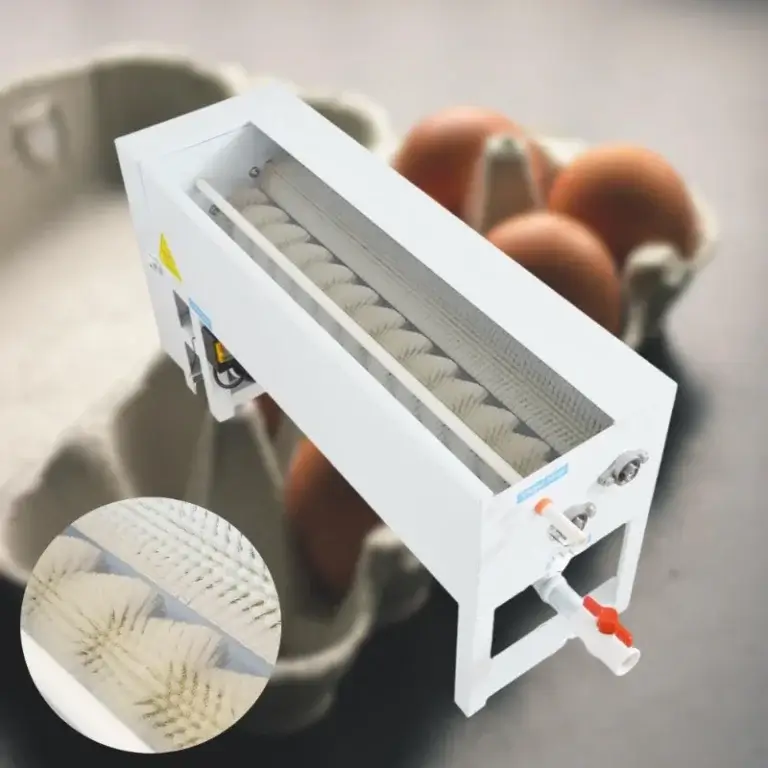
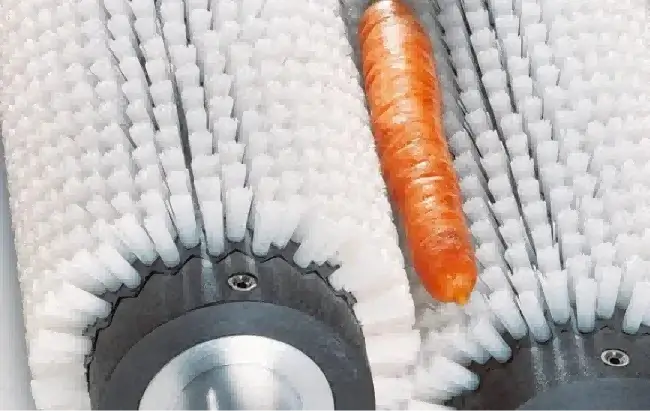
For delicate produce applications, bristle softness for delicate produce becomes the primary selection criterion. Soft filaments in the 50HA to 70HA Shore hardness range flex on contact rather than scraping, making them suitable for carrot washing, fruit cleaning, and egg processing lines where surface integrity is a quality metric. A carrot with intact epidermis stays fresher longer and commands a higher price than one with micro-abrasions that accelerate moisture loss and browning.
Summary
Uneven surface cleaning is a mechanical problem solved by brush roller compliance, not by operator adjustments or higher RPM. Nylon brush rollers address the root cause by using thousands of independent filaments, each responding to the local surface height in real time. The key specification parameters- filament diameter, trim length, density, and nylon grade- must be matched to the surface irregularity type, whether the surface is a worn conveyor belt with centimeter-scale wear or a glass panel with microscopic texture. Nylon outperforms metal brushes, scrapers, and abrasive pads in both conformability and surface safety, while delivering longer wear life than soft alternatives. Proper contact pressure setup and application-specific filament selection turn a nylon brush roller from a simple cleaning component into a precision tool for uniform surface treatment across irregular geometries.
FAQ
How often should a nylon brush roller be replaced in a continuous production line?
Replacement timing depends on application severity, filament material, and operating hours. In wet food processing environments with PA612 filaments, brush rollers typically run 2,000 to 4,000 operating hours before filament shortening or permanent set reduces cleaning effectiveness below acceptable levels. Dry abrasive applications with PA66 filaments may require replacement at 1,500 to 3,000 hours. The practical indicator is cleaning quality: when operators notice that previously clean areas begin showing residue streaks or that contact pressure adjustments no longer restore performance, the brush is past its service life and should be replaced before it causes product quality issues.
Can a single nylon brush roller handle both wet and dry cleaning applications?
A PA612 nylon brush roller designed for wet environments can physically rotate in a dry application, but the performance trade-offs are real. Filaments optimized for wet operation often have lower hardness and higher lubricity, which reduces scrubbing effectiveness on dry, adherent residues. PA66 filaments work better in dry applications but absorb more moisture in wet environments, leading to swelling, dimensional changes, and faster degradation. A production line that cycles between wet and dry modes should plan for separate brush roller sets configured for each condition, or specify a compromise filament that splits the difference on hardness and water absorption at the expense of peak performance in either mode.
What RPM range works best for a nylon brush roller cleaning uneven surfaces?
The effective RPM depends on brush outer diameter and belt or workpiece speed. For a brush with a 250 mm outer diameter cleaning a conveyor belt moving at 1.5 to 2.5 meters per second, the working range is typically 200 to 500 RPM. This produces a surface speed at the bristle tips roughly 1.5 to 2.5 times the belt speed, giving each bristle enough relative velocity to sweep debris off the surface without whipping or generating excessive heat. Smaller brushes on fixed workpieces can run higher, 400 to 800 RPM for a 150 mm diameter brush, because heat dissipation is better and bristle flex cycles are shorter. The upper RPM limit is set by the point at which centrifugal force begins to splay filaments outward before they contact the surface, reducing the effective cleaning zone.