
Glass processing is a precision-driven industry where even microscopic surface imperfections can lead to product rejection, customer returns, and significant financial loss. From architectural glass panels and automotive windshields to solar panel covers and electronic display screens, the demand for flawless glass surfaces has never been higher. Yet one of the most persistent challenges in glass manufacturing and processing remains the cleaning stage, where traditional brushes with overly stiff or poorly designed bristles frequently cause micro-scratches, haze marks, and irreversible surface damage.
A soft bristle glass washing brush engineered with carefully selected nylon filaments provides effective contaminant removal without scratching or marring glass surfaces. The combination of soft-grade nylon materials, optimized bristle density, and precision cylindrical brush design allows these brushes to clean thoroughly while maintaining the structural integrity and optical clarity of the glass.
The question is no longer whether glass washing brushes are necessary. It is how to select the right brush configuration that balances cleaning power with surface protection. As glass products become thinner, more coated, and more sensitive to mechanical contact, the role of bristle material selection and brush geometry has become a critical engineering decision. In the following sections, this article examines how soft bristle cylinder brushes work, why nylon outperforms alternative materials, and what factors determine long-term performance in high-volume glass washing lines.
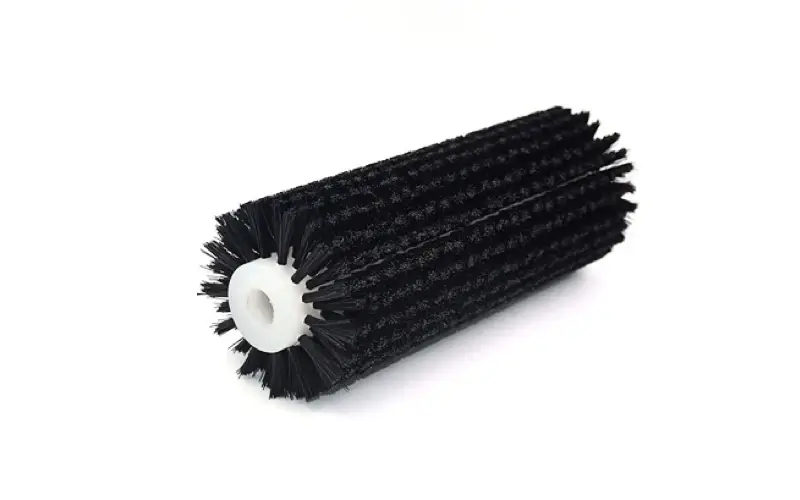
Why Soft Bristle Glass Washing Brushes Are Essential for Surface Protection
Why Hard Bristles Scratch and Soft Nylon Protects
Soft-bristle glass-washing brushes are essential because hard or abrasive bristles create micro-scratches on glass surfaces during high-speed rotation, while soft nylon bristles flex upon contact and clean through bristle-tip friction rather than rigid scraping, preserving surface quality.
The mechanism behind glass surface damage during washing is more nuanced than it appears. When a rotating cylindrical brush contacts a glass surface, each bristle exerts a localized pressure point. With stiff bristles made from materials like steel wire, brass, or even low-grade polypropylene, these pressure points exceed the glass surface hardness threshold and create permanent scratches. These scratches are often invisible to the naked eye during processing but become apparent after tempering, coating, or final inspection under specialized lighting.
How Soft Nylon Bristles Convert Scratching Force into Wiping Action
Soft bristle brushes solve this problem through material compliance. Nylon filaments, particularly PA6 and PA612 grades, have an inherent flexibility that allows individual bristles to bend on contact rather than dig into the surface. This bending action converts potential scratching force into a wiping motion where only the bristle tips make controlled contact with the glass. The result is effective removal of dust, glass powder, polishing residues, and water spots without compromising surface integrity.
The Business Case: Reducing Rejection Rates from 8% to Below 1%
The economic impact of choosing the right brush cannot be overstated. Glass processors report rejection rates as high as 5% to 8% when using inappropriate brushes on coated or low-emissivity glass. By switching to properly specified glass washing cylinder brushes, facilities have reduced surface defect rates to below 1%, directly improving yield and profitability. This makes bristle selection not just a maintenance decision but a business-critical one.
How Nylon Cylinder Brushes Prevent Scratches on Glass Surfaces
The Material Science Behind Nylon’s Scratch Prevention: Lubricity, Water Absorption, and Flexibility
Nylon cylinder brushes prevent scratches through a combination of material properties: the natural lubricity of nylon reduces friction, the filament diameter controls contact pressure, and the bristle density distributes cleaning force across thousands of individual contact points rather than concentrating it.
The material science behind nylon as a brush filament is well established in industrial cleaning applications. Nylon absorbs and retains water during wet washing operations, which keeps the bristles supple and further reduces the risk of surface marking. Unlike polypropylene, which can become brittle over time or when exposed to certain cleaning chemicals, nylon maintains its flexibility throughout its service life. This consistent mechanical behavior is essential for automated glass washing lines where brush performance must remain predictable across thousands of production cycles.
Filament Diameter and Contact Pressure: Why Thinner Bristles Are Safer for Sensitive Glass
Filament diameter plays a decisive role in scratch prevention. Industry practice has moved toward smaller-diameter filaments, typically in the range of 0.15 mm to 0.30 mm, for sensitive glass applications. Thinner filaments create more contact points per unit area, distributing the cleaning force more evenly and reducing the peak pressure at any single point. This is particularly important for coated glass, low-E glass, and thin display glass where surface sensitivity is highest.
Advanced Bristle Patterns: How Wave-Shaped and Spiral-Wound Designs Prevent Streaking
A high-quality nylon cylinder brush also benefits from advanced manufacturing techniques. Wave-shaped or spiral-wound bristle patterns create overlapping cleaning paths that prevent any single bristle track from repeatedly hitting the same glass area. This design feature extends beyond scratch prevention to ensure uniform cleaning coverage, eliminating the streaking that can occur with straight-bristle configurations.
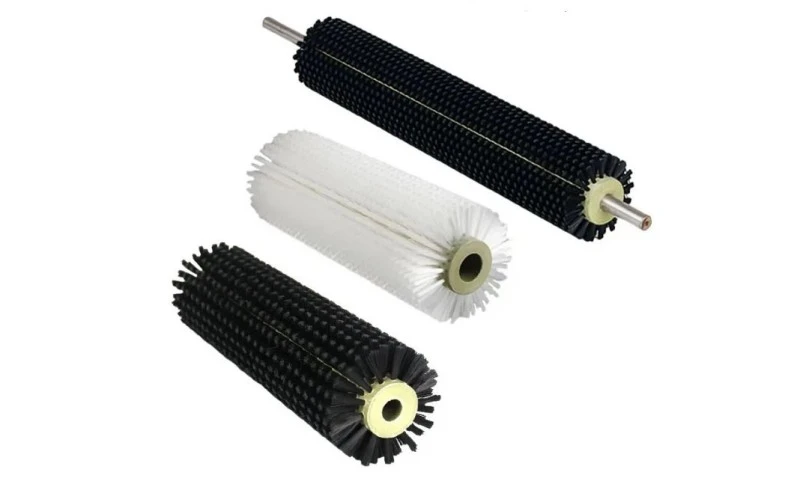
Key Factors to Consider When Choosing Glass Cleaning Brushes
When choosing glass cleaning brushes for industrial applications, the four most important factors are bristle material grade, filament diameter and density, core construction and balance, and compatibility with the specific glass type and washing machine parameters.
Bristle Material Grade
Not all nylon is the same. PA6 provides a good balance of flexibility, chemical resistance, and cost-effectiveness for standard glass washing applications. PA612 offers superior moisture absorption characteristics and maintains flexibility across a wider temperature range, making it suitable for high-speed lines or processes using heated wash water. For the most demanding applications involving aggressive cleaning agents, PA12 provides enhanced chemical resistance, though at a higher material cost.
Filament Density and Configuration
Higher bristle density generally means better cleaning efficiency, but there is a practical upper limit beyond which water and debris cannot flow freely between bristles. Optimal density allows for effective contaminant removal while maintaining self-cleaning properties that prevent residue buildup within the brush itself. The cylinder rotary brush configuration with spiral winding provides an ideal balance, offering high bristle coverage while creating natural channels for water and debris evacuation.
Core Construction
The brush core must maintain dimensional stability under continuous rotation at speeds that can reach 300 to 800 RPM in glass washing machines. Stainless steel shafts with precision-balanced construction prevent vibration that could cause uneven contact pressure. A well-balanced core also extends bearing life in the washing machine, reducing overall maintenance requirements across the production line.
Application-Specific Considerations
Different glass products demand different brush specifications. Thin display glass requires softer, finer bristles than thick architectural glass. Coated glass surfaces need brushes that clean effectively at lower contact pressures. Understanding the specific requirements of the glass type being processed is essential for selecting brushes that prevent damage while maintaining throughput.
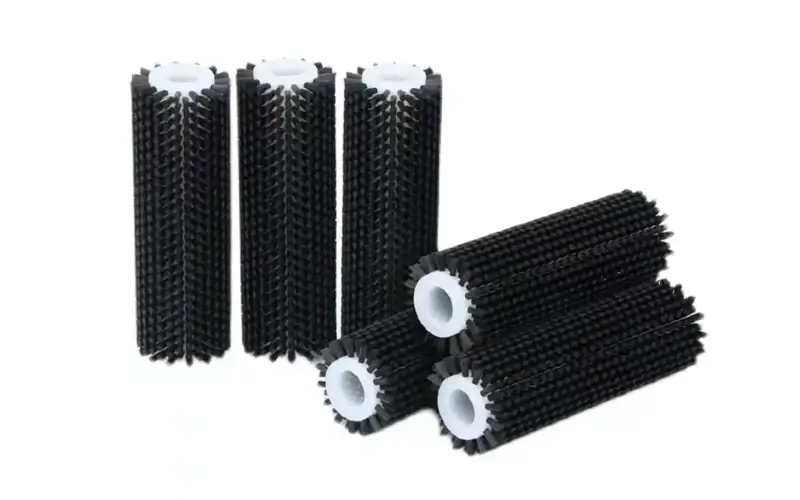
Comparing Soft Bristle Brushes with Other Glass Washing Methods
Soft-bristle nylon cylinder brushes outperform alternative cleaning methods such as abrasive brushes, spray-only systems, and manual cleaning by combining effective contaminant removal with repeatable, automated surface protection at production-line speeds.
Mechanical Brush Cleaning vs. Spray-Only Systems
Spray-only cleaning systems rely entirely on water pressure and chemical action to remove contaminants. While effective for loose dust and light debris, they struggle with adhered particles, manufacturing residues, and dried water spots. In practice, most high-quality glass washing lines combine spray systems with mechanical brushing, using the brushes to physically dislodge particles that sprays alone cannot remove.
Soft Nylon vs. Abrasive Brushes
Abrasive brushes containing silicon carbide or aluminum oxide filaments have legitimate applications in glass processing, particularly for edge seaming and surface texturing. However, using them in the washing stage is almost always a mistake. The following comparison illustrates the key differences:
Manual vs. Automated Brush Cleaning
Manual glass cleaning introduces variability that automated systems eliminate. Worker technique, fatigue, and inconsistent pressure application all contribute to unpredictable results. Cylindrical brush systems in automated washing machines deliver identical contact pressure, rotation speed, and cleaning coverage on every piece, ensuring consistent quality across the entire production batch.
Best Practices for Maintaining Glass Washing Cylinder Brushes
Regular inspection, proper water filtration, controlled chemical usage, and timely filament replacement are the four pillars of glass washing cylinder brush maintenance that maximize cleaning performance and extend brush service life.
Water Quality Management
The relationship between water quality and brush performance is often underestimated. Hard water leaves mineral deposits on bristles that increase stiffness over time, gradually transforming a soft brush into one that can scratch glass. Installing and maintaining proper water filtration and softening systems is as important to brush longevity as the brush itself. Filters should be checked and cleaned daily in high-volume operations.
Chemical Compatibility
Glass washing detergents and cleaning agents vary widely in pH and chemical composition. While nylon offers good general chemical resistance, prolonged exposure to highly alkaline or acidic solutions can degrade filament structure. Brush manufacturers can provide chemical compatibility data for specific cleaning agents. When introducing new cleaning chemicals into the washing line, testing on a small brush section before full deployment is recommended.
Rotation and Wear Monitoring
Even the best glass cleaning brushes wear over time. As bristles gradually shorten through normal use, the effective diameter of the brush decreases, potentially reducing contact pressure and cleaning effectiveness. Operators should measure brush diameter at regular intervals and establish replacement thresholds. Most facilities replace cylinder brushes when diameter reduction reaches 10% to 15% of the original specification.
Proper Storage for Spare Brushes
Spare cylinder brushes should be stored horizontally on supports that prevent core deflection, in a dry environment away from direct sunlight and ozone sources that can accelerate nylon degradation. Improper storage can compromise a brush before it is ever installed, leading to balance issues and reduced service life.
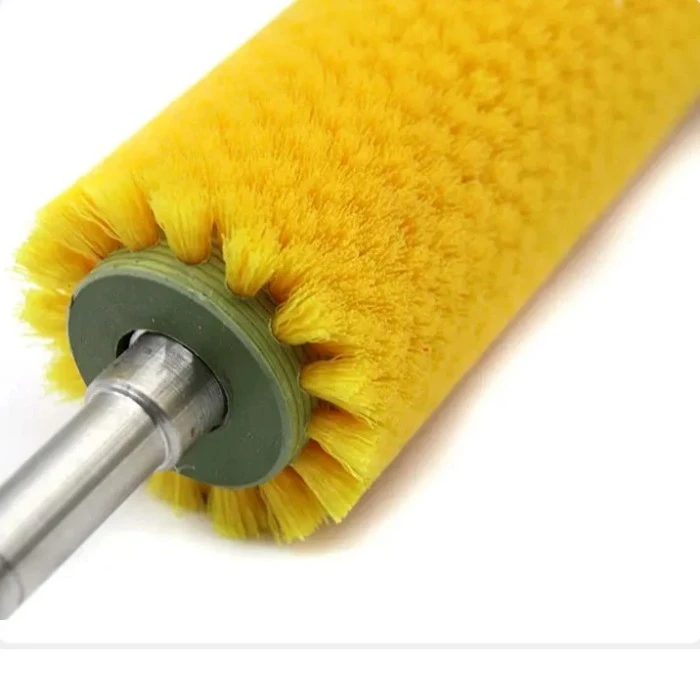
How Glass Washing Brush Design Affects Production Efficiency
The design of glass washing brushes directly impacts production efficiency through cleaning speed, maintenance downtime, and product yield rates, with optimized soft bristle configurations enabling faster line speeds without sacrificing surface quality.
Modern glass processing facilities operate on tight margins where production line speed is a primary driver of profitability. Every minute of downtime for brush replacement or adjustment represents lost output. Brushes engineered with high-density nylon filaments in spiral-wound configurations clean more effectively per rotation, allowing line speeds to increase without compromising cleaning quality. This throughput improvement can translate to significant annual production gains.
The relationship between brush design and energy consumption is another efficiency factor. Brushes that maintain consistent contact with minimal deflection require less motor torque, reducing electricity consumption across the washing line. Over the course of a year operating 24-hour shifts, the energy savings from well-designed brushes can be substantial.
Inventory management also benefits from standardized brush specifications. When a facility standardizes on a single brush type across multiple washing lines, spare parts inventory is simplified, and procurement costs decrease. Working with a brush supplier that offers custom engineering to match existing machine specifications ensures that replacements fit correctly without modification, further reducing changeover time.
Conclusion
Protecting glass surfaces during the washing process is not simply a matter of using any brush labeled for glass. It requires a deliberate selection of bristle material, filament diameter, brush density, and core construction matched to the specific glass type and production environment. Soft-bristled nylon cylinder brushes are the optimal solution for the vast majority of industrial glass-washing applications, providing the cleaning effectiveness needed to meet quality standards while eliminating surface damage that can lead to costly product rejection.
The decision to invest in properly specified glass washing brushes pays for itself through improved yield rates, reduced maintenance downtime, and consistent product quality. As glass products continue to become thinner, more coated, and more sensitive to processing conditions, the importance of precision-engineered brush solutions will only grow.
Frequently Asked Questions
What is the ideal filament diameter for a glass washing brush used on coated glass?
For coated glass surfaces, including low-E and solar control coatings, filament diameters of 0.15 mm to 0.25 mm are generally recommended. Thinner filaments create more contact points and exert less pressure per point, reducing the risk of damaging delicate coatings. PA612 nylon is the preferred material for these applications due to its low moisture absorption and consistent flexibility.
How often should glass washing cylinder brushes be replaced in a continuous production line?
Brush replacement frequency depends on line speed, glass throughput, water quality, and the specific nylon grade used. In typical flat glass washing operations running two or three shifts daily, cylinder brushes should be inspected monthly and replaced approximately every 4 to 6 months. The key indicator for replacement is a diameter reduction of 10% to 15% from the original specification, which signals that bristle length has decreased to a point where cleaning effectiveness may be compromised.
Can the same brush be used for both clear glass and coated glass washing?
While it is technically possible, it is not recommended. The cleaning requirements and surface sensitivities of clear and coated glass differ significantly. A brush optimized for clear glass may have filament characteristics that are too aggressive for coated surfaces. Additionally, running different glass types through the same brush can lead to cross-contamination if abrasive particles from one glass type become embedded in the bristles. Best practice is to dedicate separate brush sets to different glass product categories.