Solving Uneven Bristle Contact on Conveyor Brushes
Uneven bristle contact is one of the most common and costly problems in industrial conveyor cleaning. When a cylindrical conveyor brush does not make consistent contact across the full belt width, patches of carryback material avoid cleaning, accumulate on return rollers, and trigger a chain of maintenance issues. Belt tracking drifts. Bearings fail early. Energy consumption climbs as the drive motor works against material-laden rollers. Production teams end up chasing symptoms instead of the root cause.
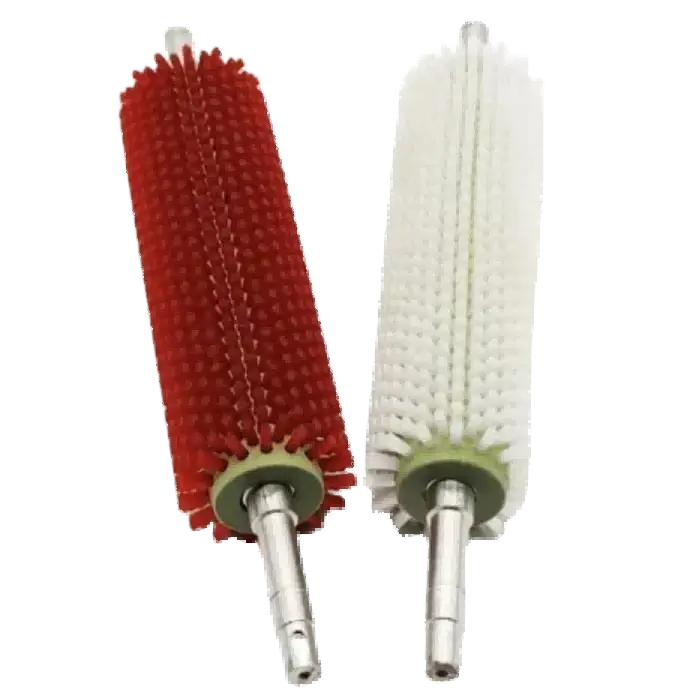
The problem is often easy to overlook. A brush installed six months ago that still has visible bristle length may look functional but has worn into a tapered or scalloped profile. The middle section makes solid contact while the edges barely graze the belt, or vice versa. Operators notice the belt looking cleaner on one side than the other and assume the brush is simply wearing out. In most cases, the brush is not worn out. It is making uneven contact, and this unevenness can be traced back to specific, correctable factors in brush selection, installation, and operating conditions.
Fixing uneven bristle contact on a cylindrical conveyor brush requires addressing four root causes simultaneously: matching filament material and diameter to the conveyed material, setting the correct interference depth across the full belt width, verifying shaft alignment and bearing condition, and selecting a bristle density and winding pattern that maintains uniform contact pressure throughout the brush’s service life. A brush that meets all four criteria cleans evenly from edge to edge and wears at a predictable, uniform rate.
The industries that depend on cylindrical conveyor brushes for continuous belt cleaning range from mining and aggregate processing to food manufacturing and recycling. Each presents different materials, belt speeds, and environmental conditions. Yet the principles that govern even bristle contact apply across all of them. When contact is uniform, the brush removes carryback consistently, replacement intervals extend, and the conveyor system as a whole runs with fewer stoppages. The following sections break down each factor that affects contact uniformity and explain how to get it right on your line.
This article walks through the mechanical and material factors that cause uneven bristle contact, from filament selection and brush diameter to mounting precision and bristle pattern design. Each section offers a direct answer followed by the technical detail that maintenance engineers and plant managers need to make informed decisions about their conveyor cleaning systems.
What Causes Uneven Bristle Contact on a Cylindrical Conveyor Brush
Uneven bristle contact stems from mismatches between the brush and the conveyor: wrong filament stiffness for the material being cleaned, incorrect interference depth, shaft misalignment, or worn bearings that let the brush tilt relative to the belt surface. Any one of these factors can create high and low spots in the contact pattern.
Material buildup on the belt is rarely uniform. Conveyors carrying aggregate often load material in a centered pile, leaving the belt edges cleaner than the center. A brush set with uniform interference across the full width responds by wearing faster in the center, where it works hardest against the accumulated carryback. Over weeks of operation, this differential wear creates a visible hourglass profile. The center bristles shorten while the edges retain near-original length. Eventually, the center loses contact entirely, and carryback in that zone passes through untouched.
The reverse pattern occurs on lines where material spills toward the belt edges. In those cases, edge bristles wear faster, creating a concave wear profile that leaves the center of the belt under-cleaned. In both situations, the fix is not a different brush material. The solution is to adjust the cleaning strategy so the brush encounters a more uniform material load, or to match the brush density pattern to the expected wear distribution.
Shaft misalignment acts differently but produces similar symptoms. If the brush shaft is not parallel to the belt surface, the interference depth varies from one end to the other. A 2 mm difference in interference across a 1,200 mm brush face creates a measurable cleaning gradient. One end scrubs aggressively while the other barely touches. Misalignment also generates uneven bearing loads, which accelerates wear on one bearing housing and introduces vibration that further degrades contact quality.
How Does Filament Material Selection Prevent Uneven Wear
Filament material controls how bristles respond to belt surface friction, chemical exposure, and temperature. Nylon provides the best all-around balance of stiffness retention and abrasion resistance for most conveyor cleaning applications, but the specific grade and diameter must match the operating conditions. Using the wrong material causes bristles to soften, break, or take a permanent set, all of which create uneven contact patterns.
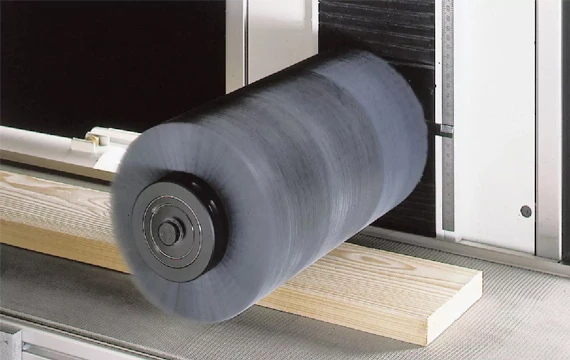
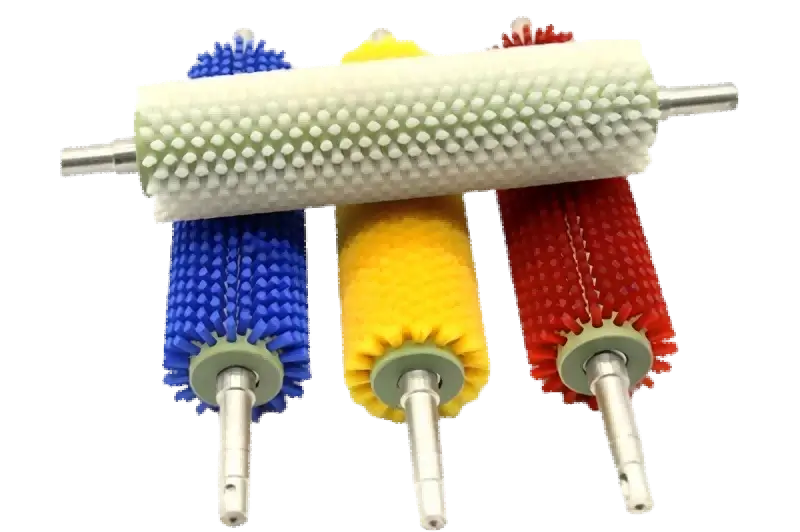
A nylon cylinder brush with PA6 or PA66 filaments works across the widest range of conveyor cleaning applications. Nylon bristles maintain their stiffness in dry conditions and recover their shape after repeated deflection against the belt surface. This recovery property is what keeps the bristle tips at a consistent height across the brush face over thousands of operating hours. When nylon is the right choice, wear is gradual and uniform.
The table below compares common filament materials and their behavior under different conveyor operating conditions:
Material choice directly affects wear uniformity. A polypropylene brush installed on a dry belt running at high speed generates heat from friction that nylon would dissipate. The PP bristles soften, fold over, and stop cleaning. The result is uneven contact that looks like a material failure but is actually a material mismatch. Similarly, steel wire bristles on a soft rubber belt cover cut grooves into the belt surface. Those grooves then channel carryback past the brush, creating stripes of uncleaned belt that widen as the belt cover wears.
Why Do Brush Diameter and RPM Affect Contact Uniformity
Brush diameter and rotational speed set the bristle tip speed, which determines how hard and how often each bristle strikes the belt surface. An oversized brush running too fast creates excessive interference that bends bristles permanently. An undersized brush running too slow fails to develop enough tip force to dislodge material. Both conditions produce uneven contact because bristles in the affected zones stop recovering between strikes.
The relationship between brush outside diameter (OD), RPM, and belt speed is the most overlooked variable in conveyor brush specification. A conveyor cylinder brush needs its surface speed to match or slightly exceed the belt speed. If the brush surface speed falls below the belt speed, material on the belt passes under the bristles faster than they can sweep it. If the brush surface speed runs too far above the belt speed, the bristles strike the belt more times per linear foot than necessary, and wear accelerates without improving cleaning.
Interference depth, measured as the distance the bristle tips extend past the belt surface plane, should fall between 2 and 8 mm for most applications. Below 2 mm, the brush barely contacts the belt, and any variation in shaft alignment or belt flatness creates gaps. Above 8 mm, the bristles bend so far that the tips lose their flicking action and drag along the belt instead of striking it. Dragging bristles polish carry back into the belt surface rather than removing it.
The following table shows the relationship between filament diameter, recommended interference depth, and expected service life:
Brushes that run at diameters too small for the belt width also develop a crown wear pattern. The shaft deflects under the bristle load, bowing slightly in the middle. This bow reduces interference at the shaft center, so the center bristles clean less aggressively and wear more slowly than the ends. Over time, the brush develops a barrel shape that mirrors the shaft deflection. Increasing the core diameter or reducing the unsupported span between bearings fixes this.
How Does Proper Mounting and Alignment Eliminate Contact Gaps
Mounting and alignment determine whether the brush makes uniform contact from the moment it starts spinning. A brush installed with the shaft parallel to the belt, bearings seated squarely in their housings, and interference depth measured at both ends and the center makes full-face contact on the first revolution. Any deviation from parallel creates a contact gradient that worsens over time.
The alignment process starts before the brush is bolted into place. Bearings must be checked for radial play. A bearing with 0.5 mm of play at one end of the shaft allows that end to float relative to the belt surface, producing variable interference that changes as the belt speed fluctuates. Worn bearing housings produce the same effect. Both conditions should be corrected before a new brush goes in.
Custom conveyor cleaning brush sizing eliminates the alignment guesswork that comes with off-the-shelf brushes. A brush built to the shaft diameter, bearing center distance, and belt width of the actual conveyor drops into place without shimming, spacer fabrication, or field modifications. The shaft fits the bearing seats. The brush face spans the full belt width. The interference depth matches the specification across the entire working surface.
The mounting hardware itself affects long-term contact quality. Adjustable take-up frames that allow the brush position to be fine-tuned as bristles wear help maintain consistent interference throughout the brush’s service life. Fixed mounts that cannot be adjusted force the brush to run at progressively lower interference as the bristles shorten, which means cleaning effectiveness declines steadily from the day of installation.
What Role Does Bristle Density and Pattern Play in Contact Uniformity
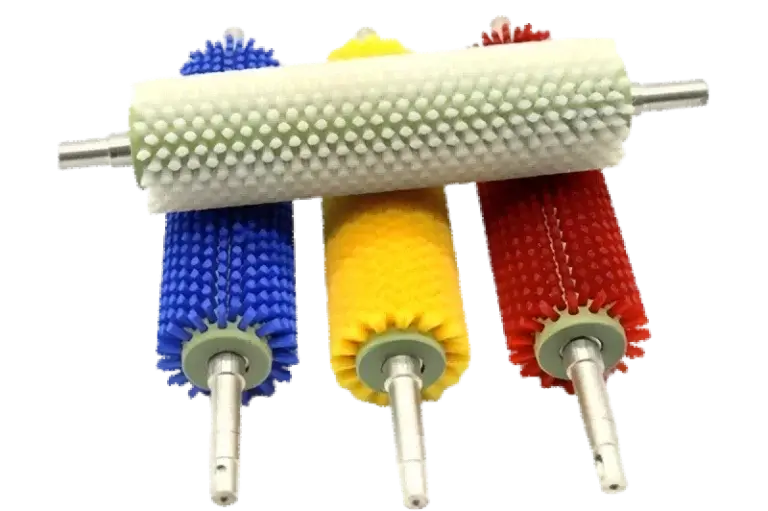
Bristle density and winding pattern control how many filament tips contact each square inch of the belt surface and how those tips are distributed across the brush face. A tufted cylinder brush uses individually anchored bristle clusters that can be spaced to concentrate cleaning force in specific zones. A spiral-wound pattern creates a continuous helical row that produces uniform, streak-free contact. The choice between patterns affects how evenly the brush wears and how thoroughly it cleans.
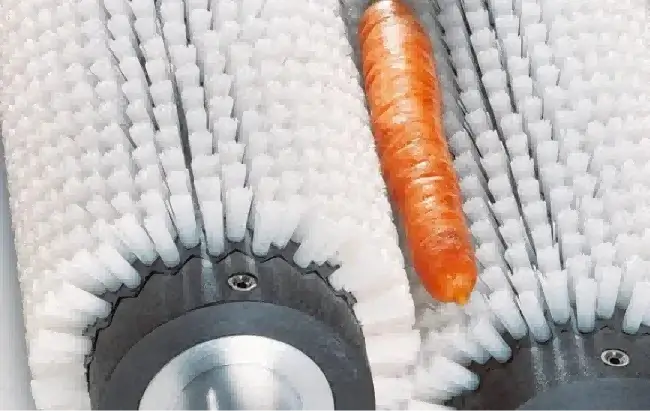
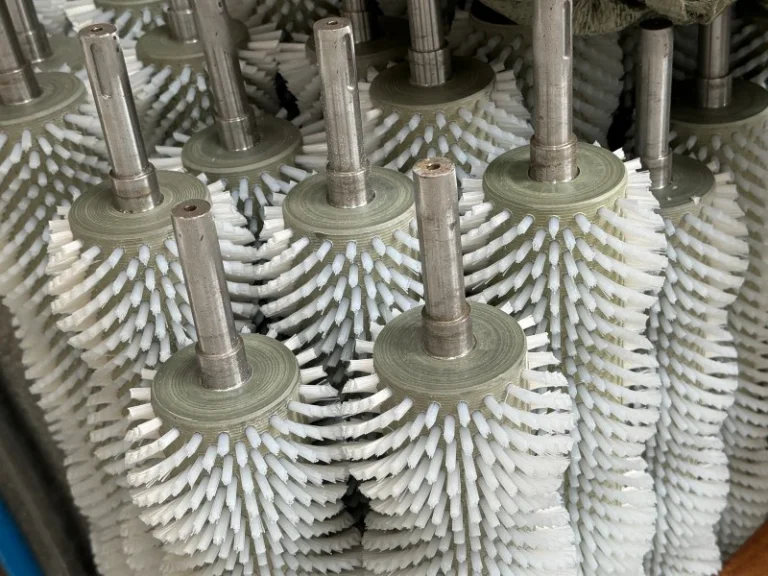
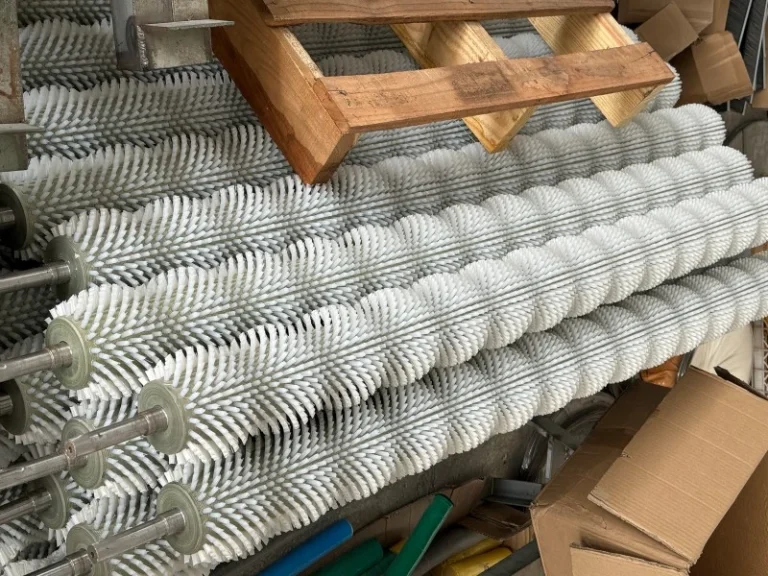
Spiral-wound construction, where filaments are anchored in a metal channel strip and wound continuously around the core, produces the most uniform contact pattern across the full brush face. The helix eliminates the gaps between bristle rows that occur with segmented or tufted designs. Every point along the brush width has bristles at the same density and the same trim length. This uniformity translates directly into even cleaning and even wear. A spiral-wound cylinder brush is the default choice for applications where streak-free results matter, including food processing, glass cleaning, and textile finishing.
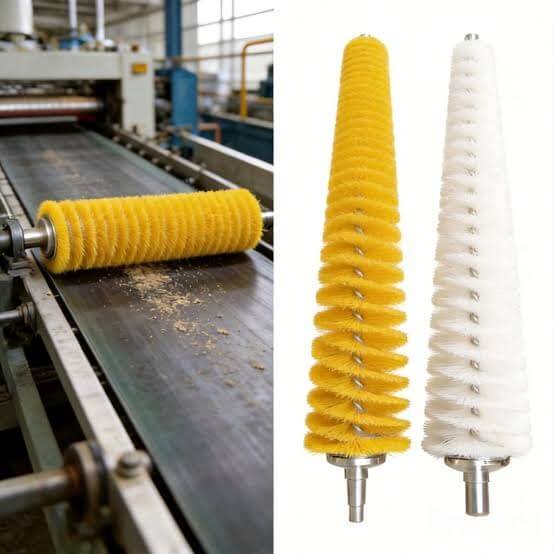
Tufted construction offers a different set of advantages for contact control by inserting bristle bundles into pre-drilled holes in the core. Tuft spacing, tuft diameter, and the number of filaments per tuft can all be varied across the brush width. A brush cleaning a belt that carries material primarily in the center can have tighter tuft spacing in the middle and wider spacing at the edges. This concentrates cleaning force where it is needed most and reduces unnecessary wear on edge bristles that see lighter material loading. The trade-off is that tufted brushes leave fine gaps between tufts where bristle density drops to zero, which can produce visible striping on the belt surface if the tuft spacing is too wide.
Density also interacts with filament diameter. A brush with dense packing of thin filaments cleans gently and conforms to surface irregularities better than a brush with sparse packing of thick filaments. The opposite combination, thick filaments at low density, hits harder but leaves more space between bristle strikes. For belts with irregular surfaces like cleated or chevron profiles, thinner filaments at higher density adapt to the surface contour and maintain contact where thicker, stiffer bristles would skip over the raised features.
How Should Maintenance Teams Monitor and Correct Uneven Contact
Monitoring uneven contact requires measuring bristle length at three to five points across the brush face during every scheduled maintenance interval. When the difference between the longest and shortest bristle length exceeds 3 mm, corrective action is needed. The fix depends on the wear pattern: tapered wear points to misalignment, center-heavy wear points to material distribution, and random scalloping points to bearing or vibration issues.
A simple measurement routine catches uneven wear before it becomes a cleaning problem. Use a caliper or a depth gauge to measure bristle length from the core surface to the bristle tip at the left edge, quarter point, center, three-quarter point, and right edge of the brush. Record the five values in the maintenance log alongside the date and operating hours since the last measurement. Plotting these values over time reveals wear trends that visual inspection misses.
When tapered wear appears, meaning bristles are consistently shorter on one side than the other, verify shaft alignment first. Measure the distance from the shaft centerline to the belt surface at both bearing locations. If the distances differ, adjust the bearing mounts until the shaft is parallel. Also check for uneven belt loading that may concentrate carryback on one side. If the material feed onto the belt is consistently offset, a chute modification upstream may address the root cause better than changing the brush.
When center-heavy wear appears, the brush is doing more work in the middle because that is where most of the carryback accumulates. Solutions include adjusting the material loading to spread product more evenly across the belt width or specifying a brush with higher filament density in the center section. The second option costs more upfront but avoids the production impact of modifying upstream equipment.
The following inspection checklist helps maintenance teams stay ahead of contact uniformity problems:
Conclusion
Uneven bristle contact on a cylindrical conveyor brush is never a random failure. It traces back to measurable, correctable variables in filament selection, brush diameter and RPM, mounting alignment, and bristle pattern design. The four factors interact: a brush with the right filament and the right density still wears unevenly if the shaft is misaligned by 2 mm. A perfectly aligned brush with the wrong filament diameter for the belt speed loses contact in weeks instead of months.
The cost of ignoring uneven contact accumulates across the entire conveyor system. Return rollers coated in carryback develop uneven diameters that pull the belt off track. Belt edges drag against frame members and fray. Drive motors draw higher current to overcome the added friction. Bearing replacements become more frequent. Each of these costs is avoidable through attention to the brush contact pattern.
Production lines that run 24 hours a day have the most to gain from getting brush contact right. A brush that cleans evenly from edge to edge extends the interval between replacements, reduces unplanned stoppages, and lowers the total cost of conveyor maintenance. The measurement and specification steps outlined in this article provide a practical framework for diagnosing and fixing uneven contact on any cylindrical conveyor brush installation.
Frequently Asked Questions
Q1: How can I tell if my cylindrical conveyor brush has uneven contact without removing it from the conveyor?
Run the conveyor with the brush engaged and observe the belt surface immediately downstream of the brush. If the belt shows clean stripes alternating with dirty stripes, the brush has uneven contact. The dirty stripes correspond to zones where bristles are not reaching the belt surface. Another method is to coat the belt with a thin layer of chalk or marking powder before the brush station, then inspect the post-brush belt for unmarked patches. This visual test takes less than five minutes and requires no disassembly.
Q2: Does bristle length affect contact pressure more than filament diameter?
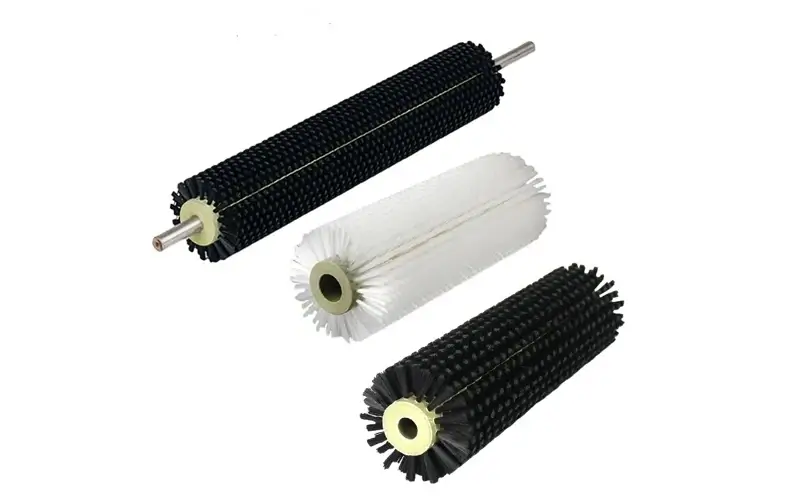
Bristle length affects contact pressure through leverage: longer bristles of the same diameter bend more easily, reducing the force at the tip. Filament diameter affects contact pressure through stiffness: thicker filaments resist bending and transmit more force. The two work together. A brush with short, thick bristles hits the belt hard and wears fast. A brush with long, thin bristles conforms to belt irregularities but may not generate enough tip force to dislodge stubborn carryback. The right balance depends on the material being cleaned and the belt surface material.
Q3: Can uneven bristle contact damage the conveyor belt itself?
Yes. When bristle contact is uneven, the zones of high interference concentrate wear on specific sections of the belt cover. Over months of operation, these sections thin out faster than the surrounding belt, creating low spots that then receive even less bristle contact. The belt develops a washboard profile that cannot be cleaned effectively by any brush. In severe cases with steel wire bristles on rubber belts, excessive interference in localized zones can cut grooves into the belt cover, leading to premature belt replacement.