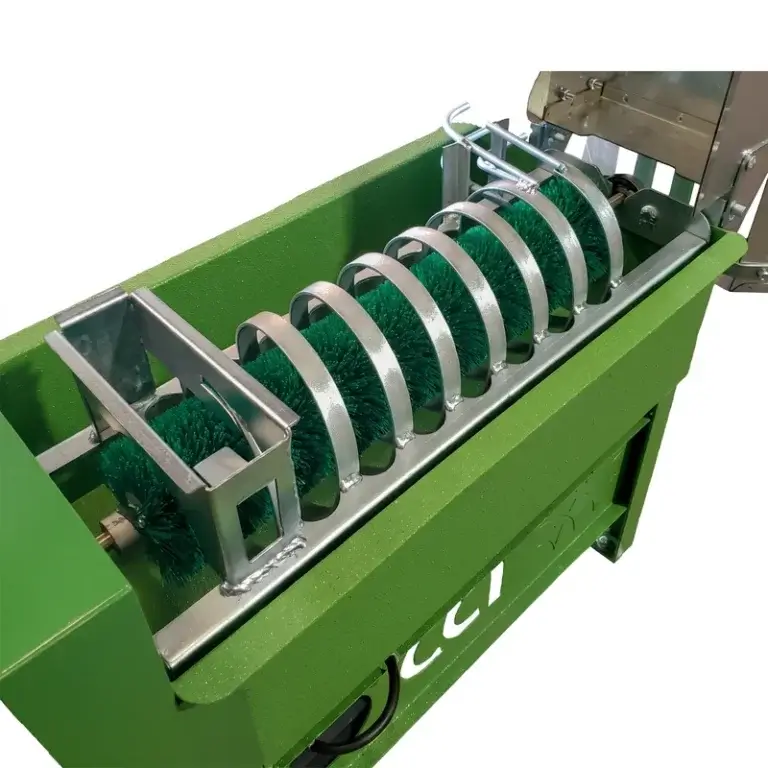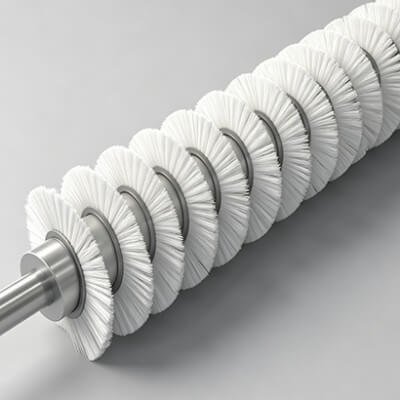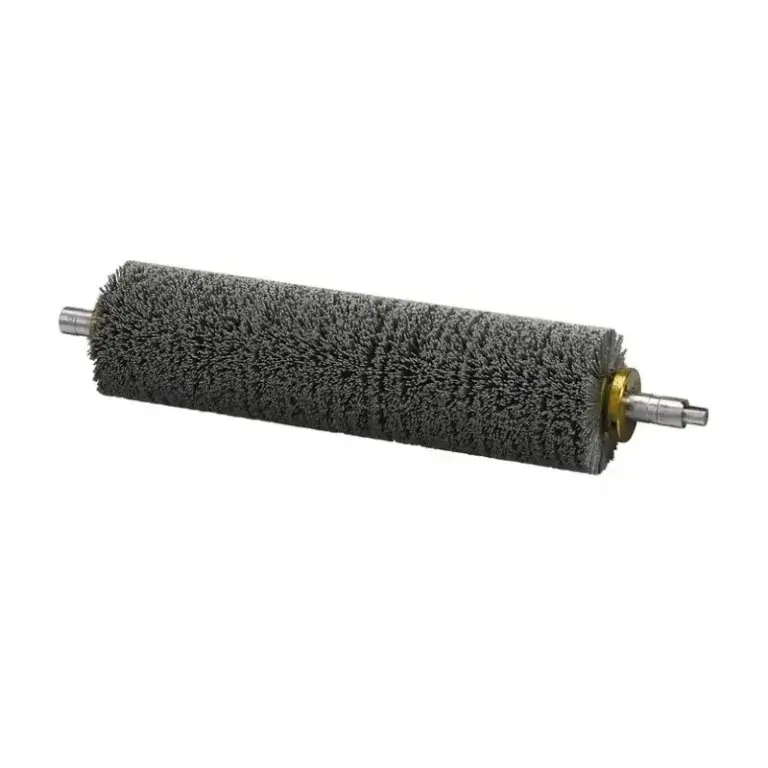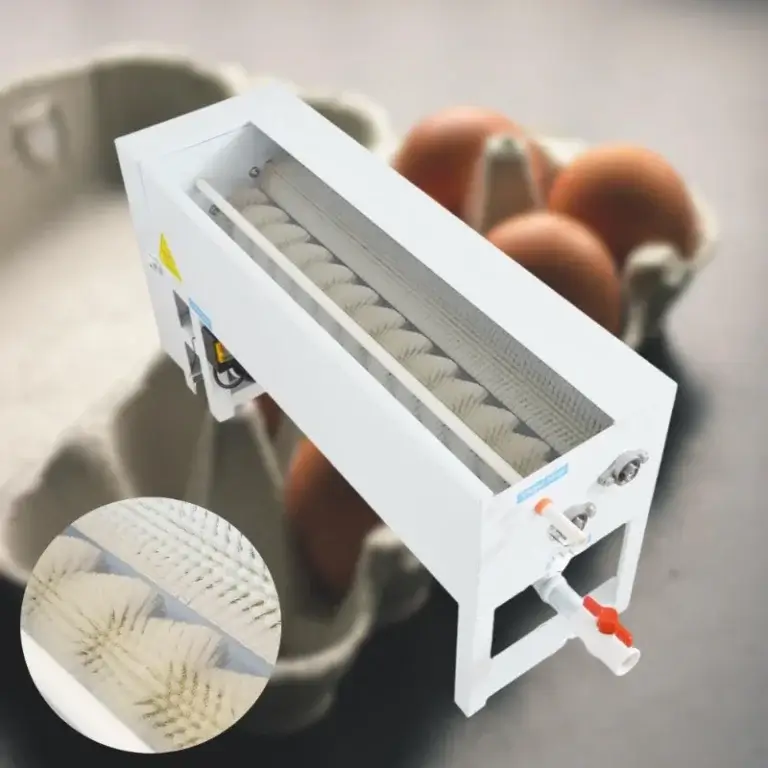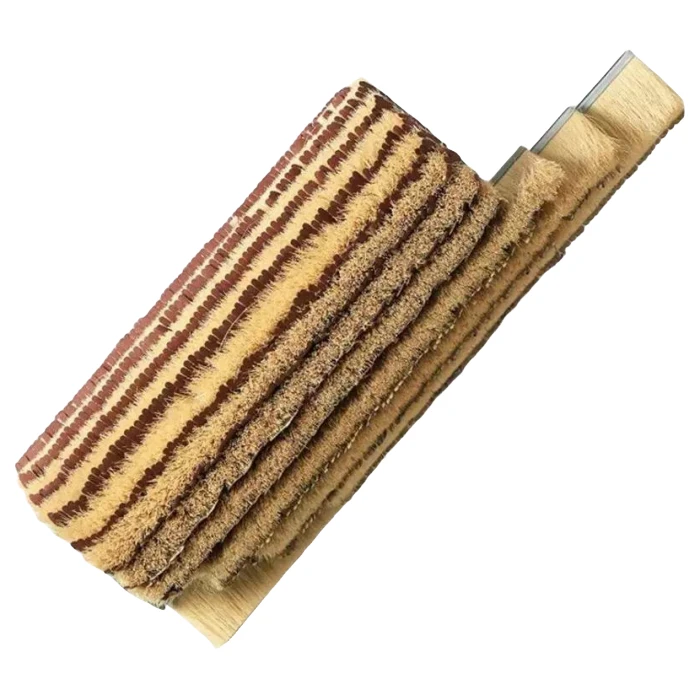
Sourcing a custom cylinder brush is not like ordering a stock component from a catalog. Every production line has its own belt width, operating speed, material type, and environmental conditions. A brush that works perfectly on one conveyor may fail within weeks on another if the filament material, core construction, or mounting dimensions do not match the application.
The global industrial brush market reached approximately $710 million in 2023 and is projected to grow at 8.5% annually through 2030. With that growth comes an expanding network of manufacturers, each claiming to offer custom solutions. The challenge for procurement teams and plant engineers is separating genuine engineering capability from catalog resellers who add a markup without adding value.
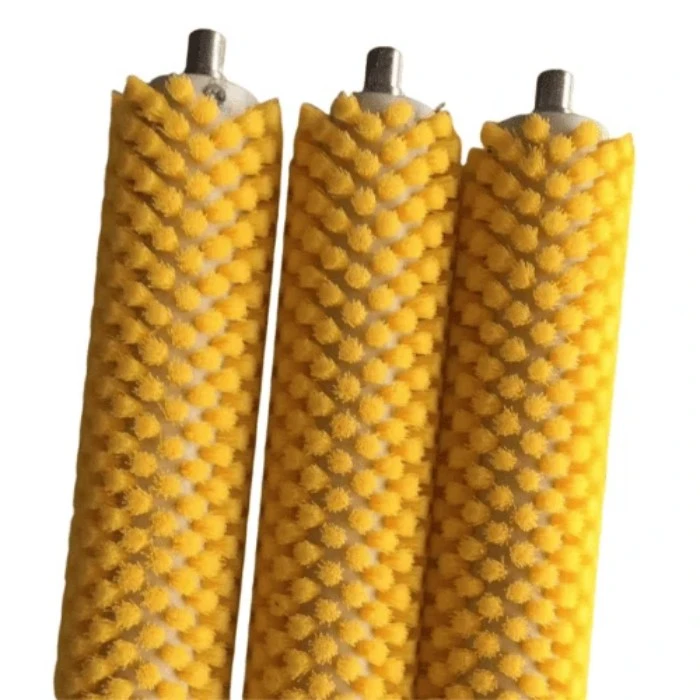
The right manufacturer will ask you for seven data points before quoting: shaft diameter at the bearing seat, brush OD clearance, belt width at the cleaning station, available mounting space, belt surface material, the substance being cleaned, and operating temperature. If a supplier quotes a price without requesting these measurements, they are selling you a stock brush with a custom label. Push back. Demand shop drawings before production begins. Demand material certifications on delivery. The questions below provide a framework for evaluating whether a manufacturer can deliver a brush that mounts the first time properly and lasts its full expected service life.
The difference between a well-specified brush and an off-the-shelf substitute is measured in production hours, not maintenance minutes. A conveyor belt cleaning brush that fits exactly removes carryback without damaging the belt cover. A brush that almost fits wears unevenly, leaves residue at the edges, and doubles your replacement frequency. This article walks through the questions that set capable manufacturers apart, covering materials, engineering support, core construction, quality control, the specification process, and lead times.
Each section below addresses one area you should probe with a prospective supplier. The answers you get, or the questions the supplier asks in return, reveal more about their capability than any marketing brochure.
What Materials Does the Manufacturer Offer for Cylinder Brushes
A qualified manufacturer keeps at least four filament materials in inventory and can explain why one suits your application while another will fail. Nylon, polypropylene, abrasive nylon, and stainless steel form the baseline. If the manufacturer cannot discuss the trade-offs among these four without checking a reference sheet, their technical depth is shallow.
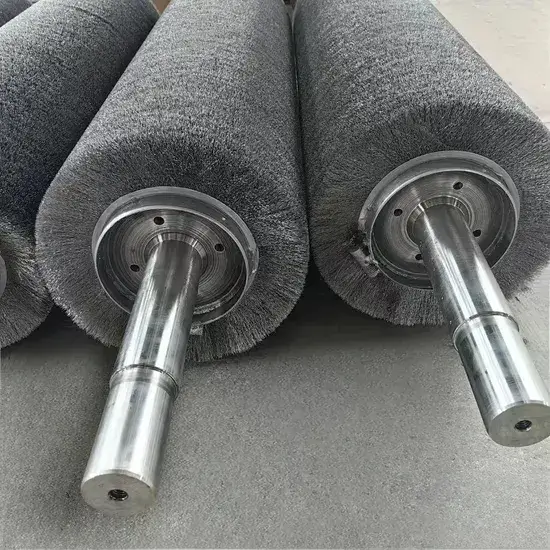
Filament material is the single most consequential decision in brush specification. Nylon 6 and nylon 6/12 absorb moisture differently. Polypropylene resists strong acids and continuous immersion where nylon softens. Abrasive nylon, loaded with silicon carbide or aluminum oxide grit, cuts through hardened residue that standard filaments cannot touch. Stainless steel wire handles temperatures above 200 degrees Celsius where any polymer filament would melt.
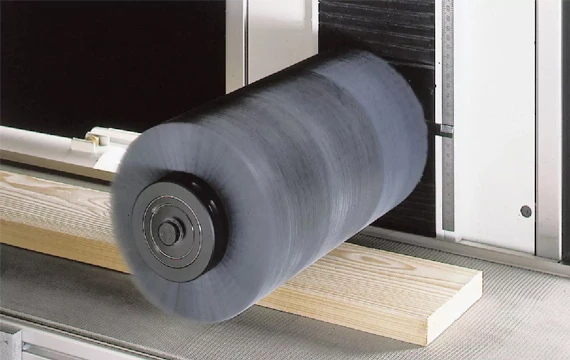
The material choice also depends on what you are cleaning. A glass washing brush needs filaments soft enough to avoid micro-scratches on the glass surface, typically nylon 6/12 or PBT with filament diameters between 0.10 mm and 0.30 mm. A brush cleaning iron ore carryback off a mining conveyor needs 0.76 mm to 1.14 mm abrasive nylon or wire that can take constant impact without folding.
Filament diameter matters as much as material. Thinner filaments clean more gently, which matters for food-contact belts and fragile surfaces. Thicker filaments deliver more impact force per rotation. A 0.50 mm nylon filament at 400 RPM cleans general industrial carryback without excessive belt wear. The same brush with 1.14 mm abrasive nylon at identical RPM strips cured epoxy from a composite manufacturing line.
Ask the manufacturer whether they stock the material in the diameter range your application needs. A supplier who has to special-order filament for every job adds lead time and charges a premium. A supplier with deep inventory can turn quotes into production faster.
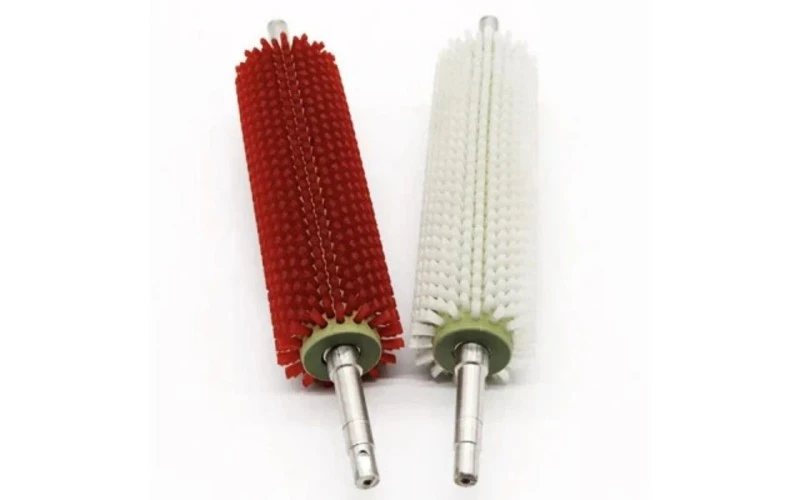
Can the Manufacturer Provide Engineering Support and CAD Drawings
Reviewing Shop Drawings Against Actual Hardware Measurements
A manufacturer worth a long-term contract sends a shop drawing before cutting a single filament. The drawing must show shaft diameter, brush outside diameter, trim length, overall length, and bearing seat dimensions. Review these against measurements taken from the actual conveyor hardware, not a parts catalog. If the drawing shows a dimension that differs from your site measurement, flag it before production starts.
Engineering Support vs. Fabrication-Only Service
Engineering support separates fabricators from brush makers. A fabricator builds to the dimensions you provide. A brush maker questions the dimensions you provide, asks about the application, and may recommend a different filament density or core design based on what they have learned from other installations.
The CAD Drawing Review as a Critical Gate
The CAD drawing review is the most important gate in the process. Shaft diameter errors are the most common cause of mounting failure. A brush built to a nominal 25 mm shaft diameter will not fit a bearing seat that has worn to 24.85 mm. Measure with calipers at the actual bearing seat. Record to 0.01 mm precision. Send that number, not the catalog dimension.
Custom Sizing vs. Catalog-Dimension Orders
Custom sizing specifications that a manufacturer develops from on-site measurements fit the first time. Brushes ordered from catalog dimensions fail to mount at roughly twice the rate of brushes built to as-measured values. The gap between the engineering drawing and the worn hardware is where installation time and frustration accumulate.
Material Certifications and Build Sheets for Traceability
Good manufacturers also provide material certifications and build sheets with each shipment. These documents confirm the filament grade, core material, and bearing type used in production. If a quality issue surfaces six months later, the build sheet tells you whether the same batch of filament went into other brushes in your facility, letting you proactively inspect rather than react to a failure.
What Core Construction Methods Does the Manufacturer Use
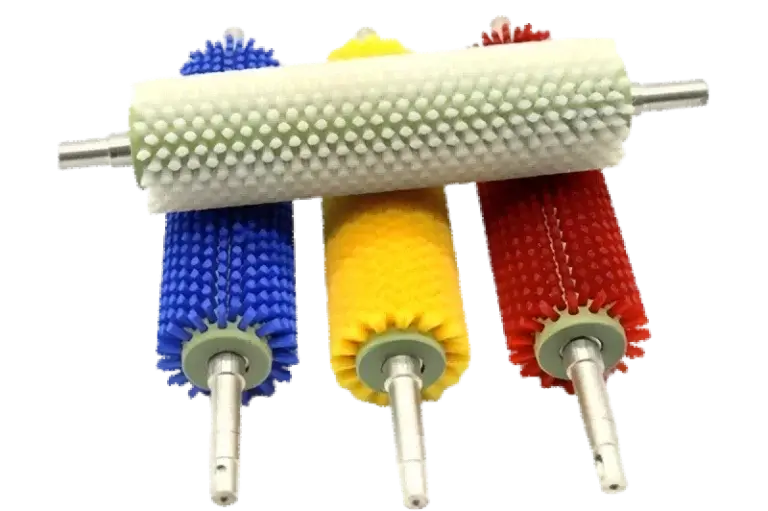
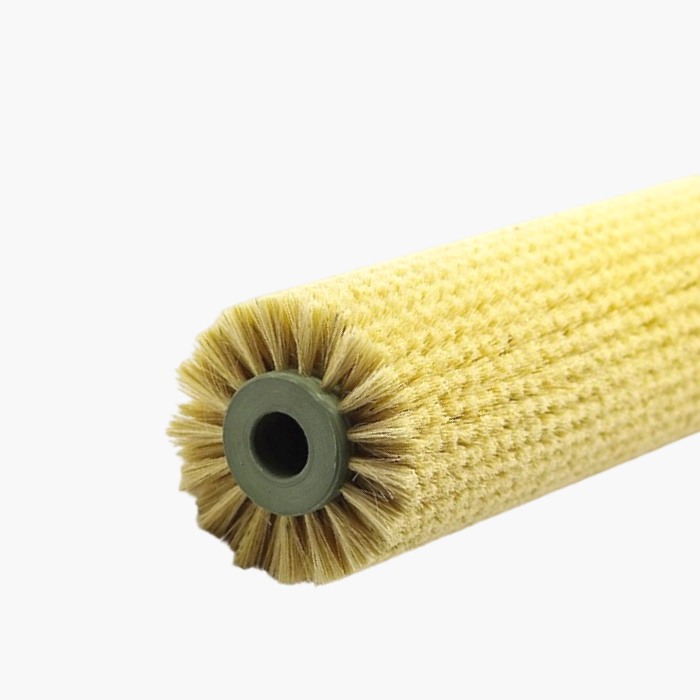
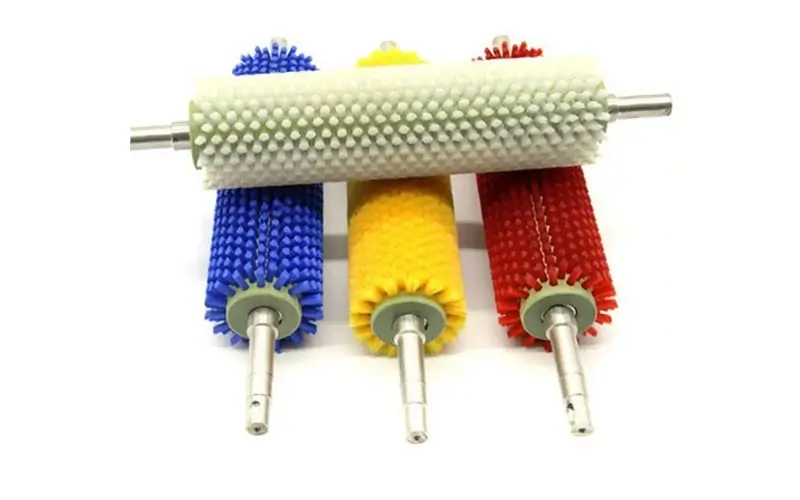
Three core construction methods dominate the market: tufted, wound, and molded. Tufted cores use individual filament tufts anchored into a metal or plastic cylinder. Wound cores spiral a continuous strip brush around a central shaft. Molded cores fuse filaments directly into a plastic body. Each method has a distinct failure mode, and the right one depends on brush diameter, operating RPM, and belt width.
Tufted construction, the most common method for cylinder brushes, drives stainless steel staples or anchors through filament bundles into pre-drilled holes in the core. The staple acts like a staple in wood, mechanically locking each tuft. This method produces consistent filament density and allows easy replacement of worn tufts in some designs. The failure mode is staple corrosion in wet environments. A staple that rusts loses grip, and tufts begin shedding into the product stream.
Wound construction, also called helical or spring brush construction, feeds a continuous strip brush into a spiral channel machined into the core surface. The strip is welded or mechanically locked at both ends. Wound brushes achieve the highest filament density of the three methods and distribute cleaning force evenly across the brush face. For textile processing brushes running at high RPM against fabric webs, wound construction eliminates the vibration that can occur when individual tufts contact the fabric at slightly different moments.
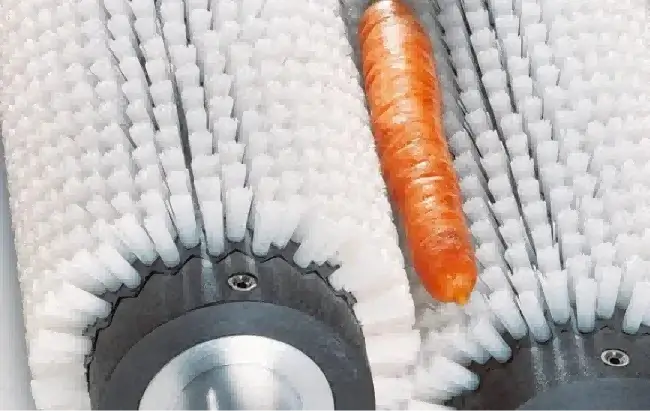
Molded construction embeds filament ends directly into a plastic or composite core during injection molding. The filaments and core fuse into a single structure, eliminating any mechanical fastener that could loosen or corrode. This method dominates food-processing applications where shed bristles are a contamination risk. The limitation is diameter. Molded brushes above 200 mm OD become prohibitively expensive because the mold tooling cost scales with volume.
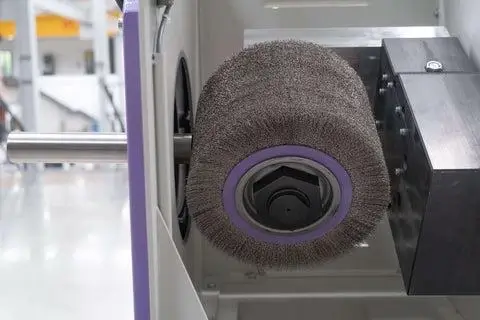
For belts wider than 1,200 mm, ask whether the manufacturer uses segmented core construction. A solid steel shaft spanning 2,000 mm deflects under its own weight plus the radial load from belt contact. The center of the brush presses harder while the edges make lighter contact, creating a clean strip down the middle of the belt with residue remaining at the sides. Segmented cores with a central support bearing distribute load evenly across the full belt width and are essential for wide conveyors.
How Does the Manufacturer Handle Quality Control and Testing
Pull-Out Testing on Filament Tufts
Every production batch should undergo pull-out testing on filament tufts, dynamic balance testing on the completed brush at operating RPM, and dimensional inspection against the approved shop drawing. A manufacturer that ships brushes without batch-level test reports is running final inspection by eye, which is not inspection at all.
Pull-out testing measures the force required to extract a filament tuft from the core. For stapled tufts, the minimum extraction force is typically 15 to 20 N per tuft. Values below this threshold signal that staples are undersized, incorrectly seated, or that the core material is too soft to hold them. Filament shedding into a product stream is a contamination event. In food processing, it triggers a recall. In glass manufacturing, shed filaments scratch finished panels.
Dynamic Balance Testing at Operating RPM
Dynamic balance testing spins the completed brush at its rated operating RPM and measures vibration amplitude. An imbalanced brush at 400 RPM vibrates enough to accelerate bearing wear, loosen mounting bolts, and produce uneven belt contact. The imbalance may come from inconsistent filament density, a slightly eccentric core, or a shaft that was not straightened before the filament was applied. A manufacturer that skips dynamic balancing ships a brush that will destroy its own bearings within weeks.
Dimensional Inspection Against Shop Drawings
Dimensional inspection is the final check before packing. The inspector measures shaft diameter at both bearing seats, brush OD at three points along the length, overall length, and trim length. These measurements go into the batch inspection report that ships with the brush. Keep these reports. When it is time to reorder, the manufacturer can reference the batch that performed well and replicate it exactly, down to the filament lot number.
Batch-Level Test Reports and Traceability
Keep these reports. When it is time to reorder, the manufacturer can reference the batch that performed well and replicate it exactly, down to the filament lot number.
The Role of ISO 9001 Certification in Quality Assurance
ISO 9001 certification is table stakes. It means the manufacturer has documented quality procedures and audits them periodically. It does not guarantee that every brush is built correctly. What matters is whether those procedures include the three tests described above and whether the manufacturer sends the reports without being asked.
What Is the Manufacturer’s Custom Sizing and Specification Process
Send the manufacturer four measurements from the actual conveyor hardware: shaft diameter at the bearing seat, clearance from shaft center to belt face, belt width at the cleaning station, and available bore for shaft ends. Add the material being cleaned, belt speed in meters per second, and operating temperature range. These seven data points let a competent brush maker produce a working quote within 48 hours.
The specification process reveals whether you are dealing with a manufacturer or a reseller. A manufacturer responds to your seven data points with clarifying questions. What is the belt surface material? Is the line continuous or intermittent? Are there chemical washdowns between shifts? Each question refines the specification. A reseller responds with a price and a delivery date, neither of which accounts for whether the brush will actually work.
Specify the material being cleaned with precision. “Food residue” tells a manufacturer almost nothing. “Flour dust at ambient temperature on a PVC belt, dry environment, 1.2 m/s belt speed” tells them everything they need to select a filament material, diameter, and density. The difference in filament choice between flour dust and sugar residue is significant because sugar is hygroscopic and creates a sticky film that needs a different cleaning action than dry particulate.
Interference depth, the distance the filament tips press into the belt surface, is typically 2 mm to 8 mm. Less than 2 mm and the brush skims rather than cleans. More than 8 mm, and filament life drops sharply while motor current climbs. The manufacturer should calculate this depth based on filament stiffness, brush OD, and belt hardness. If they cannot explain how they arrived at the interference depth they quoted, they guessed.
What Are the Realistic Lead Times and Minimum Order Quantities
Typical Production Windows and Spare Brush Planning
Custom cylinder brushes take 2 to 6 weeks to produce, not counting shipping. Plan for this window by keeping at least one spare brush on the shelf per cleaning station. Order the replacement when the running brush reaches 50 percent of its expected service life, not when it fails. A brush that fails mid-shift stops the line. A replacement that takes four weeks to arrive stops it for a month.
Three Factors That Determine Lead Time
Lead time depends on three factors: material availability, production queue depth, and shop drawing turnaround. A manufacturer that stocks the filament material your brush needs can move into production within days of drawing approval. One that has to order filament from a third party adds 1 to 3 weeks. Ask whether the manufacturer stocks your specified material in-house. Ask what their current production queue looks like. A queue that is consistently 4 weeks deep means the shop is running at capacity and any rush order will displace other work at a premium.
Minimum Order Quantities and Production Model Fit
Minimum order quantity tells you something about the manufacturer’s production model. Shops optimized for long runs may set minimums at 50 or 100 units. This works for conveyor OEMs ordering brushes by the pallet. It does not work for a plant that needs two brushes per cleaning station and has three stations. A manufacturer serving end users, not just OEMs, handles single-unit orders for prototypes and small-quantity orders for production without penalty pricing.
The Custom Premium vs. Stock Brush Trade-Off
The custom premium over an equivalent stock brush runs 15 to 30 percent. That premium buys a brush that mounts correctly on the first attempt. Stock brushes that need field modification, turning down shafts, cutting bristles, adding spacers, often end up costing more in labor and downtime than the custom premium saves. The total cost of ownership calculation favors the brush that fits from day one.
Selecting a Manufacturer as an Engineering Decision
Selecting a custom cylinder brush manufacturer is an engineering decision, not a purchasing one. The lowest quote rarely produces the lowest total cost of ownership. A brush specified to correct dimensions, built from the right filament for the material and environment, balanced to eliminate vibration, and delivered with batch-level test reports will run longer between replacements and keep the belt cleaner between maintenance intervals.
The Hallmarks of a Downtime-Reducing Partner
A manufacturer who asks for measurements, sends shop drawings, stocks filament in-house, runs pull-out and dynamic balance tests, and ships inspection reports with every order is the kind of partner that reduces downtime rather than causing it. The seven questions in this article give you a structured way to tell the difference.
FAQ
Q1: How do filament retention and brush balance affect motor sizing?
A brush that sheds filaments increases motor load unpredictably because loose tufts catch on the belt surface and create momentary torque spikes. An imbalanced brush at operating RPM draws higher steady-state current than a balanced one because the motor works against the eccentric mass on every rotation. Together, shedding and imbalance can push a motor sized with 30 percent headroom into overload territory. Always confirm that your manufacturer tests for both, and size the motor based on the balanced operating current plus at least 30 percent margin rather than calculated load alone.
Q2: What documentation should accompany every shipment of custom cylinder brushes?
Every shipment should include a batch inspection report with pull-out test values, dynamic balance readings, and dimensional measurements against the approved drawing. Material certifications for the filament and core material should be included. A build sheet listing the filament lot number, core lot number, bearing type and manufacturer, and assembly date completes the package. File these documents. When the brush wears out and you need to reorder, referencing the build sheet lets the manufacturer replicate the exact specification that performed well, down to the material lot if consistency is critical.
Q3: How do you evaluate a manufacturer’s experience with your specific industry?
Request case studies or references from customers in your industry, not testimonials from unrelated sectors. A manufacturer with deep experience in aggregate handling may know nothing about the hygiene requirements of food processing. Ask for the contact information of a plant engineer at a reference site, then call and ask how the brushes performed after six months, whether the manufacturer responded when a quality issue surfaced, and whether they would reorder. A manufacturer confident in their work will provide references without hesitation. One that deflects or offers only written testimonials is protecting a record they would rather you did not examine.