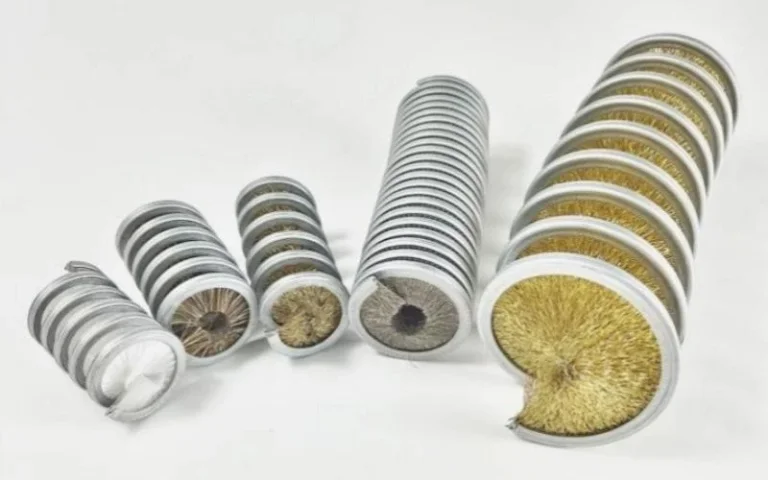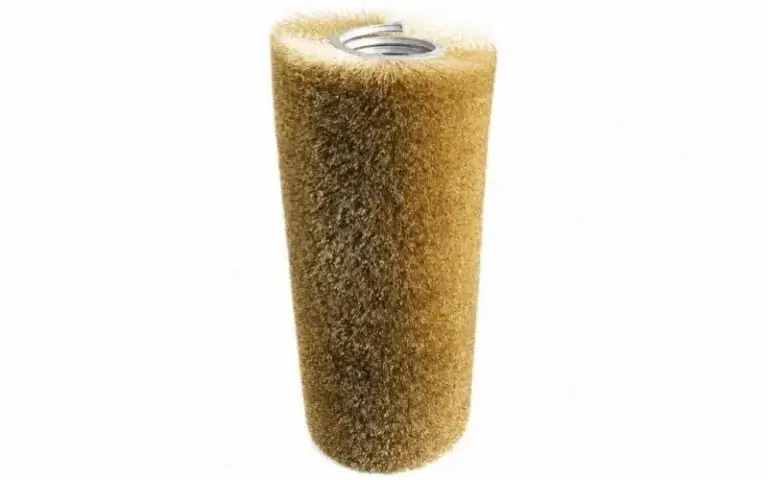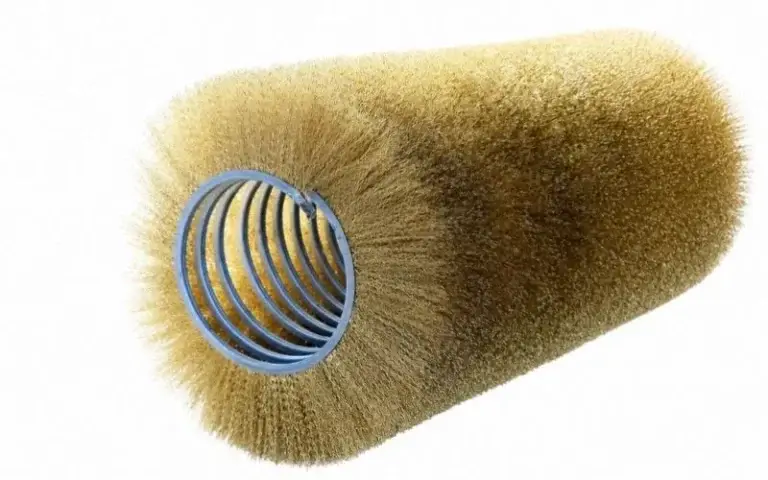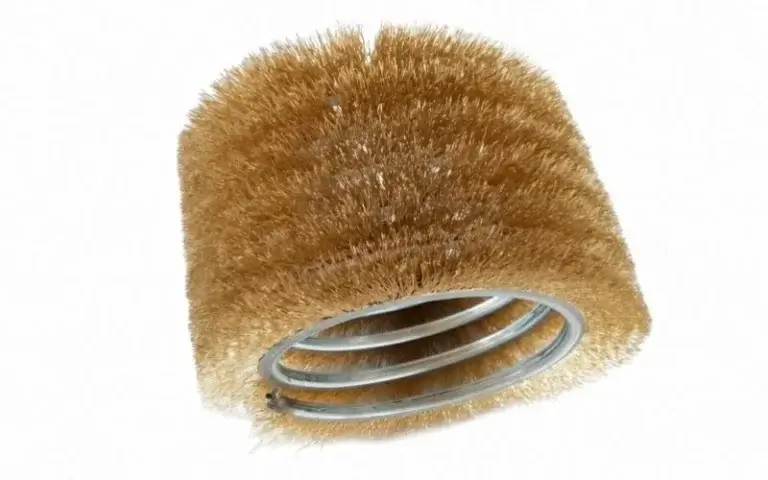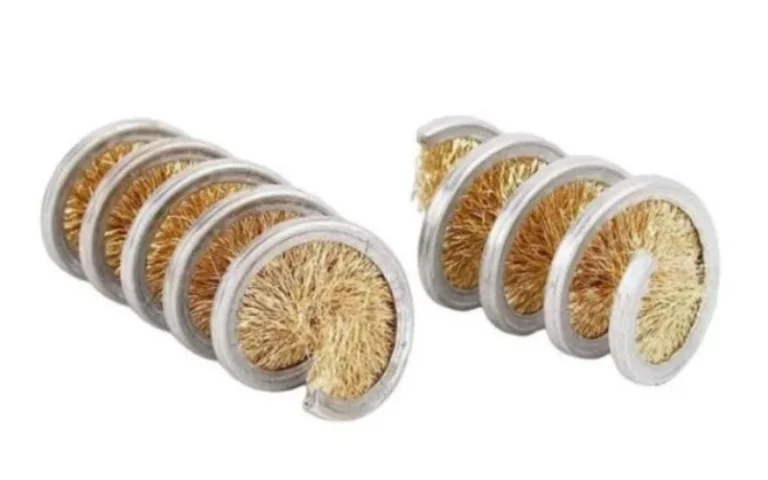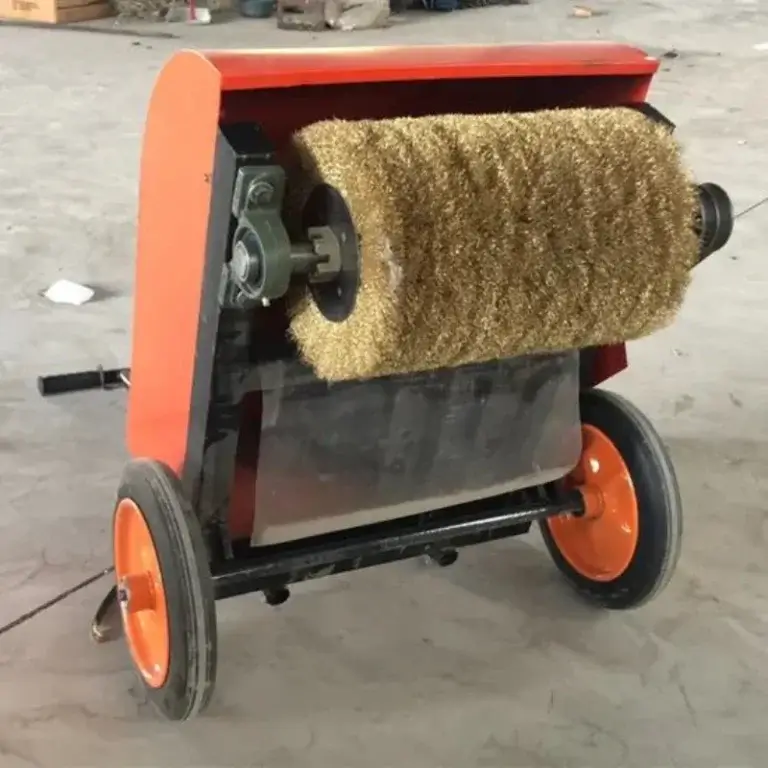
Industrial cleaning and surface preparation rarely get the attention they deserve. Rust, scale, weld slag, and caked-on deposits inside pipes, bores, and chain links slow down maintenance crews and shorten the service life of expensive components. A brass spiral brush is one of the most common tools for these jobs, yet most buyers pick one by price or by what happens to be in stock. The result is a brush that wears out fast, scratches the workpiece, or simply cannot reach the contamination that matters.
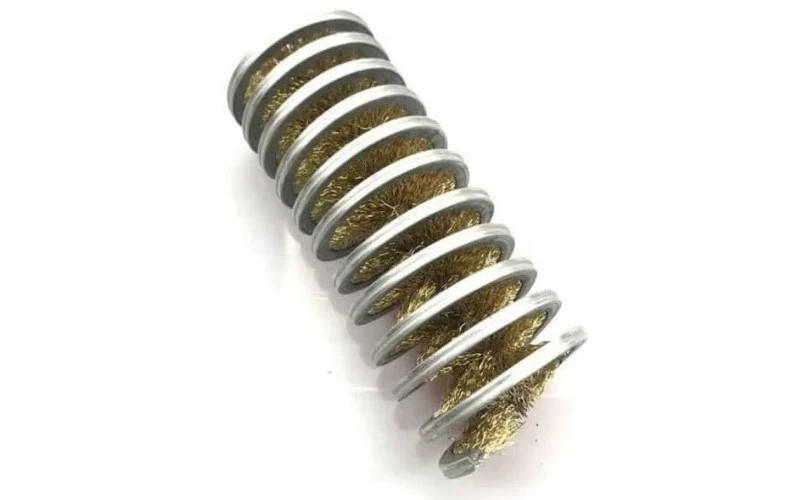
Winding density, measured as the number of wire coils per inch or per centimeter along the brush body, is the single most important specification controlling how a brass spiral brush behaves in service. Denser winding produces a stiffer, more aggressive brush that removes heavy contamination quickly, while a looser winding flexes more, protects the base material, and suits lighter or more delicate cleaning work. Get this one parameter right, and the rest of the selection process becomes straightforward.
This guide explains what winding density actually means on the production floor, how it changes cutting action, wear rate, and cost, and how to translate your cleaning problem into a density specification. We also cover the common mistakes that send buyers to the wrong configuration, along with practical numbers you can use when talking to a supplier. If you are new to this product family, start with the basics of what a brass coil brush is before diving into the technical detail below.
What Is Winding Density in a Brass Spiral Brush
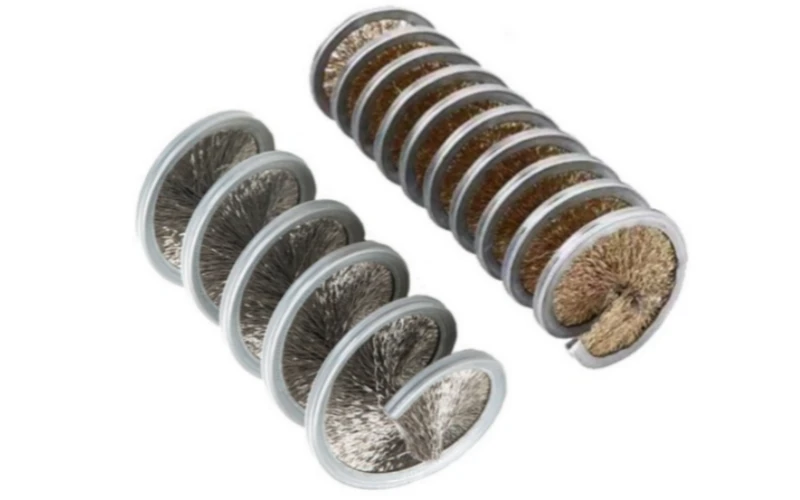
Winding density is the number of wire coils per unit length along the mandrel or core of the brush, typically expressed as coils per inch (CPI) or coils per centimeter. A brush with 10 CPI packs twice as many wire turns into the same length as a brush with 5 CPI, which changes everything about how the brush feels and cuts.
Three variables work together to define a spiral brush:
The winding density is set during manufacturing by how tightly the wire is fed onto the rotating core. A dense pack puts more wire in contact with the surface at any given moment, which increases contact pressure and material removal. A light pack spaces the coils out, so each wire has more room to bend and less total metal touches the workpiece.
There is an important trade-off hidden in this definition. Density interacts with wire diameter: a brush with fine wire at high density can feel softer than a brush with thick wire at medium density. When suppliers quote a brush, they normally state the wire gauge, the trim length, and the CPI together, because none of these numbers means much on its own. Ask for all three if you are comparing quotes from different manufacturers.
How Winding Density Affects Cleaning Performance
Higher winding density increases cutting power, surface contact, and workpiece aggression, while lower winding density improves flexibility, surface finish quality, and access to irregular profiles. Performance differences show up in four measurable areas: material removal rate, surface finish, heat generation, and brush life.
Material Removal Rate
Material removal follows a simple logic. More wire in contact means more cutting edges working at once. A dense brass spiral brush strips rust and mill scale noticeably faster than a loose one when both use the same wire diameter and trim length. In controlled shop-floor comparisons, operators routinely report that a high-density configuration finishes a heavy rust job in roughly half the passes of a light-density brush on the same pipe.
Surface Finish Quality
Surface finish behaves in the opposite direction. A dense brush tends to leave a more uniform, but also more textured, scratch pattern because the wire tips are held rigidly against the part. A looser brush follows the surface with less force, so it leaves a finer finish and does less damage to soft base metals such as aluminum or thin-wall tubing.
Heat Generation
Heat is the variable most buyers forget. Dense winding generates more friction, which matters on long continuous runs and on thin-walled parts where overheating can distort the metal or ruin a heat-treated surface. Brass also deposits onto steel under heat and pressure, which is fine for some applications and unacceptable for others. If you are cleaning parts that will be welded or coated afterward, check for brass transfer and adjust either the density or the speed.
Brush Life & Wear
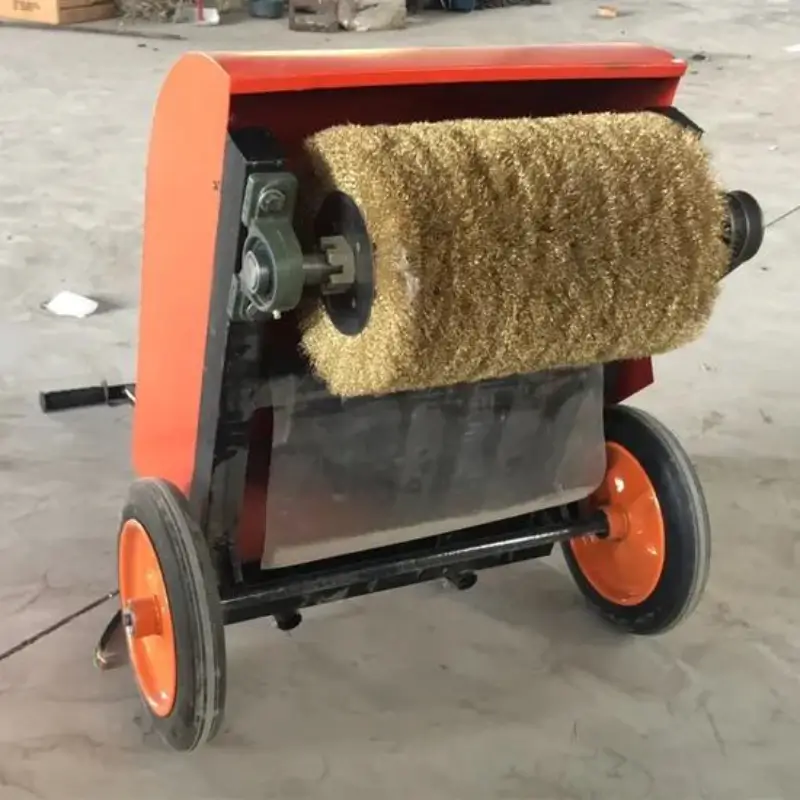
Brush life follows a curve rather than a straight line. Dense brushes remove more material, but they also wear their own wire faster because each filament carries a heavier load. A very dense brush can burn through its trim in days on abrasive surfaces, while a moderately dense brush doing the same job might run for weeks. For heavy rust removal on large diameters, a brass wire wound cylinder brush with a dense pack is the standard choice; for repetitive fine cleaning, the looser build wins on total cost.
Open vs. Dense Winding: Choosing the Right Configuration
Choose dense winding for heavy contamination, hard base metals, and fast throughput. Choose open winding for light contamination, soft or finished surfaces, and cleaning jobs that need the brush to follow an irregular shape.
Use this decision table as a starting point:
Open winding is also the safer choice when the brush diameter is close to the workpiece diameter. A dense brush has almost no give, so it can bind inside a bore or snap its core if the operator pushes too hard. Loose coils compress and ride over small irregularities instead of jamming.
Chain cleaning is a good example of the trade-off in practice. A brass inside coil brush designed for 360-degree chain cleaning needs enough density to scrub the link pockets where grease and grit pack in, but enough openness to wrap around the chain profile without tearing the wire out. Medium density with a slightly longer trim usually does both jobs.
There is no universal “best” setting. The right choice depends on the contamination, the workpiece, the tool speed, and how much surface damage you can tolerate. When in doubt, run a sample on scrap material first, then adjust density or speed before committing to a production quantity.
Winding Density and Brush Lifespan
Density affects lifespan through wear rate, heat buildup, and the mechanical stress each wire experiences, so the longest-lasting brush is not necessarily the densest one.
Every wire in a spiral brush is a small cantilever beam. When the brush rotates, each coil flexes, strikes the surface, and rebounds. Dense winding increases the number of impacts per revolution, which accelerates fatigue at the wire root near the core. This is why a brush that looks brand new can suddenly shed whole coils: the wire did not wear down; it broke at the root after millions of flex cycles.
Practical Rules for Extending Brush Life
Three practical rules keep brushes alive longer:
Match density to the material hardness. Brass wire on hardened steel wears quickly no matter how it is wound; if the base metal is harder than the brush, plan on replacing the brush regularly.
Keep the brush speed within the manufacturer’s rating. High RPM with dense winding multiplies fatigue and heat.
Let the brush do the work. Forcing a dense brush harder into the part does not clean faster; it bends the wire past its elastic limit and shortens life sharply.
Heat Effects on Lifespan
Heat also shortens life in a way that is easy to miss. Friction raises the temperature at the wire tips, and brass softens noticeably above a few hundred degrees Fahrenheit. A dense brush on a fast spindle can reach that range in seconds on a dry surface. Slowing down, adding lubrication where the process allows, or dropping to a lighter density all extend service life.
Cost Analysis & Replacement Strategy
Cost analysis should include the brush’s duty cycle, not just the purchase price. A cheap, dense brush that lasts one shift is more expensive than a moderate-density brush that lasts three weeks, once you count downtime and labor to change tools. Ask suppliers for typical life figures on your application and track your own replacements, because published ratings are based on ideal conditions.
How to Specify Winding Density for Your Application
Specify winding density by working backward from the contamination type, the workpiece material, and the required finish, then state your requirement as a target CPI range with a tolerance.
A practical specification process looks like this:
- Identify the contamination and its thickness. Heavy scale and rust need cutting power; light soot and dust need coverage more than force.
- Define the acceptable surface finish. If the part goes to plating or coating, the brush sets the final profile, so choose density and wire size together.
- Check the workpiece geometry. Bores, threads, and chains have different access requirements that often override the density you would pick for a flat surface.
- Set the operating speed. Higher RPM lets you use a slightly lighter density for the same material removal, which improves finish and life.
- State the CPI range on your purchase order. Give the supplier a band, for example 7-9 CPI, rather than a single number, and confirm the wire diameter and trim length at the same time.
If you are still narrowing down options, a coil brush material guide can help you separate the density decision from the material decision. Density controls how the brush acts; material controls how it interacts chemically with the workpiece. Brass is chosen for non-sparking behavior in some environments, for softer-than-steel contact, and for its ability to leave a clean surface without embedding carbon steel particles.
Sampling is worth the money. Most reputable suppliers will build a short test brush at your target density so you can run it on your actual parts. Measure three things during the trial: time per part, surface finish, and brush wear per hour. Those three numbers tell you whether the density is right better than any catalog table.
Common Mistakes When Selecting a Brass Spiral Brush
The most expensive mistakes come from buying on price alone, ignoring the density spec, and assuming one brush can handle every job in the shop.
The first mistake is treating all brass spiral brushes as interchangeable. Two brushes with the same outside diameter and wire gauge can behave completely differently if their winding densities differ. Without a CPI spec on the order, the supplier sends whatever they stock, and the production crew ends up fighting the tool instead of the rust.
The second mistake is overspecifying density. Buyers often assume that more wire is always better, so they order the densest brush available. On heavy steel, that works. On aluminum, thin tubing, plated parts, or any job where finish matters, it ruins workpieces and eats brushes. Read the guide on how to choose a brass coil brush before locking in a dense configuration, because most field problems trace back to a mismatch between density and workpiece.
The third mistake is ignoring speed and feed. A brush that works well at 1,500 RPM becomes an aggressive cutter at 3,000 RPM because impact energy per wire rises with the square of the speed. Operators who change spindle speed without changing the brush are effectively re-specifying the tool on the fly.
The fourth mistake is skipping the basics of safety. Powered wire brushes throw debris and can eject broken wire at speed, so eye protection, gloves, and a stable workpiece setup are non-negotiable. The general guidance on powered brush safety from OSHA applies to spiral brushes just as it does to abrasive wheels, and following it costs nothing compared to a shop-floor injury.
FAQ
Q1: Is a tighter or looser winding better for rust removal on pipe interiors?
For thick rust and scale on steel pipe, tighter winding removes material faster because more wire contacts the surface at once. Use a dense pack when the base metal is hard, and the finish requirement is loose. If the pipe is thin-walled, soft, or the rust layer is light, a looser brush removes less metal per pass but protects the tube and lasts longer.
Q2: Does winding density change the price of a custom brass spiral brush?
Yes, but not by much per brush. Dense winding uses more wire per unit length, so material cost rises with CPI. The bigger cost driver is usually the manufacturing setup and the wire diameter. When comparing quotes, ask for the CPI of each option, because a lower-priced brush may simply be a lighter density that will clean slower or wear faster.
Q3: Can winding density be adjusted after a brush is manufactured?
No. Density is set during the winding process and cannot be changed on a finished brush without unwinding and rebuilding it, which is not economical. If a stock brush performs poorly, the practical options are to change the spindle speed, alter the trim length specification on the next order, or buy a custom brush built to the target CPI range.