
Walking through a manufacturing plant, one might notice a variety of tools that seem simple at first glance but are actually the result of intense engineering. Among these, the brass coil brush stands out as a particularly versatile, albeit sometimes overlooked, hero of the industrial world. It’s that spiral-shaped component often seen spinning away in the belly of a machine or tucked inside a tube, quietly ensuring that surfaces remain clean and parts remain functional.
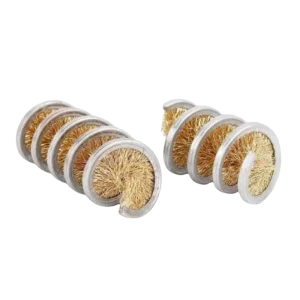
A coil brush, in its most basic essence, is a strip brush that has been wound—usually around a mandrel—to form a cylinder or a helical shape. When that brush is made with brass filaments, it takes on a specific set of characteristics that make it indispensable for certain delicate, yet demanding, tasks.
The Fundamental Nature of the Brass Coil Brush
It is often said that the right tool for the job is half the battle won. In the realm of surface finishing, the brass coil brush represents a unique middle ground. It isn’t as aggressive as stainless steel, yet it possesses a certain “bite” that nylon simply cannot replicate.
The construction typically involves a metal backing—often galvanized steel or even more brass—that holds the bristles firmly in place. These bristles are then wound into a tight or loose coil, depending on what the specific application requires. It’s actually quite fascinating to watch the winding process; the way the straight strip transforms into a rhythmic, golden-hued spiral is a testament to the precision of modern brush-making machinery.
Why Brass? A Material Perspective
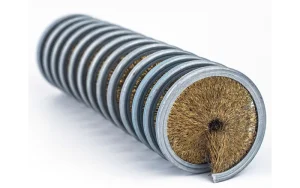
One might wonder why brass is the preferred choice for so many of these helical tools. Brass is an alloy of copper and zinc, and this combination grants it a few “superpowers” in an industrial setting:
Non-Sparking Properties: This is perhaps the most critical feature. In environments where flammable gases or explosive dust are present, using a steel brush is a recipe for disaster. A brass coil brush doesn’t create those dangerous sparks, making it the safety standard in the oil, gas, and chemical industries.
Corrosion Resistance: While it’s not entirely immune to the elements, brass holds up remarkably well against moisture and certain chemicals compared to plain carbon steel.
Surface Sensitivity: Brass is relatively soft. If the task involves cleaning a threaded part or a soft metal mold, a brass filament will remove the debris without “eating into” the base material. It’s a gentle touch (well, as gentle as an industrial brush can be).
Exploring the Inside Coil Brush Variety
When the conversation shifts to internal diameters, we encounter the inside coil brush. These are specifically designed to be inserted into pipes, tubes, or cylinders. One might think of them as the industrial version of a chimney sweep’s tool, but scaled down and made much more precise.
The inside coil brush is often used for deburring the internal edges of holes or removing scale from the interior of a heat exchanger. Because the brush is coiled, it provides a 360-degree cleaning surface that maintains constant contact with the inner walls of the workpiece.
The Mechanics of Internal Cleaning
In practice, the effectiveness of an inside coil brush depends heavily on the “lead” or the distance between the coils. A tight lead provides a denser scrubbing surface, which is great for heavy buildup. A wider lead allows for more flexibility and easier chip removal (because, let’s be honest, you don’t want the gunk you’re cleaning to get stuck inside the brush itself).
Technical Specifications: A Comparative Look
To better understand where the brass coil brush sits in the hierarchy of industrial tools, it helps to look at the numbers. While these can vary by manufacturer, certain patterns emerge when comparing materials.
Table 1: Comparison of Coil Brush Filament Materials
Key Applications and Industry Use Cases
It’s one thing to talk about what a brush is, and another to talk about what it does. From an observational standpoint, the brass coil brush finds its way into some surprisingly high-stakes environments.
1. The Automotive Sector
In the manufacturing of engines, there are countless small galleries and fluid paths that must be perfectly clean. An inside coil brush is often used to ensure that no stray metal shavings remain from the machining process. Even a tiny sliver of aluminum left in an oil gallery can lead to catastrophic engine failure (or at least a very expensive repair).
2. Plastic and Rubber Molding
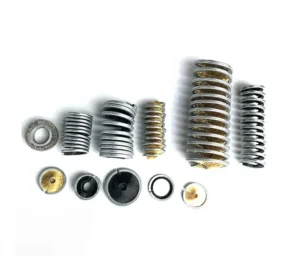
Molds are expensive. They are also prone to accumulating “flash” or residue. Using a steel brush would eventually wear down the precision-engineered surfaces of the mold. The brass coil brush is the go-to here because it can scrub away the residue while leaving the expensive steel mold unscathed.
3. Food and Beverage
Wait, brass in food? Usually, it’s for the outer parts of the machinery. However, in some specialized packaging lines where static electricity is a concern (which can lead to dust explosions in grain elevators or flour mills), the non-sparking nature of brass is vital.
4. Electrical Component Cleaning
Since brass is conductive, these brushes are sometimes used in applications where grounding is necessary or where one needs to clean electrical contacts without introducing the risk of rust (which steel might do).
Design Considerations: From Pitch to Diameter
When ordering a coil brush, there is no “one size fits all.” It’s a bit of a balancing act between several design factors. Manufacturers often ask for very specific dimensions because even a millimeter’s difference can change the brush’s behavior under centrifugal force.
Determining the Right Density
The density of a brass coil brush refers to how many filaments are packed into the backing and how close the “wraps” of the coil are to one another.
High Density: Provides a stiffer, more aggressive brush.
Low Density: Allows for more “flicking” action, which is actually better for removing light dust or wet slurry.
Common Maintenance Practices
Even though brass is durable, these brushes won’t last forever. One might notice that after heavy use, the brass filaments start to “set” or bend in one direction. This is common with any coil brush.
Rotation Reversal: If the machinery allows, periodically reversing the direction of the brush can help keep the filaments straight and extend the tool’s life.
Regular Cleaning: It sounds redundant to clean a cleaning tool, but a brass coil brush can become “loaded” with the material it’s removing. If you’re cleaning plastic residue, eventually the brush will just be a smooth cylinder of plastic.
Storage Matters: These shouldn’t be left sitting on their bristles. Hanging them or storing them in their original shipping tubes prevents the weight of the core from crushing the brass filaments on one side.
Conclusion: Why the Brass Coil Brush Remains Relevant
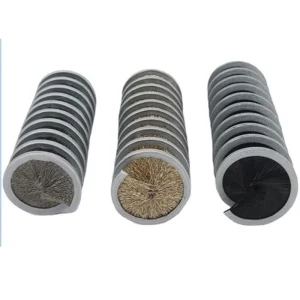
In an era of lasers and high-pressure water jets, the humble brass coil brush remains a staple. Why? Because it is predictable, cost-effective, and safe. It doesn’t require complex software to operate, and it provides a physical, tactile cleaning action that “contactless” methods often struggle to match.
Whether it’s a standard coil brush for a conveyor system or a precision inside coil brush for aerospace tubing, the golden spiral of brass continues to be the silent partner in industrial quality control. It’s not the flashiest tool in the shed, but when you need a surface clean, a part deburred, or a spark-free environment maintained, it’s exactly the tool you’ll find yourself reaching for.