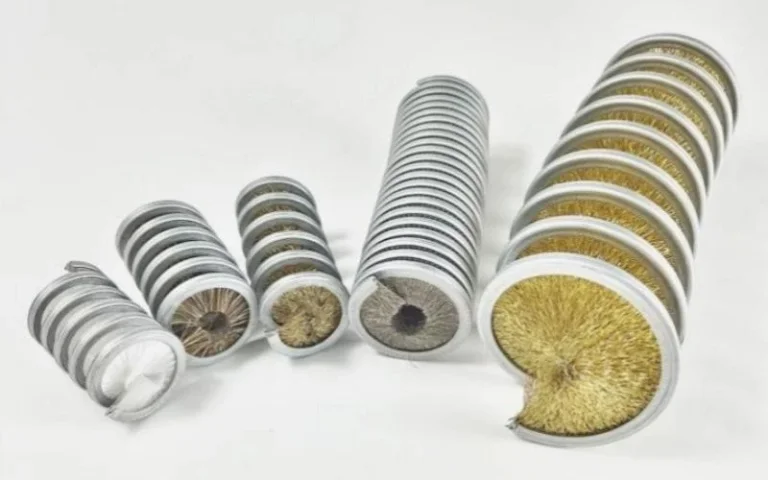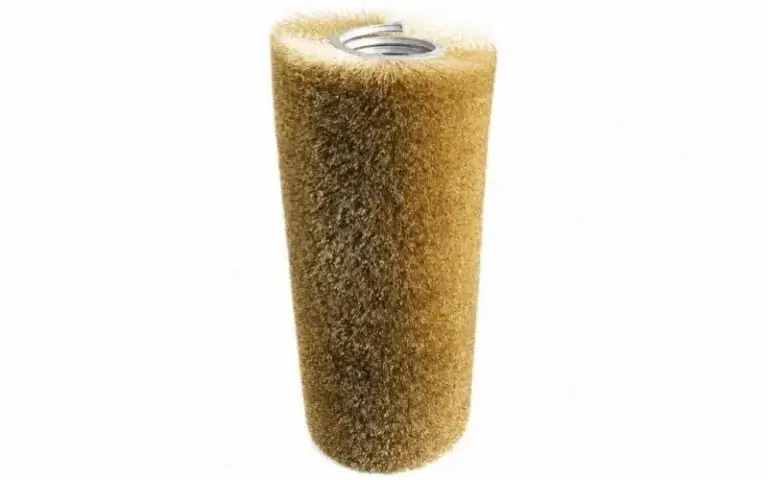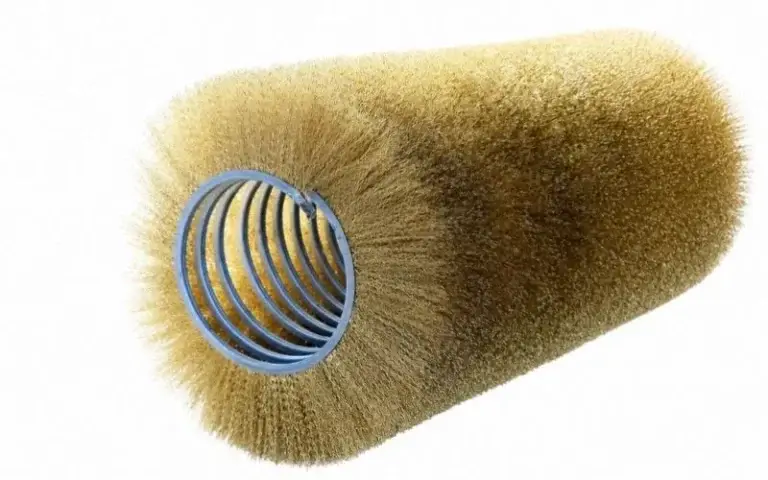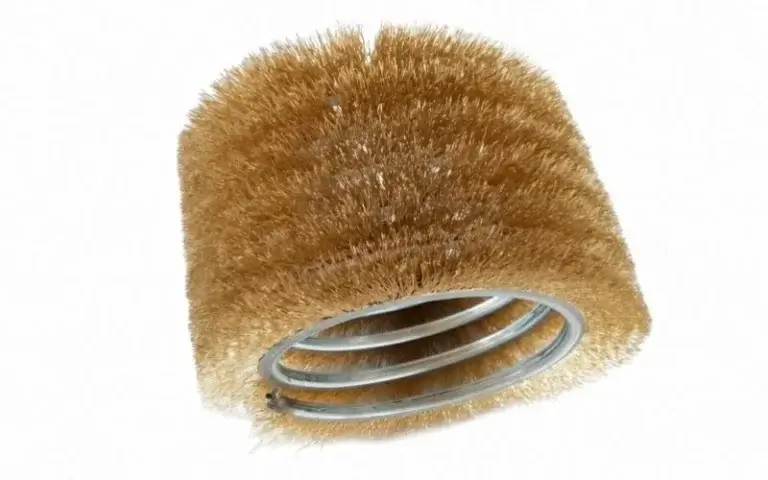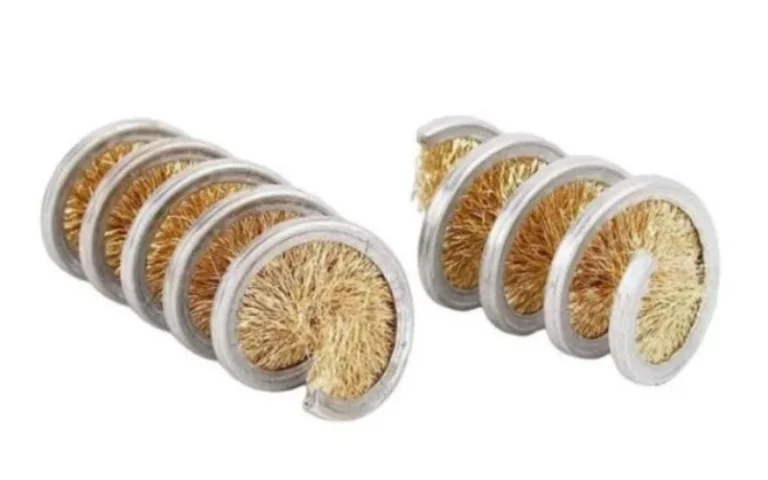
When it comes to selecting the right brush for non-ferrous cleaning, polishing, or burr elimination, there is often more than one option available, and you need to do your homework before making a decision. The brass coil brush is an example of a specialized product in the industrial brush marketplace, exhibiting both flexibility for safe use on delicate substrates and enough rigidity to provide predictable mechanical performance throughout long production runs. By understanding your selection criteria before selecting a brush, you will avoid costly mismatches between brush specifications and process requirements.
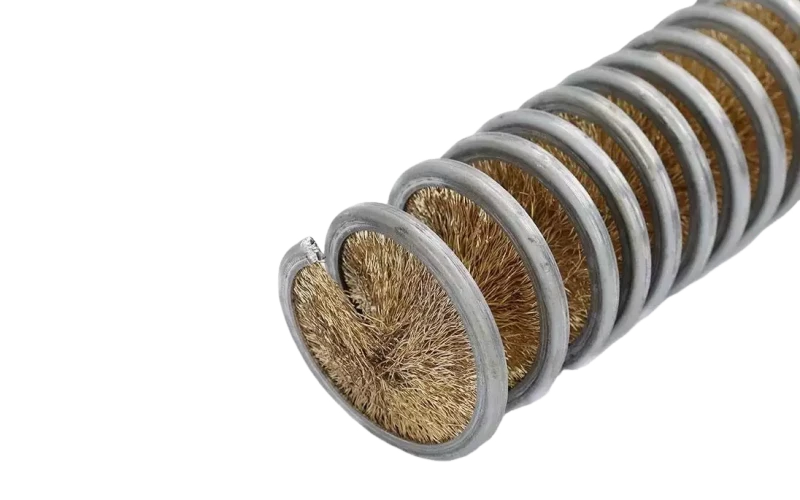
Technical Considerations of Brush Selection
When placing an order for a brush set, it is important to understand the technical aspects involved in the manufacture and use of that type of brush. This guide will help you evaluate practical procurement considerations and provide a foundation for understanding how these brushes work.
Brass Wire Is Used as There Is No Substitute
To know why brass is typically used in coil brushes, it is also helpful to understand the reasons brass wire is typically used in coil brushes. There is no other common filament material providing the same unique set of properties combined into brass.
- Non-sparking properties allow for safe use near combustible materials, or in environments where explosions are a hazard.
- Softness means that they won’t damage softer materials like aluminum, copper, or polished surfaces.
- Resistance to corrosion means they can consistently perform under humid or wet conditions and in chemical environments.
- Conductive materials have value during static dissipation applications, as well as for cleaning electrical contacts.
A more comprehensive comparison of brass against other filaments such as nylon and steel is available in the Coil Brush Material Guide for easy side-by-side visual examination.
Important Specifications for Evaluating Your Brass Coil Brush
Brass coil brushes are a type of custom-made manufacturing product. You should specify these characteristics prior to asking any companies to quote you for a brass coil brush.
Filament Diameter
Filament diameter (or wire gauge) controls how aggressive a brush you would like to order. A thicker brass wire filament gives you more cutting force per filament but has less flexibility. A smaller brass wire filament conforms to irregular shapes or surfaces but will provide less cutting force compared to stiffer (thicker) filaments and will wear away quicker than a thick wire filament.
| Type of Wire Gauge | Typical Wire Diameter | Typical Use |
|---|---|---|
| Fine Wire | 0.1 to 0.15 mm | Polishing and light deburring, surface finishing |
| Medium Wire | 0.2 to 0.25 mm | General cleaning and oxide removal |
| Heavy Wire | 0.3 to 0.4 mm | Aggressive removal of scale/weld cleaning |
Coil Pitch & Brush Density
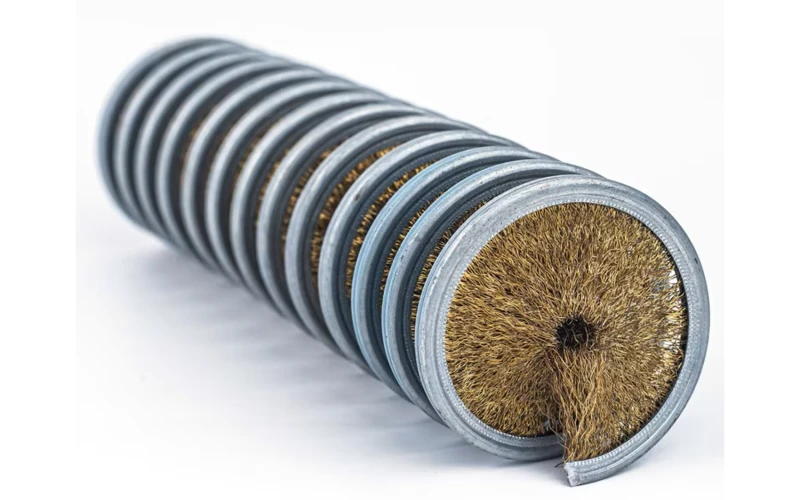
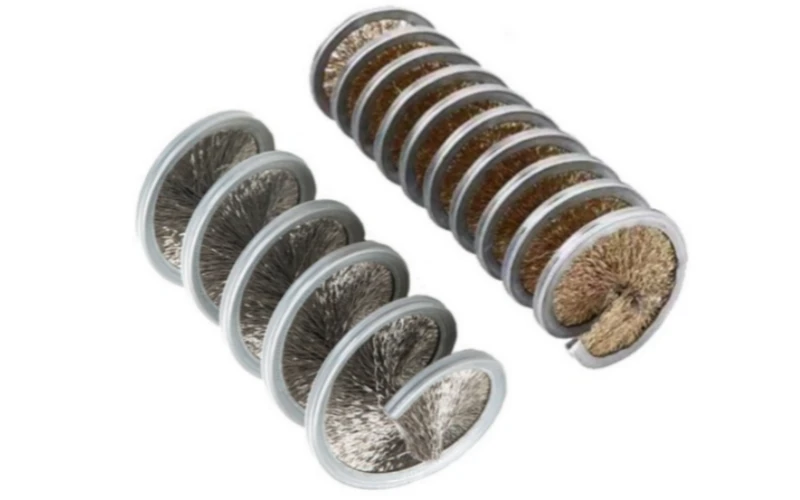
The pitch refers to how much space there is between each of the wound coils on the shaft. If the pitch is tighter, it will create a denser brush face. Conversely, if the pitch is wider, it will create a more open structure. The correct choice depends on the application:
- Close-wound (tight pitch): Provides maximum filament density with even cleaning pressure on flat substrates.
- Medium pitch — Balanced density for general-purpose cleaning and polishing.
- Open pitch — Allows debris to fall away from the brush face, ideal where contamination buildup is a concern.
Qualified engineers typically recommend that the pitch should be a little bit more open than your instinct may say when there is a lot of debris that is created by the process. If a brush gets clogged, it has a much lower efficiency than if it has a slightly lower contact density.
Core or Shaft Configuration
The core that the brass strip is wrapped to affects both its performance and the cost of replacement.
- For pre-assembled units, ready-to-install units with journals and no downtime.
- Customer-supplied shaft winding — The customer will provide their own shaft, and it will be used to wind the strip.
- Replacement coil strips — Used cores can be re-wound, resulting in the lowest cost per change.
For instances where internal cleaning of the cylinders is required instead of just treating the external surface of the cylinder, an inside coil brush configuration may be better than just standard outside-wound versions.
Aligning Brush Specifications with Their Use
Selecting a brush is simplified by beginning with the completed application. A few different applications dominate the use of brass coil brushes:
Cleaning Non-Ferrous Metals
Because of how soft the substrate is when cleaning aluminum extrusions, copper tube, or brass fittings, a steel wire is not a viable option. A medium-pitch coil cleaning brush using fine to medium brass is very effective in removing oxides and contaminants without scratching the substrate.
Polishing and Surface Finishing
When creating a uniform polished finish, using a high-density fine brass wire is the preferred method of doing so. In decorative applications, the slight part of the brass that transfers onto the workpiece can assist the appearance as well; something that a synthetic filament is unable to replicate.
Spark-Sensitive Environments
Many types of applications, such as those involving chemical processing, handling of fuel, or storage of grains, require non-sparking tools. The brass coil brush is a rotary cleaning tool that meets the required safety standards and provides significant mechanical action during use.
Factors Relating to Sourcing and Purchasing
Several factors other than the technical specifications can affect the total cost of ownership when making a purchasing decision.
Quantity of Order—Most suppliers will sell at a minimum quantity of between 1 and 50 pieces (depending on the manufacturer), with larger bulk purchase pricing for larger quantities.
Lead Time on Custom Sizes —Standard size shipments will ship quickly from the factory, but lead time for custom diameter(s) or length(s) can be greatly extended (by approximately 2–4 weeks).
Replacement Strip Availability —This should be addressed when placing initial orders so that there will not be a future shortage of supply.
Tolerance Specifications —Tighter tolerances on bore size and runout matter more for high-speed applications.
A common observation is that while individual brush costs are important, the brush with the lowest cost per unit may not provide the lowest overall cost of ownership. Factors such as density, length of filament retention, and core design all have a direct effect on the life of the brush, with a better-coiling brush generally outperforming its generic alternative by a significant amount.
Specification Misfires
The following mistakes are commonly made by purchasers of these products, and avoiding them will save buyers from extra costs and downtime.
- The specification calls for steel wire, instead of brass, to be used for the substrate, resulting in substrate damage due to the wire not being appropriate for that application.
- The pitch selected is too tight and results in quick build-up of debris during the process.
- Shaft compatibility is a factor ignored so that purchasers will require an adapter and face a delay in installation.
- The filament length is specified as too short, and after use the brush will not have the depth of bristle necessary to be in contact with the substrate.
- RPM ratings play an important role in determining how many brushes are needed based on how fast each brush will spin.
Frequently Asked Questions
Q1: Can any rebound spring-type coil brush be custom-made to fit my equipment?
Yes. Most manufacturers provide complete custom solutions, such as diameter and length of each brush, bore opening size, filament wire gauge, and pitch configuration, so that you can get exactly what you need for whatever equipment you are using.
Q2: What is the average minimum order quantity (MOQ) for bulk brass coil brush orders?
MOQ can vary depending on the supplier as well as how much customization you require. Most suppliers will accept order quantities starting at 10 to 50 pieces, and if you need to order more than that, you’ll be given a tiered price structure based on volume.
Q3: Can brass coil brushes be used in wet or chemically processed environments?
Absolutely! Brass does not rust as readily as steel filaments, and so it holds up quite well to humid, wet, and mild chemical conditions.