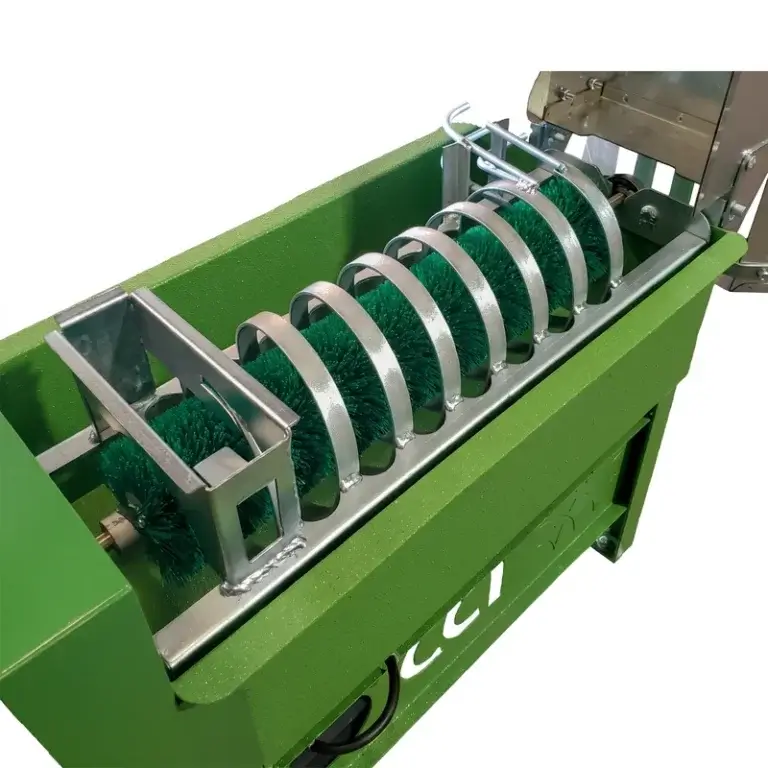
Industrial roller brushes work continuously against moving product, so how the filaments are anchored to the core determines how they clean, cut, and wear. The two big constructions are seldom sharply contrasted. The purchaser is left with a brush that clogs, mars the work, or dies early. Wave-crimp and straight-drill roller brushes differ in the method of holding the filament. Wave-crimp crimps a strip into a wave, wrapping it around a core, resulting in a dense, almost continuous face and a reusable core. Straight-drill anchors tuft filaments into holes drilled in a solid core, allowing tunable density and patterns, a favorable balance at speed, and high rigidity. The surface, the debris, and the speed are the right choices. The comparison below includes cost, construction, performance, and application.
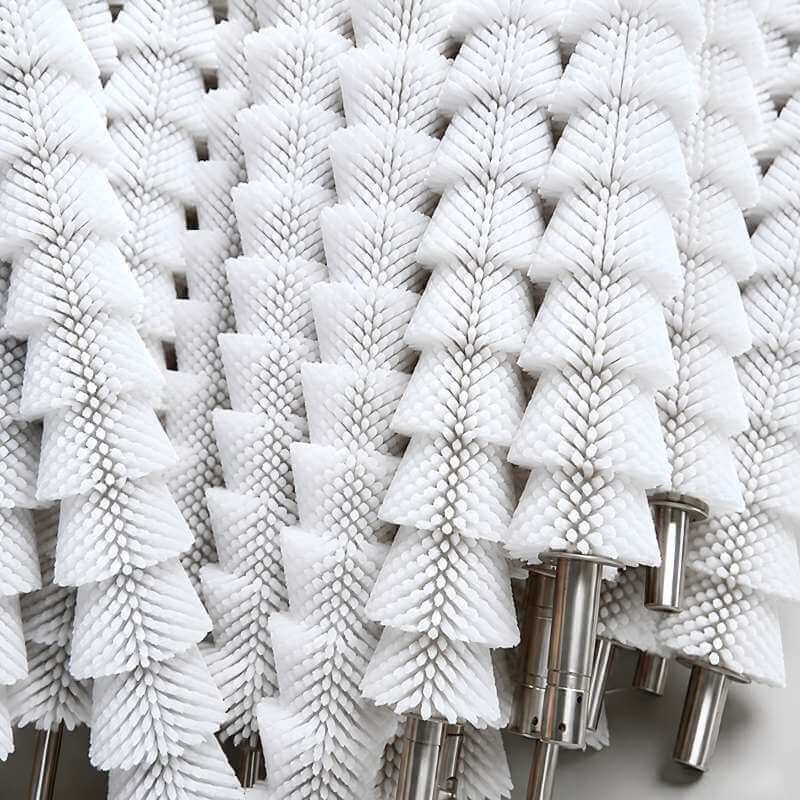
Every Construction Is Built
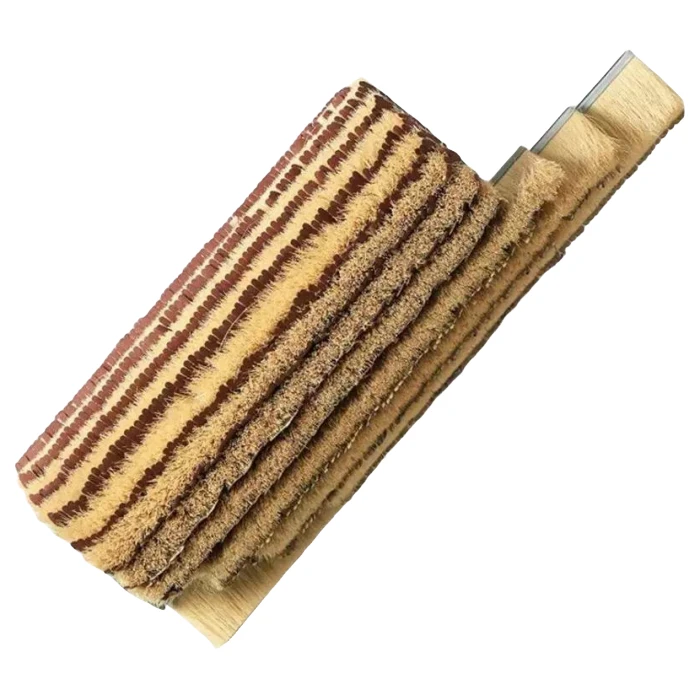
Wave-crimp loads filament into a metal channel. It crimps the filament into a wave and winds the strip in a helix around a core. Straight-drill anchors penetrate filaments in holes drilled in a solid core.
Wave-Crimp (Crimped Strip) Design
A U-shaped metal strip is filled with filament and crimped to produce a wave profile in the backing, which clamps the filament without adhesive, and the strip is then wound in a helix around a shaft or tube. The wave lets adjacent coils interleave; thus, the wound face reads as a continuous surface and not separate rows. Suppliers also call this crimped strip spiral wound or coil, so it helps to recognize strip brush construction in a quotation.
Straight-Drill (Tufted, Staple-Set) Construction
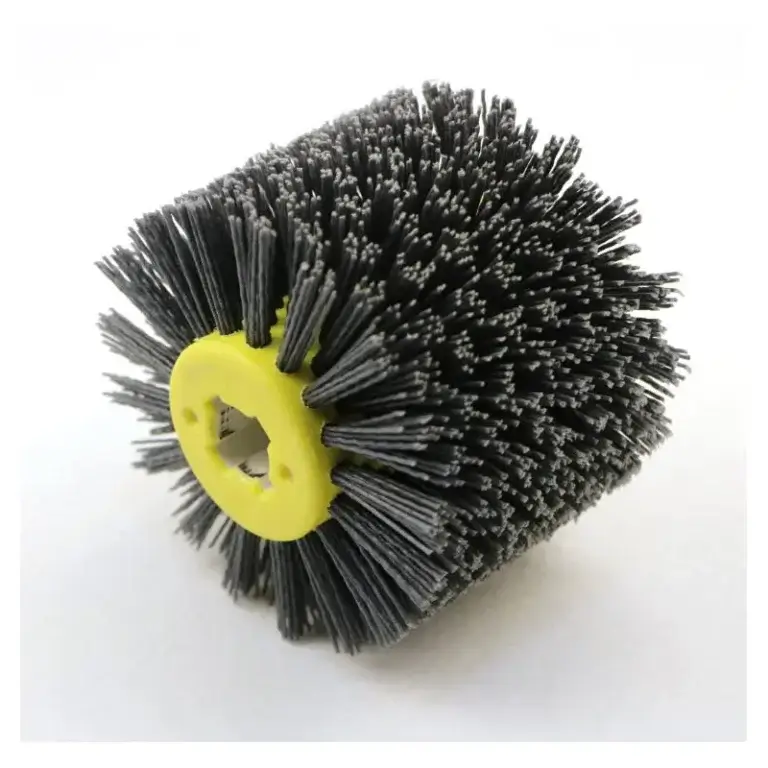
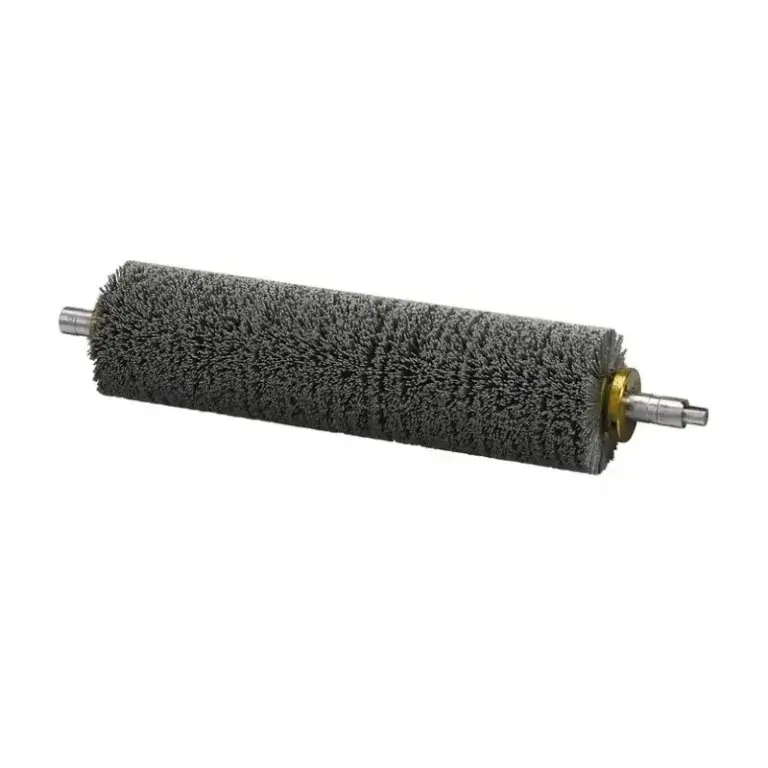
A straight drill roller is made from a solid core of plastic, wood, steel, or aluminum. Radial holes are drilled into it, and filament bundles are pressed in and fastened with a staple or an anchor. The maker puts the holes there deliberately so he can control the diameter of the holes, the spacing between them, the angle of the tuft, and the pattern, whether it’s a chevron or V rows that will direct the debris to one side. Density tracks hole spacing, so one core can do aggressive or open, nonclogging duties.
Application-Driven Performance Variations
Wave-crimp offers a continuous, forgiving face and easy core reuse. Straight-drill likes high density, precise patterns, rigidity, and balance at speed.
| Property | Wave | Tufted Straight Drill |
| Continuous brush face interleaved | Dotted tufted patterns | |
| Fill density | High, set by pitch | Very high (depending on hole spacing) |
| Cutting action | Softer, springy, shallow marks | Can make firmer, faster, and deeper marks |
| Debris clearance | Adjustable by pitch. | Adjustable through spacing and density |
| Stiffness with side load | Lower, depending on strip retention | High, of a solid core |
| High-speed balance. | Good, it relies on winding. | Great solid core fixed |
| The wrap can be replaced for core reuse | Generally replaced by core |
Fill Density and Face Continuity
Crimping opens the filament so that the strands interleave to lengthen the effective filament, and the wound face appears as one surface. The nominal density is higher for a straight-drill roller because holes can be drilled at virtually zero spacing. Use wave crimping for an unbroken face and straight drilling for most contact points.
Cutting action and debris removal
Crimped filament can flex independently so each strand gives at the point of contact and cuts with a light scraping motion that leaves shallow marks. Straight filament is stiffer, cuts faster, but is more likely to cause deeper scratches. The open area is followed by debris clearance, as pitch and tuft spacing allow easier passage of dust and chips. Either type of dense fill holds wet debris.
Balance, Rigidity, and Safe Speed
A solid, drilled core results in a rigid, well-balanced, high-speed spindle and side load. The wound strip is dependent on the strip and its end fixings, so extreme side loading and very high surface speeds should be checked with the maker. All power-driven brushes must be used at or below their maximum free speed rating and with the guarding required by the power-driven brushing tools safety standard.
Matching Construction to the Job
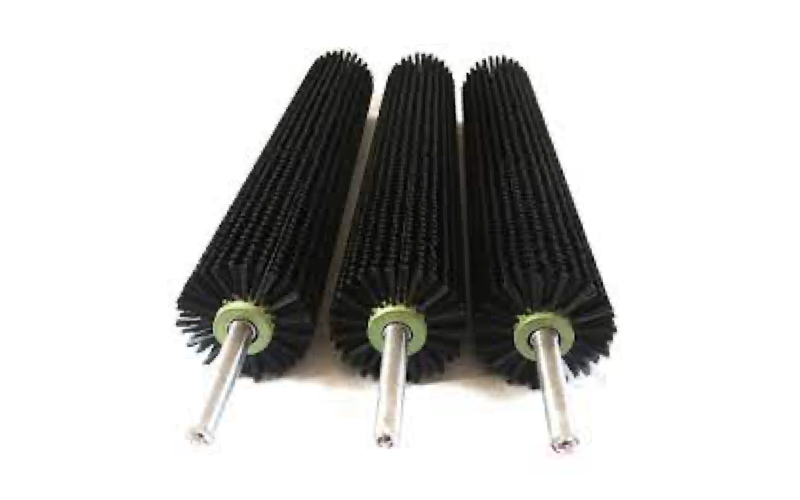
Use wave crimp when the face has to be continuous, the roller is long, or only the wrap is changed. For tight patterns, maximum density, heavy cut, or high-speed balance, use a straight drill. A continuous face and controllable pitch are ideal for conveyor and screen cleaning, glass and produce washing, and wide sheet finishing where the brush needs to cover a large surface area and allow debris to fall clear. Long rollers and lines that want to keep a proven shaft in service are also a natural fit, as only the wrap needs to be renewed. Drilled construction is safer where the brush must direct debris, deburr under load, or maintain balance at high speed.
Cost, Replacement, and Life Cycle
Wave-crimp typically reduces tooling and replacement cost as only the wrap needs to be replaced, and custom diameters require no drilled core. The straight drill has a higher setup cost but gives a rigid brush, which can be rebuilt to the same drawing.
Tooling and Cost per Unit
Wrap is specified by diameter and pitch and requires little dedicated tooling, so custom sizes remain economical. The core of a drilled roller must be drilled out or molded to the design, which increases setup costs, and it is worth checking a maker’s standing with the brush manufacturers association when volumes are small.
Core Reuse, Downtime, and Wear Pattern
The first to go are the long rollers, in the middle, where the two constructions diverge in cost. The wound roller can be re-wound or built up of replaceable modular sections so that a worn zone is replaced on-site without pulling the shaft. Normally, a drilled roller used in one band means the replacement of the entire core and the associated freight.
How to Specify a Roller Brush Properly
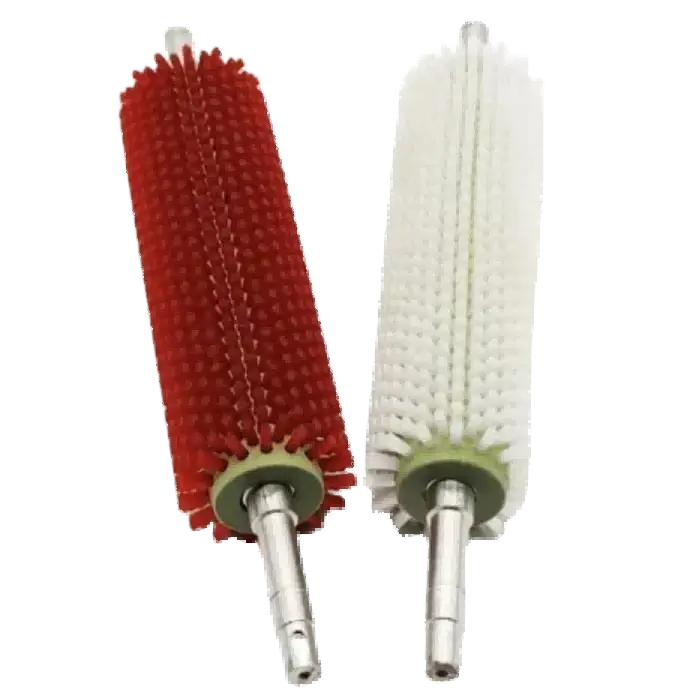
Please inform the manufacturer about the surface, debris, running conditions, and mounting, and then confirm the filament and balance specifications in writing. That tells whether to use wave-crimp or straight drill.
Data to Give the Maker
- Material and surface condition of the workpiece
- Action required: clean, deburr, polish, or convey
- Interference or contact pressure
- Rotation speed of line and brush
- Temperature, moisture, and chemicals
- Roller dimensions: diameter, bore or shaft, length, pitch, and direction
- Drawing, photograph, or worn specimen
Filament, Core, and Balance Specifications
Confirm filament type, diameter, and trim length, and either a crimp profile or straight, level form; Specify the core material and shaft interface, and request runout and balance tolerances and a measurement report, as these will determine vibration and life.
FAQ
Q1: Can I rebuild a wave-crimp roller on my existing shaft?
Often. Yes. The old wrap is taken off, a new one is wound on to the same diameter, pitch, and hand, so a tried shaft remains in service.
Q2: Why do roller brushes leave stripes or brush marks?
“Striping is generally a sign of spacing problems, not filament quality. If the spacing between coils or tufts is wider than the contact pattern demands, the surface is brushed in bands rather than continuously. Excessive interference or runout will cause the same symptom.
Q3: Which has more staying power, wave-crimp or straight-drill?
Neither has a default longer lifespan, as life depends on filament choice, interference, and speed. The crimped filament is more fatigue-resistant as it flexes and springs back, whereas a solid-core drilled roller will maintain its shape under heavy load.