Finishing lines rarely compare these two materials at the planning stage. The comparison usually arrives after a natural fiber brush dulls sooner than expected, or an abrasive nylon brush glazes over on a resinous panel, and the buyer is left with two quotations and no basis for choosing. The decision is not about which material is better in general but about which failure your line can absorb.
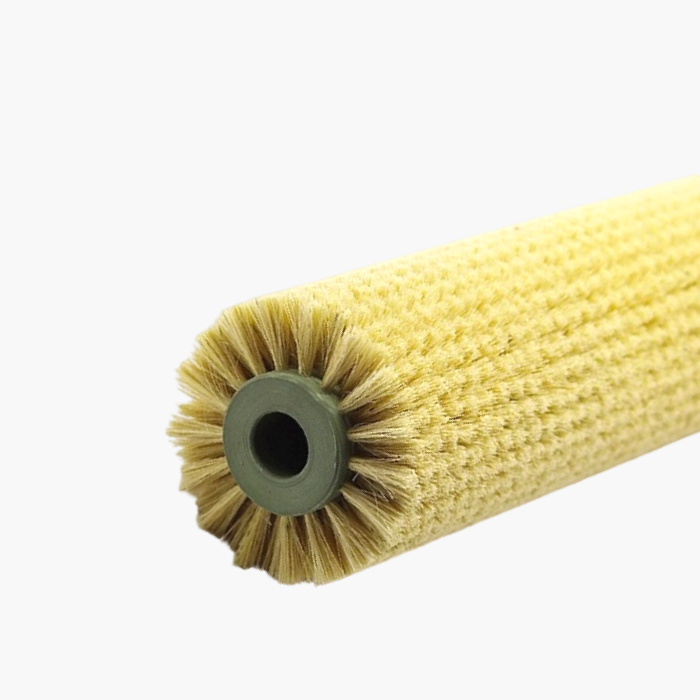
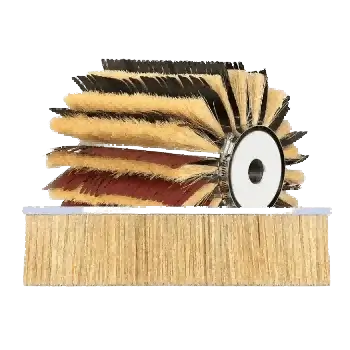
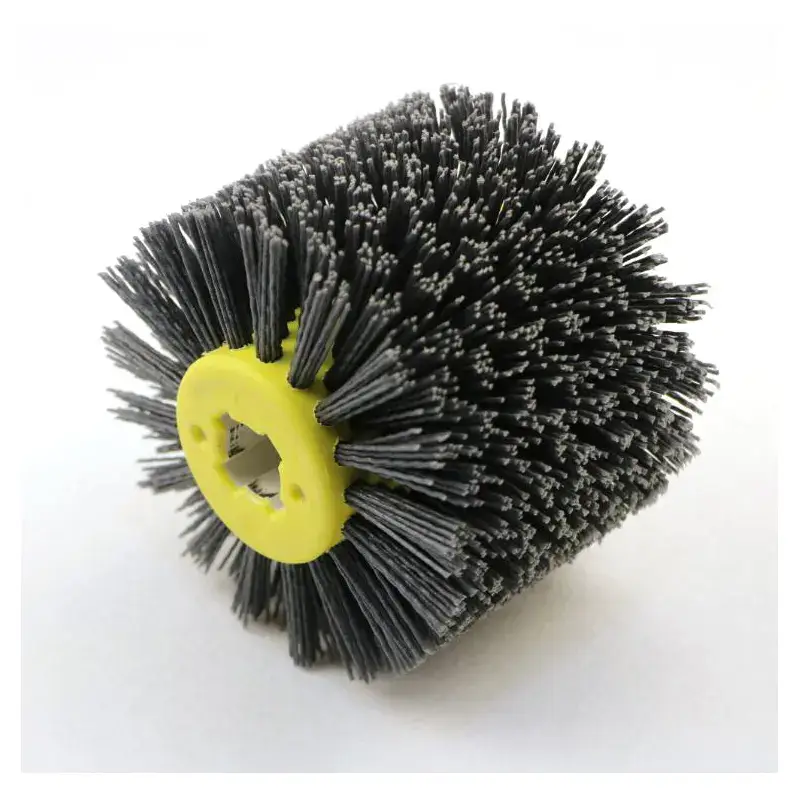
The distinction is mechanical. A sisal fiber cylinder brush scrapes and burnishes with stiff natural fibers, producing a soft blended surface and tolerating dry heat, while an abrasive nylon brush cuts with abrasive grain bonded into synthetic filament, removing material faster and holding a repeatable scratch. Choose sisal for texture, blending, inter-coat work, and dry high-heat stations, and abrasive nylon for controlled stock removal and finishes that must be measured.
The sections below compare the two materials on mechanism, station fit, aging, and cost per finished part, and then conclude with specifications and a trial approach.
What Is the Real Difference Between the Two Materials
One is a fiber tool whose sharpness comes from stiffness; the other is a coated abrasive in filament form whose sharpness comes from mineral grade, so the same physical brush construction produces two entirely different cutting actions.
Material Composition and Cutting Mechanism
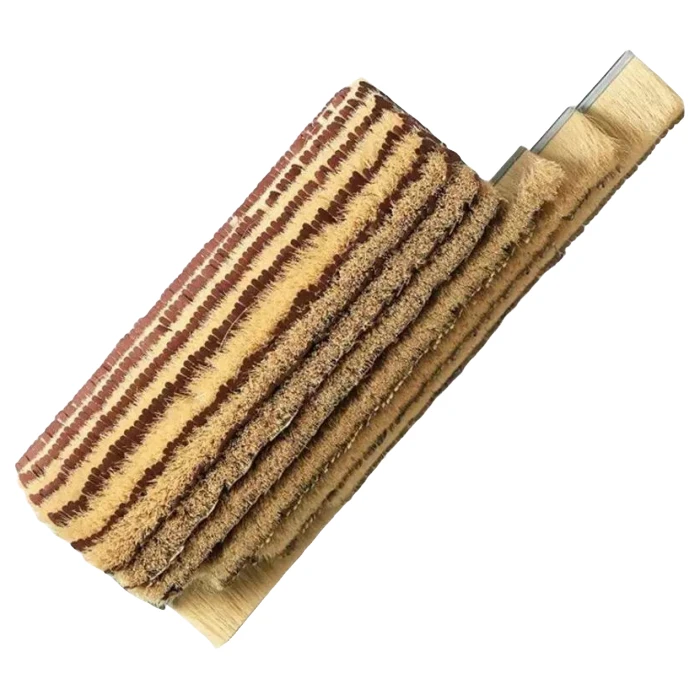
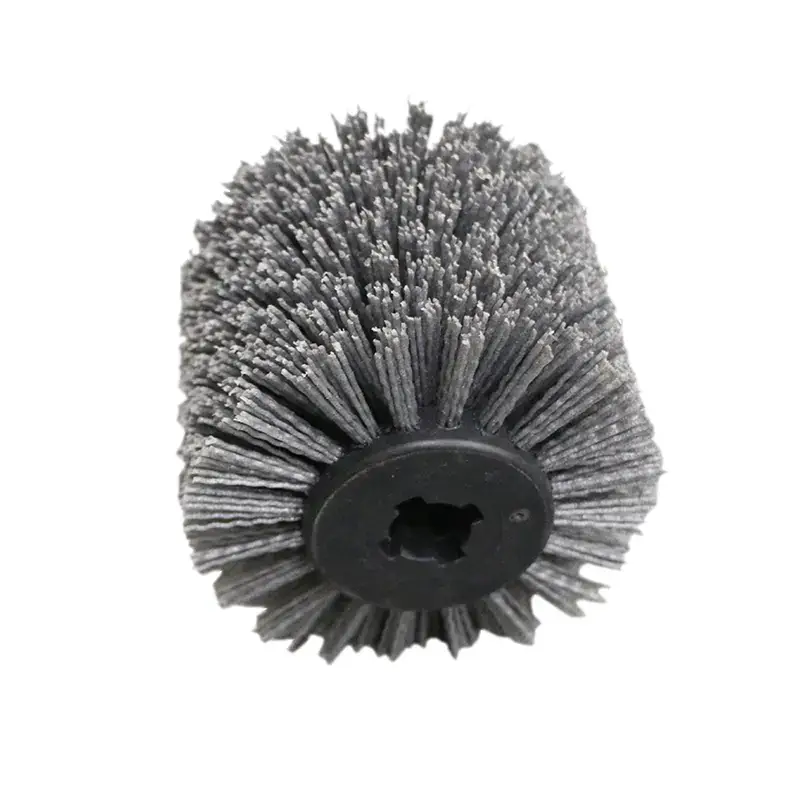
Sisal comes from agave leaf fiber, one of the stronger commercial natural fibers, bundled into a cylinder and sometimes augmented with abrasive strips. The cutting edge is the fiber tip itself, so the action is scraping and burnishing rather than scratching. Abrasive nylon instead bonds silicon carbide or aluminum oxide through a polymer filament, typically at 20 to 40 percent loading, so every tip carries a mineral of a defined size. That is why two brushes that look identical can behave nothing alike.
Abrasive Renewal and Grit Control
Abrasive nylon self-renews: as the tip wears, fresh grain is exposed, and the finish can be specified as a P grade and inspected against it. Plain sisal has no grade at all. Its aggressiveness is set by fiber stiffness, density, and trim, which is why a sisal brush behaves roughly like a P120 to P180 blend in effect rather than a precise cut.
Head-to-Head on Six Specs
Which Material Fits Which Station
Choose material station by station rather than line by line, because one finishing line usually needs both nylon, where stock must come off predictably, and sisal, where the surface must be blended or protected from overcutting.
Wood, Panel, and Veneer Work
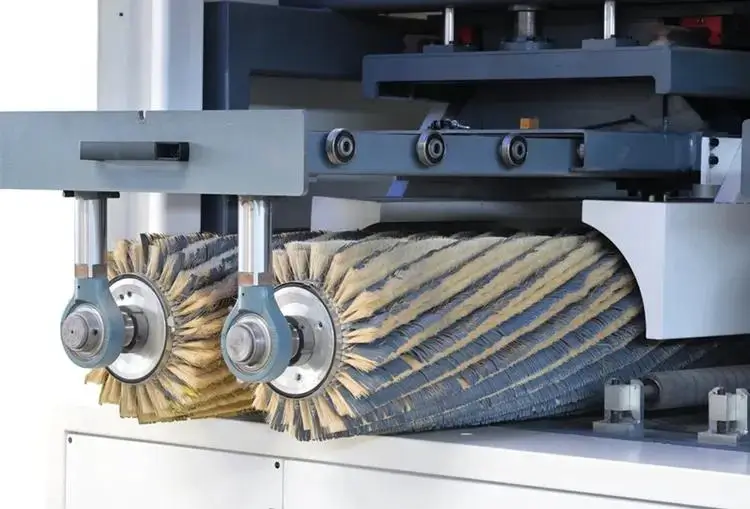
Flat panels belong to abrasive nylon at P120 to P180, where the requirement is even removal across a wide face and a quoteable grade. Sisal on flat stock tends to remove unevenly, because fiber stiffness varies with density and moisture rather than with a stated grade.
Inter-Coat and Profile Sanding
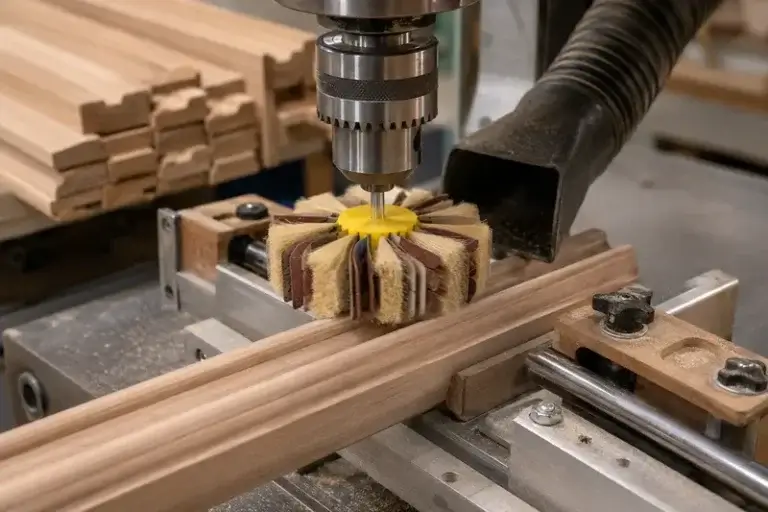
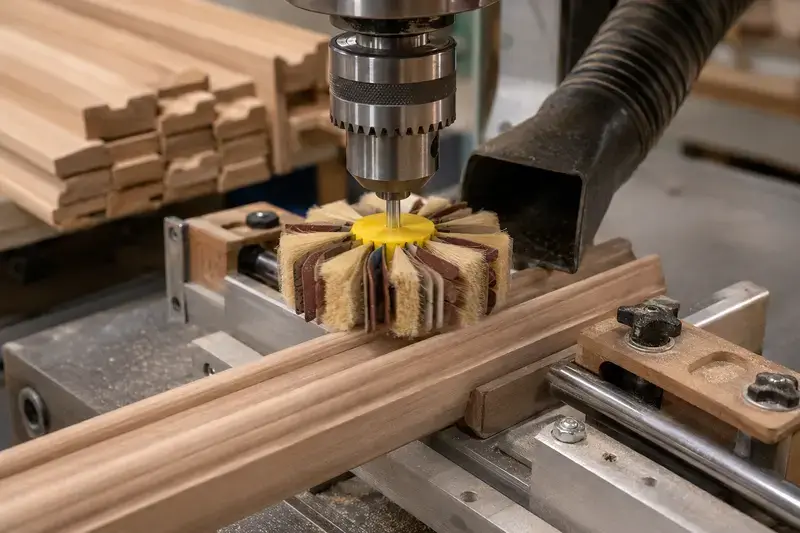
Sealer scuffing and shaped parts are sisal territory. Its action is broad and forgiving at edges, so it keys the next coat without cutting through at corners. Nylon can do the same job, but only at fine grades and low density, while a coarse grade rounds molding and carved detail that the profile exists to show.
Metal Deburring and Polishing
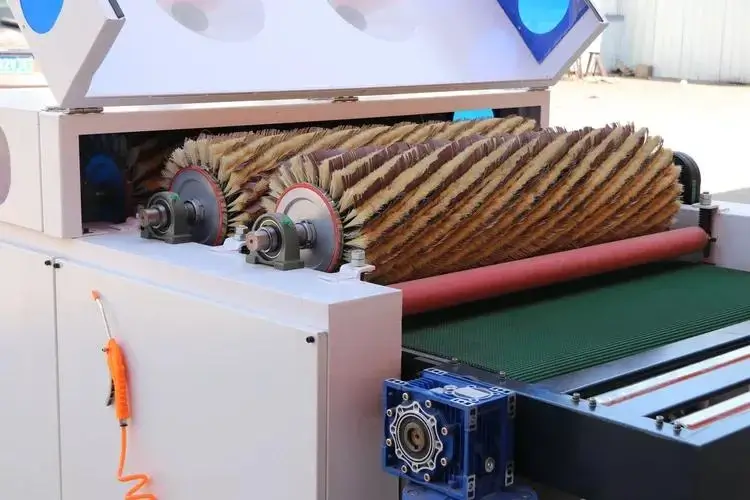
Aluminum, brass, and thin steel favor abrasive nylon, which produces a repeatable edge radius that inspection can accept. Polishing, buffing, and decorative texturing favor sisal, which holds compound, generates working friction without glazing, and leaves controlled variation. Many lines run both in sequence, nylon for removal and sisal for blending.
Heat, Moisture, and Wear: Where Each One Fails
Sisal tolerates heat, but not water, and nylon tolerates neither for long, and the two fail in opposite directions: nylon softens and glazes when hot, while sisal swells, weakens, and sheds when damp.
Temperature Limits
Common nylon bases soften near 120 C, and contact-point temperatures in dry brushing can exceed that even when the shop air feels cool. The first symptom is glazing: the brush polishes instead of cutting, and operators add pressure, which raises heat further. Sisal chars slowly and usually discolors at the tips first, giving maintenance a warning that nylon never offers.
Water, Washdown, and Storage
Nylon absorbs moisture, and absorbed water plasticizes the filament, so stiffness drops and recovers slowly. Sisal absorbs more, swells, loses tensile strength, and is prone to mildew, which is why natural fiber brushes should never be stored damp or left on a wet machine. On washdown stations, a PBT or PP filament outperforms both.
Fatigue, Matting, and Shedding
Synthetic filament fails due to fatigue. Repeated bending at one point causes the filament to take a set, mat the face, and stop cutting, even though the brush still looks serviceable. Natural fiber fails by fracture, so the face stays open and aggressive but releases loose fiber, which is a defect risk on painted surfaces and in clean rooms. In both cases, running above rated speed shortens life more than material choice does.
Which One Costs Less per Finished Part
Price per brush tells you almost nothing. Cost per finished part combines brush price, service life, rework, and changeover time, and on that measure the cheaper brush is often the more expensive one.
Building the Cost Comparison
The model is straightforward: divide brush price by parts produced per brush life, then add rework cost for damaged parts and the labor cost of changeover. Four figures are needed: brush price, parts per life, rework rate, and changeover minutes. Without plant data, any comparison is only a hypothesis.
Service Life in Real Conditions
Sisal cylinder brushes commonly run several hundred operating hours on continuous dry wood sanding, with typical reports of 300 to 500 hours at moderate pressure. Abrasive nylon often lasts longer in hours but ends its useful life earlier through glazing, so hours and acceptable parts diverge.
The Variable That Decides It
Rework rate dominates. A configuration with a lower brush price but twice the rework and a higher reject rate usually loses, which is why a two-week trial against real parts settles the argument faster than any quotation review.
How to Specify and Trial the Right Brush
Once material is chosen, diameter, density, trim length, core, and rated speed decide whether the brush performs, and the specification must be paired with a trial so the decision can be verified rather than debated.
What Belongs in the Specification
- Material and grade, or fiber stiffness class for natural fiber
- Outer diameter and working width
- Density, with the measurement method stated
- Trim length and usable wear allowance
- Core type, bore, keyway, and shaft end form
- Rated maximum speed and balance class
Speed, Balance, and Mounting Checks
Surface speed is the diameter multiplied by spindle speed, so the same brush cuts differently at a larger diameter. Confirm the rated maximum in writing, and treat imbalance or runout as a specification item, because a periodic pattern on the work is often misread as a feed problem when the cause is the brush.
A Short Trial That Settles the Question
Run both candidates on the same station, feed rate, and extraction for about 2,000 parts. Record roughness or gloss at the start and end of each shift, measure trim loss weekly, log rejects by defect type, and compare cost per thousand acceptable parts rather than cost per brush.
FAQ
Q1: Can a sisal cylinder brush be used with water or coolant?
Brief contact is tolerable; prolonged soaking is not. Sisal absorbs water, swells, loses strength, and may mildew, and the stiffness that makes it cut does not fully return. On wet stations, a PBT or PP filament brush is the safer specification.
Q2: Can a sisal fiber cylinder brush and an abrasive nylon brush run on the same line?
Yes, and many lines do. Keep the extraction matched to each brush, since sisal releases long fiber while nylon releases fine clinging dust, and never share brushes between wet and dry stations, as a damp natural fiber brush loses stiffness permanently.
Q3: Are sisal brushes biodegradable, and does it matter for industrial buyers?
The fiber is renewable and will break down under the right conditions, though a brush with a steel core and resin binder does not disappear as a whole. For most buyers, the practical advantages are lower static generation and better dust release, not disposal.