
Why Bristle Stiffness Matters in Rust Removal
Rust removal is one of the most frequent surface preparation tasks in metal fabrication, automotive refinishing, shipbuilding, and general industrial maintenance. Operators often reach for a wire brush and assume that any abrasive tool will do the job, only to discover that the wrong bristle grade leaves deep scratches on soft metals, polishes rather than cleans hardened steel, or wears out within days on heavy scale. The stiffness of a rust removal brush is not a minor specification; it determines how aggressively the brush cuts, how clean the final surface becomes, and how long the tool remains productive.
The Engineering Trade-Off Behind Stiffness Selection
The choice comes down to a simple engineering trade-off. Bristle stiffness should match the hardness of the workpiece, the severity of the corrosion, and the surface finish you need to protect: heavy rust on carbon steel calls for stiff steel wire bristles, while softer metals such as aluminum, brass, or coated surfaces require gentler grades such as brass or fine-tempered wire to avoid gouging the base material. Selecting the correct grade improves removal speed, reduces rework, and prevents costly damage to expensive components.
What This Guide Covers
This guide explains how bristle stiffness is measured and controlled, compares the most common wire materials, and provides a practical framework for matching brush grades to your specific application. Whether you operate a handheld tool or an automated finishing line, understanding the relationship between bristle hardness, workpiece material, and rust severity will help you standardize tool selection and get consistent results across every shift. You will also learn how wire brush rollers fit into high-volume rust removal and how to maintain your brushes for maximum service life.
What Is Bristle Stiffness and Why Does It Matter
Bristle stiffness is the resistance a wire filament offers when it is pushed against a surface. It is governed by wire diameter, material tensile strength, and the length of the exposed filament. A thicker wire, a stronger alloy, and a shorter trim all produce a stiffer brush, while thinner, softer, or longer wires flex more easily and create a gentler cutting action.
Bristle stiffness directly controls the balance between cutting power and surface preservation: a stiffer brush removes rust and scale faster but risks scratching the base metal, whereas a softer brush protects the workpiece but requires more passes and longer dwell time. This trade-off is why industrial brush manufacturers produce multiple grades of the same brush family rather than a single universal tool.
The practical consequences of a poor grade match are visible immediately on the workpiece. A brush that performs well for rust and scale removal on structural steel can leave a frosted, scratched appearance on a thin aluminum panel and even embed wire fragments in the surface. An overly soft brush on heavily scaled steel simply slides over the corrosion layer, wasting time and generating heat without meaningful stock removal. In automated systems, the wrong stiffness also accelerates brush wear and creates inconsistent part quality that is difficult to trace back to tooling.
Steel vs. Brass Bristles: How Material Affects Stiffness
The material of the bristle is the largest single factor in determining stiffness, and each wire type offers a distinct stiffness profile with its own trade-offs. Steel wire bristles are the stiffest and most aggressive option for heavy rust and scale, while brass wire bristles are significantly softer and are the standard choice for softer substrates and applications where surface preservation matters more than maximum removal speed.
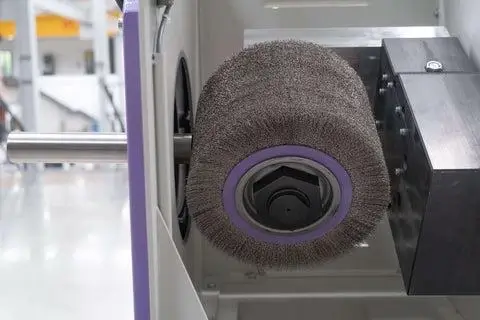
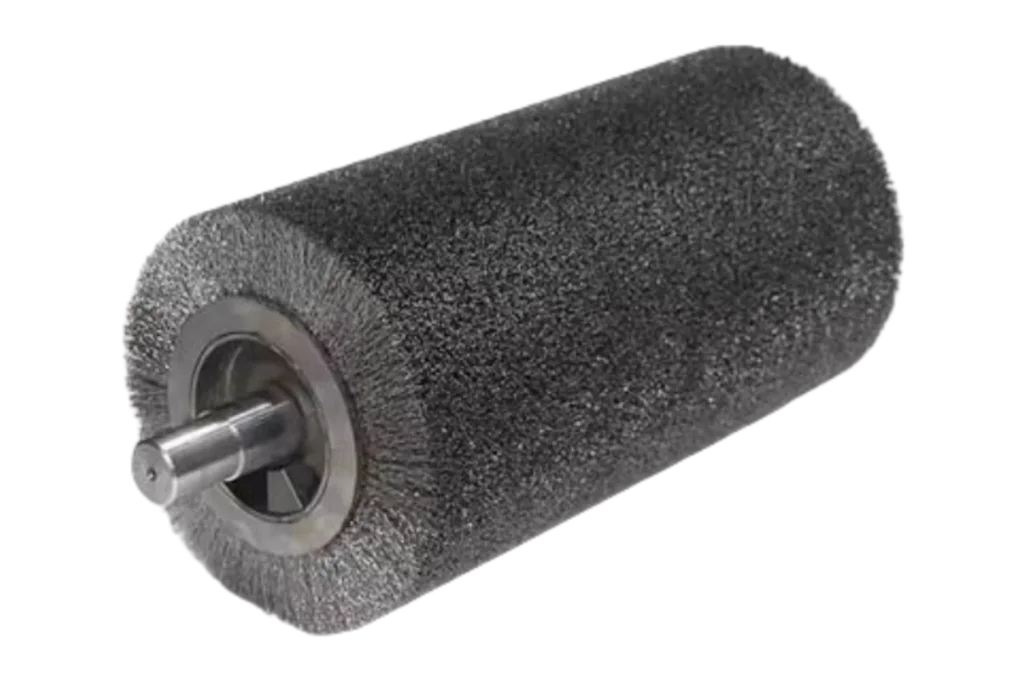
High-carbon steel wire is the workhorse of rust removal. Its high tensile strength allows thin wires to stay rigid, which is why a steel wire cylinder brush can cut through mill scale and thick corrosion while still reaching into crevices and weld seams. Steel bristles are available in crimped and knotted constructions. Crimped wire flexes more and produces a smoother finish, while knotted wire is extremely stiff and is reserved for the heaviest scaling and weld cleaning. For demanding stock removal on steel components, a steel wire cylinder brush delivers the aggressive cutting action that operators expect.
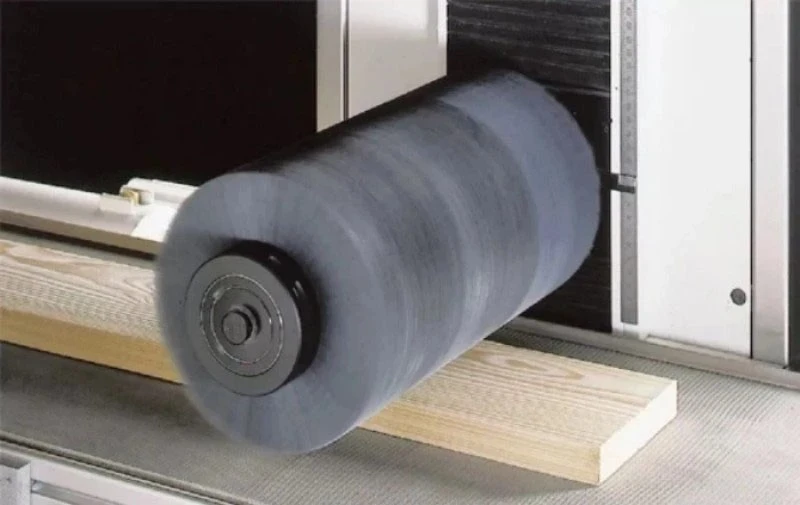
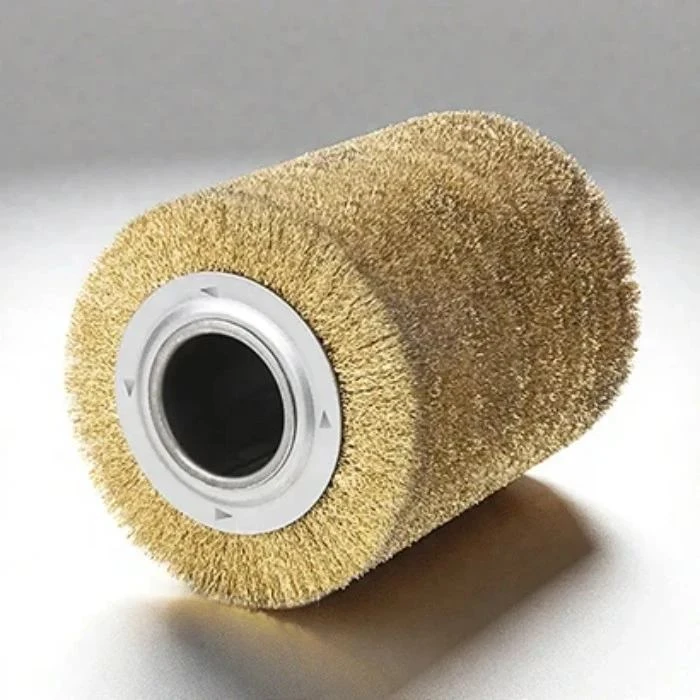
Brass wire bristles are much softer than steel because brass has lower tensile strength and the wire is typically drawn in finer diameters. Brass will not scratch hardened steel, but it is the preferred grade for softer metals such as aluminum, copper, brass alloys, and zinc-coated parts. Brass also generates fewer sparks than steel in certain environments and is commonly specified where a bright, satin finish is required without gouging. For applications that involve both rust removal and surface preservation on non-ferrous parts, a brass wire cylinder brush provides the gentler alternative that many finishing shops standardize on.
For aluminum workpieces specifically, the margin for error is small. Aluminum is roughly one-third the hardness of mild steel, and a standard steel brush can leave visible scratch patterns that require additional polishing steps to remove. Many shops address this with a dedicated anti-scratch wire brush for rust removal on aluminum workpieces, using finer wire and controlled pressure to clean corrosion without altering the base surface. The same logic applies to any thin-walled or precision-machined component where dimensional tolerance matters more than removal speed.
When the workpiece material varies across your product mix, choose the grade for the most sensitive item in the batch. Running a stiff brush on a mixed line to save time will generate rework on the soft parts, and the combined cost of scrapped components and extra finishing almost always exceeds the small productivity gain.
Wire Brush Rollers and Stiffness in Automated Rust Removal
Automated surface preparation introduces a second set of constraints because the brush rotates at high speed and the workpiece moves beneath it at a fixed feed rate. In automated lines, bristle stiffness must be matched to the feed rate and contact pressure: stiff wire brush rollers cut faster and tolerate higher throughput, while softer rollers demand slower feeds but deliver more consistent surface quality.
A wire brush roller is essentially a cylinder brush mounted on a rotating arbor, and its stiffness is tuned through wire diameter, trim length, and face density. Dense, stiff rollers are used in descaling lines where the goal is to remove thick rust in a single pass. Lighter, softer rollers appear in finishing stations where the previous operation has already removed the bulk of the corrosion and the roller is refining the surface. This staged approach is why many plants run two or three rollers in sequence with increasing fineness rather than one ultra-aggressive tool.
The stiffness of the roller also affects motor load and heat generation. An oversized, overly stiff roller can stall small drive motors or glaze the bristles when friction raises the wire temperature. Checking the manufacturer’s recommended operating speed for the roller diameter keeps the wire in its elastic range, prevents premature fatigue, and preserves the stiffness characteristics that were specified for the application. For high-volume operators, wire brush rollers for rust removal are selected by matching the roller density and wire grade to the line speed rather than by trial and error.
Bristle Stiffness vs. Rust Severity and Required Finish
Rust severity is not uniform, and the same brush grade will perform differently on flash rust, pitted corrosion, and heavy mill scale. Choose stiffness by the thickness of the contamination layer: flaky scale requires maximum stiffness, pitted rust needs a brush that can reach into cavities, and light surface rust is best removed with the gentlest grade that still cuts.
Matching Stiffness to Rust Severity
Flash rust that appears overnight on cleaned steel can be removed with a light brushing pass using a soft or medium brush. Pitted corrosion, by contrast, hides under the visible surface and requires bristles stiff enough to enter the pits without bridging over them. Heavy mill scale, common on hot-rolled steel, is the most demanding case and usually calls for knotted steel construction.
Choosing Stiffness by Required Surface Finish
The required surface finish is equally important. If the cleaned part will be painted, a slightly textured anchor profile improves coating adhesion, and a medium steel brush can produce that profile efficiently. If the part will be plated or polished, any remaining scratch pattern becomes visible in the final product, and a softer brass brush is the safer choice. Defining the finish specification before selecting the brush prevents the common mistake of over-cleaning, which removes material that the customer expected to remain.
Practical Tips for Consistent Results and Longer
Even the correct bristle grade will perform poorly if the brush is misused. Maintain the brush in its design operating range: keep contact pressure light, run at the recommended speed, and rotate the brush regularly so wear stays uniform across the full face.
Proper Operating Practices to Extend Brush Life
Follow these practices to get consistent output and extend service life:
- Use the lightest pressure that still removes rust. Heavy pressure overloads the bristles and causes premature breakage.
- Break in new brushes on scrap material before processing production parts.
- Keep the brush perpendicular to the surface so the wire tips, not the sides, do the cutting.
- Clean the brush periodically to remove embedded particles that reduce cutting efficiency.
Replacement Signs and Storage Best Practices
Documenting the brush grade, operating speed, and replacement interval for each workstation turns brush selection from a guessing game into a controlled process variable, which is exactly what ISO-certified shops and lean manufacturing teams expect.
Replace brushes when the wire becomes shorter than the rated trim length, as stiffness changes as the brush wears.
Store brushes away from moisture and corrosive fumes to prevent the bristles themselves from rusting.
Rotating multiple brushes on a rotating schedule evens out wear and keeps quality stable.
Final Thoughts
Bristle stiffness is the central specification of any rust removal brush because it determines removal rate, surface quality, and tool life in one decision. The practical rule is simple: use the stiffest bristle that the workpiece can tolerate, then verify the choice against rust severity and finish requirements. Steel wire grades deliver maximum cutting power on carbon steel and cast iron, brass grades protect aluminum and other soft metals, and automated lines require rollers matched to feed rate and process stage.
Standardizing brush grades across your shop reduces rework, simplifies inventory, and produces the consistent surface quality that customers notice. Evaluate each application against the workpiece material, corrosion thickness, and finish specification, document the winning grade, and refine the selection as your processes evolve. The right rust removal brush pays for itself in fewer rejected parts and faster throughput on every shift.
Frequently Asked Questions
Can I use a stiff steel brush on stainless steel?
You can, but only if the bristles themselves are stainless steel. A carbon steel brush will leave microscopic iron particles embedded in the stainless surface, which can initiate pitting corrosion later. For stainless workpieces, always use a dedicated stainless steel wire brush to keep the surface metallurgically clean.
How do I know when a wire brush needs to be replaced?
Replace the brush when the bristles have worn below the rated trim length, when the wire no longer springs back into shape, or when you notice a clear drop in removal efficiency. Worn bristles become shorter and effectively stiffer in feel, but their cutting power declines because the remaining wire lacks the flexibility to reach into surface irregularities.
What is the difference between crimped and knotted wire brushes?
Crimped wire bristles are waved before assembly, which adds flexibility and produces a smoother finish at lower cost. Knotted wire bristles are twisted together into tight bundles, creating a much stiffer tool that is designed for heavy scaling, weld cleaning, and aggressive rust removal on hard substrates.