
Cylindrical Cleaning Brushes for Rust and Scale Removal: Selection Guide by Application
Metal surfaces exposed to moisture, high temperatures, and industrial environments accumulate rust and scale over time. These deposits do more than degrade appearance. They compromise structural integrity, reduce heat transfer efficiency in boilers and heat exchangers, and create friction points that accelerate mechanical wear. Maintenance teams in manufacturing, shipbuilding, and heavy equipment repair spend significant hours on surface preparation before coating, welding, or reassembly can begin.
The challenge is not just removing these contaminants. It is removing them without damaging the underlying substrate, without creating secondary waste streams that require disposal, and at a speed that keeps production lines moving. Chemical descaling works but introduces environmental compliance costs and material handling risks. Manual grinding and sandblasting generate dust hazards and inconsistent results. This is why many facilities are shifting toward mechanical surface treatment solutions that combine speed with precision.
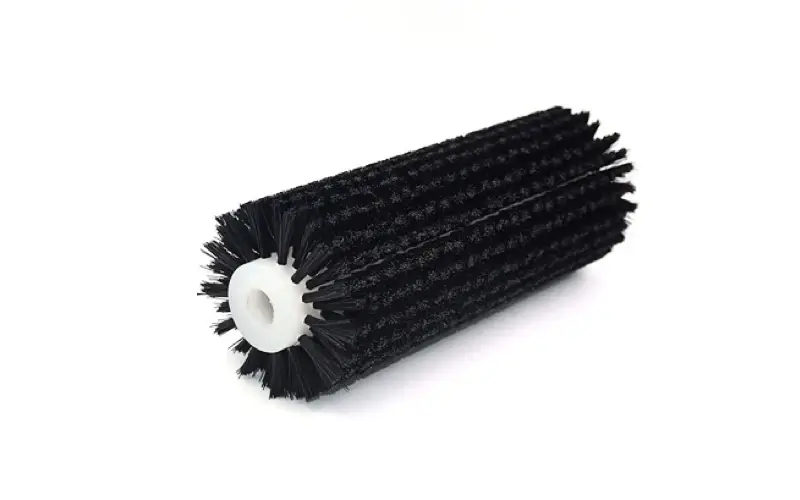
Brush Types for Rust Removal: Nylon vs. Steel Coil vs. Cylindrical Rotary Brushes
Cylindrical cleaning brushes remove rust, scale, and surface oxidation from metal parts through high-speed rotary action. Nylon cylinder brushes handle light to moderate deposits on softer metals without scratching. Steel coil brushes deliver aggressive cutting power for heavy rust on steel and iron. The right brush selection depends on the workpiece material, the severity of the contamination, and the production line speed.
How This Guide Helps You Select the Right Brush for Your Operation
This guide covers the three main types of cylindrical cleaning brushes used in rust and scale removal: nylon cylinder brushes, steel coil brushes, and cylinder rotary brushes. You will learn how each type works, which applications they suit, and how to match brush specifications to your operating conditions. The sections below also cover rotation speed considerations, brush mounting configurations, and wear factors that affect service life.
How Cylindrical Cleaning Brushes Remove Rust and Scale
The Mechanical Abrasion Mechanism: Grinding vs. Peening
Cylindrical cleaning brushes remove rust and scale by rotating abrasive or wire bristles against a metal surface at controlled speeds. The bristle tips strike the surface at a shallow angle, fracturing corrosion layers and lifting them away without cutting into the base metal. The brush diameter, bristle material, and rotation speed together determine how aggressively the brush cleans.
The mechanism is mechanical abrasion, but the way different bristle materials interact with surfaces varies significantly. Nylon filaments embedded with abrasive grit work by grinding action. Each bristle acts like a small flexible abrasive stick that wears down rust particles through friction. Steel wire bristles work differently. They impact the surface and then spring back, creating a peening effect that shatters brittle scale deposits. This is why steel coil brushes clean faster on heavy rust, but nylon abrasive brushes produce a more controlled surface finish.
Brush Configuration and Its Impact on Cleaning Path and Surface Finish
Cylindrical brush configuration also matters. A brush mounted on a rotating shaft covers the full circumference of a pipe or round bar in a single pass. For flat surfaces like steel plates and structural beams, multiple brush sections can be ganged together on a common shaft to create a wide cleaning path. Beyond mechanical setup, common industrial cleaning applications for these brushes span ship hull maintenance, coil coating lines, heat exchanger tube cleaning, and weld seam preparation, each with its own preferred bristle profile and rotation geometry. The brush density, measured in bristles per square inch, influences how evenly the cleaning force is distributed. Dense brush fills produce uniform surface finishes. Sparser fills allow larger debris to clear more easily, which helps when removing thick, flaking rust layers.
How Temperature and Contamination Type Affect Brush Performance
Temperature and contamination type affect brush performance too. Rust that has formed under high heat, such as on exhaust manifolds and furnace components, is harder and more brittle than ambient-temperature rust. This type of scale fractures more easily under impact but generates sharper debris particles that accelerate bristle wear. Wet rust and chemical scale present a different problem. They clog brush bristles and reduce cleaning efficiency. In these conditions, wider bristle spacing and higher rotation speeds help clear debris from the brush during operation.
Nylon Cylinder Brushes for Light to Medium Rust Removal
A nylon cylinder brush uses synthetic filaments embedded with abrasive grit to clean surfaces without scratching or gouging. These brushes work well on aluminum, copper, brass, and thin-gauge steel where steel wire brushes would leave marks. They remove light rust, surface oxidation, and mill scale while preserving dimensional tolerances on machined parts.
The abrasive grit in nylon cylinder brushes is typically silicon carbide or aluminum oxide, bonded into the filament during extrusion. As the brush rotates, the filaments flex against the workpiece, and the exposed grit particles do the cutting. Unlike steel wire brushes that deliver impact force, nylon abrasive brushes work by controlled grinding. The result is a more predictable surface roughness and less risk of unintended material removal. This matters when cleaning bearing seats, seal surfaces, and threaded components where tight tolerances must be maintained.
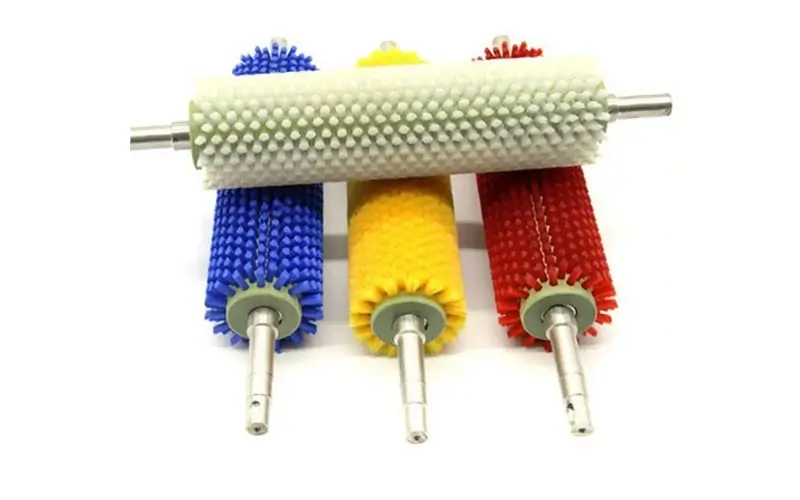
Nylon cylinder brushes last longer in wet or chemically aggressive environments than steel brushes because nylon does not corrode. In food processing plants and pharmaceutical facilities, where rust from brush bristles would be a contamination risk, nylon is often the only acceptable option. The bristles also resist loading with soft contaminants. When removing a mix of rust and grease or oil, nylon brushes keep cutting longer than steel bristles, which tend to pack with residue and lose effectiveness.
Grit size selection is the key variable for nylon brush performance. Coarser grits, typically 46 to 80 mesh, provide faster stock removal and suit general rust cleaning on structural steel. Medium grits in the 120 to 180 range balance cutting speed with surface finish quality and are the most common choice for maintenance applications. Fine grits of 240 and above produce polished finishes and work for light oxidation removal on precision components.
Choosing Between Nylon and Steel Cylindrical Brushes
When to Choose Nylon Cylinder Brushes vs. Steel Coil Brushes
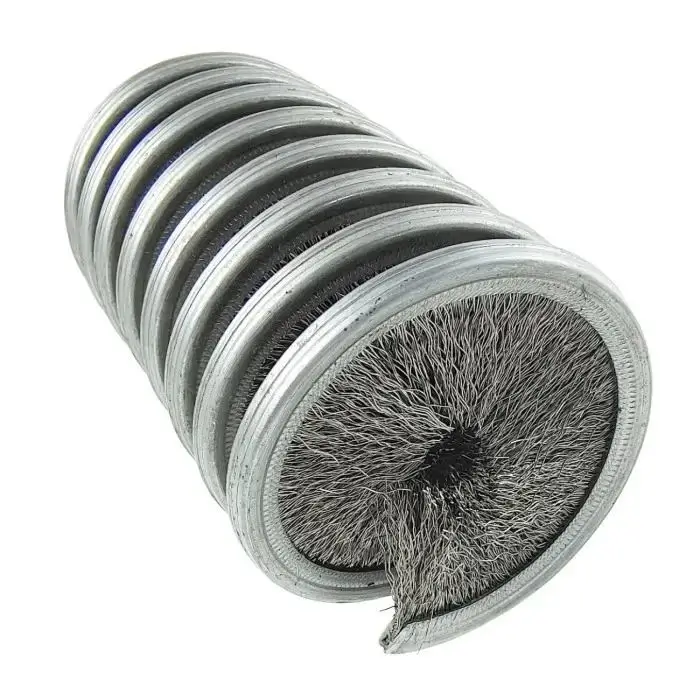
Choose nylon cylinder brushes when the workpiece material is softer than steel, when surface finish matters more than speed, or when the operating environment is wet or corrosive. Choose steel coil brushes when removing thick rust and scale from steel and iron parts, when cleaning speed is the priority, and when operating in dry environments where brush rust is not a concern.
Surface Finish Requirements and Coating Preparation Considerations
Surface finish requirements often make the decision straightforward. If the cleaned part goes directly to painting or coating, a nylon abrasive brush produces a uniform anchor profile that promotes coating adhesion. Steel wire brushes leave a coarser, more irregular surface that may require additional preparation before coating. For pre-weld cleaning, steel brushes are preferred because they leave no abrasive residue that could contaminate the weld pool. Nylon abrasive brushes can leave fine grit particles that cause weld porosity in critical applications.
Cost-Per-Unit Economics and Production Line Compatibility
Cost per unit of work tells a different story than price per brush. Steel coil brushes cost less upfront and remove material faster, so the direct cost per square foot cleaned is lower for heavy rust. Nylon brushes cost more per unit but last longer in wet conditions and produce fewer rejected parts due to surface damage. Many maintenance operations stock both types and assign them by job. Steel brushes handle the primary rust removal pass on structural steel. Nylon brushes handle the finishing pass on machined surfaces and non-ferrous metals.
Production line considerations affect the choice too. Machines designed for one brush type may not accept the other without modification. Steel coil brushes require higher horsepower drives because they draw more current under load. Nylon brushes run at higher speeds with less power draw but need more frequent brush changes in abrasive environments. Matching the brush to the machine capabilities avoids downtime and protects equipment.
Rotation Speed, Mounting, and Operating Parameters
Optimal Surface Speed Ranges for Steel vs. Nylon Abrasive Brushes
Cylindrical cleaning brushes operate within specific speed ranges that balance cleaning effectiveness against brush life. Running a brush too fast causes excessive bristle wear and heat buildup. Running too slow reduces impact energy and cleaning efficiency. The optimal surface speed for steel brushes is typically 1,500 to 3,000 surface feet per minute. Nylon abrasive brushes perform best between 1,800 and 3,600 surface feet per minute.
Why Surface Speed Matters More Than RPM Alone
Surface speed matters more than RPM alone. A small-diameter brush at high RPM can have a lower surface speed than a large-diameter brush at moderate RPM. The formula is straightforward: surface speed in feet per minute equals the brush diameter in inches multiplied by pi, multiplied by RPM, divided by 12. A 6-inch brush at 3,000 RPM runs at approximately 4,700 surface feet per minute. The same speed on a 10-inch brush requires only 1,800 RPM. Facilities with variable-speed drives can dial in the optimal surface speed for each brush type.
Mounting Configuration, Pressure, and Feed Rate for Effective Cleaning
Brush mounting configuration determines how well the brush tracks the workpiece surface. Shaft-mounted brushes work for through-feed applications where the part passes under or through a rotating brush assembly. Flange-mounted brushes allow quick changeovers on production lines. Cup brushes and end brushes mounted on cylindrical arbors reach into bores and internal cavities that full-size cylinder brushes cannot access. The mounting style must match both the machine spindle and the workpiece geometry for effective cleaning.
Operating pressure and feed rate work together. Too much pressure loads the brush bristles and stalls small drive motors. Too little pressure prevents the bristle tips from making full contact with the rust layer. A good starting point is visible bristle deflection of about 20 to 30 percent of the bristle length. Feed rates of 10 to 50 feet per minute are common for continuous processes, with faster rates possible when using wider brush assemblies or multiple brush stations in sequence.
Wear Factors and Service Life Optimization
The service life of a cylindrical cleaning brush depends on bristle material, operating speed, workpiece hardness, and contamination type. Steel coil brushes in dry environments typically last 200 to 500 operating hours before replacement. Nylon abrasive brushes last 100 to 300 hours under similar conditions. Running brushes at the recommended surface speed rather than maximum RPM extends life by 30 to 50 percent.
Bristle breakage is the most common failure mode for steel brushes. Individual wires fatigue and snap after repeated bending cycles. Running a brush at excessive speed increases the bending frequency and accelerates fatigue. The relationship between rotation speed and brush wear is nonlinear. Doubling the rotation speed can reduce brush life by more than half because the bristles experience higher centrifugal forces that increase stress at the root of each wire.
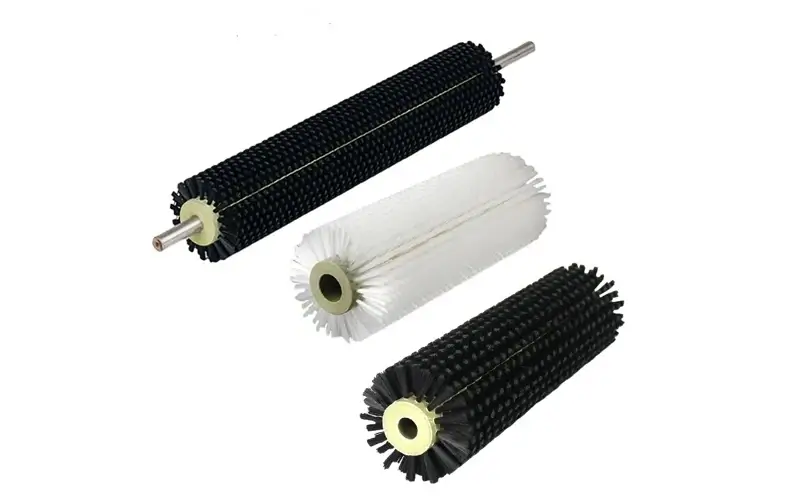
Nylon brushes wear through gradual erosion of the abrasive grit and filament. As the outer surface wears, fresh grit is exposed from within the filament. This self-sharpening effect keeps cutting performance relatively stable throughout the brush life until the filament diameter becomes too thin to hold the remaining grit. The wear rate increases sharply when operating temperatures exceed the nylon softening point, which ranges from 180 to 220 degrees Celsius depending on the nylon grade.
Debris management extends brush life in both types. Built-up rust particles trapped in the bristle pack increase friction and heat. Installing air blow-off nozzles or vacuum extraction near the brush keeps the bristles clear during operation. For steel brushes, periodic reversing of rotation direction equalizes bristle wear and prevents the wires from taking a permanent set. For nylon brushes, periodic dressing with a dressing stone exposes fresh grit and restores cutting performance.
Summary
Cylindrical cleaning brushes solve rust and scale removal problems across industries where speed, consistency, and surface quality matter. Nylon cylinder brushes handle light to moderate corrosion on sensitive metals. Steel coil brushes power through heavy rust on structural steel. The choice between them comes down to the workpiece material, the severity of the contamination, and the required surface finish.
Operating parameters are just as important as brush selection. Surface speed drives both cleaning effectiveness and service life. Running within the recommended range for each brush type minimizes downtime and replacement costs. Matching the mounting configuration to the machine and the part geometry ensures consistent contact across the entire cleaning surface. With the right brush, the right speed, and the right mounting, rust and scale removal becomes a predictable production step rather than a maintenance bottleneck.
Frequently Asked Questions
What is the difference between a cylinder rotary brush and a standard cup brush for rust removal?
A cylinder rotary brush provides a wide, uniform cleaning surface along its entire length, which makes it ideal for continuous processing of flat stock, pipes, and structural shapes. A cup brush concentrates cleaning force on a smaller circular area and works better for spot cleaning and reaching into corners. Cylinder brushes also distribute wear more evenly across more bristles, giving them a longer service life in high-volume applications. Facilities running production lines typically choose cylinder brushes, while repair shops doing irregular work often use cup brushes for their flexibility.
Can cylindrical cleaning brushes be used on stainless steel without causing contamination?
Carbon steel brushes leave microscopic iron particles embedded in stainless steel surfaces. These particles rust later and create cosmetic defects or corrosion initiation points. For stainless steel workpieces, use either a stainless steel wire brush or a nylon abrasive brush. Stainless steel wire brushes prevent iron contamination entirely. Nylon abrasive brushes use synthetic filaments with no metal content, so they cannot cause any metallic cross-contamination. Both options are acceptable for food-grade and pharmaceutical stainless steel processing.
How do I determine the correct brush diameter for my existing machine?
Measure the arbor or shaft diameter on your machine first. Most industrial brush machines accept standard shaft sizes of 1 inch, 1.25 inches, or metric equivalents. The brush outer diameter must not exceed the maximum clearance of the machine housing. Check the machine manual for maximum RPM and calculate the surface speed using the brush diameter to verify it falls within the recommended range for your bristle material. A brush that is too large in diameter will over-speed at the machine’s fixed RPM and wear prematurely.