Industrial manufacturers and metal fabricators face a persistent challenge: removing rust and surface oxidation from aluminum components without compromising the substrate. Aluminum is valued for its lightweight properties and corrosion resistance, but when rust, mill scale, or surface contaminants accumulate, aggressive cleaning methods can leave scratches, gouges, or dimensional changes that render parts unusable. Selecting the right wire brush for rust removal is not simply a matter of picking any abrasive tool — it demands an understanding of wire materials, filament configurations, and brush construction techniques that balance cleaning effectiveness with surface preservation.
An anti-scratch wire brush for rust removal on aluminum workpieces uses softer wire materials such as brass or fine-gauge stainless steel filaments configured in a wound cylinder brush design. These brushes remove rust and oxidation effectively while preserving the dimensional integrity and surface finish of the aluminum substrate, preventing the deep scratches and gouges that harder abrasives would cause.
Aluminum’s relatively low hardness (typically 2.5 to 3 on the Mohs scale) makes it particularly susceptible to surface damage during mechanical cleaning. Standard carbon steel wire brushes, while effective on ferrous metals, can embed steel particles into aluminum surfaces and create galvanic corrosion cells. The solution lies in purpose-built cylinder brushes engineered with material science and filament geometry that prioritize controlled abrasion. This article examines the key factors in selecting, using, and maintaining anti-scratch wire brushes for aluminum rust removal across industrial applications.
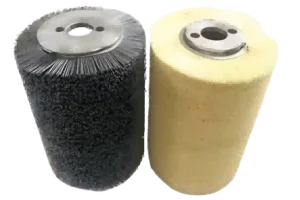
Understanding Wire Brush Materials for Aluminum Surface Preparation
Brass wire brushes are the preferred choice for aluminum rust removal because brass is softer than aluminum on the Mohs hardness scale, eliminating the risk of substrate scratching. Stainless steel wire cylinder brushes in fine gauges (0.10 mm to 0.20 mm) can also be used safely when configured with high filament density and operated at controlled speeds.
Wire Material Hardness and Compatibility with Aluminum
The material selection for a wire brush for rust removal on aluminum must account for relative hardness. The table below compares common wire brush materials against aluminum:
Brass wire-wound cylinder brushes offer an inherent safety margin. Because brass sits very close to aluminum on the hardness scale, the wire filaments deform upon contact with the substrate rather than cutting into it. This mechanical property means that even with operator error or inconsistent feed rates, the likelihood of permanent surface damage remains low.
Stainless Steel Wire Cylinder Brush Considerations
A stainless steel wire cylinder brush presents a more nuanced choice for aluminum applications. While stainless steel is harder than aluminum, fine-gauge filaments (0.10 mm to 0.15 mm diameter) provide sufficient flexibility to deflect upon contact rather than gouge. The key variables that make stainless steel safe for aluminum include:
- Filament diameter: Thinner wires (0.10–0.15 mm) flex more easily and transfer less concentrated force to the substrate.
- Filament density: Higher-density packs create a distributed contact surface where individual wires share the load.
- Operating speed: Lower RPM settings reduce impact energy at the filament tips.
- Trim length: Shorter trim lengths increase filament stiffness and raise the risk of scratching; longer trims improve flexibility.
The Role of Metal Polishing Brush Configurations
A metal polishing brush designed for final finishing often uses a hybrid approach — fine stainless steel wires combined with abrasive-impregnated filaments or interleaved with softer materials. These configurations address the dual requirement of removing oxidation while imparting a uniform surface finish. For aluminum workpieces destined for anodizing, painting, or powder coating, the surface profile created by the brush directly affects coating adhesion and appearance.
Wound Cylinder Brush vs. Crimped Wire Brush: Which Design Protects Aluminum Better
Wound cylinder brushes provide superior surface protection for aluminum workpieces compared to crimped wire brushes because their straight, densely packed filaments deliver more uniform contact pressure and fewer individual impact points. Crimped wire brushes, while more aggressive in rust removal, create irregular contact patterns that increase the risk of localized scratching on soft aluminum surfaces.
Wound Cylinder Brush Construction and Benefits
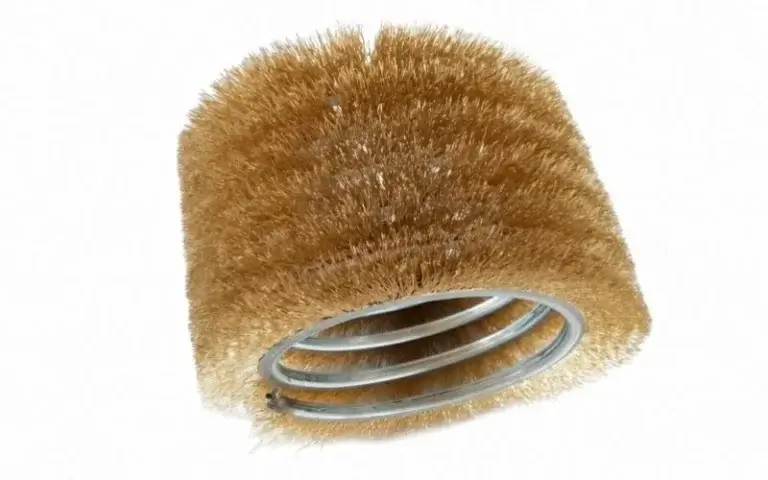
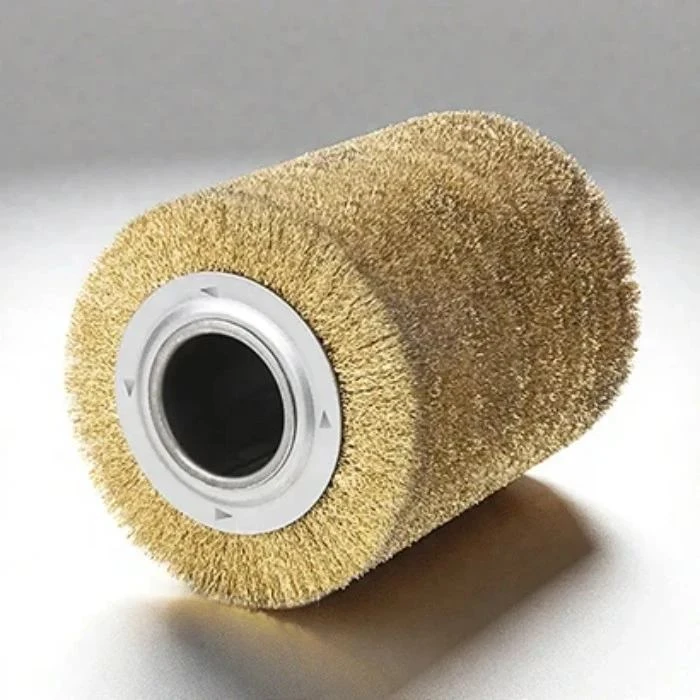
A brass wire-wound cylinder brush is manufactured by twisting wire filaments around a central core wire in a continuous spiral pattern. This construction method produces several characteristics that benefit aluminum surface preparation:
- Uniform filament distribution: Each filament occupies a predictable position, creating consistent surface contact.
- High fill density: Wound construction packs more filaments per unit length of the brush face.
- Smooth cutting action: The straight wire orientation presents a continuous cleaning edge rather than intermittent impact points.
- Cooler operation: Greater air space between filaments improves heat dissipation, preventing thermal stress on aluminum workpieces.
The wound design also enables precise control over filament trim length. A longer trim length (exposed wire extending from the core) produces a more flexible brush face that conforms to contoured aluminum profiles without concentrating pressure on high points.
Crimped Wire Brush Characteristics and Limitations
Crimped wire cylinder brushes feature filaments that are mechanically waved or crimped before being secured in a stamped channel base. The crimped geometry creates individual spring-like filaments that strike the workpiece surface with greater impact force. While this aggressiveness benefits heavy rust removal on steel, it introduces risks for aluminum:
- Intermittent contact pattern: Crimped filaments create a hammering effect rather than a wiping action.
- Higher individual filament loads: The irregular contact surface concentrates force on fewer filament tips at any given moment.
- Greater heat generation: Denser packing reduces airflow and increases frictional heating.
Direct Comparison Table
The relationship between filament diameter and surface pressure is governed by contact mechanics: halving the wire diameter reduces the contact area per filament to approximately one-quarter, but more importantly, thinner filaments buckle at lower forces, preventing the pressure from exceeding the yield strength of aluminum.
Optimizing Filament Density
Filament density refers to the number of wire filaments packed into the brush face per unit area. Higher density improves aluminum safety through a load-sharing effect:
- Low density (40–55% fill): Fewer filaments carry the total applied force, increasing pressure per filament tip. Scratch risk is elevated, and cleaning action is inconsistent.
- Medium density (55–70% fill): Acceptable for general aluminum cleaning when paired with fine wire gauges. Provides adequate rust removal with moderate surface protection.
- High density (70–85% fill): Optimal for aluminum applications. The distributed contact surface ensures no single filament bears enough pressure to scratch, while the dense filament network creates a uniform cleaning action.
The Trim Length Variable
Trim length — the distance from the brush core or channel to the filament tips — acts as a multiplier on filament flexibility:
Long trim lengths increase filament compliance, allowing wires to conform to surface contours and irregular geometries without concentrating force. Short trim lengths produce stiffer brush faces suited for flat surfaces but increase scratch risk on aluminum.
A general rule for aluminum workpieces: maintain a trim length of at least 25 mm for wire gauges up to 0.15 mm, and at least 30 mm for 0.20 mm wires. Shorter trims may be usable on aluminum if operating speed is reduced proportionally. For specific configurations, consult wound cylinder brush specifications to match trim length with your application requirements.
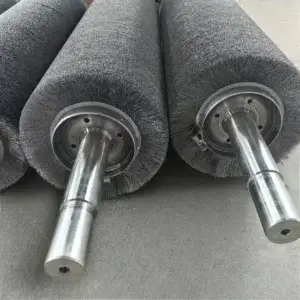
Application Guide: Using Cylinder Brushes on Aluminum Extrusions, Castings, and Sheet
Different aluminum workpiece forms require tailored brushing approaches. Extrusions benefit from brushes with longer trim lengths to follow profiles without applying uneven pressure. Castings need medium-gauge wires with high density to clean irregular surfaces without digging into softer alloy regions. Sheet aluminum demands the finest wire gauges and lowest operating speeds to prevent warping and surface marking.
Aluminum Extrusions
Extruded aluminum profiles — common in automotive trim, architectural framing, and heat sinks — present unique challenges due to their varied cross-sectional geometries. Sharp corners, thin walls, and curved surfaces create uneven contact zones where standard brush setups may apply excessive pressure on high points while missing recessed areas.
Recommended setup for extrusions:
- Use a wound cylinder brush with a trim length of 30–40 mm to maximize filament compliance.
- Select brass wire or 0.12–0.15 mm stainless steel wire to prevent corner burnishing.
- Operate at 1,200–1,800 RPM to balance cleaning speed with heat management.
- Apply a feed rate of 3–5 meters per minute for consistent surface coverage.
The brush should be oriented so that filaments contact the extrusion surface at a tangent, not perpendicularly. This orientation promotes a wiping action along the profile rather than direct impact. When specifying brushes for extrusion lines, a precision-wound cylinder brush with extended trim length provides the filament compliance needed to follow complex profiles.
Aluminum Castings
Cast aluminum components — engine parts, pump housings, and structural brackets — feature rough surfaces with varying hardness across the casting skin. The challenge is removing foundry scale, light oxidation, and surface contaminants without preferentially eroding softer interdendritic regions.
Recommended setup for castings:
- Wire material: Stainless steel, 0.15–0.20 mm gauge, for adequate cleaning aggressiveness.
- Filament density: 75% fill or higher to distribute force evenly across rough surfaces.
- Trim length: 20–25 mm for controlled stiffness on irregular surfaces.
- Operating speed: 1,500–2,200 RPM, adjusted based on casting hardness.
A stainless steel wire cylinder brush with high fill density performs well on castings because the dense filament network bridges low spots in the casting surface, preventing individual wires from digging into softer regions.
Aluminum Sheet and Plate
Sheet aluminum — used in trailer panels, signage, and appliance components — is the most scratch-sensitive form due to its large, visible surface area and typically thinner cross-section requiring cosmetic-quality finishes.
Strictest setup for sheet aluminum:
The combination of low speed, fine wire gauge, and long trim minimizes the kinetic energy at each filament tip while maintaining sufficient cleaning action. For large sheet surfaces, multiple brushes arranged in an overlapping pattern ensure complete coverage without pressure hotspots.
Maintenance Practices That Extend Brush Life and Preserve Cleaning Performance
Proper maintenance of wire cylinder brushes involves regular filament inspection for wear patterns and breakage, periodic rotation to ensure even wear distribution, cleaning of accumulated debris between filaments, and storage in low-humidity environments to prevent corrosion. Well-maintained brushes deliver consistent surface quality and last two to three times longer than neglected ones.
Daily and Weekly Inspection Protocol
Wire brushes used for aluminum rust removal accumulate aluminum oxide particles, loose wire fragments, and processing residues that degrade performance over time. A structured inspection routine prevents quality issues before they appear on workpieces:
- Visual inspection: Check for uneven wear patterns, broken or bent filaments, and signs of core wire fatigue. Uneven wear indicates misalignment between the brush and workpiece.
- Filament integrity check: Run a gloved hand lightly across the brush face (power off). Individual broken filaments feel sharp and indicate the brush is nearing the end of its life.
- Core wire inspection: Examine the twisted core wire on wound cylinder brushes for loosening or corrosion. A compromised core can cause catastrophic brush failure.
- Dimensional check: Measure the brush outside diameter. A reduction of more than 10% from the original diameter signals that filament wear has reached a point where cleaning effectiveness and surface contact pattern have changed.
Cleaning and Debris Removal
Accumulated debris between filaments reduces brush flexibility and creates hard spots that can scratch aluminum surfaces. Cleaning procedures include:
- Compressed air cleaning: Use 80–90 PSI compressed air directed tangentially along the brush face to dislodge loose particles. Perform daily for brushes in continuous use.
- Solvent cleaning: For stubborn residues, soak the brush in a mild solvent compatible with aluminum (isopropyl alcohol or mineral spirits) for 15–20 minutes, then air-dry completely before reuse.
- Mechanical cleaning: Use a stiff nylon brush or wooden dowel to gently separate matted filament clusters. Avoid metal tools that could damage or deform the wire filaments.
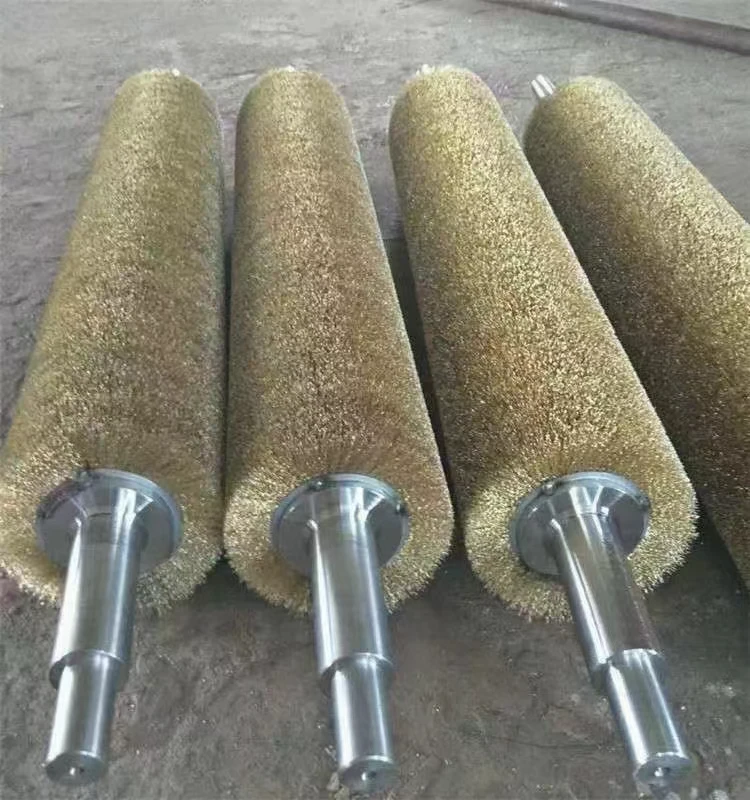
Rotation and Usage Tracking
Brushes operated continuously in one direction wear unevenly, developing a directional set in the filaments. To maximize brush life:
Rotate the brush direction weekly to ensure even filament wear. Track operating hours and replace brushes proactively when they reach 80% of their expected service life rather than waiting for visible quality issues.
Implement a usage log for each cylinder brush to record:
- Installation date and initial diameter
- Hours of operation between inspections
- Observed wear rate (diameter reduction per 100 hours)
- Replacement date and reason
Storage Conditions
Wire brushes stored improperly develop corrosion on filaments and core wires that compromises performance and introduces rust contamination risk to aluminum workpieces. Optimal storage: