
Metal Brush Wheel Diameter Guide
Every metal fabrication shop has a rust problem. Plates sit in storage, weld seams oxidize overnight, and structural steel arrives from the mill with a layer of scale that has to go before painting or welding. The tool most shops reach for is a power brush, and the question that comes up over and over is simple: what diameter should the brush be?
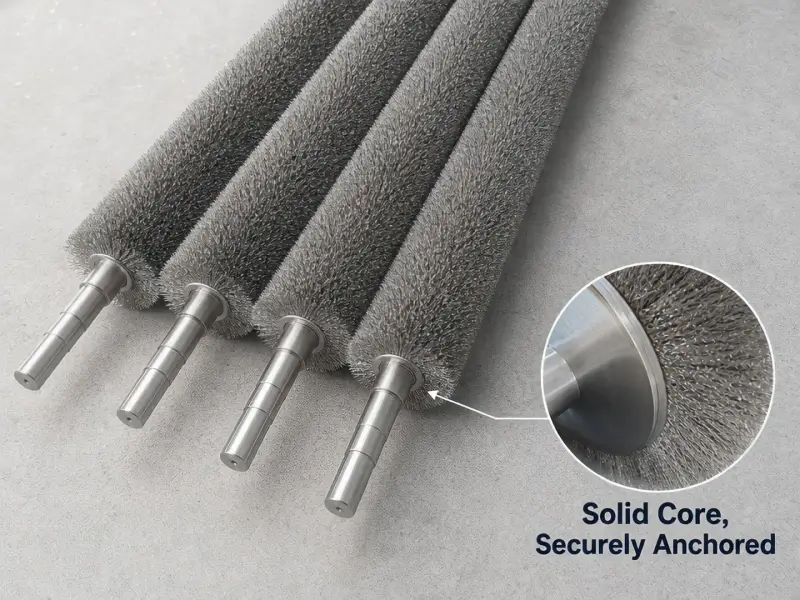
Why Wheel Diameter Matters
Wheel diameter is not a trivial spec. It changes how fast the brush tips travel across the work, how much surface the brush covers per pass, how easily the brush reaches into corners, and how much load the spindle and motor have to carry. Pick the wrong size, and you get a brush that chatters, overheats, leaves streaks, or simply cannot reach the area that needs cleaning.
The Three Factors That Determine the Right Diameter
The direct answer is that there is no universal size. The right metal brush for rust removal depends on three factors: the spindle or arbor size your machine accepts, the geometry of the workpiece, and the surface finish you need. For general-purpose work on flat steel, a 6-inch (150 mm) wheel is the most common starting point. Go larger, to 8 to 12 inches, for wide plates and high-volume production. Drop to 4 inches or smaller for tight corners, small parts, and portable tools.
What This Guide Covers
So before you order, it pays to understand how diameter interacts with speed, bristle length, and brush material. This guide walks through the sizing logic that buyers and maintenance teams use, with the numbers that matter for carbon steel and stainless steel cylinder brushes.
Why Wheel Diameter Matters in Rust Removal
Diameter controls three things at once: brush tip speed, coverage width, and access. Change any one and the result changes, which is why the same rust job can fail with one wheel size and succeed with another.
How Diameter Affects Brush Tip Speed and Cutting Aggressiveness
Tip speed is the physical reason bigger wheels cut faster. At the same spindle RPM, a 10-inch wheel moves its bristle tips roughly 67 percent faster than a 6-inch wheel. Faster tips mean more aggressive stock removal, which sounds good, but it also means more heat, more wear, and a rougher finish. That is why a 12-inch wheel on a 3,600 RPM grinder is usually a bad idea even if the arbor fits.
How Diameter Affects Coverage Width and Efficiency
Coverage width is easier to visualize. A wider brush face clears a wider band of rust in a single pass. For a large flat plate, a narrow wheel forces the operator to overlap passes and burn time. For a channel, pipe, or formed part, a wide face can overshoot the edge and round off corners the customer wanted sharp.
How Diameter Affects Access to Tight Areas
Access is the factor that gets ignored until the brush is already mounted. Wheels are circular, and the working zone is only the part of the circumference that contacts the work. In a narrow slot or behind a flange, a large diameter simply does not fit. In those spots, a smaller wheel or a different brush style such as wire brush rollers is the only practical option.
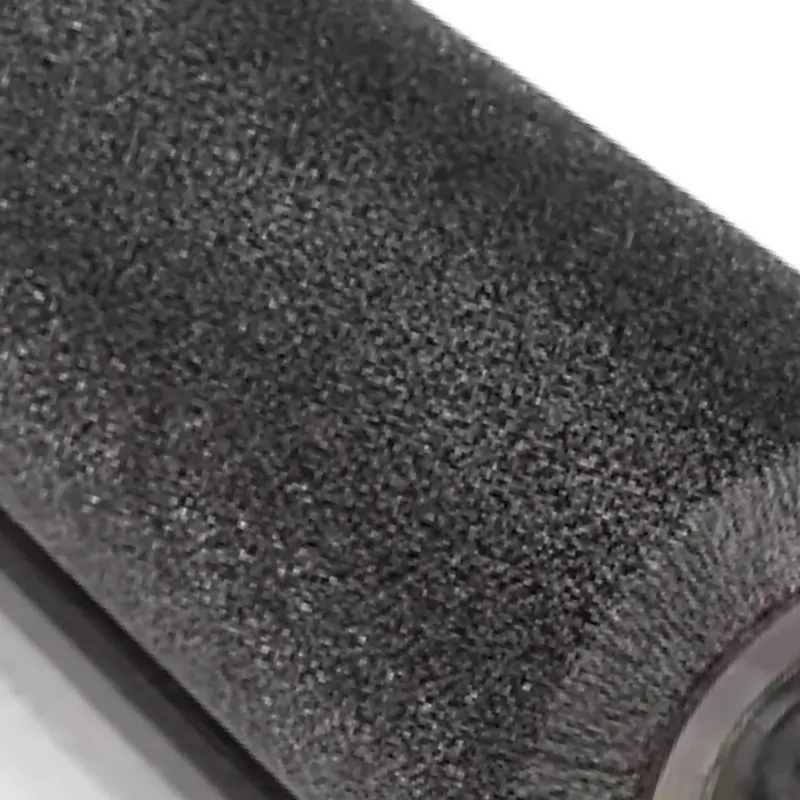
Standard Wheel Diameters and What They Are Used For
Most industrial wire wheels come in a small set of standard diameters: 3, 4, 6, 8, 10, and 12 inches, plus metric equivalents. Each size band has a natural job, and most rust removal tasks fall into one of three bands.
The table below summarizes typical applications for each size range.
The 6-inch wheel earns its place as the default because it fits the most machines. Bench grinders, pedestal grinders, and many portable tools accept a 6-inch brush, and the performance on ordinary rust and mill scale is predictable. For most general cleaning, a carbon steel wire cylinder brush at 6 inches is enough, and shops that only clean small batches rarely need anything else.
The larger sizes pay off only when the work is genuinely large. A 10 or 12-inch wheel clears a wide band fast, which matters when a fabricator is descaling a dozen beams in an afternoon. The trade-off is machine size: a 12-inch wheel needs a heavy spindle, enough motor power, and guards that can contain a brush moving at high tip speed.
Matching Brush Diameter to Your Machine and Workpiece
The first constraint is always the machine, not the rust. Check the arbor hole size, the maximum wheel diameter the guard allows, and the spindle RPM before you choose a brush diameter.
Start with the Arbor Hole Size
Start with the arbor. A brush is mounted on a center hole sized to the spindle, and common sizes include 1/2, 5/8, 3/4, and 1 inch. If the brush you want has the wrong hole, you can sometimes use a bushing, but reducing a large hole to a small spindle weakens the mounting and is not recommended for production work.
Match Diameter to Workpiece Geometry
Next, look at the workpiece geometry. For flat surfaces, go as wide as the guard allows. For edges, fillets, and weld toes, a narrower face follows the contour better. For the inside of tubes or enclosed sections, the outside diameter of the brush must be smaller than the opening, and a cylinder brush with a longer face is often a better fit than a wheel at all.
Respect Your Motor’s Power and Speed Limits
The motor matters more than most buyers expect. A brush acts like a fan and a cutting tool at the same time. Bigger diameter means more air drag and more cutting resistance. A small motor that runs fine with a 4-inch brush can stall, overheat, or drop RPM dangerously with a 10-inch brush. If the machine label shows a maximum wheel size, respect it.
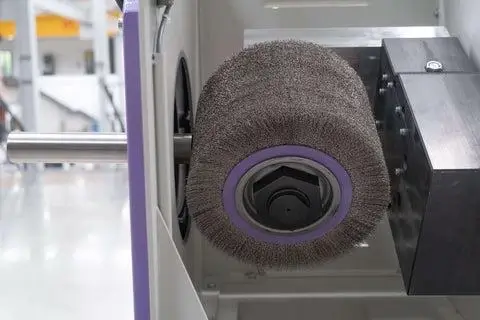
Diameter, Speed, and Safety: The RPM Limit
Every wire brush has a maximum safe RPM, and the limit drops as diameter grows. Running a wheel above its rated speed is one of the most common causes of wire breakage and brush failure in the field.
Manufacturers rate brush speed two ways: the spindle RPM and the surface speed of the bristle tips. Surface speed is the number that tells you what is actually happening at the work, and it is calculated as the wheel circumference multiplied by RPM. A useful rule of thumb is to keep surface speed between 5,000 and 9,000 feet per minute for steel wire on ferrous work.
For shops that clean both steel types, the practical answer is two brushes in the same diameter, one carbon and one stainless, kept separate so carbon particles never cross over. Labeling the stainless brush and storing it apart prevents the most common contamination failure in the industry.
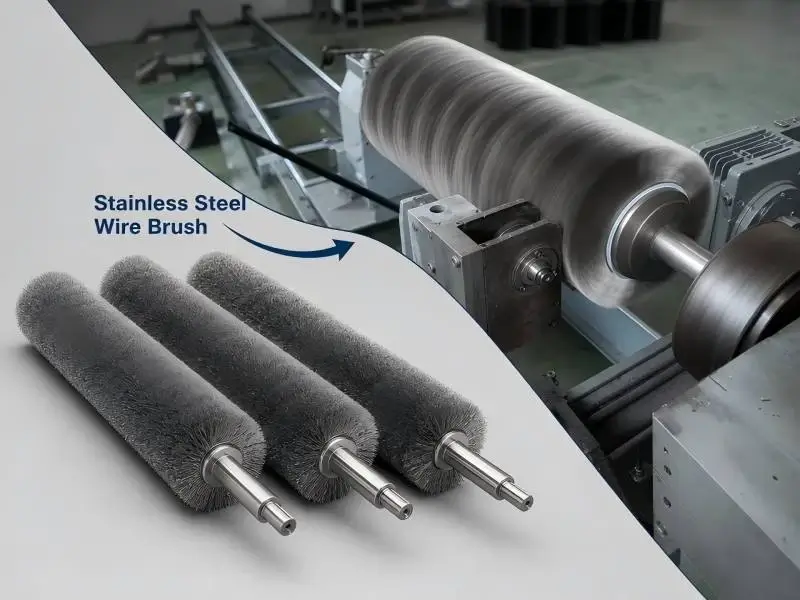
Common Mistakes When Selecting Wheel Diameter
The failures that come up in the field are remarkably consistent: oversizing for the machine, undersizing for the job, and ignoring the guard and RPM limits.
- Buying the biggest wheel the arbor accepts without checking the RPM rating. This is the fastest route to wire breakage and tool damage.
- Choosing a narrow brush for large flat surfaces. The job gets done, but the operator spends twice as long overlapping passes.
- Choosing a wide brush for contoured work. The edges dig in, the brush bounces, and the finish comes out uneven.
- Forgetting that diameter also changes the reach. A wheel that looks right on the bench may be impossible to position inside the assembly.
- Using one brush diameter for every job. A single compromise size works for some work and wastes time on the rest.
The fix is to keep the machine constraint list written down: arbor size, max diameter, max RPM, and guard dimensions. When a new job comes in, compare against that list before ordering anything. For a broader checklist that covers bristle material and machine fit as well, our rust remover brush selection criteria guide fills in the rest.
How to Measure and Confirm the Right Size
Before ordering, confirm three numbers: the outside diameter, the arbor hole, and the face width. These three values fit the brush to the machine and to the work.
Measure the outside diameter across the bristle tips, not the steel hub. The hub is smaller than the working diameter, and clearance calculations must use the tip-to-tip dimension. Measure the arbor hole with calipers, and check whether the spindle is threaded or keyed. Measure the face width to confirm the coverage you expect.
If the part to be cleaned is enclosed, add one more check: the brush must pass through every opening it has to enter. A 6-inch wheel will not fit through a 5-inch port, no matter how good the rest of the spec looks. In that case, step down in diameter or switch to a cylindrical brush designed for long, narrow access.
When the numbers are in doubt, test on scrap. Mount the brush, run it at the machine speed, and check tip speed against the rating. A five-minute test on a rusty offcut beats a production-line surprise.
FAQ
Can I use a wire brush wheel on a regular angle grinder?
Yes, if the arbor matches and the brush diameter stays within the grinder’s rated wheel size. Most angle grinders are rated for 4 to 4.5 inch wheels, so larger brushes require a bench grinder or a dedicated machine.
Does a larger diameter always remove rust faster?
Not always. Larger diameter raises tip speed and coverage, but it also adds load and heat. If the machine cannot hold RPM, the brush stalls or burns the work, and the job gets slower instead of faster.
How do I know when a wire wheel is worn out and needs replacing?
Replace a wheel when the bristles are visibly shorter, bent flat, or missing from sections of the face. A worn brush cuts slower, generates more heat, and leaves a polished instead of cleaned surface.