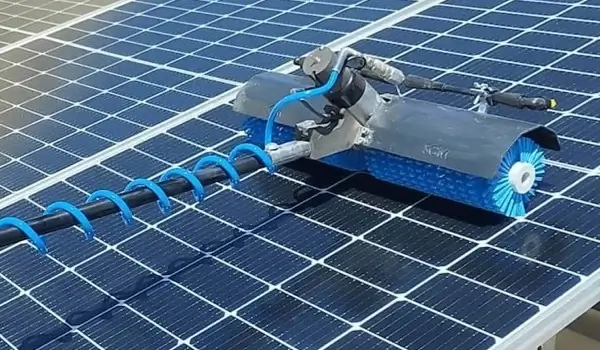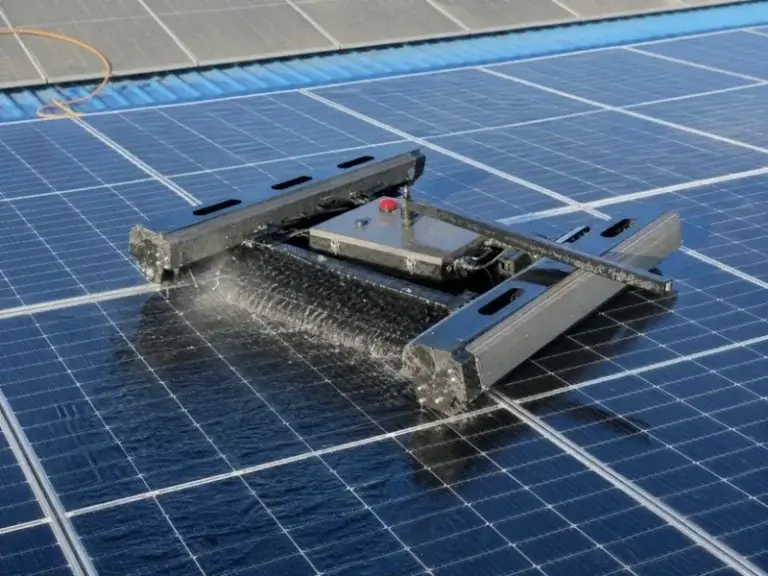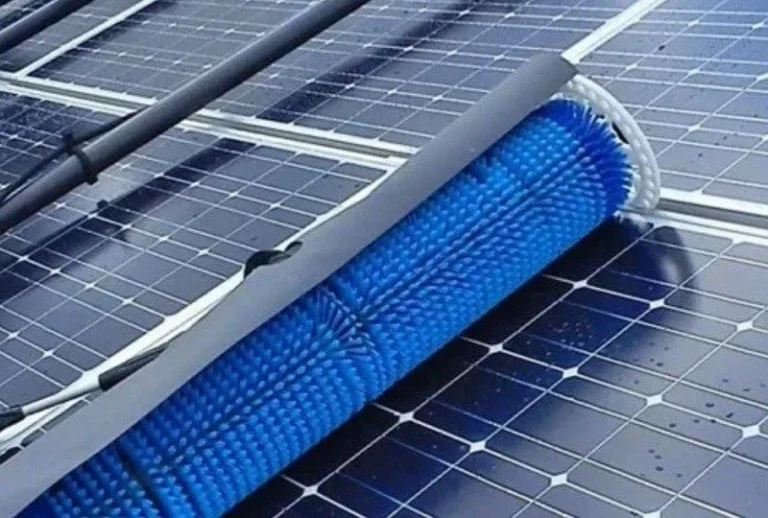
As global solar photovoltaic (PV) installations continue to surge past the 1.6 TW mark, the operational efficiency of solar farms increasingly depends on one often-overlooked factor: panel cleanliness. Dust accumulation, bird droppings, industrial residue, and sand can reduce PV power output by 5% to 30%, with arid regions experiencing losses at the higher end of this spectrum. Rotating brush cleaning systems have emerged as a popular automated solution, offering fast, consistent cleaning with minimal labor. However, the solar industry encompasses a diverse range of PV technologies, each with distinct surface characteristics, coating chemistries, and mechanical tolerances. This raises a critical question for solar farm operators and EPC contractors evaluating cleaning equipment.
The short answer is no: a solar panel rotating brush is not universally suitable for all PV panel types in a single configuration. Compatibility depends on three key variables: the panel’s surface technology (crystalline silicon vs. thin-film vs. perovskite), the brush bristle material and stiffness, and the cleaning mode (dry vs. wet). A properly selected and configured rotating brush system can safely clean most commercial PV panels, but using the wrong brush on the wrong panel type risks irreversible damage to anti-reflective coatings, micro-scratching of glass surfaces, and even voiding manufacturer warranties.
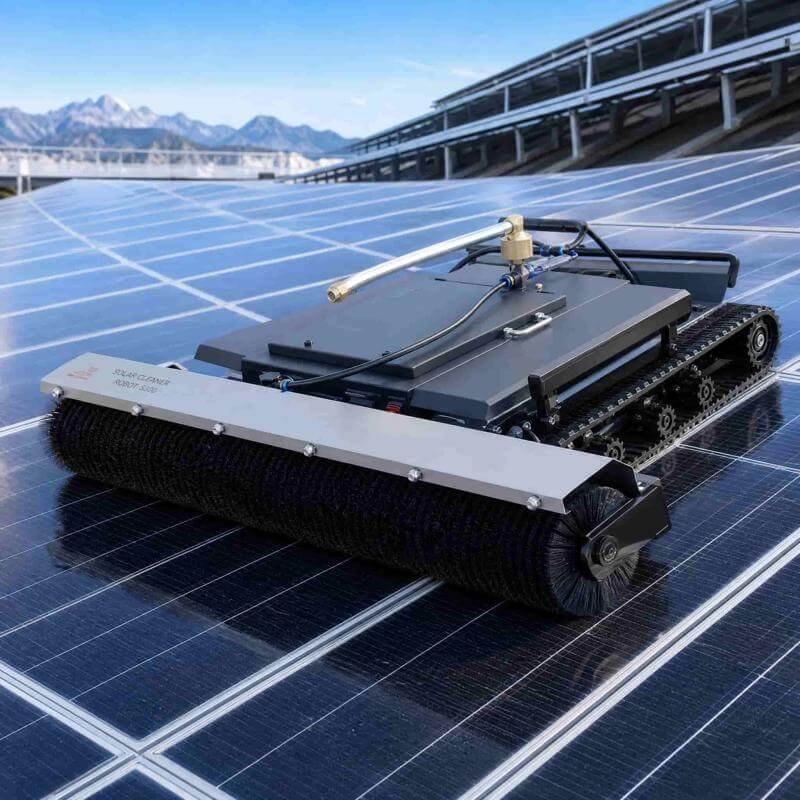
This article provides a detailed technical analysis of rotating brush compatibility across different PV panel technologies. We examine the science behind bristle material selection, the vulnerability of anti-reflective coatings (ARCs), the trade-offs between dry and wet cleaning modes, and the role of intelligent sensor systems in achieving safe, automated cleaning.
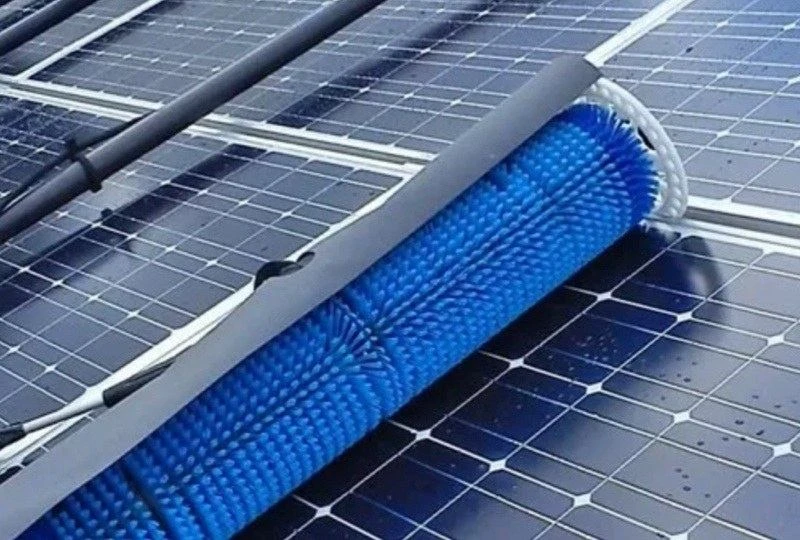
PV Panel Types and Surface Differences
Rotating brush compatibility begins with understanding the panel type. Crystalline silicon panels (monocrystalline and polycrystalline) feature hardened tempered glass surfaces with anti-reflective coatings and can tolerate moderate mechanical cleaning. Thin-film panels (CdTe, CIGS, a-Si) often use softer front glass or polymer-based encapsulation and require gentler cleaning approaches. Perovskite panels and bifacial modules introduce additional surface sensitivities that demand specialized brush configurations.
Crystalline Silicon Panels: Monocrystalline and Polycrystalline
Crystalline silicon (c-Si) panels dominate the global PV market with over 95% market share. Both monocrystalline and polycrystalline variants feature a front surface made of tempered low-iron glass, typically 3.2 mm thick, which provides substantial mechanical durability. The glass surface is engineered with a textured or patterned finish to enhance light trapping, and a nanoscale anti-reflective coating (ARC) is applied to reduce reflection losses and boost light transmission by 2% to 3%.
These panels are the most forgiving when it comes to mechanical cleaning. Their hardened glass surface can withstand moderate brush pressure, making them compatible with a wide range of rotating brush systems using nylon, PBT (polybutylene terephthalate), or PP (polypropylene) bristles. However, the ARC layer remains the vulnerable element. Even on c-Si panels, aggressive brushing with overly stiff bristles or contaminated brush heads carrying abrasive particles can gradually erode the coating, leading to increased reflectance and permanent efficiency loss.
Thin-Film Panels: CdTe, CIGS, and Amorphous Silicon
Thin-film PV technologies differ fundamentally from crystalline silicon in their construction. Cadmium telluride (CdTe) and copper indium gallium selenide (CIGS) panels often use a front glass substrate, but some flexible variants employ polymer-based encapsulation. The front surface may lack the thick tempered glass of c-Si panels and instead rely on a thinner cover glass or transparent conductive oxide (TCO) layer that is significantly softer and more scratch-prone.
For thin-film panels, rotating brush selection must prioritize ultra-soft bristle materials. The standard nylon or PBT brushes used on crystalline silicon installations can cause micro-scratching on thin-film surfaces. Manufacturers of thin-film modules typically specify strict cleaning guidelines: some recommend only non-contact water cleaning, while others permit soft cloth contact cleaning up to a limited number of cycles per year. Using a rotating brush with inappropriate bristle stiffness on these panels risks not only coating damage but also warranty voidance.
Perovskite and Emerging Panel Technologies
Perovskite solar cells represent the next frontier in PV technology, with laboratory efficiencies now exceeding 26%. However, perovskite materials are inherently sensitive to moisture, mechanical stress, and thermal cycling. Their encapsulation layers are still evolving, and long-term durability under field conditions remains an active area of research. For rotating brush applications, perovskite panels demand the most conservative approach: dry cleaning with an ultra-fine soft sponge or microfiber rollers at minimal contact pressure, and strict avoidance of wet cleaning modes that could introduce moisture ingress risks.
Bifacial Modules
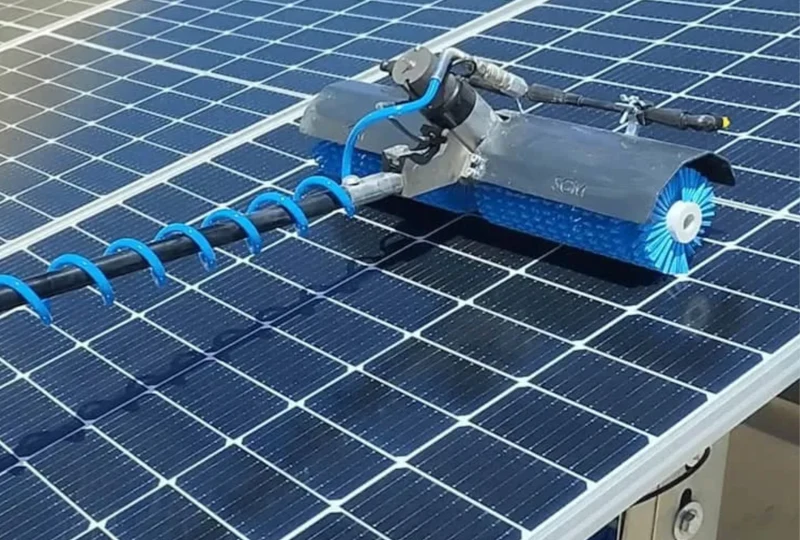
Bifacial modules, which capture light from both the front and rear sides, introduce a unique consideration. The rear side may use a transparent backsheet or glass instead of an opaque polymer backsheet. This dual-surface design means the cleaning system must be compatible with both the front tempered glass and the potentially more delicate rear surface. Rotating brush systems designed for bifacial installations need to account for the rear surface’s coating and mechanical properties, which may differ from the front glass specification.
Panel Surface Compatibility Comparison
| Panel Type | Front Surface Material | ARC Presence | Mechanical Tolerance | Recommended Brush Type |
| Monocrystalline Si | Tempered low-iron glass | Yes (high durability) | High | Nylon/PBT mixed bristle, medium pressure |
| Polycrystalline Si | Tempered low-iron glass | Yes (moderate durability) | High | Nylon/PBT mixed bristle, medium pressure |
| CdTe Thin-Film | Front glass or TCO layer | Varies by manufacturer | Low to moderate | Ultra-soft microfiber or sponge roller, low pressure |
| CIGS Thin-Film | Front glass or flexible polymer | Varies by manufacturer | Low | Soft velvet or sponge roller, minimal pressure |
| Amorphous Si (a-Si) | Front glass | Yes (lower durability) | Moderate | Soft nylon (sub-0.3 mm diameter), low pressure |
| Perovskite | Glass with encapsulation | Under development | Very low | Ultra-fine sponge, minimal contact, dry only |
| Bifacial (dual-glass) | Tempered glass (both sides) | Yes (front, sometimes rear) | High (front), varies (rear) | Match to each surface specification |
Why Are Rotating Brush Bristle Materials Critical for Panel Compatibility
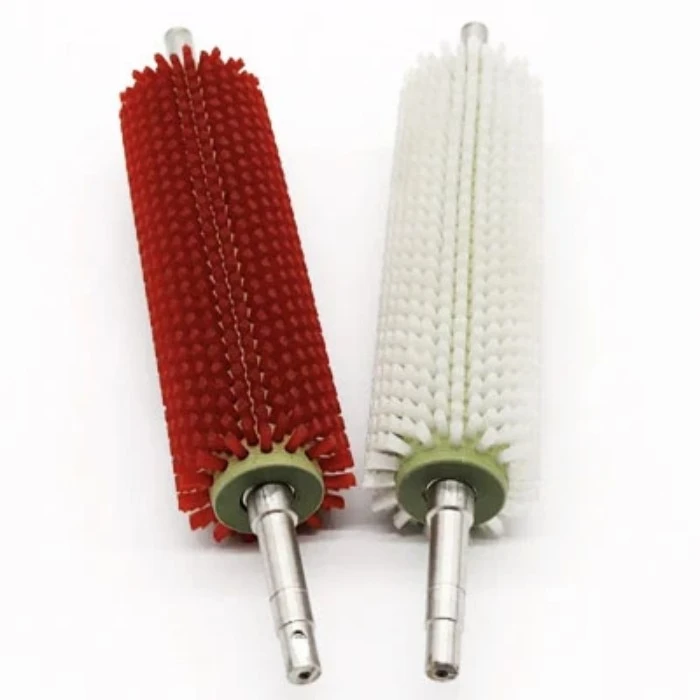
Bristle material is the single most important compatibility factor. Nylon (PA) bristles offer excellent flexibility and abrasion resistance for dry cleaning of crystalline silicon panels. PBT bristles provide greater stiffness for removing stubborn contaminants in wet cleaning scenarios. PP (polypropylene) bristles are cost-effective but wear faster. Ultra-fine microfiber and sponge rollers are essential for thin-film and sensitive panel types. The bristle diameter, density, and tip geometry all influence cleaning effectiveness versus surface abrasion risk.
Nylon (Polyamide / PA) Bristles
Nylon is the most widely used bristle material for PV panel rotating brushes. Its key advantages include high abrasion resistance, excellent flexibility, and the ability to recover its shape after repeated bending cycles. Nylon bristles with a diameter of less than 0.3 mm are categorized as ultra-soft and are suitable for dry cleaning applications on crystalline silicon panels. The softness of nylon bristles makes them particularly effective for sweeping away loose dust and sand without causing the “grinding effect” that occurs when hard particles are pressed against the glass surface by overly stiff bristles.
A 2023 study published in Solar Energy Materials tested 12 brush types on more than 200 panel samples and found that nylon brushes with optimized bristle density achieved a cleaning efficiency of over 90% for loose particulate matter while maintaining zero detectable ARC damage after 500 cleaning cycles. However, nylon bristles have limitations: they absorb moisture, which can lead to bristle softening and reduced cleaning effectiveness in humid environments, and they may not provide sufficient stiffness to remove caked-on bird droppings or industrial residue without wet cleaning assistance.
PBT (Polybutylene Terephthalate) Bristles
PBT bristles are characterized by higher stiffness and better chemical resistance compared to nylon. This makes them the preferred choice for wet cleaning applications where water or cleaning solutions are used to soften stubborn contaminants before mechanical removal. PBT bristles maintain their rigidity when wet, unlike nylon, and provide the additional scrubbing force needed to dislodge baked-on organic matter, oil residues, and salt deposits common in coastal and industrial environments.
For crystalline silicon panels with heavy soiling, PBT brushes with medium stiffness are highly effective. However, PBT brushes should not be used on thin-film panels or panels with delicate AR coatings, as their higher stiffness increases the risk of micro-scratching. Many professional cleaning systems now use a PBT and nylon hybrid approach, blending both materials in a single brush head to balance cleaning power with surface protection.
PP (Polypropylene) Bristles
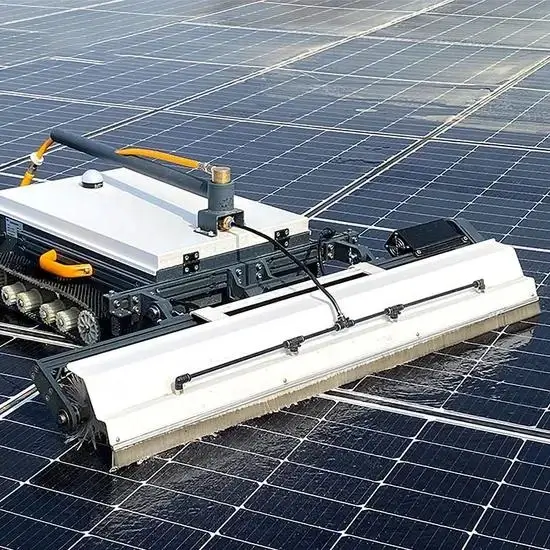
Polypropylene bristles offer an economical alternative with good chemical resistance and moisture resistance. They are commonly found in entry-level or consumer-grade rotating brush systems. However, PP bristles have lower abrasion resistance compared to nylon and PBT, leading to faster wear and more frequent brush replacement. For commercial and utility-scale installations where long-term reliability and consistent cleaning quality are critical, PP-only brushes are generally not recommended.
Ultra-Fine Microfiber and Sponge Rollers
For thin-film panels, perovskite modules, and panels with sensitive AR coatings, traditional bristle brushes are inappropriate. Instead, ultra-fine microfiber rollers with fiber diameters as small as 0.05 mm (three times thinner than a human hair) or soft sponge rollers are used. These materials provide gentle, non-abrasive contact that can remove dust without scratching the ARC layer. Some advanced microfiber brushes use modified PBT material that, after 1,000 friction tests, showed only 3% wear compared to 15% for standard nylon brushes.
Nanofiber roller technology represents the cutting edge of gentle cleaning: these rollers use electrostatic attraction combined with high-speed rotation to lift dust particles away from the panel surface with minimal mechanical contact, achieving near-zero abrasion risk for the most sensitive panel types.
Bristle Material Selection Guide
| Bristle Material | Stiffness Level | Best Suited Panel Types | Cleaning Mode | Wear Resistance | Relative Cost |
| Nylon (PA) sub-0.3 mm | Ultra-soft | c-Si, a-Si | Dry | High | Medium |
| Nylon (PA) standard | Soft to medium | Monocrystalline, Polycrystalline | Dry / Wet | High | Medium |
| PBT | Medium to hard | c-Si (heavy soiling only) | Wet | High | Medium-High |
| PP | Soft to medium | c-Si (light duty) | Dry | Low to medium | Low |
| Nylon + PBT hybrid | Customizable | c-Si (all conditions) | Dry / Wet | Very high | High |
| Microfiber (sub-0.05 mm) | Ultra-soft | Thin-film, Perovskite, ARC-sensitive | Dry | Medium | High |
| Sponge / Foam roller | Ultra-soft | Thin-film, CdTe, Perovskite | Dry (only) | Low to medium | Medium |
Rotating Brushes vs. AR Coating Damage
Yes, rotating brushes can damage anti-reflective coatings (ARCs) if improperly specified or operated. A landmark study by Fraunhofer ISE found that dry brushing on dusty surfaces caused significant ARC performance reduction after just 100 brush cycles, with reflectance increasing by up to 2.3% at 600 nm. An 18-month field test in Qatar revealed that five out of nine tested module types showed greater power losses with more frequent dry-brush cleaning. However, with proper brush material selection, controlled contact pressure, and appropriate cleaning frequency, ARC damage can be minimized to acceptable levels.
Understanding the Vulnerability of ARCs
Anti-reflective coatings are thin-film layers, typically composed of porous silicon dioxide (SiO2) or similar materials, deposited on the front glass of most modern PV modules. These coatings reduce surface reflection from approximately 4% (bare glass) to below 1%, translating to a 2% to 3% increase in light transmission and a corresponding boost in energy yield. However, ARC layers are significantly softer and more mechanically fragile than the underlying glass substrate.
The damage mechanism involves two primary processes. First, coating thinning: repeated brush contact gradually wears away the ARC material, reducing its anti-reflective effectiveness. Second, localized coating removal: bristle tips, particularly when contaminated with abrasive dust particles, can scratch through the coating entirely, creating microscopic channels that expose bare glass. Both mechanisms increase surface reflectance and create “anchor points” where dust and dirt accumulate more rapidly, accelerating future soiling.
The Fraunhofer ISE research on ARC resilience provides the most authoritative data on this topic. Their study tested dry manual brushing on uncoated solar glass and two commercial ARC types. Key findings include:
- Uncoated glass surfaces showed only minor damage even after high numbers of dry brush cycles, with no change in hemispherical reflectance.
- Both tested commercial ARCs showed significant performance reduction after just 100 brush cycles.
- After 500 brush cycles (simulating harsh bi-weekly cleaning over 20 years of operation), the coatings still retained some AR properties but with measurably degraded performance.
- Different ARC formulations showed significantly different durability, indicating that coating quality varies substantially between manufacturers.
The Qatar Field Study: Real-World Abrasion Data
An 18-month field study conducted in Doha, Qatar, tested nine types of PV modules and five types of ARC coupons under three cleaning schedules: daily dry-brush robot cleaning, weekly cleaning, and no cleaning (weathering reference). The results revealed substantial variability in abrasion resistance:
- Five module types showed greater power losses with more frequent cleaning.
- Four module types showed no significant additional loss from frequent cleaning.
- Laboratory profilometry confirmed large variability in scratch depth and quantity across different ARC formulations.
The study’s conclusion is critical for system integrators: it is recommended to test specific robot and module pairs in the field to be confident of their ARC degradation rate. Generic claims that a rotating brush is “safe for all panels” should be treated with skepticism unless backed by module-specific field test data.
Mitigation Strategies for ARC Protection
To minimize ARC damage when using rotating brushes, operators should adopt several evidence-based strategies:
- Match brush softness to coating durability: Use ultra-soft nylon (sub-0.3 mm diameter) or microfiber brushes designed specifically for ARC-coated panels.
- Control contact pressure: Maintain brush contact pressure at or below 0.5 N of force. Advanced systems incorporate pressure sensors and automatic pressure regulation.
- Optimize cleaning frequency: Daily dry brushing maximizes ARC wear. Research suggests that allowing dust to accumulate moderately and cleaning less frequently, combined with periodic wet cleaning, may better balance soiling losses against ARC degradation losses.
- Pre-clean inspection: In high-dust environments, ensure that coarse sand and grit are not being dragged across the panel surface by the rotating brush. Some systems incorporate pre-cleaning air blowers or soft pre-sweepers.
- Regular brush inspection and replacement: Worn, contaminated, or damaged brush heads dramatically increase abrasion risk. Implement a brush replacement schedule based on operational hours rather than visual inspection alone.
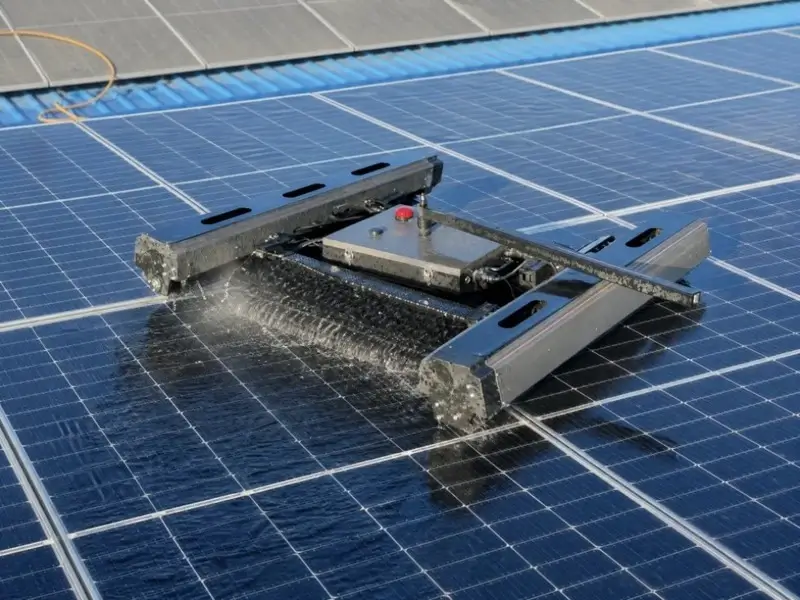
Dry vs. Wet Cleaning: Which Mode for Which Panel
Dry cleaning with rotating brushes is suitable for crystalline silicon panels with light to moderate dust accumulation and is the only safe option for thin-film, perovskite, and ARC-sensitive modules. Wet cleaning provides deeper contaminant removal for crystalline silicon panels with stubborn organic or oily residues but is contraindicated for moisture-sensitive panel types and carries risks of water ingress, thermal shock, and mineral spotting. The optimal approach for most commercial installations is a hybrid strategy: dry cleaning for routine maintenance and wet cleaning for periodic deep cleaning.
Dry Cleaning: Mechanism, Advantages, and Limitations
Dry cleaning relies on the mechanical action of rotating bristles to physically dislodge and sweep away loose particulate matter from the panel surface. No water or cleaning solutions are used, making this method inherently safer from an electrical safety and moisture ingress perspective. The cleaning efficiency for loose dust and sand typically reaches 90% to 95%.
The advantages of dry cleaning are substantial for specific scenarios:
- Zero water consumption: Critical for desert installations, arid regions, and sites where water logistics represent a major operational cost. Each megawatt of PV capacity cleaned via wet methods consumes approximately 6 to 10 tons of water per cycle.
- Year-round operability: Unlike wet cleaning, dry methods can be used in sub-zero temperatures without risk of ice formation on panels, making them suitable for northern latitude installations in winter.
- No mineral residue: Dry cleaning eliminates the risk of hard water spotting or mineral scale buildup that can occur with wet cleaning if deionized or reverse osmosis water is not used.
- Electrical safety: Dry cleaning can be performed without de-energizing the PV array in many system designs, reducing downtime.
The limitations center on cleaning effectiveness for non-particulate contaminants. Bird droppings, oily industrial residues, salt spray deposits, and baked-on organic matter are poorly removed by dry brushing alone. In these cases, the brush may smear rather than remove the contaminant, creating a thin film that still blocks light transmission.
Wet Cleaning: Deep Cleaning for Stubborn Contaminants
Wet cleaning combines rotating brush action with water spray or mist, and optionally neutral pH cleaning agents, to soften and remove bonded contaminants. Cleaning efficiency typically reaches 95% to 98%, making it the gold standard for restoring heavily soiled panels to near-original transparency.
Wet cleaning is most appropriate for:
- Monocrystalline and polycrystalline silicon panels with significant bird dropping accumulation.
- Coastal installations where salt spray forms a crusted layer.
- Industrial zones with oily or hydrocarbon-based residue.
- Sites that have gone extended periods without cleaning and have built up cemented dust layers.
However, wet cleaning introduces several risks that must be managed:
- Panel type restrictions: Wet cleaning is contraindicated for thin-film panels, perovskite modules, and panels with known moisture sensitivity. Some manufacturers explicitly prohibit wet contact cleaning and limit cleaning to non-contact water spray or dry methods only.
- Thermal shock: Applying cold water to hot panels (e.g., midday cleaning) can cause thermal stress that leads to glass micro-cracking. Best practice is to schedule wet cleaning during early morning or late afternoon when panel temperatures are lower.
- Water quality: Tap water contains dissolved minerals that leave residue spots as water evaporates. These spots create micro-shadows on the cell surface, reducing output. Deionized or reverse osmosis water is strongly recommended.
- Electrical safety: Wet cleaning requires proper grounding and may necessitate de-energizing affected strings to prevent ground fault risks.
Hybrid Approach for Maximum Compatibility
The most sophisticated rotating brush systems now offer dual-mode or hybrid cleaning capabilities that intelligently select the appropriate mode for each situation. For daily or high-frequency maintenance on crystalline silicon panels with light dust, the system operates in dry mode. When sensors detect heavy soiling, bird droppings, or sticky residues, the system activates a controlled water spray combined with brush action for deep cleaning.
For installations with mixed panel types, the system can be programmed to use dry-only mode on thin-film or sensitive sections while permitting wet cleaning on crystalline silicon sections. This targeted approach maximizes cleaning effectiveness across the entire installation while respecting the unique requirements of each panel technology.
Cleaning Mode Suitability Matrix
| Panel Type | Dry Brush Cleaning | Wet Brush Cleaning | Recommended Frequency | Special Considerations |
| Monocrystalline Si | Highly suitable | Suitable | Dry: weekly; Wet: quarterly | Use deionized water for wet mode |
| Polycrystalline Si | Highly suitable | Suitable | Dry: weekly; Wet: quarterly | Match water pressure below 0.5 MPa |
| CdTe Thin-Film | Suitable (soft brush only) | Not recommended | Dry: monthly maximum | Follow manufacturer cleaning guidelines strictly |
| CIGS Thin-Film | Conditionally suitable | Prohibited by most manufacturers | Minimal; verify with manufacturer | Some manufacturers prohibit all contact cleaning |
| a-Si Thin-Film | Conditionally suitable | Not recommended | Monthly maximum | Use ultra-soft microfiber only |
| Perovskite | Suitable (dry only, minimal pressure) | Prohibited | Minimal; consult manufacturer | High moisture sensitivity |
| Bifacial (dual glass) | Suitable (front); verify rear | Suitable (front); verify rear | Match front and rear schedules | Rear surface may need different brush spec |
Smart Sensors for Brush Compatibility Across Panel Types
Smart sensor technologies, including pressure sensors, AI-powered surface recognition, and adaptive speed control, are revolutionizing rotating brush compatibility. These systems can automatically detect panel surface hardness and texture, adjust brush pressure in real time, modulate rotational speed based on contamination type, and even visually identify panel type to lock or unlock specific cleaning modes. This intelligent adaptation allows a single cleaning system to safely service multiple panel technologies within the same installation.
Real-Time Pressure Regulation
Contact pressure is the single most critical variable governing the balance between cleaning effectiveness and surface damage risk. Too little pressure leaves dirt behind; too much pressure accelerates ARC wear and risks micro-scratching. Traditional rotating brush systems operate at a fixed pressure setting, which inevitably represents a compromise that is suboptimal for some panel types.
Advanced systems now incorporate embedded pressure sensors in the brush head assembly that provide real-time feedback to the motor controller. When the brush encounters a softer surface, such as a thin-film panel or a panel with a more delicate ARC, the system automatically reduces downward pressure. When cleaning a standard tempered glass crystalline silicon panel, pressure can be increased for more effective dirt removal. This closed-loop pressure control enables a single brush system to safely transition between different panel types in mixed-technology solar farms.
Some systems take this further by incorporating AI-based surface recognition: optical sensors combined with machine learning algorithms can identify panel surface characteristics (hardness, smoothness, coating type) before the brush makes contact, pre-setting optimal pressure parameters for each panel section.
Adaptive Rotational Speed Control
Rotating brush speed directly influences cleaning effectiveness and abrasion potential. Higher speeds generate more cleaning action but also more friction and potential for coating wear. Smart systems now adjust brush RPM based on real-time contamination assessment:
- Light dust conditions: Low speed (100 to 200 RPM) for gentle, low-abrasion sweeping.
- Moderate soiling: Medium speed (200 to 350 RPM) for standard cleaning.
- Heavy contamination (bird droppings, mud): High speed (350 to 500 RPM) for maximum scrubbing power, combined with wet cleaning mode.
The speed adaptation logic can also incorporate panel type awareness, automatically capping maximum RPM when operating on sensitive panel types regardless of contamination level.
Visual Panel Type Recognition and Mode Locking
The most advanced systems use onboard cameras and computer vision to automatically identify the panel type before initiating a cleaning cycle. By comparing visual signatures against a trained database of panel appearances, the system can:
- Determine whether the panel is crystalline silicon, thin-film, bifacial, or another technology.
- Check the panel type against a pre-configured cleaning mode whitelist.
- Lock out incompatible cleaning modes: for example, automatically disabling wet cleaning and limiting brush pressure when a thin-film panel is detected.
- Log cleaning parameters per panel for compliance and warranty documentation.
This visual recognition capability is particularly valuable for large-scale installations where multiple panel types may be deployed across different sections, or for O&M service providers who clean diverse customer installations with varying panel inventories.
Contamination Type Detection and Response
Beyond panel type recognition, some systems can identify the type of contamination present and adjust the cleaning strategy accordingly. Optical sensors can distinguish between loose dust, caked mud, bird droppings, and oily residues. The system then selects the optimal combination of brush speed, pressure, and cleaning mode (dry vs. wet) for that specific contaminant, on that specific panel type.
Key Sensor Technologies Summary
| Sensor Technology | Function | Benefit for Panel Compatibility |
| Contact pressure sensor | Real-time measurement of brush-to-panel force | Prevents over-pressure on sensitive panels; automatic soft-panel detection |
| Optical surface scanner | Panel type identification via visual recognition | Automatic mode locking: disables wet cleaning for thin-film, limits pressure for perovskite |
| Contamination sensor | Detection of soiling type and density | Adaptive RPM and mode selection based on actual cleaning needs |
| Torque/current monitor | Motor load measurement during rotation | Detects abnormal resistance indicating brush binding or surface obstacles |
| Temperature sensor | Ambient and panel surface temperature measurement | Prevents wet cleaning during high-temperature conditions to avoid thermal shock |
| Inclinometer/gyroscope | Panel tilt angle measurement | Adjusts brush contact dynamics for angled vs. flat-mounted panels |
Best Practices for Mixed Panel Brush Selection
Selecting a rotating brush cleaning system for installations with multiple panel types requires a systematic, data-driven approach. Operators must inventory all panel types and their manufacturer cleaning specifications, conduct site-specific soil analysis, evaluate brush systems against module-specific compatibility data, and implement a graduated deployment strategy that validates safety on small test sections before scaling to the full installation.
Step 1: Inventory Panel Types and Manufacturer Specifications
Before evaluating any cleaning equipment, compile a comprehensive inventory of every panel model installed at the site. For each model, obtain the manufacturer’s official cleaning and maintenance guidelines. These documents specify:
- Approved cleaning methods (dry contact, wet contact, non-contact water only).
- Approved cleaning tool materials and bristle types.
- Maximum allowable cleaning frequency per year.
- Prohibited cleaning practices and materials.
- Water quality requirements for wet cleaning.
- Warranty conditions related to cleaning practices.
This inventory forms the baseline compatibility matrix against which all brush system candidates must be evaluated. If any panel type in the installation prohibits rotating brush contact cleaning entirely, a rotating brush system cannot be safely deployed on that section without risking warranty voidance.
Step 2: Conduct Site-Specific Soiling Analysis
The type and rate of soiling at the site strongly influence brush selection. Conduct a soiling study that measures:
- Soiling rate: Percentage of daily or weekly power loss due to particulate accumulation, measured via paired clean and soiled reference modules.
- Particle size distribution: Analysis of collected dust samples to determine the proportion of fine particles (under 10 microns) versus coarse sand (over 100 microns). Coarse, angular sand particles increase abrasion risk during dry brushing.
- Contaminant chemistry: Laboratory analysis to identify organic content, salt content, hydrocarbon presence, and other chemical factors that influence cleaning difficulty and material selection.
- Seasonal variation: Assessment of how soiling patterns change across seasons, including monsoon dust flushing effects in some regions.
This analysis informs decisions about optimal cleaning frequency, whether dry cleaning alone is sufficient, and what bristle material offers the best balance of cleaning effectiveness and surface protection for the specific contaminant profile.
Step 3: Evaluate Brush Systems Against Module-Specific Compatibility Data
Request detailed compatibility data from brush system vendors, including:
- Bristle material specifications (material, diameter, density, tip geometry).
- Contact pressure measurements (nominal and maximum).
- Rotational speed range and control granularity.
- Independent third-party test results for ARC abrasion on panel models matching those at your site.
- Field references from installations with the same or similar panel types.
- Sensor capabilities (pressure control, panel recognition, adaptive speed).
Cross-reference this data against the panel manufacturer specifications from Step 1. If the vendor cannot provide test data for your specific panel models, request or fund a pilot test before committing to full deployment.
Step 4: Implement Graduated Deployment with Performance Monitoring
Deploy the selected brush system in phases:
- Laboratory or controlled environment test: Clean a small number of representative panels under controlled conditions. Measure pre-cleaning and post-cleaning power output, and inspect panels for any visible surface changes using high-resolution imaging.
- Small-scale field pilot: Deploy the system on a 0.5 to 1 MW test section for 3 to 6 months. Monitor cleaning effectiveness (soiling ratio recovery), ARC condition (periodic reflectance measurements), and any power degradation trends compared to control sections.
- Graduated scale-up: If pilot results are satisfactory, expand deployment in phases while continuing to monitor for any degradation signals.
- Ongoing surveillance: Implement continuous performance monitoring with automated alerts for unexpected power drops that might indicate cleaning-related damage.
Best Practices Checklist
| Practice | Rationale |
| Obtain and follow manufacturer cleaning guidelines for every installed panel model | Warranty compliance and baseline safety verification |
| Match bristle material to the most sensitive panel type in the installation | The cleaning system must be safe for all panels it touches |
| Implement pressure-sensing and adaptive pressure control | Eliminates the risk of fixed-pressure systems damaging sensitive panels |
| Use deionized or reverse osmosis water exclusively for wet cleaning | Prevents mineral spotting and associated micro-shadow losses |
| Schedule wet cleaning during cool hours (early morning or late afternoon) | Avoids thermal shock to hot panels |
| Establish brush replacement schedules based on operational hours | Worn brushes dramatically increase abrasion risk |
| Maintain cleaning logs per panel section, including mode, frequency, and conditions | Enables correlation of cleaning practices with long-term performance trends |
| Test specific robot and module pairings in the field before full deployment | Lab data cannot fully replicate real-world dust, climate, and operational conditions |
Conclusion
The question of whether a solar panel rotating brush is suitable for all types of PV panels has a nuanced answer. In summary:
Rotating brush cleaning systems are generally compatible with crystalline silicon panels (both monocrystalline and polycrystalline), which constitute the vast majority of installed PV capacity globally. For these panels, properly specified nylon, PBT, or hybrid bristle brushes operating at controlled pressure and appropriate speed can deliver effective cleaning with manageable long-term ARC wear.
For thin-film panels (CdTe, CIGS, a-Si) and emerging technologies such as perovskite, rotating brush compatibility is conditional and often restricted. These panels demand ultra-soft microfiber or sponge rollers, dry-only operation, minimal contact pressure, and strict adherence to manufacturer-specific guidelines. In some cases, manufacturers explicitly prohibit any contact cleaning method, making rotating brushes unsuitable regardless of configuration.
The key to safe and effective rotating brush deployment lies in a systematic, data-driven approach: inventory panel types and manufacturer specifications, analyze site-specific soiling characteristics, rigorously evaluate brush systems against module-specific compatibility data, and validate safety through controlled pilot testing before full-scale deployment.
As the PV industry continues to diversify its technology portfolio and as automated cleaning becomes standard practice for utility-scale installations, the importance of panel-specific cleaning compatibility will only grow. Smart sensor technologies that enable adaptive brush behavior represent a promising pathway toward universal compatibility, but for the present, the golden rule remains: know your panels, and match your brush accordingly.
FAQ
Q1: Can I use a regular scrub brush on solar panels?
No. Regular brushes lack graded bristles and can scratch AR coatings, permanently reducing energy output by up to 15%–20%.
Q2: Manual pole brush or rotary system — which should I choose?
Manual works for residential/small arrays; rotary is better for large ground-mount farms with thousands of panels.
Q3: Is a cheap solar brush actually more expensive in the long run?
Yes. Hidden costs include faster wear, lower efficiency, and scratch damage that reduces output by 2%–5% per year. Professional brushes often save 30%–50% over 12 months.