Cleaning work on a production line is judged by repeatability rather than peak effort. A handheld brush depends on the pressure and pace of the person using it, so the result changes between shifts and between operators. Where a surface passes the cleaning station only once, whatever is left behind travels with it.
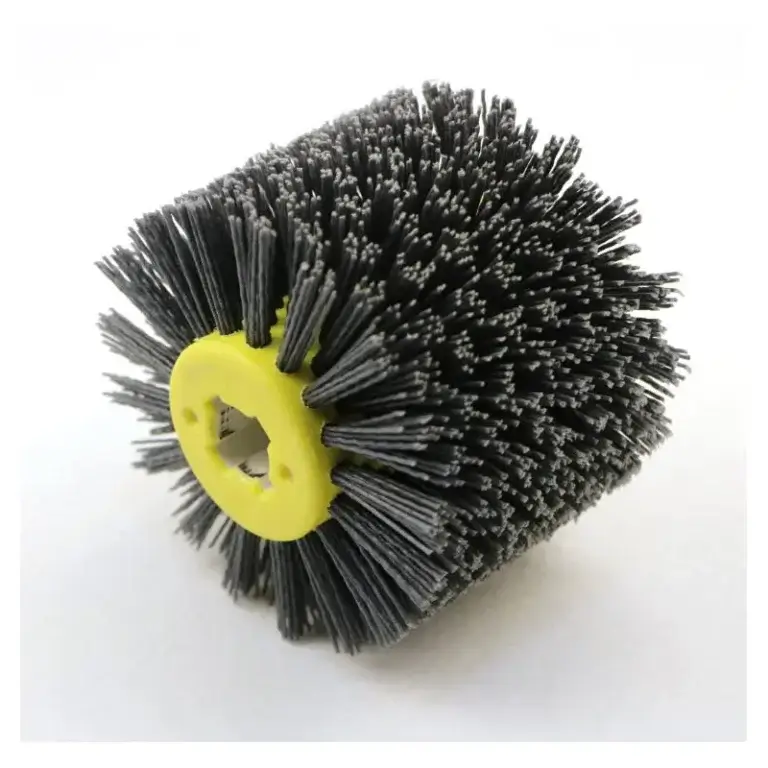
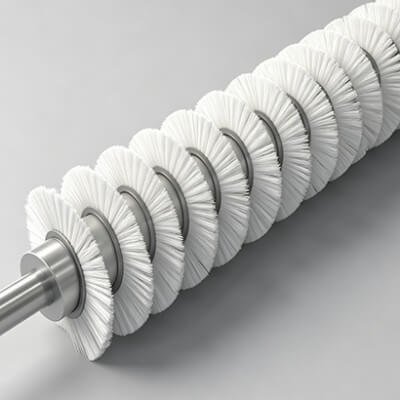
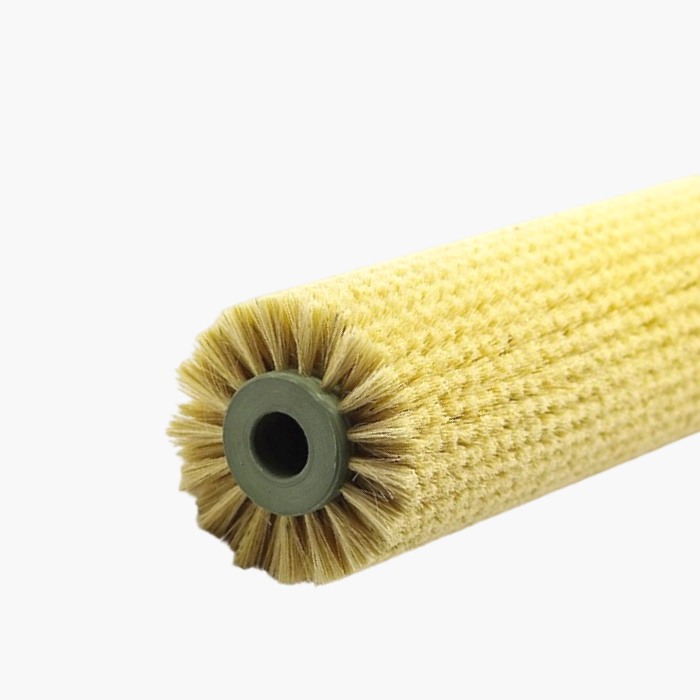
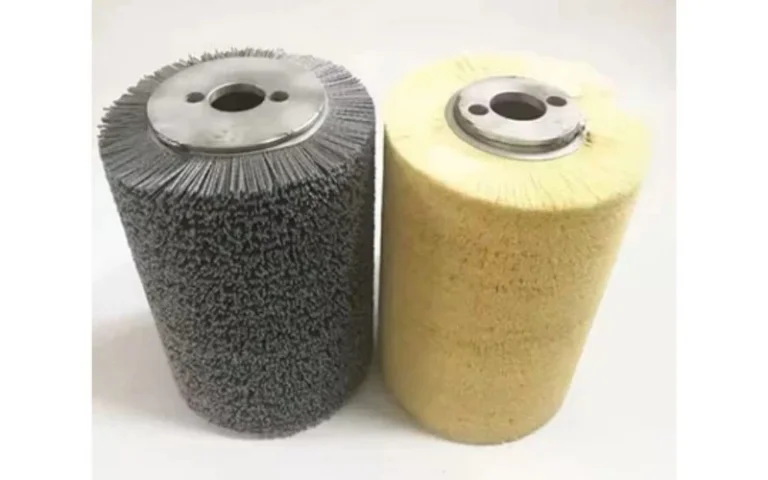
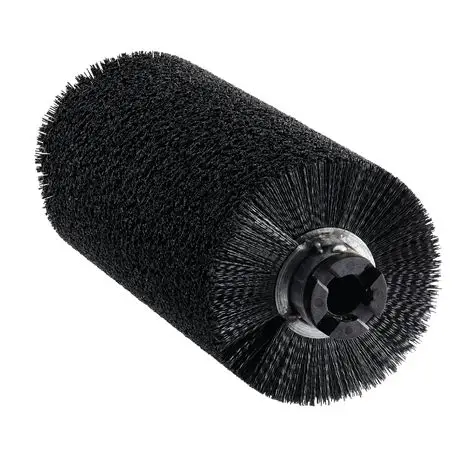
A cylindrical nylon brush improves surface cleaning by replacing hand-controlled pressure with machine-controlled contact. The rotating cylinder touches every point of the surface with the same force for the same length of time; the flexible filaments loosen debris instead of smearing it; and nylon resists wear, moisture, and most cleaning chemicals, so the result holds steady from the first pass of a shift to the last.
Below is how that contact lifts contamination, what improvements it produces, and what decides their size.
What a Cylindrical Nylon Brush Does Differently
It turns cleaning into a repeatable mechanical process. A cylinder mounted across the width applies even pressure and a set dwell time, so the result no longer depends on who holds the tool or how long they spend on each section.
Shape separates a cylindrical cleaning brush from a hand tool. A flat brush meets the surface at whatever angle the operator holds it, so pressure varies along the stroke. A cylinder meets the surface along a line across the full working width, so every point passes through the same contact zone at the same speed.
How the Filament Contact Lifts Contamination
Each filament bends when it meets the surface and springs back as it leaves, so the tip flicks particles clear instead of pushing them along. Nylon recovers its shape quickly, so the action repeats at every rotation, while a filament that stayed bent would glide and polish rather than clean. Contact pressure is set by the mounting distance and the filament extension beyond the backing, so it can be measured and repeated.
| Tool form | Contact pattern | Coverage | Where it fits |
| Cylindrical roller | Continuous line contact across the full width | Complete in one pass | Conveyor surfaces, panels, sheet material |
| Flat hand brush | Point contact that changes with hand angle | Depends on operator overlap | Detail work, corners, spot cleaning |
| Disc brush | Circular contact patch | Needs overlapping passes | Edges and irregular shapes |
The Improvements You Can Measure
Cleaning improvements appear in five places: speed per pass, consistency across the width, surface damage and rework, tool life and changeover frequency, and consumption of water, chemicals, and labor. Each can be measured before and after the change of tool.
Those gains come from the material as much as from the shape. Nylon has high resistance to wear, heat, and chemicals, as documented by Britannica, and that combination lets a filament keep its stiffness and working shape over a long service life. A rotary nylon brush roller cleans the way it did when new.
Faster Coverage Per Pass
A conveyor cleaning brush roller spans the belt and removes residue in the same pass that carries the product, so cleaning stops being a separate operation with its own downtime. Coverage no longer depends on whether someone remembered to clean a particular section or had time to finish it, and the labor formerly spent on manual scrubbing is released for other work.
Consistent Cleaning Across the Full Width
Manual cleaning leaves the middle and the edges at different standards, because an arm cannot hold the same pressure across a wide surface, and an operator’s attention fades as the shift goes on. A cylinder applies the same load to every part it touches, so the first meter of a run and the last meter come out alike, and the surface that reaches the next process looks the same whether it was cleaned at the start of the shift or at the end.
Fewer Scratches and Less Rework
Nylon filaments are softer than the surfaces they clean and softer than metal fill, so they lift residue without cutting into the substrate. On glass and polished parts, one scratch turns a part into scrap or rework, and the cost of that single mark is many times the cost of the brush. Cleaning that only removes debris leaves the part saleable, while cleaning that also removes material changes the surface and has to be controlled pass by pass.
Longer Service Life and Fewer Changeovers
Wear resistance keeps the working section of the filament intact longer, so nylon brush rollers hold their cleaning power over a longer interval. Fewer replacements mean fewer stoppages, and fewer stoppages mean fewer of the alignment checks and settling periods that follow every change, which is where much of the real cost of a worn tool sits.
Lower Consumable and Labor Input, and a Cleaner Work Area
A brush that lifts dust at the contact point keeps it out of the air instead of moving it with a broom. OSHA links respirable crystalline silica from cutting, grinding, and crushing to silicosis, lung cancer, and COPD, so capturing particles at the source cuts housekeeping labor and airborne load at once. Where the work is wet, a metered brush also uses less water and less chemical than manual washing of the same surface area.
What Decides How Much Improvement You Get
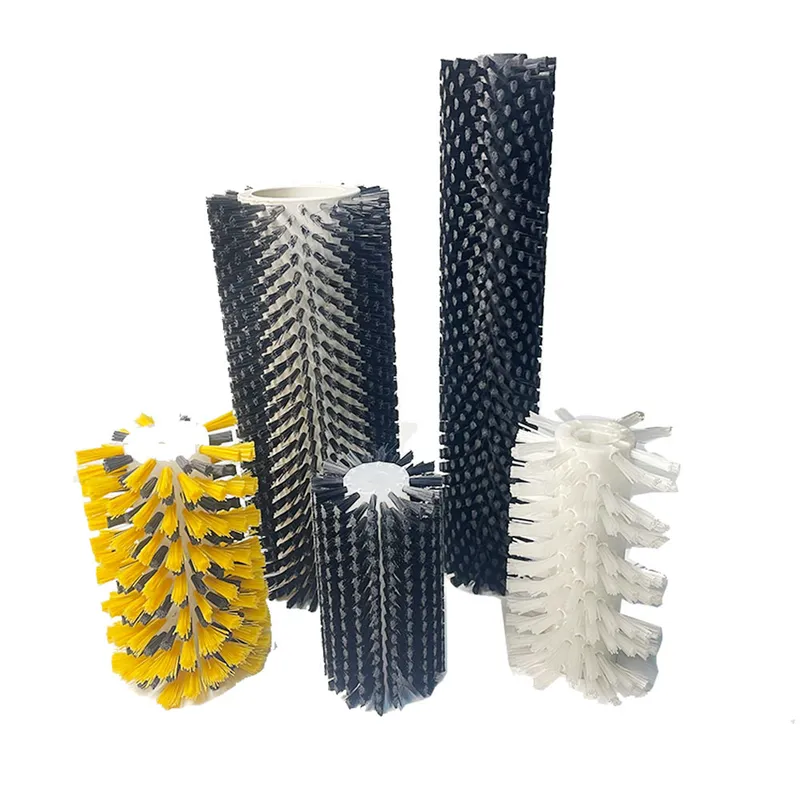
Five choices set the ceiling: filament grade, filament diameter, trim length, density and pattern, and core construction. A brush that gets any one wrong will still turn, but the result will stop improving.
- Filament grade. General-purpose nylon suits dry work, while wet-service grades absorb far less water and keep their stiffness through washdown.
- Filament diameter. A thicker filament is stiffer at the same length, so diameter sets how aggressive the brush is.
- Trim length. Longer filaments bend more and act gently, while shorter ones behave like stiffer filaments.
- Density and pattern. Denser fill cleans more thoroughly but adds friction, heat, and drive load.
- Core construction. A corrosion-resistant core suits wet areas, and a balanced core keeps rotation free of vibration.
| Filament diameter | Typical cleaning task | Point to watch |
| 0.15 to 0.20 mm | Dust and fine residue on finished surfaces | Keep pressure low to avoid marking |
| 0.20 to 0.30 mm | General surface and conveyor cleaning | Most common starting point |
| 0.30 to 0.50 mm | Stubborn residue on textured surfaces | Higher load on the drive and the surface |
| Abrasive-filled nylon | Burrs, oxides, and surface conditioning | Removes material, so test a sample first |
When Cleaning Quality Drops: Common Problems and Practical Fixes
Most lost cleaning quality traces back to three causes: filaments wearing unevenly, filaments leaving the brush, and rotation losing its balance. All three show up in the cleaned surface well before the brush looks worn out, so they are easier to diagnose from the product than from the tool.
An industrial cylinder brush rarely fails outright. It drifts out of adjustment first, and checking each symptom against its likely cause is faster than replacing parts on suspicion, because most fixes are adjustments.
| Symptom | Likely cause | Practical fix |
| Stripes of uncleaned surface | Uneven contact across the width | Reset the mounting distance and check alignment |
| Filaments worn to an uneven profile | Imbalance, or one end loaded harder | Rebalance the assembly and check the drive |
| Filaments appearing in the cleaned area | Weak anchoring, or excessive pressure | Reduce pressure and verify tuft depth |
| Cleaning fades within weeks | Residue packed between the filaments | Clean with compressed air and rinse regularly |
| Filament tips soften and splay | Process temperature above the filament limit | Move to a heat-stabilized filament |
Cleaning Surfaces in Food and Hygiene Critical Areas
Nylon is the usual choice where a surface touches food or a sterile product, because it does not shed metal fragments, absorbs little water, and is available in grades accepted for food contact. Where the brush touches food-contact surfaces, the filament resin must comply, and in the United States that means a nylon resin listed under 21 CFR 177.1500.
Dry Versus Wet Performance
Water absorption separates grades. A filament that takes up water loses part of its stiffness, so a brush selected for dry duty softens once it runs in a washdown area and cleans less aggressively than its specification suggests. Wet service grades absorb far less water and preserve the pressure the machine was set up for.
Sanitation and Foreign Object Control
A smooth core without crevices, firm filament anchoring, and stainless construction leave bacteria nowhere to collect. Where product is inspected for foreign objects, filament formulations that respond to metal detection add a second layer of control.
FAQ
Q1: What filament diameter should I start with for general surface cleaning?
Start in the middle of the range and adjust based on the result. Diameter and trim length work together, so a longer filament at a given diameter behaves like a softer brush, and shortening the trim is often cheaper than buying a stiffer brush. Test on a sample of the real material first, because the same filament can clean one surface and mark another.
Q2:Do nylon brush rollers lose stiffness when they run wet?
Some grades do. Filaments that absorb water soften, and the brush loses part of its cleaning action once it runs continuously wet. Grades made for wet service absorb far less water and are based on their working stiffness, so choose for the wettest condition the brush will meet rather than the condition on the day the line was specified.
Q3: How often should a cylindrical nylon brush be replaced?
Replace it based on measured condition rather than a calendar. A weekly visual check catches filament loss and packed residue before they appear in the product, and the useful signal is filament height: once it has dropped by roughly a quarter from its original value, cleaning can no longer be restored by adjusting pressure or cleaning the brush. Keep a spare rack so the filaments stay straight and unloaded, and store it dry so the core does not corrode while it waits.