
Rotary cylinder brushes are workhorses in industrial cleaning. They scrub conveyor belts, remove debris from packaging lines, wash fruit before packing, and keep solar arrays free of dust. In each of these jobs, the brush spins against a surface that has a specific hardness, texture, and tolerance for abrasion. The difference between a clean product and a damaged one often comes down to a single specification: bristle stiffness.
Get it wrong in either direction, and you pay for it. A brush that is too stiff scratches anodized aluminum, strips protective coatings, or bruises soft produce. A brush that is too soft leaves residue behind, forces operators to slow the line, and creates rework. Yet most maintenance teams select brushes by habit, reordering the same part number year after year without questioning whether it still matches the surface being cleaned.
The direct answer is this: match bristle stiffness to the hardness of the surface you are cleaning, always choosing the softest filament that still delivers adequate cleaning action. For delicate surfaces such as coated metals, glass, solar panels, and fresh produce, that means low-stiffness filaments like soft nylon, polypropylene, or polyester in fine diameters, with lower trim length and moderate brush speed. Confirm the choice with a small-scale trial before full rollout, because no spec sheet can fully replace a test on your actual surface.
This article explains how bristle stiffness is defined, how to read it in a brush specification, and how to match filament material to common delicate surfaces. You will find practical tables, application-specific guidance for solar panels and fruit lines, and a selection process you can reuse for any new product. We start with the basic mechanics of a cylinder brush for cleaning so the rest of the discussion has a solid foundation.
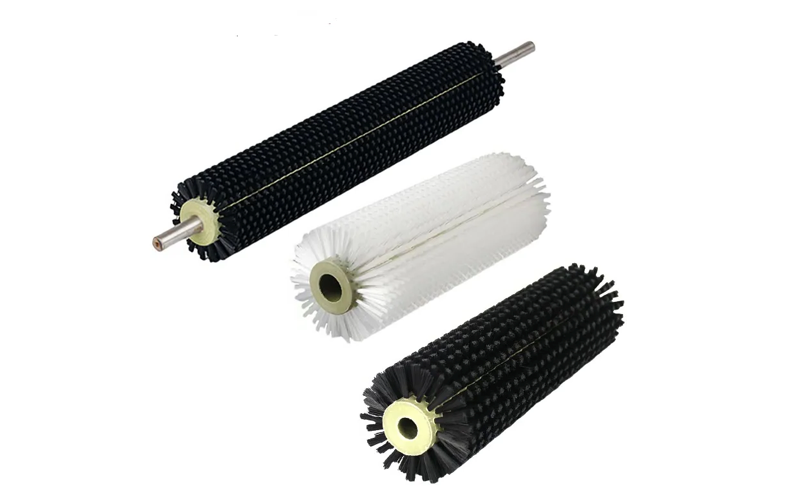
Why Bristle Stiffness Matters for Delicate Surfaces
The Science of Contact Force: Stiff vs. Soft Filaments
Bristle stiffness controls how much force a single filament transfers to the surface at the contact point. On delicate surfaces, high contact force causes scratches, coating loss, and physical damage, while insufficient force leaves the surface under-cleaned.
Every rotary brush works on the same principle. The cylinder rotates, the filaments deflect as they hit the surface, and the energy stored in that deflection does the cleaning. Stiff filaments deflect less, which means they press harder and scrub more aggressively. Soft filaments bend more easily, spreading the force over a wider area and reducing the pressure per square millimeter. That difference in pressure is exactly what separates a gentle clean from an abrasive scrub.
Rules of Thumb by Surface Type
A few rules of thumb help when judging any application:
- Surfaces with a polished finish, anodized coating, or paint should only be cleaned with filaments that bend before the coating does.
- Food products with soft skins, such as peaches, tomatoes, and berries, need brushes that flex around the fruit contour instead of pressing into it.
- Hard surfaces such as steel and concrete can tolerate stiff filaments, and often need them to remove baked-on residue.
- The damage threshold of a surface is a physical limit, not a preference. Exceeding it, even briefly, produces permanent marks.
The practical takeaway: when in doubt, start soft and increase stiffness only if cleaning results are insufficient.
How Brush Filament Stiffness Is Measured and Rated
Filament stiffness is not a single number on a datasheet. It is the combined result of filament material, diameter, trim length, and packing density, and all four must be considered together.
Manufacturers rate stiffness through a combination of material modulus and geometric factors. Two brushes made from the same polymer can behave completely differently if one uses a thicker filament or a shorter trim length. The table below summarizes how each variable moves stiffness up or down.
The term “trim length” deserves special attention because it is the easiest lever to adjust. A brush with long filaments feels noticeably softer because each filament acts like a longer lever. Shortening the trim by a few millimeters can turn a gentle brush into an aggressive one without changing the material at all.
Filament diameter matters just as much. A 0.30 mm nylon filament is a soft, forgiving tool suitable for wiping and light scrubbing. A 1.50 mm nylon filament, in contrast, is a rigid bristle that can damage soft surfaces even at low speed. When a supplier asks about stiffness, give them the surface hardness, the contaminant type, and the acceptable cleaning time, and let them propose the diameter and trim combination.
Choosing the Right Filament Material
Filament material sets the base stiffness range and also determines chemical resistance, water absorption, temperature limits, and food-contact compliance. Nylon is the default choice for most delicate-surface cleaning because it offers the widest balance of softness, wear life, and chemical tolerance.
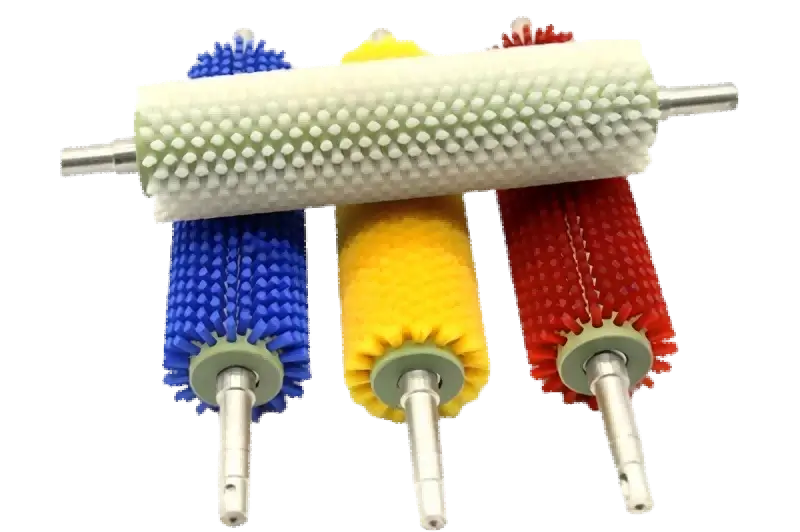
A nylon cylinder brush is the most common starting point in industrial cleaning, and for good reason. Nylon filaments come in a wide range of diameters, resist abrasion well, tolerate water and mild detergents, and can be manufactured in food-grade grades for direct contact with produce. For delicate surfaces, a fine-diameter nylon brush with a long trim is usually the safest first trial.
Other polymers earn their place in specific situations:
For glass, coated metal, and solar panel surfaces, soft nylon or polypropylene in diameters below 0.50 mm is a reliable starting range. For fruit and vegetables, food-grade polyethylene or fine polypropylene reduces the risk of bruising while still lifting dirt and surface bloom. For heavier deposits on robust surfaces, move up to thicker nylon or even abrasive-impregnated filaments, but treat that as a deliberate decision rather than a default.
Application-Specific Recommendations
No single brush fits every delicate surface. The right specification depends on the geometry of the part, the type of soil, and the speed of the line. The sections below walk through three common applications.
Solar Panel Cleaning
Solar panels are a classic delicate surface: tempered glass with an anti-reflective coating that scratches easily. Cleaning must remove dust and bird residue without micro-scratches that reduce light transmission over time.
Dust accumulation on photovoltaic modules can cut energy output by 5 to 25 percent depending on the site, which makes regular cleaning economically necessary. But aggressive brushes and harsh scrapers do more harm than good, because each micro-scratch on the coating permanently reduces the panel’s light-capturing efficiency.
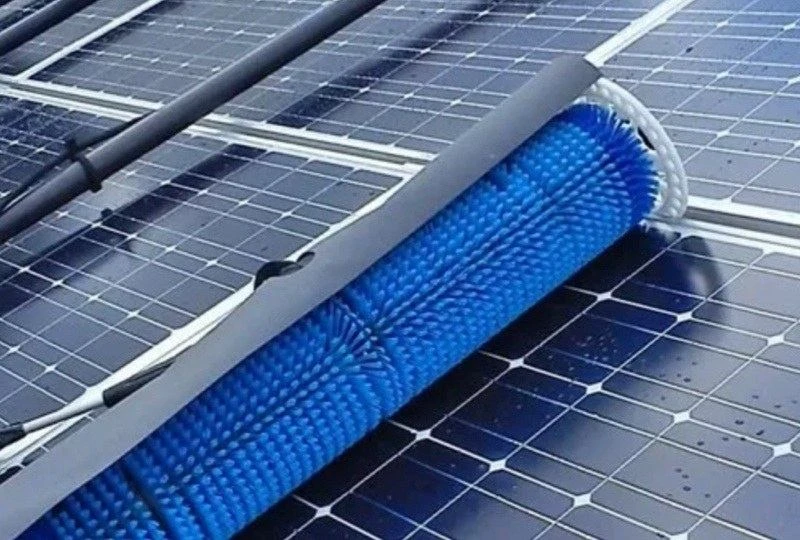
For automated solar panel cleaning, a solar panel cleaning brush with soft filaments, typically fine polypropylene or soft nylon, works best. Use these settings as a starting baseline:
- Filament diameter below 0.50 mm to keep contact pressure low.
- Long trim length so filaments flex and conform to the glass contour.
- Moderate rotational speed, because speed multiplies impact force.
- Dry brushing where possible; if water is used, ensure filaments are compatible with the cleaning solution.
The goal is to lift dust before it becomes cemented by moisture or heat. Frequent, gentle passes beat rare, aggressive scrubbing on every measure that matters: output, coating life, and downtime.
Fruit and Vegetable Cleaning
Fresh produce cleaning requires brushes soft enough to protect skins while aggressive enough to remove soil, pesticide residues, and surface bloom before packing.
Fruit lines present a special problem. The product varies in hardness from apples to berries; the brush contact is direct food contact, and the surface cannot tolerate bruising because bruised fruit is unsellable. The cleaning action must also work across irregular shapes, which means the filaments need to conform rather than press.
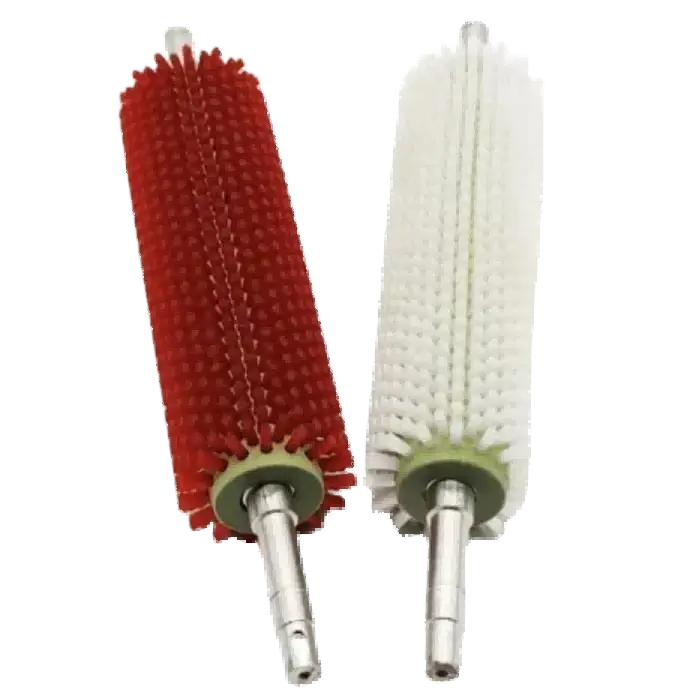
A fruit cleaning brush is normally built with food-grade filaments, fine diameters, and long trim. Practical guidance for produce lines:
- Use food-grade polyethylene or fine polypropylene for soft-skin fruit such as peaches and tomatoes.
- Reserve slightly stiffer nylon for root vegetables with tougher skins, such as potatoes and carrots.
- Keep brushes wet with clean water or approved wash solution to lubricate the contact and carry soil away.
- Inspect filaments daily for broken bristles, since stray filaments can end up in the pack.
Because fruit contact is a food-safety issue, verify that all brush materials carry the relevant food-contact certifications for your target market before installation.
Conveyor and Packaging Lines
On conveyor systems, the brush must clean the belt surface without wearing the belt cover or the spliced joints. Belt materials range from soft rubber to fabric, so stiffness selection must follow the belt, not the brush supplier’s catalog.
Conveyor cleaning brushes remove carryback, dust, and product residue from the belt return. A brush that is too stiff wears the belt cover and creates tracking problems; one that is too soft lets carryback accumulate and contaminate the product side of the belt. The correct spec sits between those limits and depends on belt material, speed, and the residue being removed.
For rubber belts, fine-to-medium nylon filaments are the standard choice. For fabric belts, switch to polypropylene and reduce speed. Whatever the belt type, monitor brush wear and belt condition together, because either wearing out before the other signals a mismatch.
How to Choose a Cylinder Brush for Your Process
The Five-Step Selection Framework
A reliable selection process has five steps: define the surface, define the soil, set the stiffness range, run a trial, and document the winning specification. Skipping any step forces you to guess, and guessing is how surfaces get damaged.
Start from the Process, Not the Brush
Many buyers start from the brush and work backward. The better sequence starts from the process and works forward:
- Record the surface material, hardness, finish, and damage tolerance.
- Identify the contaminant: dust, grease, dried residue, or food soil.
- Set an acceptable cleaning time and line speed.
- Ask suppliers for two candidate brushes, one soft and one medium, in the same material family.
- Run a short trial on scrap or a sacrificial part, then check the surface under magnification.
- Lock in the specification that cleans correctly with zero visible surface change.
For a deeper walkthrough of the criteria that matter, see our guide on choosing a cleaning brush. It covers core diameter, shaft configuration, and mounting details that affect fit on your existing machine.
Document the Winning Spec
Document every winning specification. Maintenance teams change, suppliers change, and without a written record, the next purchase becomes a guessing game again. A simple one-page spec sheet per application saves hours of re-trials later.
Caring for Your Cleaning Cylinder Brushes
A well-maintained brush lasts several times longer than a neglected one, and worn filaments are the most common cause of suddenly poor cleaning results on delicate surfaces.
Brush wear is gradual, which makes it easy to miss. Filaments lose length, lose stiffness, and start to polish rather than scrub. On a delicate surface, a worn brush can also press harder at the base because the remaining filaments are shorter and stiffer, creating damage where none existed before. Regular inspection catches this before it costs you product.
A practical maintenance routine covers four areas:
- Clean the brush itself after each shift to remove embedded soil and fibers.
- Check trim length and filament condition weekly; replace when wear exceeds the manufacturer’s recommendation.
- Verify shaft alignment and bearing condition, since a wobbling brush concentrates load on one side.
- Store spare brushes vertically or on their own stands so filaments do not take a permanent set.
For a step-by-step routine, including how to clean different filament types and when to recut or replace, read our guide on conveyor brush maintenance.
Frequently Asked Questions
What is the softest bristle material for cleaning painted or coated surfaces?
Polyethylene and fine polypropylene are the softest common filament materials. For coated or painted surfaces, start with polypropylene filaments under 0.50 mm in diameter and a long trim length. If cleaning is insufficient at the gentlest setting, increase contact time or brush speed before moving to a stiffer material.
Can I use the same cylinder brush for wet and dry cleaning?
Not without checking the material. Nylon absorbs water and swells slightly, which changes its stiffness in service, while polypropylene and polyester handle wet environments with minimal change. If a line alternates between wet and dry runs, choose a material with low water absorption and confirm it tolerates the cleaning chemicals used.
How often should a cylinder brush be replaced on a delicate-surface line?
There is no universal interval. Replacement depends on line speed, contact pressure, and the abrasiveness of the soil. Set a weekly inspection and measure trim length against a written baseline; replace the brush when the trim loss reaches the manufacturer’s threshold or when cleaning quality drops. On gentle produce lines, brushes may last several months, while abrasive dust applications may require changes every few weeks.