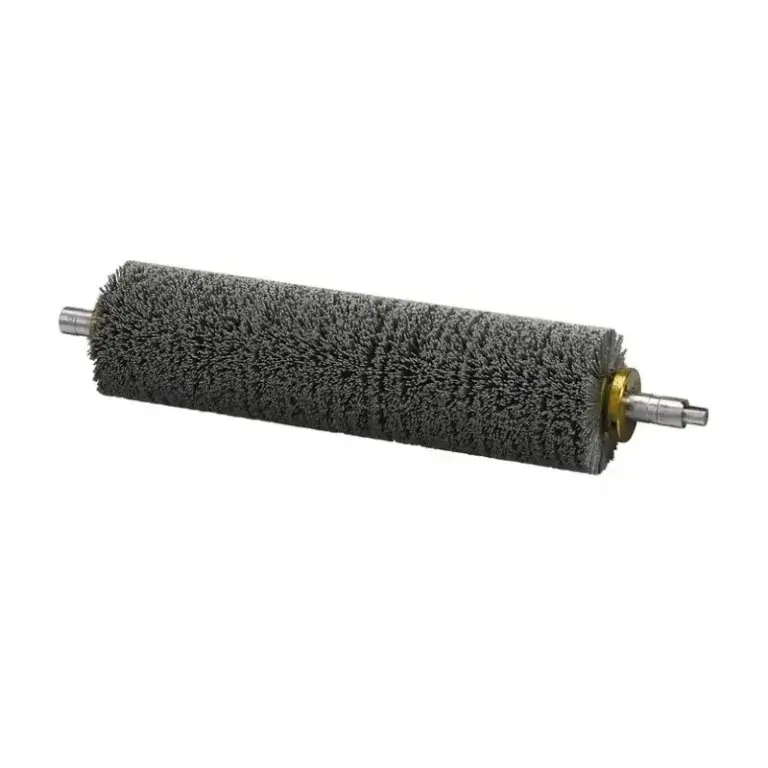
Custom cylinder rotary brushes deliver precision deburring and edge radiusing for CNC-machined parts. Explore types, materials, and selection guidance.
In modern manufacturing, deburring remains one of the most persistent and costly surface finishing challenges. From CNC-machined aerospace components to stamped automotive parts, burrs — those unwanted raised edges formed during cutting, drilling, and milling — compromise dimensional accuracy, create assembly interference, and pose safety hazards. Manual deburring with hand tools is labor-intensive, inconsistent, and increasingly unsustainable in high-volume production environments.
The shift toward automated surface finishing has accelerated demand for precision-engineered rotary brushing solutions. Among these, the custom cylinder rotary brush has emerged as a versatile and highly effective tool for removing burrs, edge radiusing, and imparting consistent surface finishes across a wide range of materials and geometries. Unlike disposable abrasives or chemical processes, a well-designed cylinder brush integrates directly into CNC machines, robotic cells, and dedicated deburring stations, delivering repeatable results with minimal operator intervention.
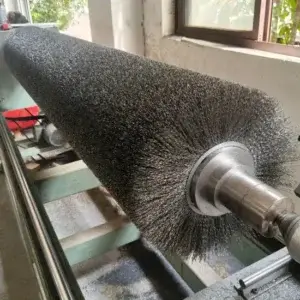
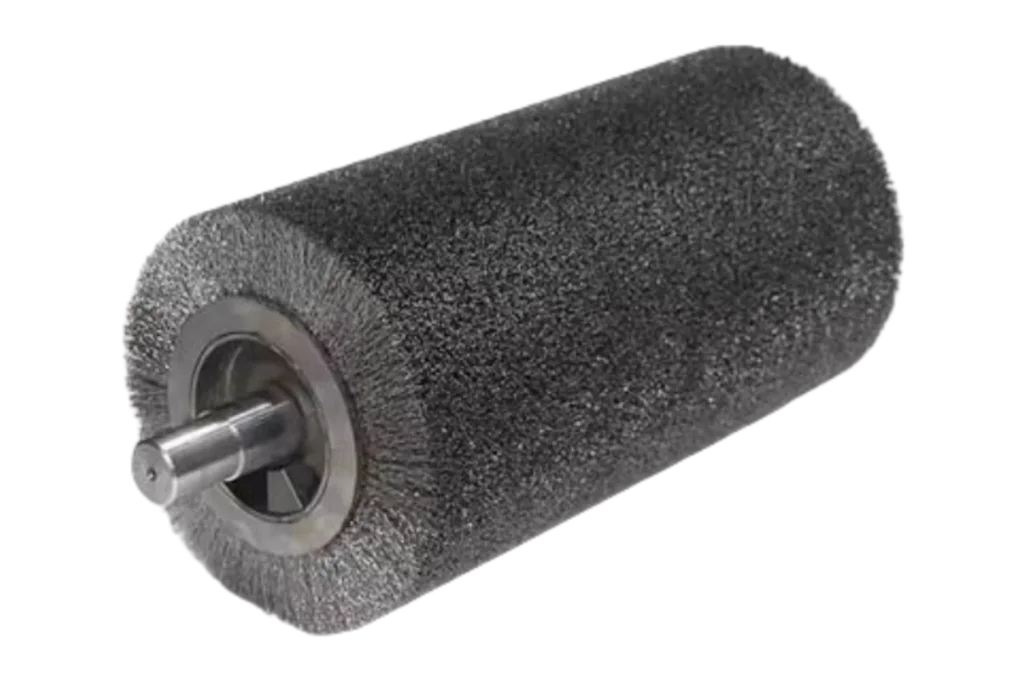
A custom cylinder rotary brush is a cylindrical power brush engineered to specific dimensions, filament types, densities, and abrasive grits for precision deburring and surface conditioning tasks. When properly specified, these brushes remove burrs uniformly from edges, holes, and complex contours while preserving base material integrity — making them indispensable for industries where both speed and surface quality are critical.
As manufacturers increasingly demand tighter tolerances and faster cycle times, selecting the right cylinder rotary brush configuration has become a strategic decision. Factors such as filament material, abrasive type, brush diameter, trim length, and rotational speed all influence deburring performance. This guide examines how custom cylinder rotary brushes work, the key design parameters that affect their performance, and how to select the optimal configuration for your specific deburring application.
How Cylinder Rotary Brushes Work in Deburring Applications
Cylinder rotary brushes deburr by rotating at controlled speeds while filaments impact and sweep across workpiece edges, mechanically displacing burrs through a combination of impact energy, filament flex recovery, and abrasive cutting action.
The Mechanics of Rotary Deburring
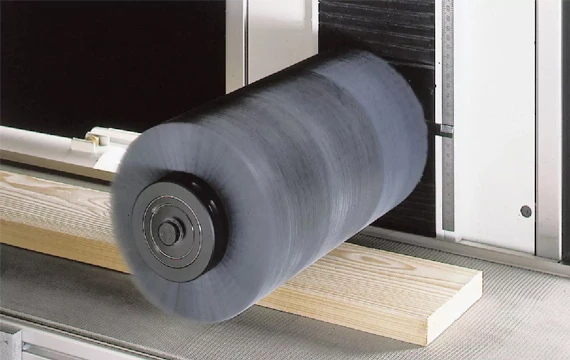
Cylinder rotary brushes operate on a deceptively simple principle: filaments mounted radially around a central core rotate at high speed, and each filament tip acts as a microscopic cutting or peening tool as it strikes the workpiece surface. The brush is typically mounted on a shaft and driven by a motor or machine spindle, with the workpiece either fed past the rotating brush or the brush traversed across stationary parts.
The deburring action itself is a multi-phase process. On initial contact, filament tips strike the burr root with kinetic energy, initiating fracture at stress concentration points. As the brush continues rotating, filaments flex and bend around the workpiece edge, and their elastic recovery generates a secondary wiping motion that displaces loosened burr material. When abrasive-filled filaments are used — common in abrasive wire cylinder brushes— embedded silicon carbide or aluminum oxide grains provide an additional cutting mechanism, shearing burrs at the microscopic level.
The effectiveness of this mechanism depends heavily on two interrelated parameters: filament tip speed and penetration depth (the distance the brush “interferes” with the workpiece). Tip speeds typically range from 900 to 3,600 surface feet per minute (SFM), with harder filaments and more aggressive deburring requiring higher speeds. Penetration depth — usually between 0.020 and 0.125 inches — controls how much filament flex occurs and determines the impact force delivered to the burr.
Material Removal Characteristics
One of the distinguishing advantages of cylinder rotary brushes over rigid cutting tools is their compliance. Filaments deflect around workpiece contours, allowing the brush to deburr irregular edges, internal bores, and complex geometries that would be inaccessible to a fixed cutter. This compliance also provides a self-limiting material removal characteristic — once burrs are removed, filament tips primarily contact the smooth substrate surface, reducing the risk of over-cutting or dimensional alteration.
The material removal rate is influenced by:
- Filament diameter: Thicker filaments (0.020–0.060 inches) deliver higher impact force for heavy burrs; thinner filaments provide finer finishing
- Filament density: Higher fill densities increase the number of impacts per revolution, producing more uniform results
- Abrasive grit size: Coarser grits (60–120) for aggressive stock removal; finer grits (180–320) for final finishing and edge radiusing
- Rotational speed: Higher speeds increase impact frequency and tip energy, accelerating deburring but generating more heat
Key Design Parameters for Custom Cylinder Rotary Brushes
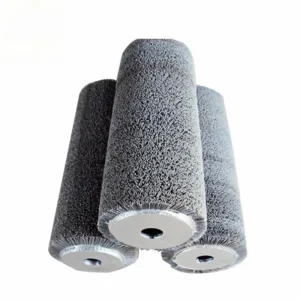
The performance of a custom cylinder rotary brush is governed by five primary design parameters: filament material and abrasive type, brush diameter, overall length and trim length, filament density, and core construction — each of which can be tailored to meet specific deburring requirements.
Filament Material Selection
Filament material is arguably the most critical design decision in specifying cylinder rotary brushes for deburring. The choice directly affects cutting aggressiveness, heat resistance, service life, and compatibility with workpiece materials.
Abrasive nylon filaments represent the most common choice for precision deburring. The abrasive grains are co-extruded throughout the filament cross-section, meaning fresh cutting edges are continuously exposed as the filament wears — unlike coated abrasives that lose effectiveness once the surface layer is consumed. For ferrous metal applications, aluminum oxide-filled nylon provides the optimal balance of cutting speed and filament life. An abrasive cylinder brush configured with the correct grit and density can handle everything from light edge blending to aggressive stock removal in a single automated station.
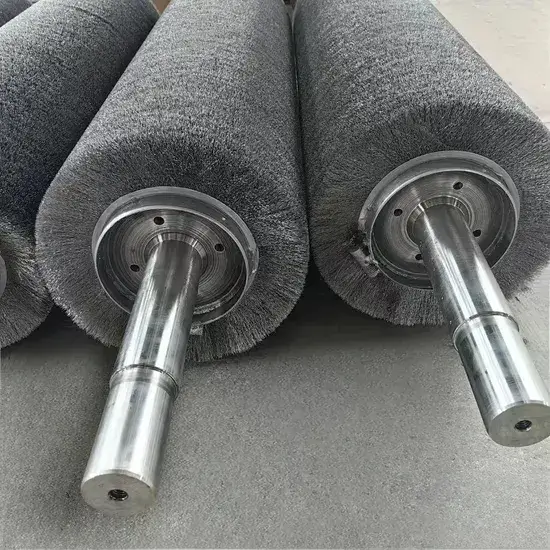
Wire filaments, by contrast, deburr through mechanical impact rather than abrasive cutting. They excel at removing larger, tougher burrs and are often preferred for heavy-duty applications such as weld spatter removal and cast iron deburring. Metal polishing brushes constructed with fine wire filaments can also achieve polished surface finishes in a single pass.
Diameter and Trim Length
The relationship between brush outside diameter (OD) and filament trim length determines two crucial performance characteristics: filament stiffness and the brush’s ability to conform to irregular surfaces.
A shorter trim length relative to brush diameter produces stiffer filaments with higher impact force — ideal for heavy burr removal on flat or gently curved surfaces. Longer trim lengths provide greater flexibility and compliance, allowing the brush to reach into recesses, around corners, and across undulating profiles.
Typical trim length guidelines:
- Heavy deburring: Trim length = 0.25 × brush diameter
- General-purpose deburring: Trim length = 0.30–0.40 × brush diameter
- Contour following and fine finishing: Trim length = 0.40–0.50 × brush diameter
Core Construction and Mounting Options
The brush core — the cylindrical hub into which filaments are secured — must withstand the centrifugal forces generated at operating speeds while maintaining precise concentricity. Common core materials include:
- Aluminum: Lightweight, excellent heat dissipation, suitable for speeds up to 6,000 RPM
- Steel: Maximum durability, ideal for heavy-duty applications and larger diameters
- Thermoplastic (PVC/Nylon): Chemical resistance for wet applications, lower cost for disposable brushes
- Stainless steel: Required for food processing, pharmaceutical, and corrosive environments
Shaft mounting configurations include keyed shafts for high-torque applications, set-screw hubs for quick changeovers, and arbor-mount designs for integration with standard machine spindles. Custom bore sizes and keyway specifications ensure compatibility with existing equipment.
Common Types of Cylinder Rotary Brushes for Precision Finishing
The three primary categories of cylinder rotary brushes used in precision deburring are abrasive-filled nylon brushes, wire cylinder brushes, and specialty composite brushes — each optimized for specific material types, burr characteristics, and surface finish requirements.
Abrasive Nylon Cylinder Brushes
Abrasive nylon cylinder brushes are the workhorses of automated deburring. The combination of nylon’s flexibility and embedded abrasive grains makes it uniquely suited for removing small to medium burrs from precision-machined components. A well-specified abrasive cylinder brush delivers consistent edge quality across thousands of parts with minimal operator oversight.
These brushes excel in CNC and robotic deburring applications where consistency is paramount. Because the abrasive is dispersed throughout the filament, the brush maintains its cutting characteristics throughout its service life — an advantage over bonded grinding wheels that require periodic dressing. Typical applications include:
- Edge radiusing on aerospace structural components
- Cross-hole deburring in hydraulic manifolds
- Gear tooth deburring after hobbing or shaping
- Surface preparation before coating or anodizing
- Removing micro-burrs from medical device components
Wire Cylinder Brushes
Wire cylinder brushes employ metal filaments — most commonly carbon steel, stainless steel, or brass — to deburr through mechanical impact rather than abrasive cutting. The wire tips act as thousands of miniature hammers, fracturing burrs at their roots while simultaneously peening the surrounding surface.
These brushes are particularly effective for:
- Heavy burr removal from stamping and laser cutting operations
- Weld spatter and slag removal
- Rust and scale removal before finishing — common in rust removal brush applications
- Surface texturing for improved coating adhesion
- Cleaning threaded components without damaging thread profiles
Wire type selection is application-specific. Carbon steel wire offers maximum aggressiveness and economy, stainless steel wire provides corrosion resistance for food and pharmaceutical applications, and brass wire eliminates sparking risks in hazardous environments.
Composite and Specialty Brushes
Beyond the standard abrasive nylon and wire configurations, several specialty cylinder brush types address niche deburring challenges:
Combination brushes integrate alternating rows of abrasive nylon and wire filaments, providing both cutting and impact deburring in a single tool. These are particularly effective on mixed-material assemblies where different burr types exist on adjacent surfaces.
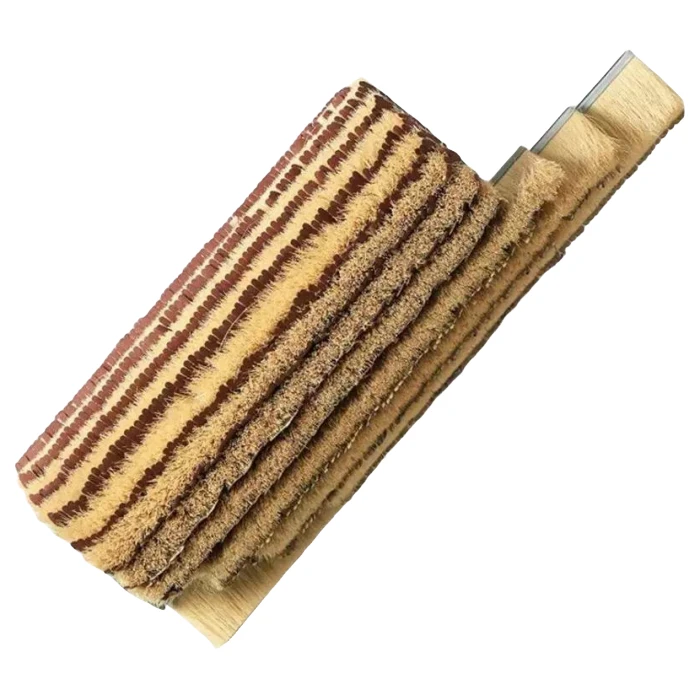
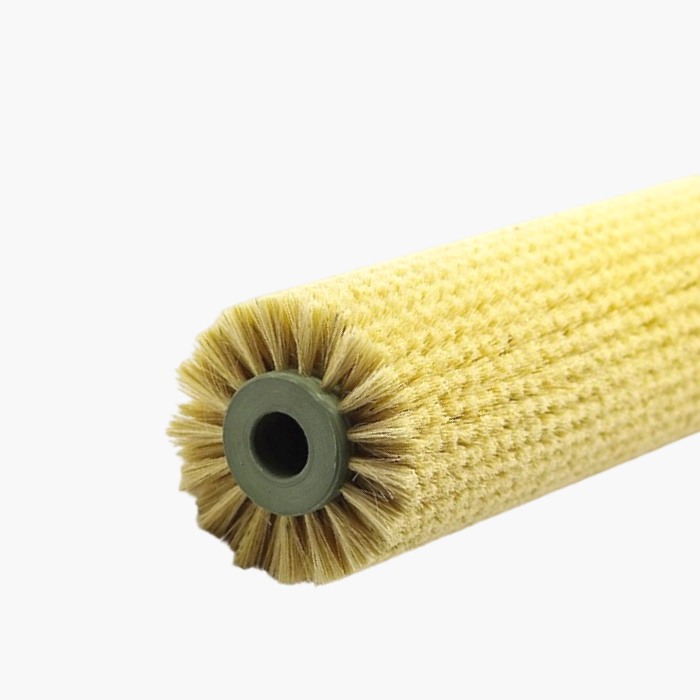
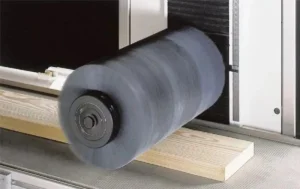
Sisal-impregnated brushes use natural sisal fibers with abrasive compounds for applications requiring gentle yet effective deburring — common in furniture polishing brushes and wood surface preparation.
Flap-style cylinder brushes arrange coated abrasive flaps radially around the core, combining the conformity of a brush with the aggressive cutting of coated abrasives. These excel at heavy stock removal and weld blending where standard filament brushes lack sufficient aggression.
Selecting the Right Cylinder Rotary Brush Configuration
Selecting the optimal cylinder rotary brush configuration requires a systematic evaluation of workpiece material, burr characteristics, surface finish requirements, production volume, and machine integration constraints — with each factor influencing the choice of filament type, abrasive grit, and brush geometry.
Step 1: Characterize the Burr
Before selecting a brush, thoroughly characterize the burrs to be removed:
- Burr type: Is it a rollover burr, breakout burr, Poisson burr, or thermal burr? Rollover burrs from milling respond well to abrasive nylon; thermal burrs from laser cutting often require wire brushes.
- Burr thickness: Thickness at the root determines required filament stiffness. Thin burrs (under 0.003 inches) can be removed with fine-grit abrasive nylon; thick burrs (over 0.010 inches) may require wire brushes or coarse-grit configurations.
- Location: External edges are straightforward; internal bores, cross-holes, and recessed features may require long-trim brushes or specialized brush geometries.
Step 2: Match Filament to Workpiece Material
The workpiece material dictates both filament chemistry and abrasive selection:
Cylinder rotary brushes occupy a compelling middle ground. They deliver the consistency of automated processes at a fraction of the capital investment required for thermal or electrochemical systems. Unlike vibratory finishing — which processes parts in batches and can cause part-on-part contact damage — rotary brushing handles parts individually, maintaining tight control over critical dimensions.
When Cylinder Rotary Brushes Are the Optimal Choice
Cylinder rotary brushes are the preferred deburring solution when:
- Edge radius specifications are tight: Brushes produce controlled, repeatable edge breaks (typically 0.002–0.010 inches) without altering part dimensions
- Parts cannot contact each other: Precision components with critical surface finishes benefit from individual part processing
- In-machine deburring is desired: Brushes integrate directly into CNC machining centers, eliminating secondary handling
- Mixed materials are processed: Filament and abrasive combinations can be optimized per material without changing equipment
- Surface conditioning is required: Beyond burr removal, brushes impart beneficial compressive surface stresses and uniform textures that improve coating adhesion
Limitations to Consider
Cylinder rotary brushes are not universal solutions. They may struggle with extremely thick burrs (over 0.030 inches), better addressed by grinding or milling operations. In high-volume production of very small parts (under 0.5 inches), vibratory finishing often proves more economical. Parts with deep, narrow recesses beyond filament reach may require specialized tooling or alternative deburring technologies.
Frequently Asked Questions
Q1: What is the typical service life of a cylinder rotary brush for deburring?
Service life depends on filament type, abrasive grit, operating speed, and workpiece material. Abrasive nylon brushes typically last 8–40 hours of continuous operation before filament wear reduces deburring effectiveness below acceptable thresholds. Wire brushes generally outlast abrasive nylon by 2–3 times but may require periodic re-truing. Monitoring changes in motor current draw is an effective method for predicting end of useful life — a significant drop indicates reduced filament-workpiece engagement.
Q2: Can a single-cylinder rotary brush deburr multiple materials in the same production cell?
Yes, but with important caveats. Abrasive nylon brushes filled with silicon carbide or ceramic grain can effectively deburr a range of ferrous and non-ferrous metals. However, cross-contamination risks must be evaluated — wire brush filaments can embed ferrous particles into aluminum or stainless steel surfaces, potentially causing corrosion or contamination issues. For mixed-material cells, abrasive nylon filaments are generally preferred, and dedicated brushes per material family represent best practice in regulated industries.
Q3: How does filament density affect deburring results?
Filament density — the number of filaments per unit area of core surface — directly influences deburring uniformity and brush aggressiveness. Higher density configurations deliver more impacts per revolution, producing finer, more consistent surface finishes. Lower-density brushes provide greater individual filament compliance, which can be advantageous for reaching into recessed features and internal corners. Face density is typically specified as a percentage of maximum fill, with 60–80% being the most common range for precision deburring applications.
Q4: What maintenance practices extend cylinder rotary brush life?
Regular visual inspection for uneven wear patterns, filament breakage, and core damage is essential. Brushes should be cleaned periodically to remove accumulated debris — compressed air is sufficient for dry applications, while solvent cleaning may be needed for oily residues. Rotational direction should be reversed periodically (where application allows) to promote even filament wear and prevent directional set. Storing brushes horizontally and away from direct sunlight prevents filament deformation and UV degradation of nylon-based products.