Conveyor lines rarely fail because the belt is worn out. They fail because carryback builds on the return run and residue migrates into idlers, tracking systems, and the next product. The cylinder brush at the cleaning station is the usual answer, but its performance rests on a decision often made by price rather than engineering: what the bristles are made of.
There is no single best bristle material for conveyor cleaning cylinder brushes. Nylon 6.6 is the general-purpose default; polypropylene wins where chemicals and constant moisture dominate; moisture-stable grades such as PBT and PA610 hold stiffness through washdown; abrasive nylon cuts hardened scale; and stainless steel wire handles heat and heavy abrasion. Align the choice with four conditions: temperature, chemistry, moisture, and abrasion.
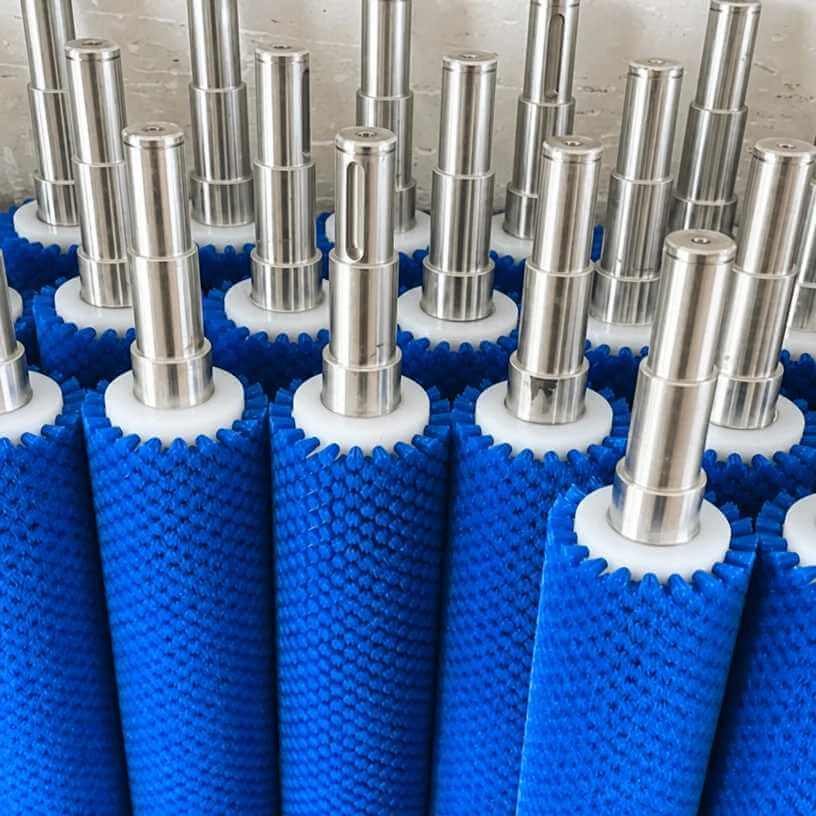
Below: how to read those conditions, how the materials compare, and what the failure signals mean.
Match the Filament to Four Operating Conditions Before Choosing a Material
A filament only performs as well as its fit with the cleaning station, so temperature, chemistry, moisture, and abrasion must be recorded first.
Most early failures trace back to one unrecorded condition: a brush that performs perfectly on a dry packaging line can soften within weeks on a dairy line running a nightly caustic washdown. Chemical resistance must be verified against a specific substance, concentration, and temperature.
Temperature, Chemistry, Moisture, and Abrasion
| Condition | What to record | Consequence of a mismatch |
| Temperature | Peak temperature | Softening, permanent set, melting |
| Chemistry | Substance, concentration, time | Strength loss, cracking |
| Moisture | Immersion or spray | Stiffness loss, swelling |
| Abrasion | Residue hardness, speed | Rapid wear, belt damage |
Read the Residue Before the Catalogue
Residue type narrows the choice more than any other input. Fine dust and crumbs suit low-diameter filaments; sticky pastes, oils, and hardened scale need stiffer, abrasive-loaded ones, since a compliant bristle smears rather than lifts.
Comparing the Main Bristle Materials
Nylon 6.6 is the default for general cleaning, while polypropylene, PBT, and PA610, abrasive nylon, and stainless wire each have a niche.
The table reflects practical conveyor limits, not laboratory maximums.
Nylon, Polypropylene, and Moisture-Stable Grades
| Material | Max temperature | Moisture behaviour | Best use |
| Nylon 6.6 | about 120 C | Absorbs moisture, stiffens when wet | General cleaning, dry or damp |
| PA610 or nylon 6.12 | about 130 C | Low absorption, stable stiffness | Washdown, food lines |
| PBT | about 120 C | Below 0.1 percent absorption | Wet, sanitising lines |
| Polypropylene | about 80 C | Near zero absorption | Chemical washdown, immersion |
Moisture absorption separates these materials in practice. Standard nylon can lose much of its stiffness when saturated, and water uptake within the polyamide family is well documented, which is why washdown lines move to PA610, PBT, or polypropylene. Polypropylene resists acids and alkalis at low cost, but it softens sooner and can score modular plastic belts.
Abrasive Filaments and Steel Wire
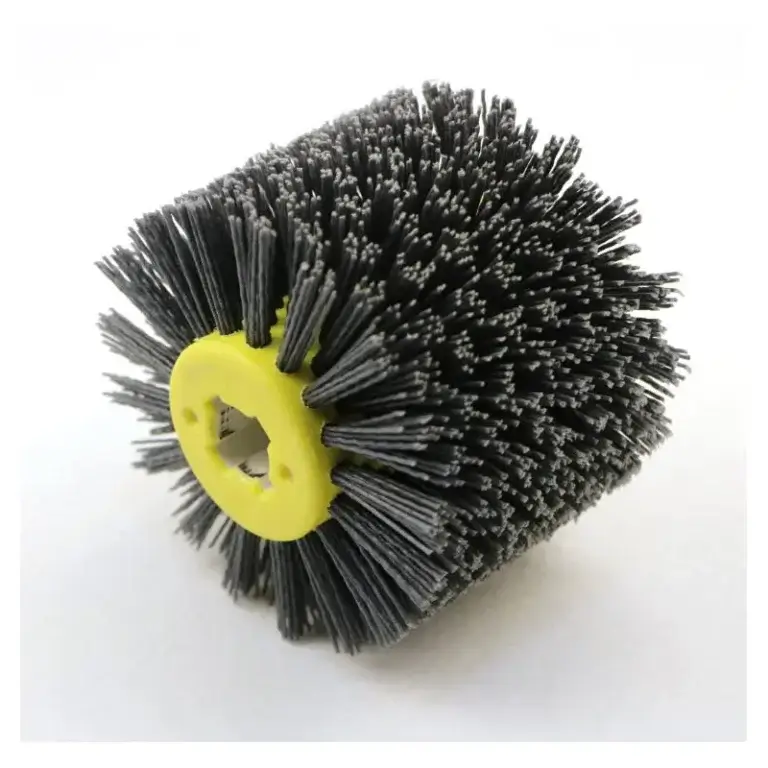
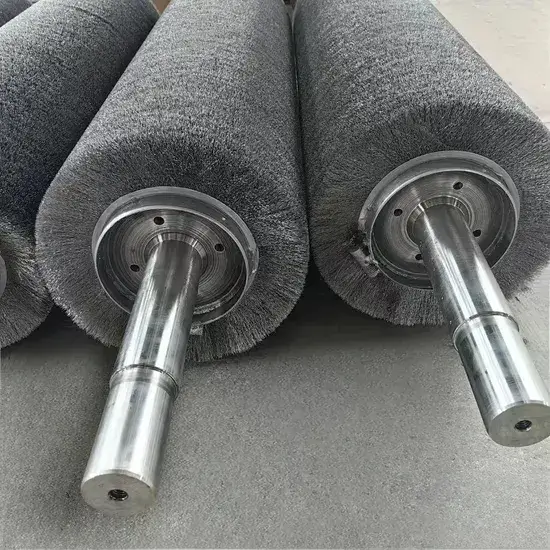
Abrasive nylon carries silicon carbide or aluminum oxide grit through the filament, in the 46 to 1000 range, and removes baked-on residue without the belt damage that wire can cause. Steel wire is the last resort for heat and heavy abrasion, specified only after confirming the belt cover tolerates it.
Filament Diameter, Trim Length, and Contact Force
Diameter, not material alone, sets the contact force a brush applies, because stiffness scales with the fourth power of diameter: a filament twice as thick is roughly sixteen times stiffer.
Two brushes of identical material can therefore behave differently on the same belt.
Choosing Filament Diameter by Duty
- 0.10 to 0.20 mm: fine dust, delicate or food-contact surfaces
- 0.20 to 0.40 mm: general conveyor cleaning
- 0.40 to 0.80 mm: heavy debris, high-torque drives
- 0.80 to 1.50 mm: deburring and scale
Iron ore carryback needs 0.76 to 1.14 mm of abrasive nylon or wire; a glass surface calls for 0.10 to 0.30 mm.
Trim Length, Tip Interference, and Speed
Conveyor brushes commonly run trim lengths of 40 to 80 mm with tip interference of about 2 to 5 mm; longer trim flexes more gently, shorter trim cuts harder. Abrasive nylon and polypropylene usually run in the 5 to 20 m/s surface speed window, at or slightly above belt speed so the tips sweep rather than drag, as the American Brush Manufacturers Association guidance notes.
The Core and Channel Must Survive the Same Environment
Why Core and Channel Materials Matter
Filament selection is only half the specification, because a brush with corroded channels or a failed adhesive bond sheds fill into the process regardless of the bristles.
The temperature, chemistry, and moisture that drive the filament choice apply to every other component.
Choosing Core and Channel Materials
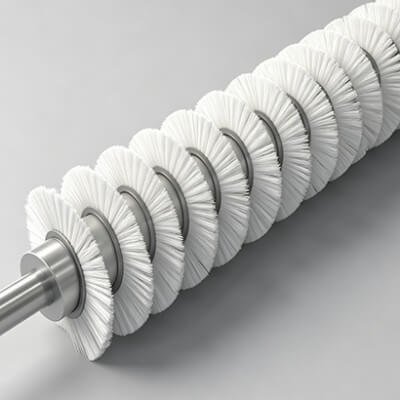
Grade 304 stainless is common but vulnerable to pitting in chloride-rich washdown, where 316 is safer. Galvanized steel dissolves in alkaline cleaners, and aluminum reacts with strong bases. For aggressive washdown, pair a 316 stainless or polypropylene-encased channel with epoxy-set fill. Spiral-wound rolls suit long faces, tufted construction gives denser contact, and modular segments cut the downtime of a change.
Food-Contact and Hygiene Requirements
Compliance and Traceable Documentation
On food packaging lines, material selection is a compliance decision as much as a performance one, and the deliverable is a traceable material declaration, not a generic food-grade label.
Auditors look for documentation tied to a specific filament, not a claim.
Compliance, Color Coding, and Shedding Control
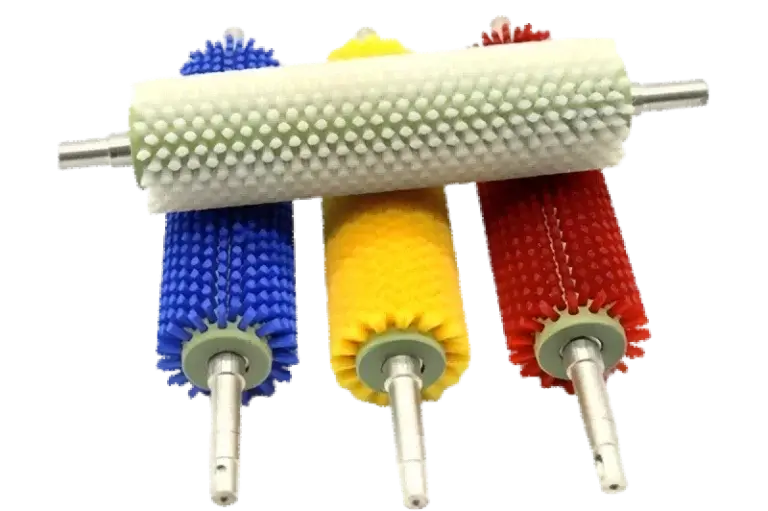
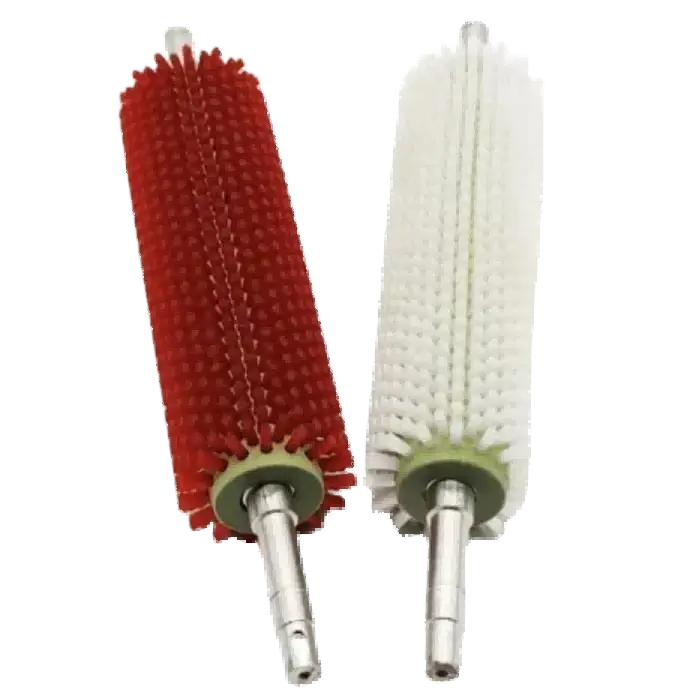
Food-contact filaments should be declared against recognized frameworks such as FDA food contact requirements and EU Regulation 10/2011, and the certificate number should be requested against the filament part number. Non-porous filaments and crevice-free cores let cleaning in place work. Color coding by zone prevents cross-contamination between raw meat, dairy, and bakery areas, and secure anchoring keeps bristles out of the product stream.
Failure Modes That Reveal a Wrong Material Specification
Each material fails predictably, so the failure pattern is a diagnostic tool that usually identifies which operating condition was misjudged.
| Failure signal | Likely root cause | Corrective direction |
| Stiffness loss, floppy fill | Moisture absorption | Move to PA610, PBT, or polypropylene |
| Softening, permanent set | Over-temperature | Confirm peak temperature |
| Cut rate fades slowly | Tip rounding on abrasive nylon | Expected wear, respec grit |
| Shed bristles, rust streaks | Wrong wire grade or excess speed | Verify speed rating, specify stainless |
| Uneven wear at edges | Misalignment or uneven tip interference | Realign and reset pressure |
Brushes are inspected monthly and replaced on condition, with typical service intervals of four to eighteen months. A practical trigger is roughly thirty percent loss of bristle height.
FAQ
Q1: What is the best bristle material for conveyor cleaning cylinder brushes?
There is no universal answer. Filter by peak temperature and chemistry first, then compare abrasion resistance and cost per cycle. Nylon 6.6 covers most general duties; specialized grades cover chemical, wet, abrasive, and hot conditions.
Q2: Can polypropylene brushes be used on food conveyor lines?
Yes, provided the filament carries a food-contact declaration and the process stays below its roughly 80°C limit. Polypropylene resists cleaning chemicals and absorbs almost no water, though it softens earlier than nylon and can score plastic belts.
Q3: How often should conveyor cleaning cylinder brushes be replaced?
Inspect monthly and replace on condition. Most plants see four to eighteen months of service, with roughly a thirty percent loss in bristle height or a clear drop in cleaning performance as the trigger.