
Scratched metal is one of the most common problems in fabrication shops, machine shops, and assembly lines. A finished part can pick up surface damage from handling, machining, shipping, or contact with other components, and the defect often shows up at the worst possible time, right before delivery or during final inspection.
Scratches are not just a cosmetic issue. On load-bearing components, they create stress risers that can shorten fatigue life. On others, they trap moisture and accelerate corrosion. In consumer-facing products, a visible scratch can turn an acceptable part into a rejected one. Whatever the reason, the question is always the same: can the surface be fixed without scrapping the part?
Yes, custom cylinder brushes can remove shallow surface scratches on metal, provided the brush is correctly specified for the workpiece. A custom cylinder brush with the right fill material, wire diameter, filament density, and operating speed can blend or eliminate light to moderate scratches, restore a uniform finish, and prepare the surface for coating or further processing. Deep gouges and structural damage, however, still require grinding or machining rather than brushing.
The short answer hides a lot of detail. Brush selection depends on the base metal, the depth of the scratch, the required final finish, and the geometry of the part. Get those variables wrong, and you can end up with a surface that still shows the defect, or one that looks worse than when you started.
This article walks through how cylinder brushes interact with scratched metal, which scratch types respond to brushing, and how to specify a brush for your process. It also covers the situations where brushing is not the right fix, so you can make an informed decision before spending money on tooling.
What Causes Scratches on Metal Surfaces
Most surface scratches come from mechanical contact: handling, machining, abrasive contamination, or sliding against other parts. Understanding the source matters because it determines whether a brush can fix the damage, or whether the process that caused it needs to change first.
Scratches fall into two broad categories. The first is single-event damage: a part dragged across a table, a clamp that slipped, a tool mark left during machining. The second is repetitive contact: parts sliding down chutes, stacked against each other, or rubbing against conveyor components. Each type leaves a different scratch profile, and that profile decides how much material removal is needed.
The base metal also matters. Soft metals like aluminum and brass scratch easily, but they respond quickly to brushing. Harder alloys such as stainless steel or hardened tool steel resist scratching, but once damaged, they need a more aggressive fill to cut the surface. A quick way to gauge severity in the shop is the fingernail test: if a fingernail catches on the scratch, brushing alone will likely fall short; if the nail glides over it, the scratch is superficial and a properly set-up brush will usually blend it out.
How Do Custom Cylinder Brushes Remove Scratches
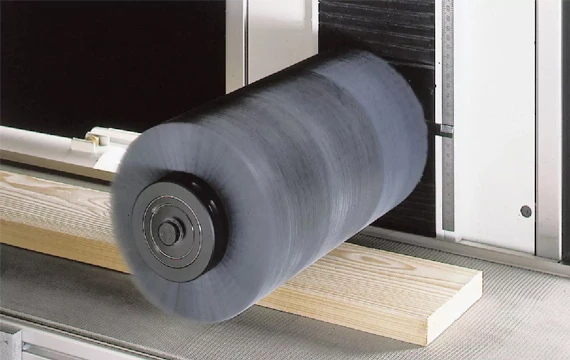
A cylinder brush removes scratches through controlled abrasion: rotating filaments or wire tips contact the surface, shave off the high spots around the scratch, and gradually blend the defect into the surrounding finish. The brush does not fill the scratch; it removes material down to a level where the scratch no longer stands out.
Custom cylinder brushes are built around a rotating core with filaments arranged in a helical or straight pattern. The fill material determines the aggressiveness:
- Steel wire for heavy material removal
- Stainless steel wire for corrosion resistance and consistent cutting
- Brass or bronze wire for softer metals and non-sparking environments
- Abrasive-impregnated nylon for finishing and deburring
- Natural or synthetic bristle for light polishing
The Mechanics of Scratch Removal
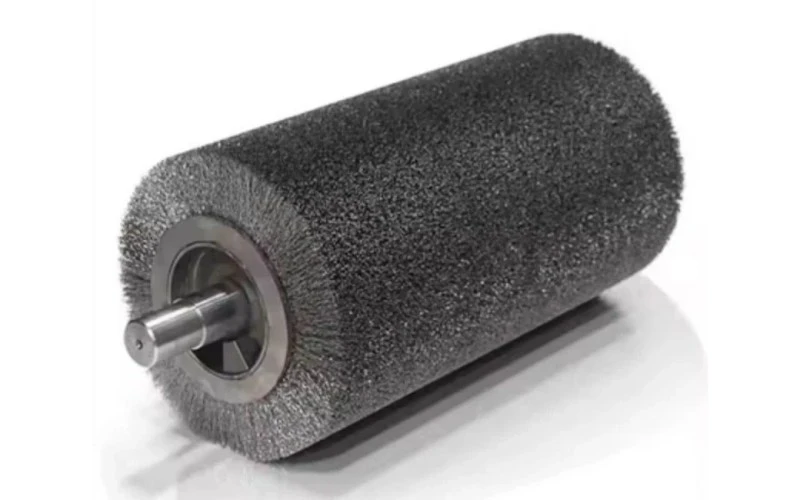
The mechanics are simple. Each filament tip acts as a small cutting tool. As the brush rotates, thousands of tips strike the surface at high speed. With a metal cylinder brush, the wire tips are stiff enough to cut the raised edges of a scratch, while the helical arrangement ensures even coverage across the full width of the workpiece.
Key Variables That Control Material Removal
Three variables control how much material gets removed:
- Wire diameter: thicker wire cuts deeper
- Filament density: more filaments mean more contact points
- Surface speed: higher tip speed increases impact energy
Balancing Speed and Finish Quality
The tradeoff is straightforward. More aggressive settings remove scratches faster, but they also change the surface finish more noticeably. A scratch that disappears under a coarse steel wire brush may leave behind a directional pattern that then needs a lighter pass to smooth out. For this reason, most production processes run a multi-stage sequence rather than a single pass.
When Can a Cylinder Brush Remove Scratches
Brushing works best on shallow, cosmetic scratches where material removal of a few thousandths of a millimeter is acceptable. If a scratch can be felt with a fingernail or is deep enough to affect dimensional tolerances, brushing alone will not be enough.
The Fingernail Test: A Quick Shop Rule
A practical rule used in many shops: run a fingernail across the scratch. If it catches, expect partial removal at best. If the nail glides over it, the surface can usually be brought back to an acceptable condition with a brush. The acceptable depth also depends on the application. A structural component with a cosmetic blemish can tolerate a visible trace of the scratch; a decorative trim part cannot.
Rust Removal: A Special Case for Cylinder Brushes
For rusty surfaces, the situation is different. Corrosion often sits on top of the metal while the underlying surface remains intact. A rust removal brush with aggressive steel wire can strip the corrosion layer, and in many cases the original surface underneath is serviceable once cleaned. This is one of the most common uses of cylinder brushes in metal restoration and maintenance work.
Recommended Multi-Stage Brushing Sequence
The best results come when brushing is combined with a finishing sequence:
- Remove rust or heavy contamination with a coarse steel wire brush
- Blend remaining scratches with a medium-density brush
- Finish with a lighter brush or polishing pass to restore the desired texture
Application Example: Automotive Surface Refinement
In automotive restoration, for example, brushes for automotive parts are used to clean and refine surfaces before paint or plating. The brush brings the surface back to a uniform condition that accepts coatings properly, which is often the real goal behind scratch removal in the first place.
When to Refinish Instead of Scratch Removal
When a scratch is deep, load-bearing, or located on a surface with a precise finish requirement, grinding, machining, or refinishing is the better option. Brushing can improve the appearance, but it cannot restore material that has already been displaced.
Deep scratches remove material from the surface. A brush removes more material from the surrounding area to match, which changes the part geometry. On a decorative panel with a 0.05 mm tolerance, that approach fails. On a structural beam where the scratch is purely cosmetic, brushing is fine and far cheaper than re-machining.
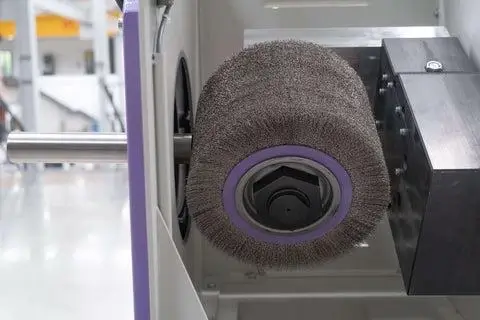
Finish requirements matter just as much as tolerances. If the part needs a mirror polish or a specific Ra value, brushing will typically leave a satin or directional texture. For those jobs, use a steel wire cylinder brush to prepare the surface, then finish with a dedicated polishing process. Brushing is a preparation step, not a substitute for precision finishing.
Cost also plays a role. Grinding or re-machining a scratched part takes time, setup, and skilled labor. When the scratch is shallow, brushing at line speed costs a fraction of that. The decision usually comes down to a simple calculation: does the part need material restoration, or does it just need a uniform surface? Only the first case requires removing brushing from the conversation.
How to Choose the Right Brush Configuration
The right configuration depends on four inputs: base metal, scratch severity, desired finish, and available machine speed. A custom brush lets you optimize all four instead of compromising on a standard tool.
Standard brushes cover common cases, but production lines rarely present common cases. Custom cylinder brushes can be engineered with specific wire types, trim lengths, core diameters, and densities to match the exact geometry and material of your parts.
Before ordering a custom brush, define the acceptance criteria for the finished part. Is the goal a uniform cosmetic appearance? A specific roughness value? A clean surface ready for coating? The answers change the specification, so write them down before you talk to a supplier.
It also pays to involve the manufacturer early. Questions about operating speed, coolant use, and part geometry will prevent expensive trial and error, and most suppliers can run test samples on your material before the full order is produced. Our guide on choosing a brush manufacturer lists the details you should have ready before your first consultation.
Real-World Applications of Cylinder Brushing
Cylinder brushing is used across fabrication, restoration, automotive, and food processing lines wherever metal surfaces need cleaning, deburring, or surface refinement at scale.
Typical applications include:
- Rust and scale removal from steel plates and structural sections
- Surface conditioning before painting or powder coating
- Deburring of machined edges and cut profiles
- Cleaning of sheet metal before stamping or forming
- Restoration of worn tooling and fixtures
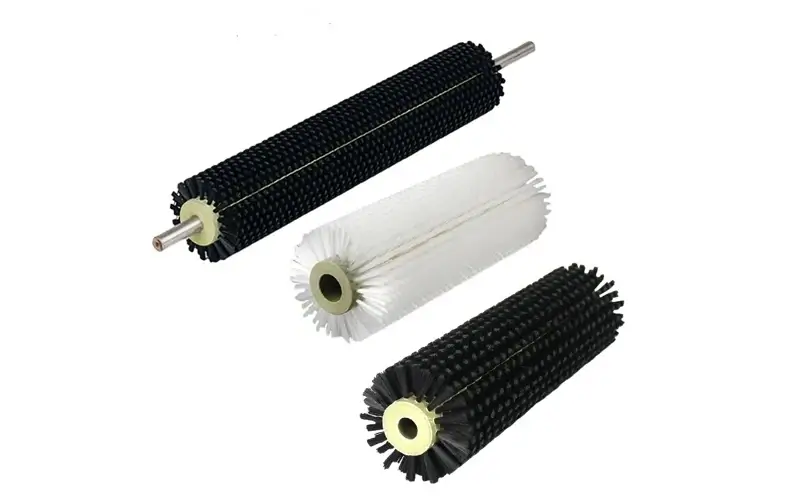
In food and packaging plants, conveyor belt cleaning brushes keep belts free of residue, and the same brush technology handles metal surfaces in washdown zones where rust prevention matters.
Brushing works best as an inline operation. A brush mounted on a conveyor, a centerless machine, or a stationary fixture treats parts at production speed rather than as a manual rework step. That is where the return on investment shows up. Plan the brush position, dust extraction, and safety guarding at the design stage, and the process runs for years with minimal attention.
FAQ
Can cylinder brushes remove scratches from stainless steel?
Yes, but stainless steel requires stainless steel wire fill to avoid cross-contamination and surface rust. Use medium density and moderate pressure, then verify with a test piece that the finish meets your roughness requirement. Deep scratches on stainless may need a grinding step first.
How fast should a cylinder brush rotate for scratch removal?
Surface speed matters more than RPM. For most metal work, 1000 to 2000 meters per minute at the brush tip gives effective cutting without excessive heat. Lower speeds suit soft metals; higher speeds suit hard alloys and heavier contamination.
Will brushing change the dimensions of my part?
Brushing removes material, so dimensions change slightly. On thin or tight-tolerance parts, measure before and after each setup change. If the scratch depth exceeds your tolerance window, brushing is not the right solution; refinishing or re-machining is.