Conveyor systems move millions of tons of material every day across mining sites, food processing plants, recycling facilities, and manufacturing lines. Every ton that travels along a belt leaves something behind. Fine dust, sticky residue, abrasive particles, and wet slurry cling to the belt surface after the payload discharges. This material, known as carryback, does not simply fall away. It accumulates on return rollers, builds up on pulleys, and eventually works its way into bearings and seals. The result is belt mistracking, increased motor load, unplanned downtime, and a cleanup bill that grows by the week.
Standard cleaning solutions like polyurethane scrapers handle the heavy, wet bulk of carryback but struggle with fine particles and dry dust. A scraper blade that glides over a thin layer of limestone powder leaves enough material behind to create a dust cloud down the full length of the return run. This is where rotary brush cleaners fill the gap. Unlike fixed blades, a powered cylinder rotary brush spins against the belt surface at high speed, flicking embedded particles loose with each filament pass. The mechanical action reaches into surface textures and around belt splices that scrapers skip over entirely.
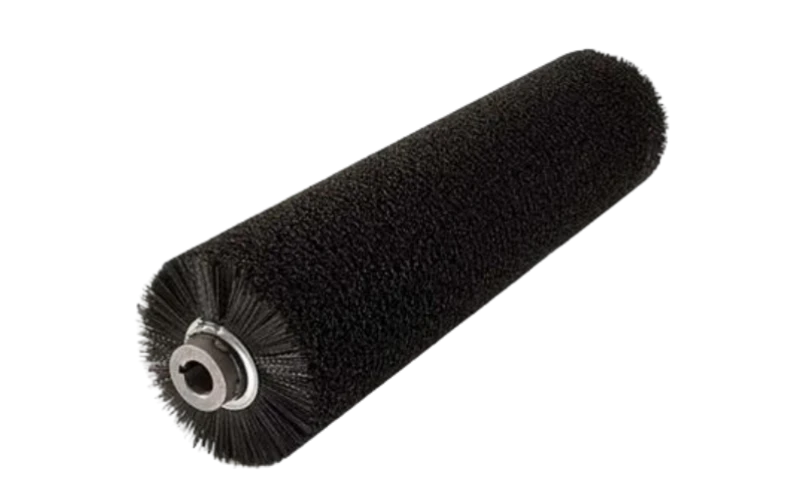
Custom cylinder brushes are rotary cleaning tools built to match a specific conveyor’s belt width, speed, material type, and operating environment. When specified correctly, they remove fine particles and sticky residues that primary scrapers leave behind, cutting carryback by up to 90% and reducing the labor hours spent shoveling spillage under the return run.
Specifying a brush that works reliably for years rather than months comes down to a handful of technical decisions: filament material, core construction, diameter, density, and rotation speed. Each of these parameters interacts with the others, and getting one wrong can turn an expensive brush into a disposable wear item. The sections below cover these choices in the order they should be made during the specification process, starting with the most fundamental question: what the brush is actually made of.
If you are dealing with a belt that runs through a washdown environment, carries hot material, or spans an unusually wide or narrow frame, off-the-shelf brushes will rarely fit. The ability to tailor every dimension and material choice is what separates a conveyor belt cleaning brush that solves a problem from one that creates new ones.
What Are Custom Cylinder Brushes and How They Remove Carryback
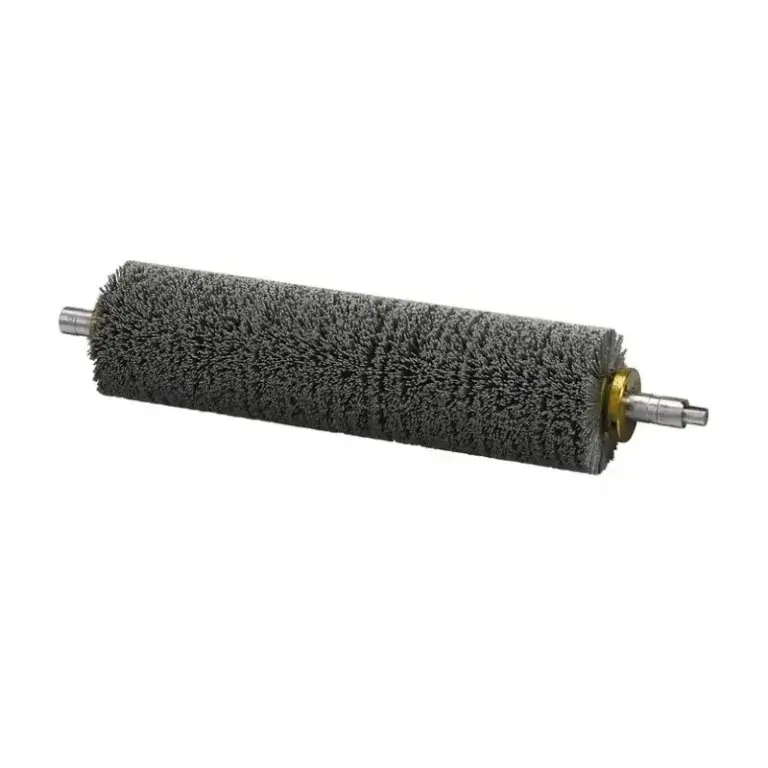
A custom cylinder brush is a rotating cleaning tool consisting of a cylindrical core wrapped with densely packed filaments, driven by an electric or hydraulic motor to spin against a moving conveyor belt. The filaments strike the belt surface at an angle opposite to belt travel, mechanically dislodging particles that have adhered to the belt through moisture, static charge, or compaction.
Design and Mounting Configuration
The brush mounts below the return run of the belt, typically within 300 to 500 millimeters of the head pulley where carryback is still loose and easiest to remove. A motor and gearbox assembly drives the brush at speeds between 200 and 600 RPM, depending on belt speed and material type. The filaments make light contact with the belt surface, compressing by 5 to 10 millimeters at the point of contact. This compression is enough to sweep particles free but not enough to abrade the belt cover or generate excessive heat.
Cleaning Mechanisms: Mechanical Contact and Centrifugal Force
Two physical mechanisms do the cleaning work. The first is direct mechanical contact: each filament tip acts like a miniature scraper, catching particle edges and flicking them away from the belt surface. The second is centrifugal force: as the brush spins, particles trapped between filaments are thrown clear of the brush body, preventing the buildup that would eventually mat down the bristles and stop the brush from cleaning at all. Spiral or herringbone filament patterns on the core help channel dislodged material toward the edges of the brush, keeping the cleaning zone clear.
Why Customization Matters for Performance
The reason customization matters at this stage is straightforward. A brush with filaments that are too soft will fold over on contact and do nothing. Filaments that are too stiff will sand down the belt cover over time. A core diameter that is too small will require RPMs beyond what the motor and bearings can sustain. Every variable connects to every other one. The section below covers the material choices that determine where on the soft-to-aggressive spectrum the brush will land.
Filament Material Selection: Nylon, Abrasive, and Wire Options
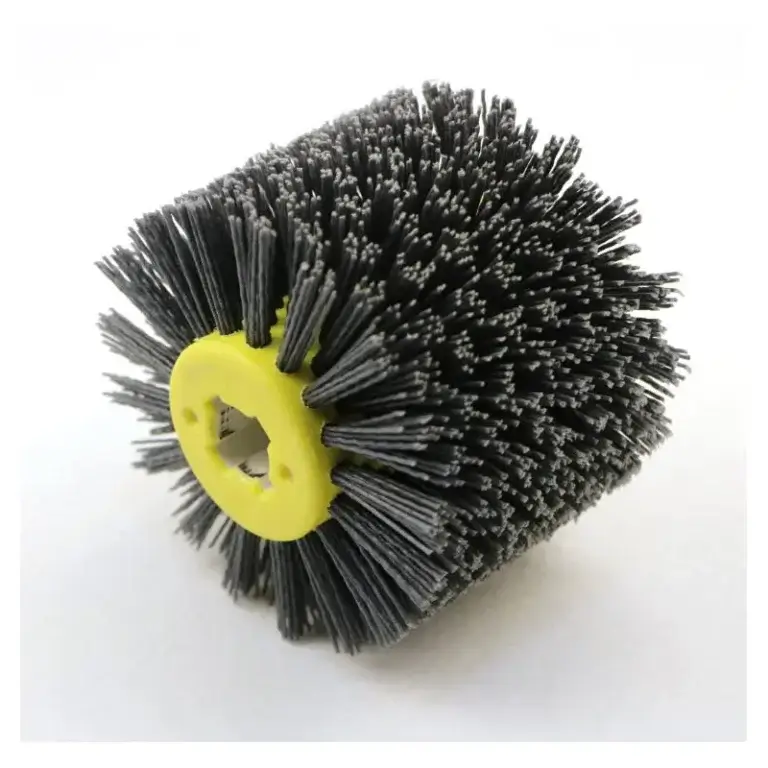
Filament material is the single most important specification decision. Nylon filaments handle general-purpose dry and lightly moist material on rubber and PVC belts without causing belt wear. Abrasive-impregnated nylon tackles compacted or sticky residues that plain nylon cannot shift. Steel and stainless steel wire filaments work on high-temperature applications and hardened deposits but require careful speed and pressure control to avoid belt damage.
The four common filament categories break down as follows:
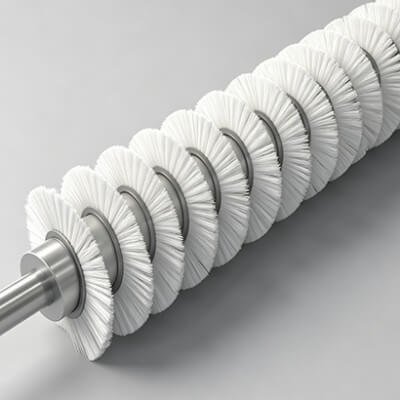
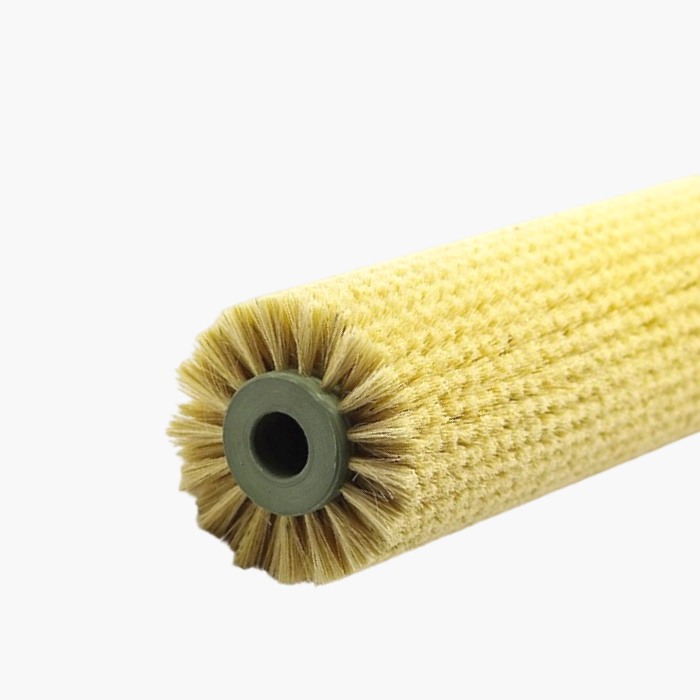
Nylon filaments are the default choice for most conveyor cleaning applications. They work because nylon has a natural resilience that lets each filament flex on contact and snap back to its original shape as it leaves the belt surface. This snap action is what ejects particles from between the bristles. Nylon cylinder brushes are available in a range of diameters from 0.3 mm for light dusting up to 1.2 mm for heavier scrubbing. A 0.6 mm filament diameter is the standard starting point for general conveyor cleaning on belts running at speeds under 3 meters per second.
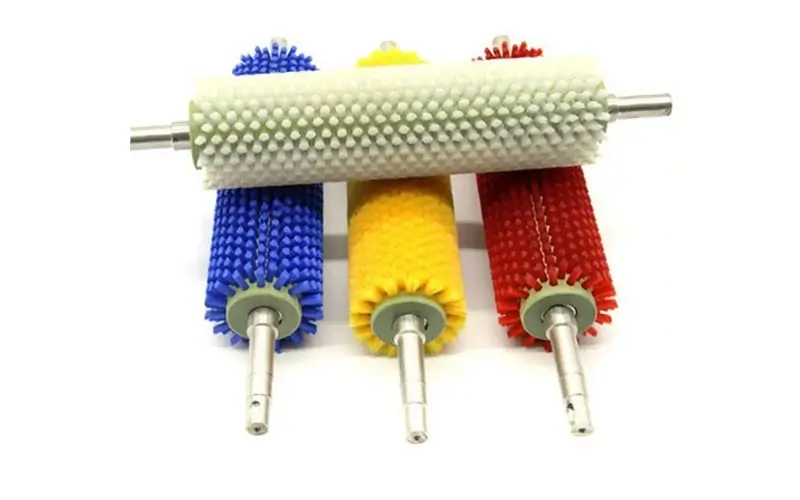
Filament density, measured as the number of filament tufts per square centimeter of core surface, directly controls cleaning force. Low-density patterns leave gaps that allow larger particles to pass through without being swept away. High-density patterns trap more material between filaments and require higher motor torque to maintain speed. For most applications, a medium density with tufts spaced 8 to 12 millimeters apart around the circumference and staggered between rows provides the best balance of cleaning effectiveness and self-clearing action.
Abrasive nylon fills the gap between plain nylon and wire. The abrasive grit embedded in each filament cuts through compacted material that plain filaments skate over, without the risk of belt scoring that wire introduces. These brushes work well on belts carrying clay, gypsum, or wet ash that hardens after discharge. The tradeoff is a shorter filament life: abrasive filaments wear down roughly 30% faster than plain nylon of the same diameter.
Wire brushes belong in high-temperature and heavy-deposit applications. A stainless steel wire brush running on a belt carrying hot clinker at 120°C will outlast nylon by a factor of five. But wire brushes require precise setup. The brush must rotate in the same direction as belt travel at the contact point, not against it, to prevent the wire tips from digging into the belt cover. Brush-to-belt contact pressure must stay under 0.5 bar, and the brush diameter should be at least 1.5 times larger than what you would specify for nylon in the same position.
How Rotation Speed and Brush Diameter Affect Wear Rates
Brush rotation speed and diameter together determine the tip speed at which filaments strike the belt. For nylon brushes, a tip speed of 3 to 5 meters per second delivers effective cleaning without excessive wear. Running the same brush at 8 meters per second can cut filament life in half while providing only marginal improvement in cleaning performance.
Understanding Tip Speed and Its Calculation
Tip speed is the linear velocity of the filament tips as the brush rotates. It is calculated as: tip speed (m/s) = brush diameter (m) × π × RPM ÷ 60. A 200 mm diameter brush running at 400 RPM produces a tip speed of 4.2 m/s, well within the recommended range. The same brush at 600 RPM hits 6.3 m/s, which is usable but will accelerate wear noticeably.
The Relationship Between Speed and Filament Wear
The relationship between rotation speed and brush wear follows a non-linear curve. Testing on 0.6 mm nylon filaments running against a rubber belt surface shows the following approximate service life at different tip speeds:
The drop-off above 5.5 m/s comes from two effects. First, higher impact velocity generates more frictional heat at the filament tip, softening nylon and accelerating abrasive wear. Second, filaments striking the belt at high speed have less time to flex and recover before the next impact, leading to permanent deformation that reduces cleaning effectiveness.
Why Brush Diameter Matters Independently of RPM
Brush diameter matters independently of RPM because it determines the contact arc length between brush and belt. A larger diameter brush spreads the cleaning force over more filaments, reducing the load on each tuft. For belts 800 mm wide and above, a brush diameter of at least 200 mm is recommended. Below 800 mm belt width, a 150 mm diameter is workable but will require more frequent filament replacement.
Direction of Rotation: Counter-Rotation vs. Co-Rotation
Direction of rotation relative to belt travel is another parameter that affects both wear and cleaning. Counter-rotation, where the brush spins opposite to belt travel at the contact point, provides the most aggressive cleaning action because filaments strike the belt surface head-on. This is the standard configuration for nylon and abrasive brushes. Co-rotation, where the brush spins in the same direction as the belt, produces a gentler wiping action and is mandatory for wire brushes to prevent the wire tips from catching and tearing the belt cover.
Sizing Cylinder Brushes for Different Conveyor Widths and Configurations
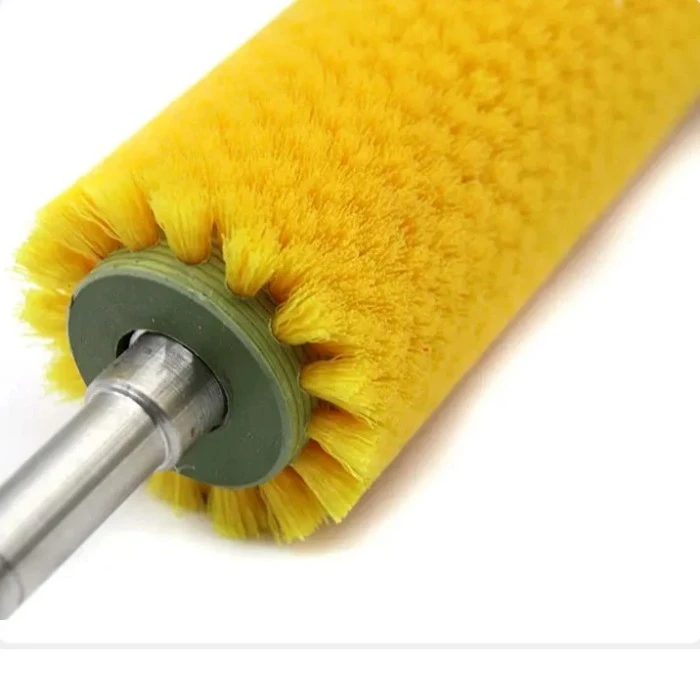
The brush face length should extend 50 to 100 mm past the belt edge on each side to ensure full-width coverage and prevent material from accumulating along the belt edges where filament contact is weakest. Core diameter, shaft diameter, and mounting configuration must all be selected to match the available space under the return run and the existing conveyor frame geometry.
Belt width is the starting dimension for brush sizing, but it is not the only one that matters. The brush must fit within the clearance available under the return run without interfering with stringers, return roller brackets, or the belt itself when it sags between idlers. Three critical dimensions must be verified before specifying a brush:
The first is overall brush length, which equals belt width plus 100 to 150 mm of overhang. The overhang ensures filaments at the brush ends are in full contact with the belt and compensates for belt wander during operation. The second is the core outer diameter, which determines how far the brush body protrudes into the space under the belt. The third is the shaft diameter and end configuration, which must match the pillow block bearings and drive coupling already on the conveyor frame or planned as part of the installation.
Custom-sized cleaning brushes address installations where standard dimensions will not fit. Common scenarios include:
- Narrow belts under 500 mm where standard brush lengths leave excessive overhang
- Wide belts over 1,800 mm that require a segmented brush with a central support bearing to prevent shaft deflection
- Belt cleaners positioned inside chutes or enclosures with limited vertical clearance requiring a smaller brush diameter than standard
- Retrofit installations on existing conveyor frames where bearing centers and shaft diameters are already fixed by the previous cleaning system
Core construction is a specification detail that affects both brush life and cleaning consistency. The following table summarizes the three common core types:
Segmented cores solve the deflection problem on wide belts. A solid steel shaft spanning 2,000 mm will deflect under its own weight plus the radial load from belt contact, causing uneven filament pressure across the belt width. The center of the brush presses harder while the edges make lighter contact, creating a cleaned strip down the middle of the belt with residue remaining at the edges. Segmented construction with a central support bearing distributes the load evenly.
Mounting configuration is the final variable. Most cylinder brushes mount on pillow block bearings bolted to adjustable brackets attached to the conveyor stringers. The brackets allow the brush height to be set so that filament tips just touch the belt surface with light pressure. Spring-loaded or counterweighted mounts are available for belts that bounce or sag significantly between idlers, maintaining consistent contact pressure as the belt position changes.
Installation, Maintenance, and When to Replace Filaments
A correctly specified cylinder brush requires minimal ongoing maintenance. Weekly inspection of filament wear, bearing temperature, and drive belt tension catches most problems before they affect cleaning performance. Filaments should be replaced when they have worn down to 50% of their original length or when cleaning effectiveness visibly declines.
The installation process starts with positioning. The brush should sit under the return run within 500 mm of the head pulley, where material is still loosely adhered and easy to remove. Mounting the brush too far from the discharge point lets carryback compact under the pressure of the return rollers, making it harder to remove and accelerating filament wear.
Brush height adjustment is the most common setup error. Too little contact, and the brush does not clean. Too much, and filament life drops sharply. The correct setting compresses filament tips by 5 to 10 mm against the belt surface. A simple check: slide a sheet of paper between the brush and belt with the brush stopped. If the paper pulls through with light resistance, the setting is approximately correct.
Drive system maintenance follows standard industrial practice. Check gearbox oil level monthly. Inspect drive belts or chains for tension and wear. Listen for bearing noise at the pillow blocks, which signals either misalignment or lubricant breakdown. Most brush failures trace back to bearing seizure rather than filament depletion. When a bearing locks up, the brush stops spinning, and the belt quickly wears a flat spot into the stationary filaments, destroying the brush.
Filament wear is progressive and predictable. A brush running at the recommended 4.2 m/s tip speed on a dry aggregate belt will show the following wear pattern:
- First 200 hours: filaments bed in, tips develop a slight mushroom shape, cleaning effectiveness is at its peak
- 200 to 1,000 hours: steady wear, filament length decreases by roughly 0.05 mm per hour of operation, cleaning remains effective
- 1,000 to 1,500 hours: filaments reach 50-60% of original length, cleaning begins to decline, plan replacement
- Beyond 1,500 hours: cleaning drops off noticeably, belt surface shows residue streaks, replace immediately
One sign of a well-specified brush is that it wears evenly across its full face width. Uneven wear, with deeper wear at the center or edges, indicates a mounting or alignment problem that should be corrected before a new brush is installed.
Conclusion
A custom cylinder brush that matches the belt width, material type, operating temperature, and available mounting clearance will clean more effectively and last longer than any generic alternative. The specification process is not complex, but it requires attention to detail at each step. Start with the filament material and diameter, select a core construction that handles the belt width without deflection, size the brush diameter to deliver 3 to 5 m/s tip speed at the available motor RPM, and verify all mounting dimensions before fabrication.
The cost difference between a correctly specified brush and an off-the-shelf substitute is usually recovered within the first six months of operation through reduced filament replacement frequency, lower spillage cleanup labor, and extended belt and roller life from reduced abrasive contamination. In applications where carryback has been an ongoing problem, upgrading to a properly specified cylinder brush is one of the highest-return maintenance investments available.
FAQ
Q1: How do I determine the right filament diameter for my application?
Start with 0.6 mm nylon as a baseline for general dry material on rubber belting. If the material is sticky or compacted, move to 0.8 mm abrasive nylon. If the belt carries hot material above 100°C, switch to 0.3 mm stainless steel wire. Increase diameter only if cleaning is insufficient at the baseline specification. Heavier filaments clean more aggressively but also wear belts faster and draw more motor current.
Q2: Can a cylinder brush replace a primary belt scraper?
No. Cylinder brushes work best as secondary or tertiary cleaners installed after a primary polyurethane or carbide scraper. The scraper removes the bulk of carryback, and the brush handles the fine particles and residual film the scraper leaves behind. Running a brush as the only cleaning stage shortens filament life dramatically and may not remove heavy, wet carryback effectively.
Q3: What motor size is required for a cylinder brush?
For a brush cleaning a belt up to 1,200 mm wide at 400 RPM, a 1.5 kW motor with a 10:1 reduction gearbox is a common starting point. Wider belts, higher RPM, and denser filament patterns increase the power requirement. Wire brushes draw significantly more power than nylon brushes of the same diameter because of the higher friction at the belt contact point. Always size the motor with at least 30% headroom above the calculated load to account for filament bedding-in and occasional overloads from material buildup.