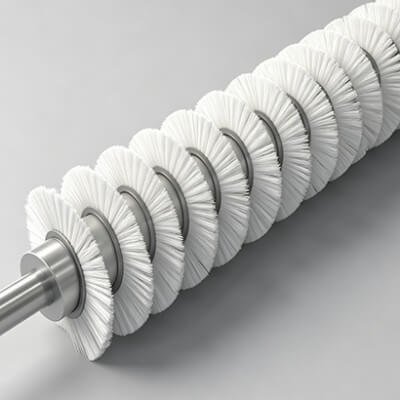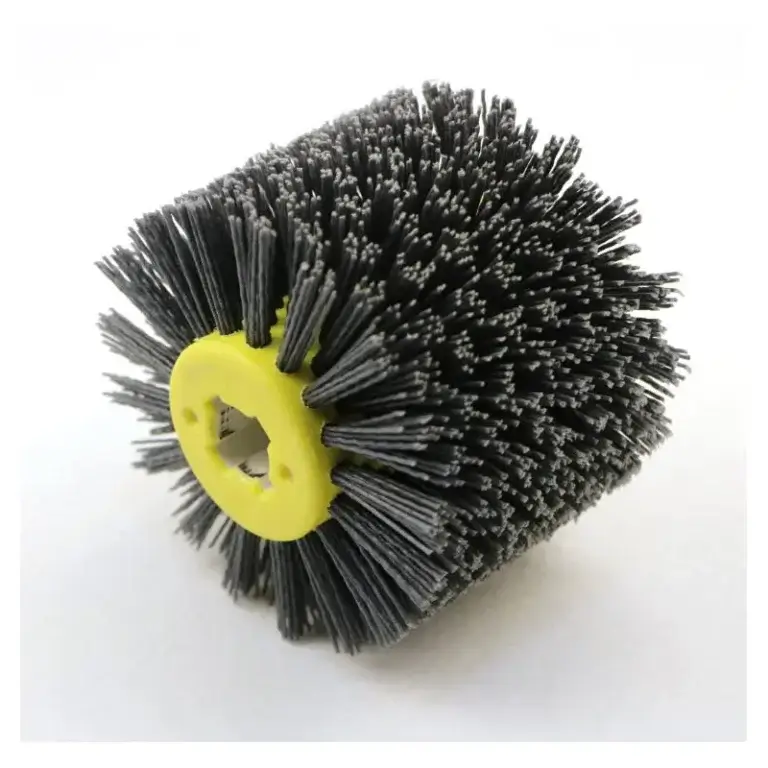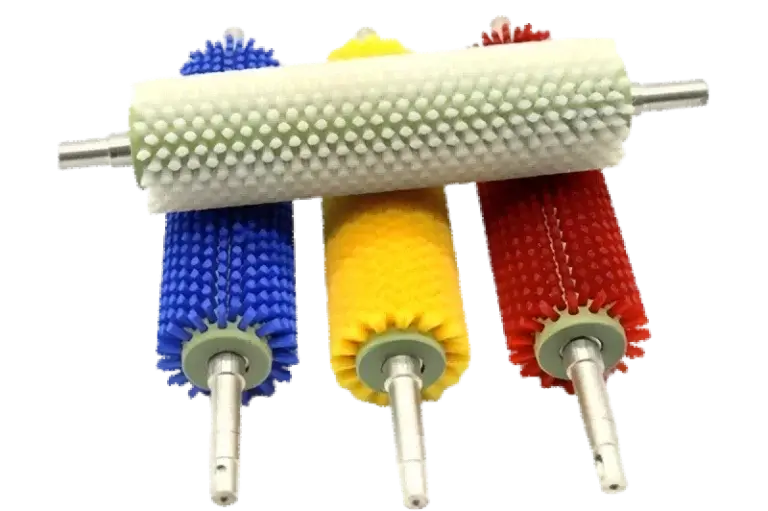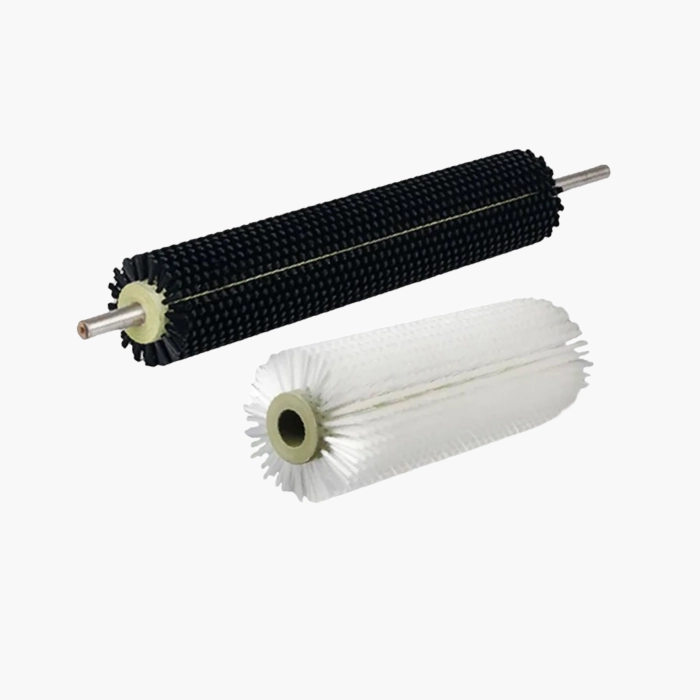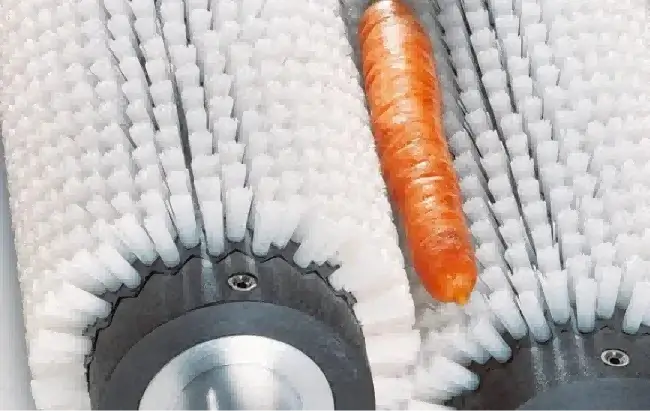
Conveyor belts move material. That part is simple. The hard part is what stays behind after the belt dumps its load and starts the return trip. Wet clay cakes onto the belt surface. Damp grain dust forms a paste that hardens overnight. Food processing lines see dough, batters, and sticky confectionery residues that cling to belt covers with surprising tenacity. Mining operations deal with mineral slurries that dry into concrete-like deposits on return idlers.
These materials share a common trait: they defeat traditional cleaning methods. A fixed scraper blade rides over a wet, tacky film instead of peeling it off. Within hours, the film layers up into a thick coating that throws off belt tracking accuracy, fouls return rollers, and builds piles of spillage under the conveyor frame. Maintenance crews spend hours scraping, washing, and shoveling material that the primary cleaner never touched.

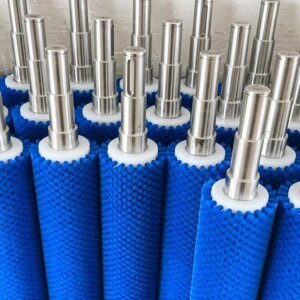
Yes, conveyor brush rollers handle wet and sticky material buildup better than any other single cleaning method. Rotating brush filaments reach into belt surface irregularities that scrapers skip over, flick material off the belt by mechanical action rather than relying on a blade edge, and the open brush structure lets moisture and debris pass through instead of packing into a solid mass against the cleaning face. The key is selecting the right bristle material, filament diameter, and brush density for the specific material being conveyed.
The answer becomes clearer when you look at what makes a brush roller work on sticky residue and what makes it fail. Not every brush handles every wet material. A brush built for dry cement powder clogs in minutes on damp clay. Bristle material, filament spacing, brush speed relative to the belt, and whether the brush is powered or belt-driven all determine whether a brush roller cleans the belt or just smears the material around.
The sections that follow cover the material properties that make wet buildup so difficult, the mechanical reasons brush rollers succeed where scrapers fail, the bristle materials that hold up best in wet and corrosive environments, and the specification decisions that turn a good brush into a reliable cleaning station. If you are dealing with wet, sticky carryback on your conveyors, the next twenty minutes of reading will give you a framework for fixing it.
What Makes Wet, Sticky Material So Difficult to Clean from Conveyor Belts
Wet, sticky materials defeat scrapers because they form a continuous adhesive film rather than discrete particles. The material bonds to the belt surface at the molecular level through surface tension and capillary action, filling microscopic belt irregularities that a scraper blade cannot reach. As the film builds, it traps more material behind it, creating a self-reinforcing buildup cycle that accelerates over time.
A scraper blade works by presenting a hard edge to the belt surface at a specific attack angle, peeling material off as the belt slides past. This works well for dry, granular material that sits on top of the belt cover. Wet material behaves differently. Water acts as a bonding agent between the material particles and the belt surface. The same capillary forces that let a wet sponge stick to a window push sticky slurry into the microscopic pores and surface texture of a rubber or PVC belt cover. A scraper blade riding at even the most aggressive angle cannot get below the surface plane of the belt, so it leaves behind a thin film.
That film is the start of the problem. On the first belt revolution, the film is perhaps a few thousandths of an inch thick and barely visible. But the film is tacky. On the next revolution, fresh material adheres to the existing film instead of the belt cover. Layer by layer, the buildup grows. Within a few hours of continuous operation, a conveyor running wet clay can accumulate half an inch of caked material across the full belt width. At that point, belt cleaners that worked fine during the first hour of operation are simply riding over the top of the deposit.
Several material properties make the problem worse:
Temperature compounds these effects. Hot material, such as asphalt mix or baked food products, softens belt covers and increases the contact area between material and belt. Cold, wet material thickens in viscosity and sticks harder. A conveyor running outdoors in winter faces belt covers that are stiffer and less compliant, which means scrapers cannot conform to the belt surface as effectively.
The surface condition of the belt itself matters. Older belts develop cuts, grooves, and wear patterns that hold material. A belt that has been in service for three or four years has a surface texture far rougher than a new belt, and that roughness multiplies the surface area available for wet material to grip. Scrapers designed for a smooth belt surface cannot adapt to these wear features. Brush rollers can, because individual filaments bend into the surface irregularities independently.
How Do Conveyor Brush Rollers Remove Sticky Residue That Scrapers Leave Behind
The Physics of Brush Cleaning vs. Scraper Cleaning
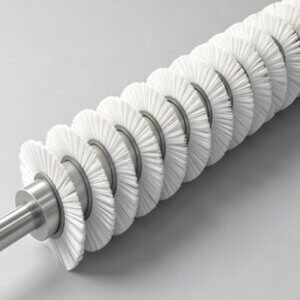
Conveyor brush rollers clean by mechanical flicking, not scraping. Each filament acts as an independent spring that loads against the belt surface, flexes as it passes through the contact zone, and snaps back to its original shape on the release side. This snap, or flick, throws material off the filament tip. Thousands of filaments doing this at once across the full belt width create a sweeping action that lifts sticky material out of surface irregularities rather than smearing it across the surface.
Three Advantages of Brush Rollers for Wet, Adhesive Materials
The physics of brush cleaning differs from scraper cleaning in three ways that matter for wet, adhesive materials. First, bristle tips enter surface pores and scratches that a blade spans across. A scraper contacts only the high points of the belt surface. A brush filament is small enough to reach into a wear groove, dislodge the material packed there, and flick it out. This is why brush rollers clean older belts more effectively than scrapers: the brush adapts to the surface the belt actually has, not the surface it had when new.
Second, the open brush structure lets material pass through. A scraper blade traps material against its leading edge. On a dry application, this trapped material falls away by gravity. On a wet application, the trapped material forms a dam that grows until it either breaks loose in chunks or forces the scraper away from the belt. A brush roller has no continuous blade face. Filaments are spaced apart by the brush winding pattern, and the spaces between filament rows let wet material squeeze through and fall clear. The brush does not hold material against the belt. It sweeps it off and releases it.
Third, brush cleaning gets more aggressive under certain conditions, not less. A scraper blade that wears down loses contact pressure and cleans less effectively over time. A brush roller maintains cleaning action as filaments wear shorter because the remaining filament length is still spring-loaded against the belt. The brush does get less effective as filaments shorten past 30 to 40 percent of their original trim length, but that is a gradual decline measured in months, not the sudden failure mode of a scraper blade that chips, cracks, or flips.
Why Counter-Rotation Delivers Stronger Cleaning Action
The rotational direction of the brush matters. Running the brush against the belt direction (counter-rotation) at a surface speed roughly double the belt speed produces the strongest flicking action. The bristle tip velocity relative to the belt is higher in counter-rotation, so the energy transferred to the material at the contact point is greater. This extra energy breaks the adhesive bond between the material and the belt surface more reliably than a blade edge sliding at belt speed.
For fixed-speed conveyor lines, the brush is geared or belted to a motor or to the conveyor drive itself to maintain this speed relationship. Variable-speed conveyors need a powered brush with independent speed control so that brush RPM tracks belt speed across the full operating range. A conveyor belt cleaning brush running slower than the belt during a ramp-up phase loses cleaning effectiveness exactly when the belt is most likely to deposit wet material due to lower material flow turbulence.
The wire density of the brush, measured in filaments per unit length along the brush face, controls how many individual cleaning contacts happen per belt revolution. Higher-density brushes put more filaments in contact with the belt per inch of width, which improves cleaning of fine, wet materials that spread into a uniform film. Lower-density brushes with wider filament spacing resist clogging on chunky, fibrous wet materials like wood pulp or shredded organic waste. The custom-size conveyor cleaning brush approach lets operators dial in this density for the specific material on their line.
Which Bristle Materials Work Best for Wet and Sticky Applications
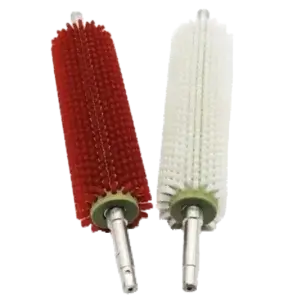
Nylon and polypropylene are the two bristle materials that work best for wet and sticky conveyor applications. Nylon offers higher abrasion resistance and better filament recovery, making it the default choice for most wet cleaning stations. Polypropylene resists chemical attack and absorbs practically zero moisture, which makes it the better choice when the wet material is chemically aggressive or when the cleaning station uses washdown chemicals that degrade nylon over time.
Choosing between these two materials, and then choosing the right grade within each material family, comes down to the specific chemistry and temperature of the wet material on the belt. The table below summarizes the performance trade-offs.
The cost difference between motorized and belt-driven narrows when you account for the cost of inadequate cleaning. A belt-driven brush that slips on a wet belt leaves carryback on the return side. That carryback drops off on return idlers, piles up under the conveyor, and requires manual cleanup. For a conveyor running two shifts a day, manual cleanup labor for wet carryback spillage runs hundreds of hours per year. The payback on a motorized brush upgrade comes from reduced labor, not from the brush price difference.
Proper motorized brush setup also extends filament life, which is covered in detail in the article on extending roller brush lifespan. A motorized brush that runs at a steady, conservative RPM avoids the over-speed spikes that happen when a belt-driven brush breaks free of a wet belt and surges, only to grab again and snap filaments under shock load. Filament fatigue from repeated flexing is the primary wear mechanism on wet-cleaning brushes, and steady RPM operation minimizes the flex cycle count per hour of operation.
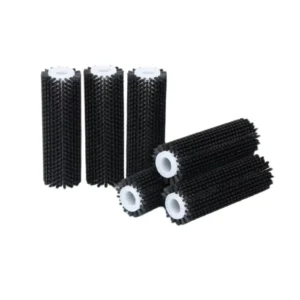

Start with the Belt: Width, Cover Material, and Surface Condition
Specifying a brush roller for wet material handling requires seven data points: belt width, belt speed, the material being conveyed and its moisture content, the belt cover material, the available mounting space around the cleaning station, the operating temperature range, and whether washdown chemicals contact the brush. These seven parameters let a brush manufacturer calculate the correct brush diameter, filament type, filament diameter, brush density, core material, and bearing specification.
Start with the belt. Measure the belt width at the cleaning station, not the conveyor frame width. Note the belt cover material: rubber, PVC, polyurethane, and modular plastic belts tolerate different bristle materials and contact pressures. A polyurethane belt cover is softer than rubber and needs finer filaments to avoid surface scuffing. A modular plastic belt has gaps between segments that catch bristle tips if the filament diameter is too fine relative to the gap width.
Understand the Material: Moisture, Abrasiveness, and Particle Size
Next, measure the material. The moisture content of the conveyed material determines whether the brush needs open spacing to shed wet material or dense spacing to capture fine dry particles. Material that contains both moisture and abrasive solids, such as mineral slurry, needs filaments that balance chemical resistance against wear life. The particle size range matters because the brush must generate enough impact force at the bristle tip to dislodge the largest particles that adhere to the belt.
Get the Mounting Geometry Right: Diameter, Shaft, and Clearance
The mounting geometry is where specification errors happen most often. The distance from the shaft centerline to the belt face determines the brush outer diameter. A brush that is too small in diameter cannot generate enough bristle tip speed at safe RPM. A brush that is too large will not fit the available space. Take this measurement with the belt at rest and the tension released, and record it to within 2 to 3 millimeters. The shaft diameter at the bearing seat needs to be measured with a caliper, not copied from a parts list. Bearing housings wear, shafts get turned down during rebuilds, and the dimension on the drawing may not match the hardware bolted to the conveyor frame.
Mounting clearance matters because a brush that fits on paper but requires field modifications to install rarely gets installed correctly. Note the distance between the bearing mounting pads, the shaft end access for bearing removal, and whether any conveyor structure, chute work, or guarding interferes with brush installation or removal. A brush that takes four hours to change because a chute blocks access will get changed less often than one that takes thirty minutes.
Consider the Environment: Temperature, Moisture, and Washdown
The operating environment drives the core material and bearing selection. Wet environments with frequent washdown call for stainless steel cores and sealed bearings with moisture-resistant grease. High-temperature environments near dryers or kilns need filaments rated for the ambient temperature and bearings with high-temperature lubrication. Outdoor installations need UV-stabilized filaments and corrosion-resistant hardware throughout the brush assembly and mounting bracket.
For conveyors where the belt surface is worn, grooved, or uneven, the brush roller needs filaments long enough and flexible enough to reach into surface features. A nylon brush roller solution uses filament compliance to clean into belt wear patterns that scrapers bridge over. The same principle applies to wet sticky material: the belt surface under the residue is likely worn, and the cleaning tool must conform to the actual surface profile.
Plan for Replacement: Spares and Standardization
Order a spare brush at the same time as the primary brush. Wet-cleaning brush rollers on continuous production lines run 2,000 to 6,000 hours between replacements, depending on material abrasiveness and filament selection. A replacement ordered when the running brush starts showing reduced cleaning performance arrives weeks after the brush fails. A spare on the shelf means the change-out happens during a scheduled maintenance window, not during an unplanned shutdown.
Operators who maintain conveyor brush rollers across multiple lines should standardize brush specifications where possible. Standardization reduces the number of spare brushes kept in inventory and lets maintenance crews build familiarity with a single brush change-out procedure. But standardization should not override the material-specific requirements of each conveyor. A brush that handles wet clay on one line may fail quickly on wet grain on the next line if the filament material and density differ significantly from what each material needs.
Summary
Conveyor brush rollers handle wet, sticky material buildup by using the mechanical advantage of thousands of independent filaments that flick material off the belt surface instead of scraping it. This approach reaches into belt surface irregularities that scraper blades skip over, and the open brush structure lets wet material pass through instead of packing against the cleaning face.
The material selection decision for wet applications comes down to nylon versus polypropylene. Nylon in PA612 grade offers the best balance of water resistance and abrasion resistance for most wet cleaning stations. Polypropylene wins when the wet material is chemically aggressive or when the brush operates continuously submerged. Filament diameter between 0.010 and 0.035 inch covers most wet cleaning applications, with finer filaments for uniform films and stiffer filaments for chunky wet material.
Motorized brushes outperform belt-driven brushes on wet, sticky applications because they maintain cleaning speed when friction contact between the brush and the belt breaks down. The higher installed cost of a motorized station pays back through reduced manual cleanup labor and longer filament life from steady-speed operation.
Specifying a brush roller for wet material requires seven data points taken from the actual conveyor hardware: belt width, belt speed, material type and moisture content, belt cover material, mounting clearance, operating temperature, and washdown chemical exposure. Measurements taken on-site beat catalog dimensions. A spare brush ordered with the primary brush prevents a worn brush from becoming a production outage.
FAQ
Can a single conveyor brush roller clean both wet clay and dry sand on the same conveyor?
A brush roller can physically clean both materials, but the filament specifications that work well for wet clay differ from those for dry sand. Wet clay calls for open filament spacing to prevent clogging and filaments stiff enough to break the adhesive bond. Dry sand calls for dense filament spacing to capture fine particles. A conveyor that runs both materials on the same belt needs either a compromise brush specification that splits the difference or two separate brush stations configured for each material condition.
How does belt speed affect brush roller cleaning performance on wet material?
Belt speed and brush rotational speed must maintain a consistent relationship for effective cleaning. The brush surface speed at the bristle tips should run roughly double the belt speed in counter-rotation. On belts running above 500 feet per minute, achieving this speed ratio with a belt-driven brush becomes difficult because the brush drive drum must spin fast enough to maintain friction contact on a wet belt surface. Motorized brushes solve this by using independent motor control to hold the correct speed ratio regardless of belt speed.
What happens if a conveyor brush roller runs in the same direction as the belt?
Running a brush roller in the same direction as the belt (co-rotation) reduces cleaning effectiveness by roughly half compared to counter-rotation. In co-rotation, the relative speed between the bristle tips and the belt surface is the difference between the two speeds rather than the sum. The lower impact velocity at the contact point does not break the adhesive bond of wet, sticky material as reliably. Co-rotation is used mainly on delicate belt surfaces or lightweight materials where counter-rotation would be too aggressive.