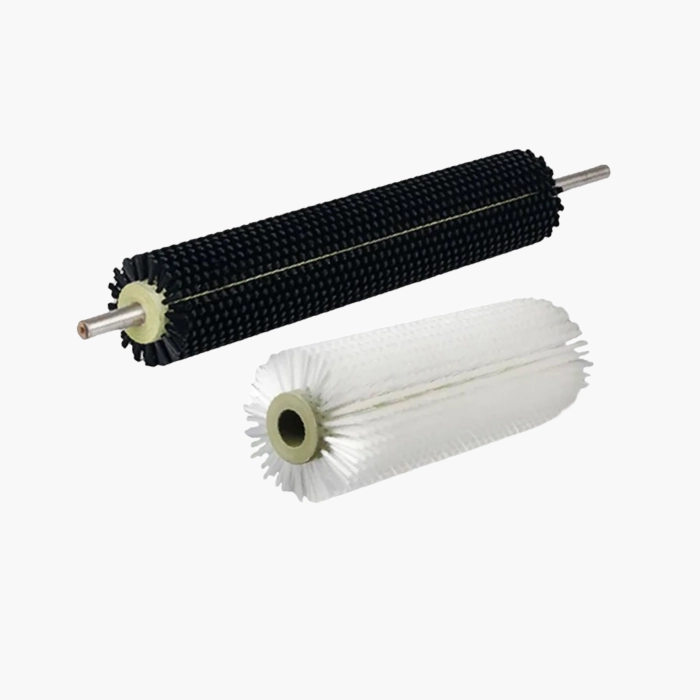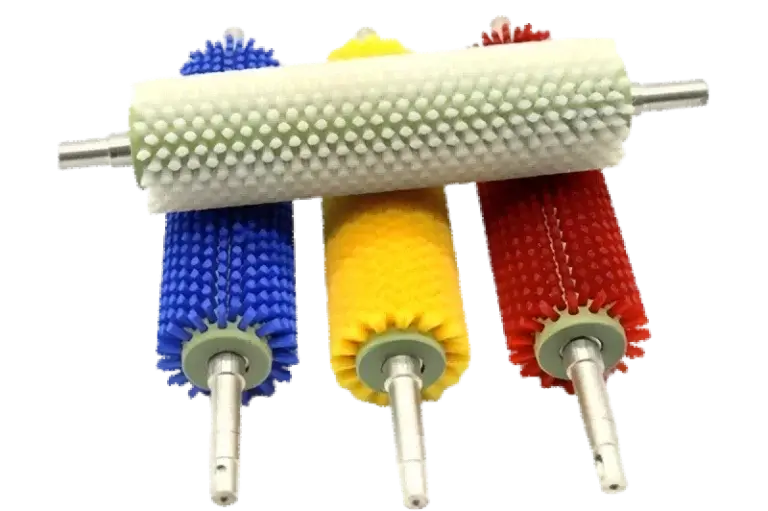
Scratched glass discovered after washing means lost profit — damaged panels are either reworked or scrapped. Most of the scratches are, however, caused by the glass washing brush, for three specific reasons that can easily be corrected: wrong filament material, poorly crafted rollers, and daily upkeep that is too often neglected. In understanding each of these causes, the right solution is immediately apparent.
This will take care of all three root causes and suggest tested filament upgrades that will protect even the most delicate Low-E-coated glass.
Causes of Glass Scratches from Cleaning Rollers
Most glass plants blame the washing machine for the appearance of scratches, but the best technicians in the business, those with many years of hands-on experience, point the finger at the glass washing brush roller — more specifically, its filament, build quality, or maintenance condition. Here are the three most common culprits, ranked by how often they come into play.
Wrong/Worn Filaments Lead to Glass Scratches
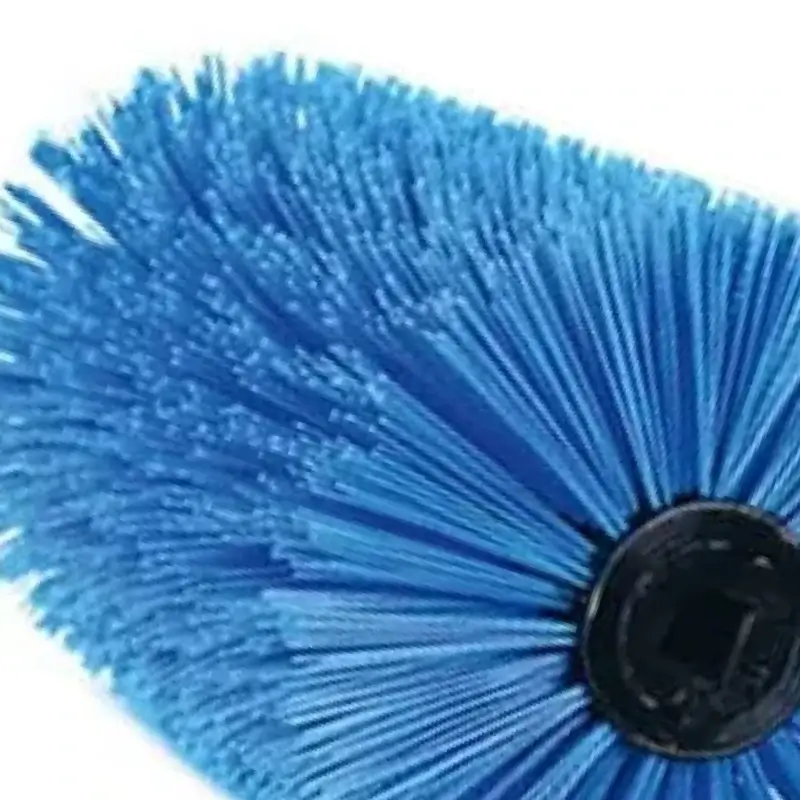
More than any other factor, the wrong filament type leads to more damage to glass. Typically, standard hard nylon bristles are fine with plain float glass but will quickly scratch the surfaces of soft-coated or Low-E glass. Most of the production lines are still working with generic bristles for all types of glasses, and this is where the visible scratching starts from day one due to a mismatch.
Even if a factory starts with the right filament, over time, material aging will create the same problem. Brush filaments, which soak in cleaning chemicals and water for extended periods, gradually harden—micro-burrs form along each strand, and they lose their original flexibility. Once the bristles stiffen, they essentially turn into abrasive tools rather than cleaning tools.
Here’s another problem you might not have seen: sand and grit get wedged between stiff, aging filaments. Every turn after that just pulls the trapped dirt over the glass surface, and it grinds micro-scratches into the coating.
The solution can be implemented in two steps:
- Match the filament type to the glass in use. Soft, anti-static special filaments will protect delicate coatings much better than general-purpose nylon.
- Set a replacement schedule as a rule of thumb. Even the best filaments degrade over time: the only way to prevent cumulative surface damage is to replace them before they harden.
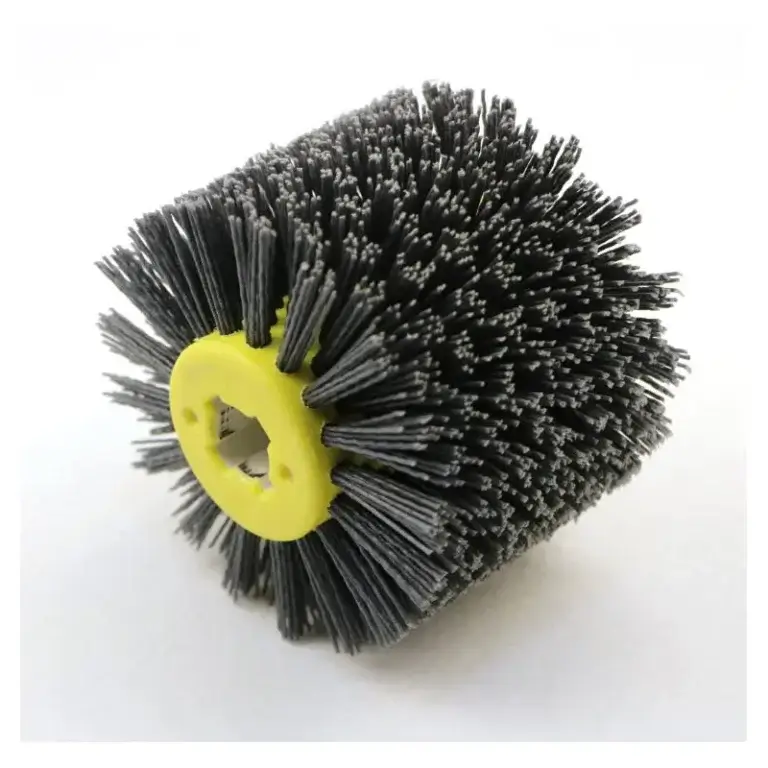
The modified anti-static PA612 nylon filament is a perfect balance between softness and durability. It does not hold a static charge and does not attract sand or dust when cleaned, both wet and dry; it can stay for long periods in a chemical without affecting it. Factories that process coated or tempered glass should consider Nylon Cylinder Brush rollers as a priority upgrade for those built with this filament.
Bad Roller Structure & Installation Cause Line Scratches
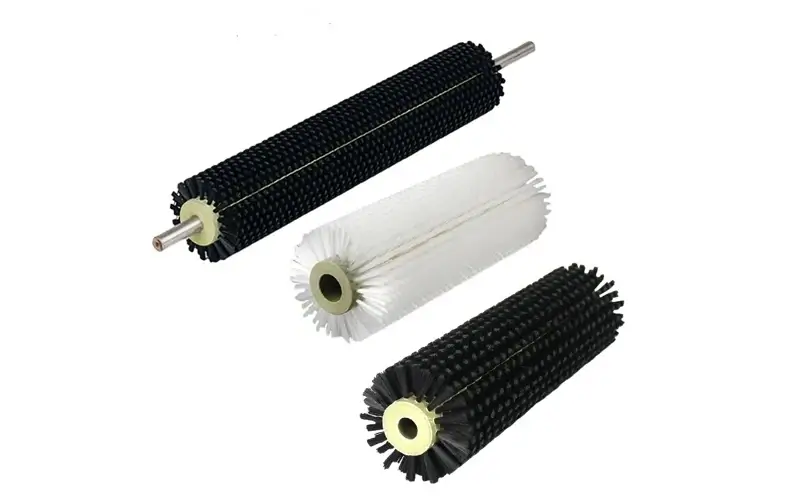
An inadequately constructed glass cleaning brush roller will damage the glass, even with the correct filament. This is due to uneven bristle density, inconsistency in tuft height, or a bent shaft on the roller, all of which add up to provide uneven pressure during the rotation of the brush. Visible to the operator as parallel line scratches; they will be parallel lines, and this is without the aid of any viewing instrument.
Other common construction defects are:
Uneven bristle planting- tufts set at irregular depths create high and low spots that will concentrate force on small areas.
Irregular Bristle Density- sparse sections allow the roller to bounce and stutter, leaving intermittent scratch marks.
Bent or welded-seam shafts — because if the shaft isn’t perfectly straight, you’ll get wobble at high RPM, and that presses certain bristle zones harder against the glass.
The solution begins at the roller core. A high-quality glass washing brush roller should feature a solid, seamless metal shaft, machined to tight straightness tolerances. Reputable manufacturers will also perform dynamic balancing before the roller leaves the factory to ensure smooth, vibration-free rotation even at full production speed. This will go a long way in eliminating localized heavy pressure zones, thus stopping line scratching right from the source.
Production managers should ensure that the supplier provides dynamic balance reports and shaft runout tolerances. This is to safeguard against a recurrence of the quality problems witnessed with the glass washing brush rollers, which were sourced without these considerations.
Static Dust Triggers Hidden Micro-Scratches
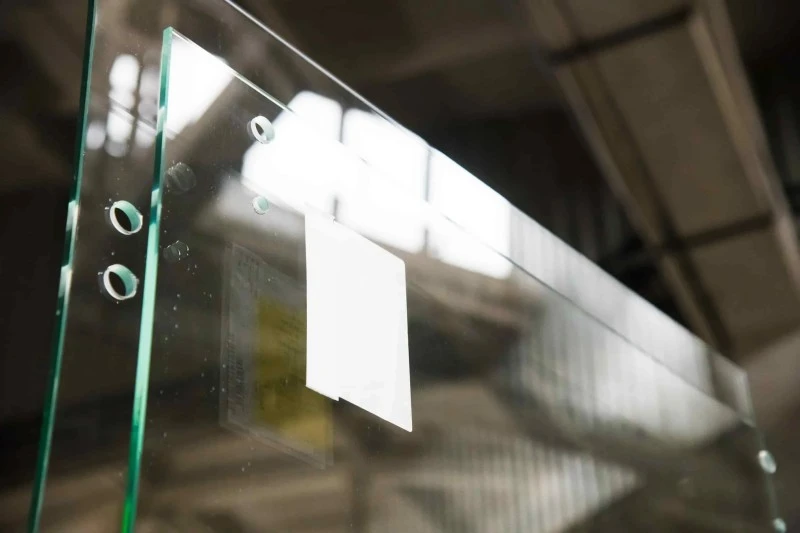
Some of these scratches only become visible after coating or lamination — and by that time, it’s much too late to trace them back to the wash unless you’re actively looking for them. Most of these ‘invisible’ micro-scratches are the result of static electricity and poor housekeeping.
The static charge, developed by the friction of rapid brushing, turns each bristle into a dust magnet, and it draws in fine sand and mineral particles deep within the bristle bed. If the brush is not rinsed out by the crew often and if they do not keep the tank clean, dirty water will recirculate and redeposit grit right on the glass.
Routine maintenance recommended is as follows:
- Flush brush rollers with clean water at every shift change.
- Drain and scrub the recirculation tank at least once per week.
- Inspect filaments under bright light weekly for embedded grit or burr formation.
Conductive modified PBT filament definitely suits 24hr continuous production. It has long-lasting anti-static properties and good water resistance, keeping the filaments clean until the next maintenance cycle. Factories that run 24 hours per day would therefore benefit from considering special anti-static glass washing brushes made with this type of filament.
Specialty Filaments vs Hard Nylon for Glass Washing
The table compares four specialty filaments against standard hard nylon regarding the most important properties for glass washing.
| Property | Standard Hard Nylon | Anti-Static PA612 | Conductive Modified PBT | Soft PBT |
| Level of Hardness | High | Medium | Medium-Low | Low |
| Ability to be Anti-Static | None | Yes | Yes (long-lasting) | Limited |
| Resistance to Chemicals | Low | High | High | Medium |
| Dust / Grit Attraction | High | Low | Very Low | Medium |
| Suitable for Low-E Glass | No | Yes | Yes | Yes |
| Recommended Use | Plain float glass only | General coated glass lines | 24h continuous lines | Light-duty washing |
This contrast shows why merely transitioning from generic hard nylon to a matched specialty filament eliminates most of the glass scratching issues. To delve deeper into brush roller types and structures, the guide on glass washing brushes covers the basics.
Brief Summary
Glass scratching in washing machines almost always goes back to the glass washing brush roller. Choosing the right filament for each glass type, demanding precision-built rollers with balanced shafts, and sticking to a disciplined cleaning routine will get rid of the vast majority of scratch defects. The right investment in a glass cleaning brush solution upfront costs much less than scrapping damaged panels afterward.
Service Life of High-Yield Glass Washing Rollers
As a general rule, facilities should set the replacement cycle for the glass washing brush roller at every 3-6 months based on the output for each day, the chemicals used, and the condition of wear of the filaments as observed in the weekly inspections.
Anti-Static Filaments Eliminate Low-E Sand Scratches?
It reduces the affinity of dust and thus the risk of scratches. However, to achieve consistent scratch-free results, flushing and tank cleaning should still be carried out regularly to remove dust particles and other debris that may get deposited on the glass surface.
Ideal Shaft for Glass Washing Brush Rollers
A solid, seamless stainless steel shaft gives you the best straightness, corrosion resistance, and stability of dynamic balance at high speeds when used for glass washing brush rollers.