
Chains carry loads, drive conveyors, and keep production lines moving. They also collect grit, grease, and dried lubricant faster than most maintenance teams expect. A dirty chain wears unevenly, stretches, and eventually fails at the worst possible moment. Cleaning is not optional, and the tool you choose determines whether the job takes minutes or a full shift.
Many plants already own a chain brush. The problem is that most of them picked one by guesswork. They compared bristle material or handle length, but never checked whether the coil diameter matched the chain they were cleaning. The result is a brush that skims the surface, misses the pins and rollers, or jams between the links.
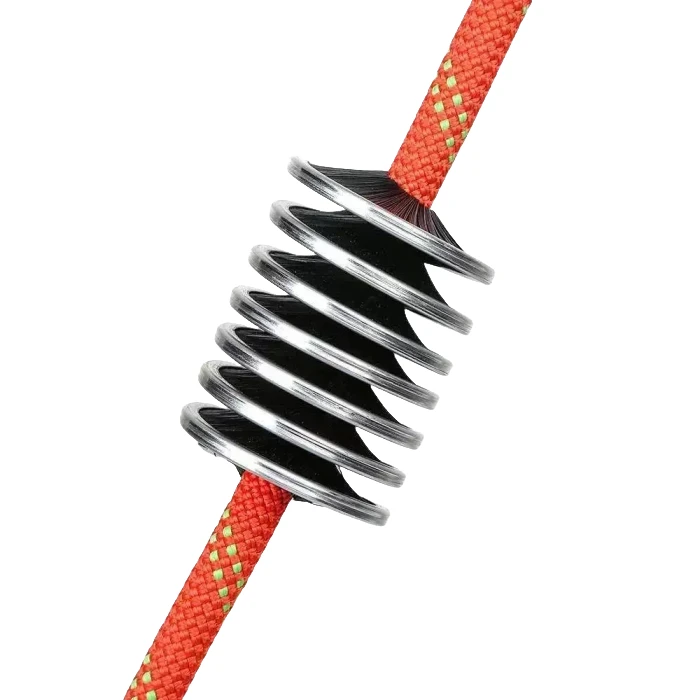
The coil diameter of a 360-degree chain brush must be slightly larger than the overall width of the chain plates, while remaining small enough to work between the side plates and reach the pins and rollers. In practical terms, you measure the chain width and the space around the pins, then select a coil diameter that fits that gap without forcing. A correctly sized coil contacts the pin surface around the full circumference, which is exactly what the 360-degree design is built for.
The rest of this guide explains how chain dimensions are measured, how those numbers translate into a coil diameter, and which other specifications you should check before ordering. You will also find tables for common chain types, a step-by-step selection process, and maintenance advice that extends brush life.
If the product category is new to you, it helps to review the 360 chain brush basics before comparing sizes.
Why Coil Diameter Matters for Chain Cleaning
Coil diameter determines how deeply the brush can penetrate the chain and how much contact area the bristles have with the pins and rollers. Get it wrong, and the brush either floats on the surface or wedges itself between the links.
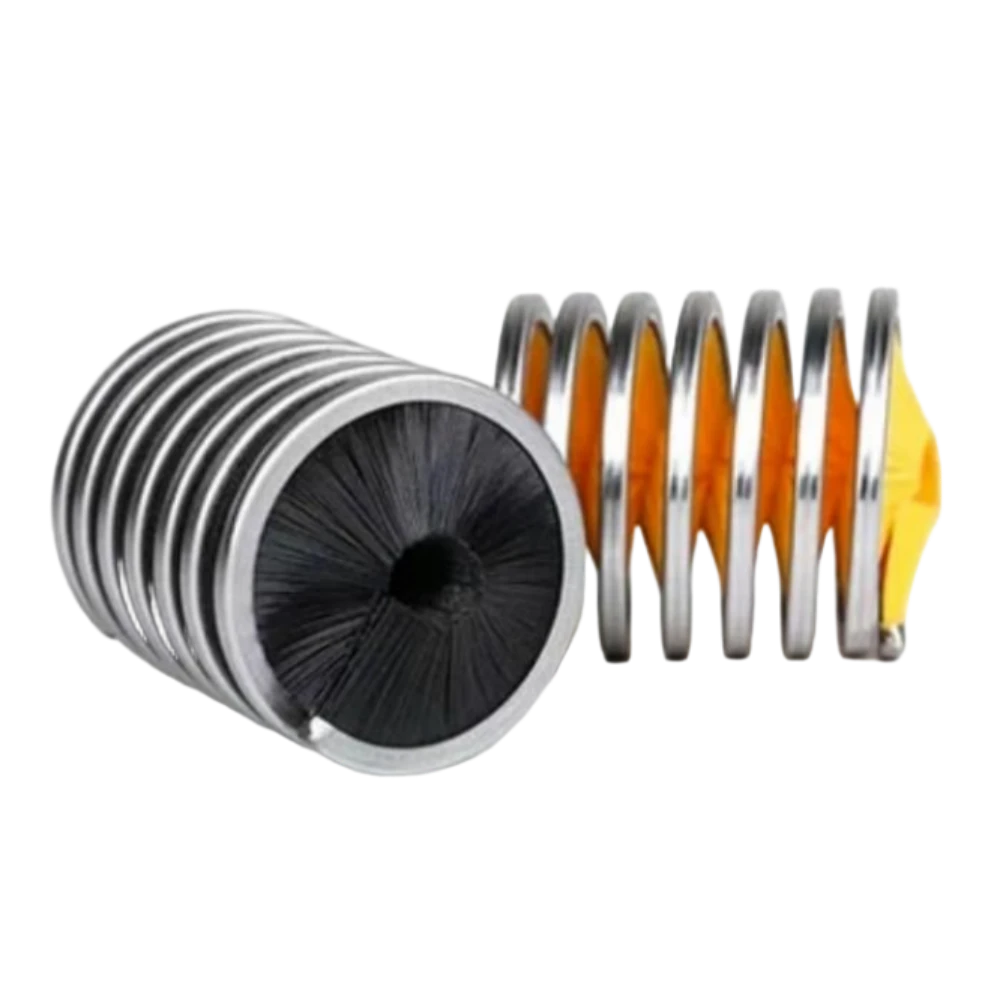
A chain brush with a coil design wraps bristles around a central wire core. When the brush rotates, every bristle travels through a full circle. That rotation is what allows the brush to clean the pin surface from every angle in a single pass. But that circle only helps if its diameter fits the space around the parts you are cleaning.
The table below summarizes what happens when the coil diameter falls outside the usable range.
There is no universal coil size. A brush that cleans a heavy conveyor chain perfectly will be useless on a small roller chain, and vice versa. That is why the sizing process starts with the chain, not the brush.
Understanding Chain Sizes and How They Relate to Brush Coils
Chain size is defined by four key dimensions: pitch, pin diameter, inner width, and plate width. The two dimensions that matter most for coil selection are the inner width, which controls how far the bristles can enter, and the overall width, which limits the space the brush has to work in.
Manufacturers rate chains by pitch, which is the distance between two consecutive pins. A common designation like ANSI 40 roller chain tells you the pitch is 0.5 inch, but it does not directly tell you the width of the chain. That information comes from the chain specification sheet, where you will find:
- Pin diameter: the thickness of the pin that connects the links
- Roller diameter: the outside size of the roller
- Inner width: the gap between the inner plates where the roller sits
- Plate height and overall width: the full footprint of the chain when assembled
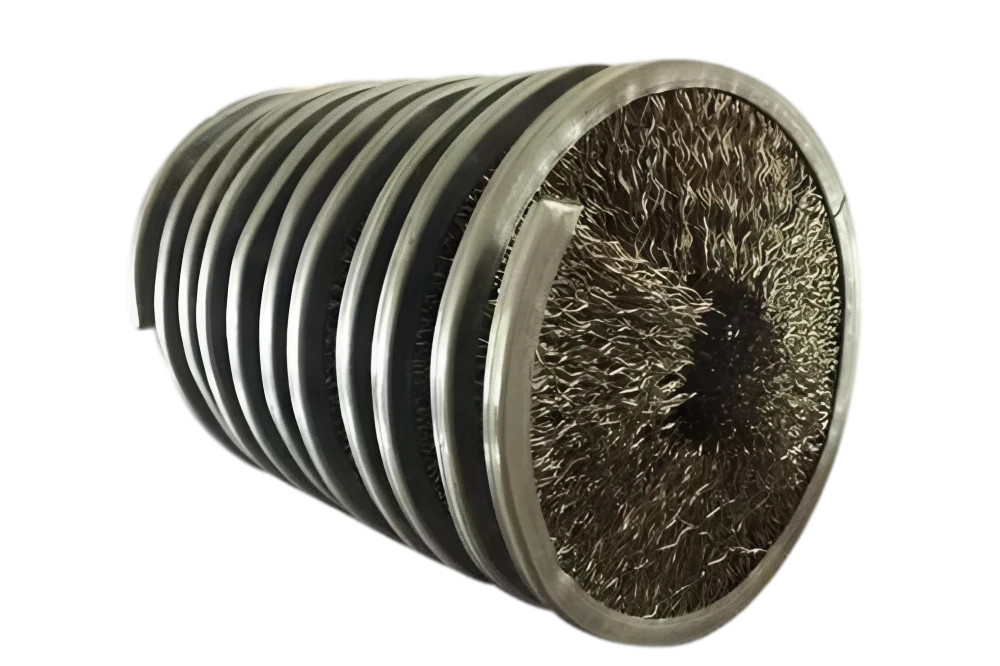
For cleaning purposes, the coil must fit inside the overall width so it can align with the pins, and the bristles must be long enough to bridge the gap between the plates. When those two conditions are met, the brush can work on an inside coil brush principle: bristles enter the space between the plates and scrub the pin from all sides.
Measure Chain Pitch, Width & Pin Diameter
You need three measurements to select a coil diameter: the chain pitch, the inner width between plates, and the overall width of the chain. All three can be taken with a digital caliper in a few minutes, no disassembly required.
Step-by-Step Measurement Procedure
Follow this procedure with the chain installed and the machine locked out:
Measure the pitch from the center of one pin to the center of the next pin. Round to the nearest 1/8 inch or millimeter.
Measure the inner width by placing the caliper jaws between the inner plates, at the pin location.
Measure the overall width across the outside of the plates at the same location.
Record the pin diameter by measuring the exposed pin end, if visible.
Compare the values with the chain manufacturer’s specification sheet.
Applying Measurements to Coil Selection
Once you have the numbers, the selection rule is simple. Choose a coil diameter that is close to the overall chain width, and make sure the bristle length reaches past the inner plate gap toward the pins. If the chain has heavy buildup, choose a slightly smaller coil so the bristles can push into the deposit rather than ride over it.
For a broader decision framework that covers bristle type, speed, and mounting, see choosing a 360 chain brush.
Selecting the Right Coil Diameter: A Practical Guide
Start with the overall chain width, then adjust for chain condition. In most cases, the correct coil diameter is equal to or slightly smaller than the overall chain width, and the bristle trim length is set so the brush reaches the pins without touching both side plates under load.
Recommended Coil Diameter Ranges by Chain Width
The table below gives recommended starting points for typical measurements.
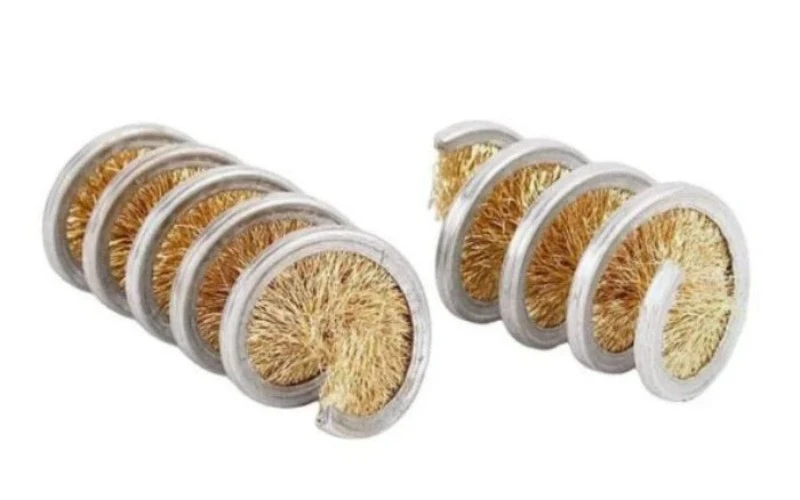
Two points deserve emphasis. First, metric chains follow the same logic, so convert the width values and use the same ranges. Second, the inner width matters as much as the overall width. A chain with wide plates and a narrow pin gap still needs a coil that can enter that gap, which is why some plants prefer a brass inside spiral brush for aggressive scrubbing of the pin surface.
Other Factors That Affect Cleaning Performance
Coil diameter is only one variable. Bristle material, bristle stiffness, rotation speed, and the type of lubricant on the chain determine how effective the brush is, regardless of the diameter you choose.
Bristle material changes how the brush interacts with the chain:
- Brass bristles are soft enough to avoid scoring the pin surface while still removing hardened grease. They are the standard choice for finished chains.
- Nylon bristles are gentler and work well on lightly soiled chains or when the brush runs continuously.
- Stainless steel bristles handle heavy carbonized deposits but can damage plated chains, so use them only on plain steel.
Rotation speed also matters. Too slow, and the bristles push dirt around instead of lifting it. Too fast, and the bristles deflect away from the pin before they make contact. Most fixed stations run between 500 and 1,200 rpm, with handheld tools at the lower end of that range.
The lubricant itself influences results. A chain coated in dry graphite dust behaves differently from one coated in sticky grease. If you are switching lubricants, budget time to re-evaluate the brush setup, not just the coil size.
Installation, Maintenance, and Service Life
Install the brush so the coil is centered over the chain and the bristles touch the pins at rest. Check bristle wear every 200 to 400 operating hours, and replace the coil when bristles bend permanently or no longer reach the pin surface.
Proper Installation Sequence
Proper installation follows a simple sequence:
Align the brush with the chain path, not at an angle, unless the setup is designed for angled entry.
Adjust the brush height so the bristles contact the pins without pressing into the side plates.
Run the chain slowly and inspect contact across the full width.
Lock the mounting position and verify there is no vibration at operating speed.
Re-check alignment after the first shift, because brackets can shift during initial use.
Wear Monitoring & Replacement Indicators
Bristles wear faster at the leading edge, and a brush that looks fine from the side may already be useless on the pin surface. The quick test is to stop the chain and press a clean fingertip against the bristles; if you cannot feel individual bristle ends, the coil needs replacement.
A coil brush used correctly lasts for thousands of cleaning cycles. The same brush abused at the wrong speed or forced into the wrong chain will fail in weeks. Matching the diameter at the start is the cheapest maintenance decision you can make.
When the brush must reach pins in confined spaces, a flexible 360 chain brush design gives you more positioning options without changing the coil sizing logic.
Frequently Asked Questions
How often should a chain be cleaned with a coil brush?
Cleaning frequency depends on operating hours and contamination level. As a starting rule, clean light-duty chains every 200 operating hours and heavy-duty chains every 50 to 100 hours, then adjust based on how quickly deposits return. If the chain shows visible buildup between scheduled cleanings, increase the frequency rather than the brush pressure.
Can the same coil brush clean both roller chains and conveyor chains?
Not usually. Roller chains and conveyor chains differ in pitch, plate width, and pin geometry, so a coil sized for one will miss or jam on the other. If a plant runs both types, keep separate brush heads for each family and label them by chain size.
How do I know when a coil brush is worn out?
Replace the brush when the bristles bend permanently, the coil loses its roundness, or cleaning time increases noticeably despite the same setup. A worn brush also tends to leave a visible grease line on the pins, which is easy to spot on a white cloth after a test pass.