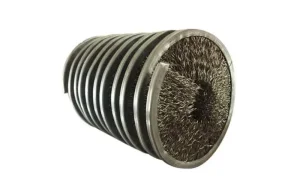
Industrial cleaning and maintenance tasks often involve navigating confined, hard-to-reach areas where traditional tools fall short. Chains, sprockets, and rotating assemblies are notorious for accumulating grime, lubricant residue, and debris in the narrow gaps between links and around housings. Conventional brushes with fixed heads or straight bristle patterns simply cannot conform to these irregular contours. This is where the 360 chain brush enters the picture: an innovative tool engineered to wrap around cylindrical components and deliver thorough cleaning from every angle in a single pass. As industries ranging from manufacturing and food processing to automotive and marine operations push for higher equipment uptime and reduced manual labor, the demand for efficient chain maintenance solutions continues to grow. The flexible brush design addresses a long-standing pain point: how to clean what you cannot easily see or reach.
A 360 chain brush is a specialized cleaning tool featuring bristles arranged in a full circular or spiral pattern around a flexible core, enabling it to envelop chains, cables, and shafts completely and remove contaminants from all sides simultaneously without requiring multiple passes or awkward tool angles.
The following article examines the design principles, performance benefits, and selection criteria for this category of chain maintenance tools. Whether you are evaluating an inside coil brush for cleaning internal chain passages or comparing a chain coil brush against traditional flat brushes for your operation, understanding the engineering behind 360-degree brush technology will help you make an informed procurement decision. We will explore how flexible construction enables access to tight spaces, what material choices affect durability, and how proper usage can extend service intervals for critical drivetrain components.
How a 360 Chain Brush Works: Design and Mechanism
Flexible Central Spine and 360-Degree Bristle Pattern
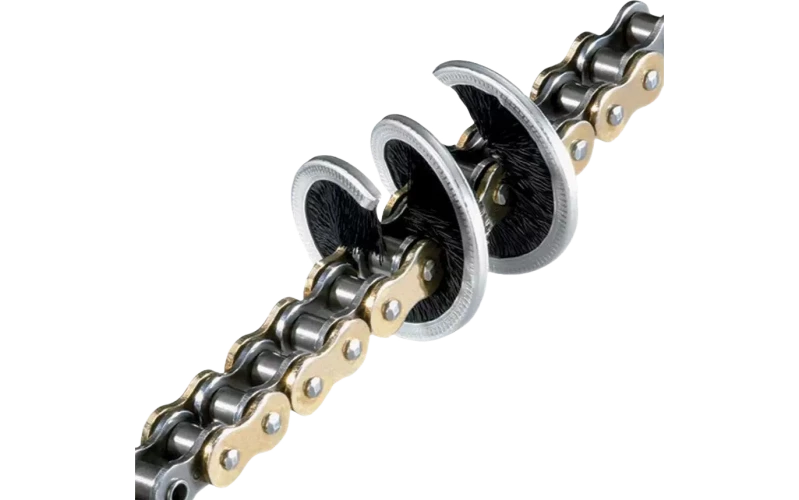
A 360 chain brush operates by wrapping its spirally arranged bristles fully around a chain or cylindrical surface, so that as the brush is pulled or rotated along the component, every bristle row contacts the surface from a different radial angle, scrubbing the entire circumference in one continuous motion.
The core structural innovation of a 360 chain brush lies in its flexible central spine. Unlike rigid-handled brushes that can only attack a surface from one fixed direction, the flexible core allows the brush to bend and conform to the geometry of the target component. This spine is typically constructed from twisted wire, which holds bristle tufts securely at evenly spaced intervals along its length. The bristles themselves radiate outward in a full 360-degree pattern, meaning that regardless of how the brush is oriented relative to the chain, bristles are always making contact.
Spiral Bristle Arrangement and Self-Guiding Action
When the brush is drawn through a chain, the bristles penetrate between side plates, rollers, and pins. The twisting action of the wire core creates a spiral bristle arrangement that naturally follows the pitch of most standard roller chains. This self-guiding behavior reduces operator effort and ensures consistent contact pressure. For internal cleaning tasks, an inside coil brush for cleaning follows the same principle but is inserted into hollow sections, where the bristles expand outward against the inner walls. A well-known example in this category is the 360 Chain Cleaning Brush, which combines a flexible twisted-wire core with densely packed spiral bristles to handle both external chain surfaces and internal bore passages. This dual capability makes the 360 chain brush versatile enough for both external chain maintenance and internal bore cleaning in a single tool category.
Bristle and Core Material Selection
Material selection plays a decisive role in brush performance. Bristle filaments are commonly available in nylon, polypropylene, brass, and stainless steel. Nylon and polypropylene offer chemical resistance and moderate abrasiveness, making them suitable for food-grade and general industrial environments. Brass bristles provide a balance of scrubbing power and spark resistance, while stainless steel bristles deliver aggressive cleaning for heavy rust and carbon deposits. The wire core material is equally important: galvanized steel offers corrosion resistance at a lower cost, while stainless steel wire cores are preferred for washdown and marine applications. The combination of bristle type, bristle density, and core flexibility determines how effectively the brush reaches tight spaces and removes contaminants without damaging the underlying substrate.
Key Advantages of a 360 Chain Brush Over Conventional Cleaning Tools
Reduced Cleaning Cycle Time
The primary benefits of a 360 chain brush include complete circumferential coverage in a single pass, the ability to conform to irregular and confined geometries, significantly reduced cleaning time, and consistent cleaning results that are difficult to replicate with flat brushes, scrapers, or chemical-only methods.
One of the most measurable improvements operators report after adopting this tool is the reduction in cleaning cycle time. Traditional methods often require multiple tools: a flat brush for accessible outer surfaces, a pick or small-diameter brush for between-link gaps, and a rag or solvent bath for final residue removal. Each step demands repositioning the chain or the operator, and the quality of the result depends heavily on individual technique. A 360 chain brush consolidates these steps. Because bristles attack from all directions at once, a single pull-through can achieve what previously required three or four distinct operations.
Cleaning Chains Without Disassembly
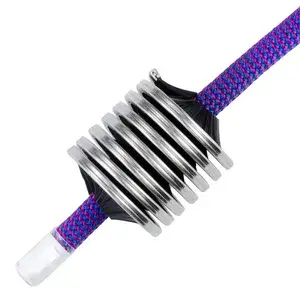
The flexibility advantage is particularly relevant when working with chains that are still installed on machinery. Removing a chain for bench cleaning is time-consuming and may require partial disassembly of guards, tensioners, and sprockets. A chain coil brush with sufficient flexibility can be threaded around an in-situ chain, allowing maintenance crews to perform cleaning without dismounting the drive system. This reduces equipment downtime and avoids the risk of incorrect reinstallation. In food processing environments where hygiene verification is mandatory, the ability to clean chains thoroughly in place with a validated tool simplifies compliance documentation.
Consistent, Repeatable Cleaning Results
Consistency is another underappreciated benefit. With this brush design, the bristle pattern ensures that every chain link receives roughly equal treatment. There is no reliance on operator judgment to determine whether a particular area has been scrubbed enough. This uniformity is critical in applications where uneven cleaning can lead to premature wear or contamination risks. The table below summarizes the key differences between 360-degree brushes and conventional alternatives:
Maintenance and Best Practices for Maximizing Brush Service Life
Post-Use Cleaning: Preventing Residue Hardening
Proper maintenance of a 360 chain brush involves rinsing bristles immediately after use to prevent contaminant hardening, storing the brush in a dry and unbent position, inspecting bristles for wear or loss before each use, and replacing the brush when bristle length has decreased by 30 percent or more.
A brush that is not cleaned after use will accumulate hardened residue between bristle tufts. Once this residue solidifies, it reduces the effective bristle length and can scratch surfaces during subsequent use. The simplest and most effective post-use procedure is to rinse the brush in a compatible solvent or warm water with detergent immediately after finishing the cleaning task. For water-based rinsing, the brush should be shaken or blown dry to prevent corrosion of the wire core. Solvent rinsing is preferable for brushes used with heavy greases and oils, as solvents penetrate deeper into the bristle bundle.
Storage Conditions That Extend Brush Longevity
Storage conditions have a direct impact on brush longevity. Bristles, especially nylon and polypropylene, can take a permanent set if the brush is stored under pressure or in a bent configuration. The brush should be hung vertically or laid flat in a clean, dry location. Exposure to direct sunlight degrades polymer bristles over time through UV radiation, so enclosed storage is recommended. Temperature extremes should also be avoided: freezing temperatures can make nylon bristles brittle, while excessive heat can soften and deform them.
Bristle Inspection and Replacement Thresholds
Bristle inspection should be part of the standard pre-use checklist. Operators should look for bristles that are bent, broken, or missing entirely. A missing bristle in a food processing environment is a foreign material contamination risk that can trigger a product recall. In non-food applications, worn bristles reduce cleaning effectiveness and increase the time required to achieve acceptable results. A simple gauge check measuring bristle length against the original specification provides an objective replacement threshold. When bristle length has decreased by 30 percent, the brush should be retired. Attempting to extend service life beyond this point yields diminishing returns in cleaning quality and increases the risk of wire core exposure, which can damage chain surfaces.
Comparing 360 Chain Brush Designs Across Use Cases
Spiral-Wound Design for General-Purpose Chain Maintenance
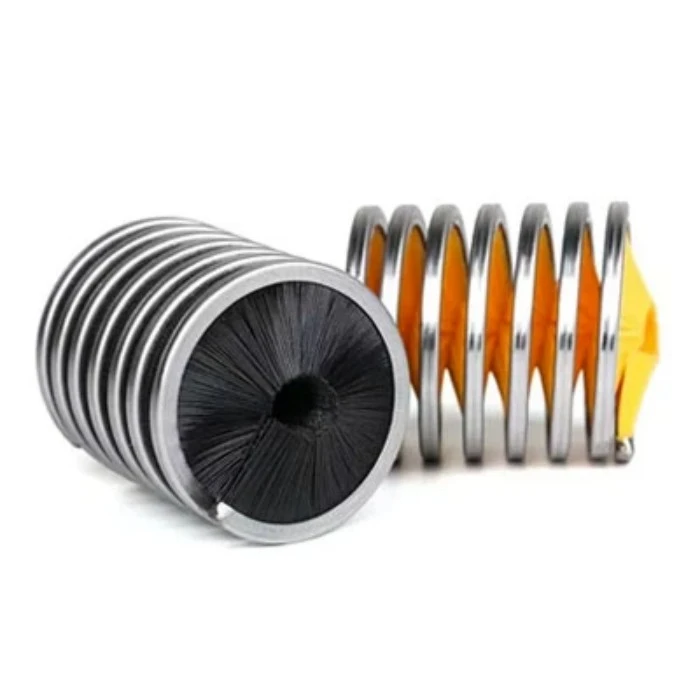
360 chain brush designs vary primarily in bristle pattern, core construction, and material combination, with each configuration optimized for specific use cases ranging from light-duty food processing chains to heavy industrial power transmission systems operating in harsh environments.
The spiral-wound design is the most common configuration for general-purpose chain maintenance. In this design, bristles are captured between twisted wire strands that form a continuous helical pattern along the brush length. The spiral arrangement provides a natural self-feeding action when the brush is pulled through a chain, and the bristle density is uniform throughout. Spiral brushes are available in diameters from under half an inch to over four inches, covering everything from bicycle chains to large conveyor drive chains. This design is also the basis for most inside coil brushes for cleaning products, where the spiral construction enables insertion into pipes, tubes, and hollow shafts for internal surface preparation.
Loop-Type Brushes for Automotive and Power-Assisted Cleaning
Loop-type brushes feature bristles formed into a continuous loop with the ends joined, creating a tool that can be used in a back-and-forth scrubbing motion without catching on chain edges. This design is popular in automotive and motorcycle maintenance, where chains are shorter, and the operator benefits from a tool that works well in both push and pull directions. The loop configuration also allows the brush to be mounted on a rotary tool or drill for power-assisted cleaning, significantly increasing material removal rates for heavily soiled chains.
Single-Stem vs. Multi-Stem Configurations for Varying Chain Widths
The choice between single-stem and multi-stem configurations depends on the chain width and the level of coverage required. Single-stem brushes with a 360-degree bristle pattern are sufficient for most standard roller chains up to approximately two inches in width. For wider chains such as those used in heavy conveyor systems or marine anchor chains, multi-stem arrangements or larger-diameter single brushes may be necessary to ensure adequate bristle contact across the full width of the chain.