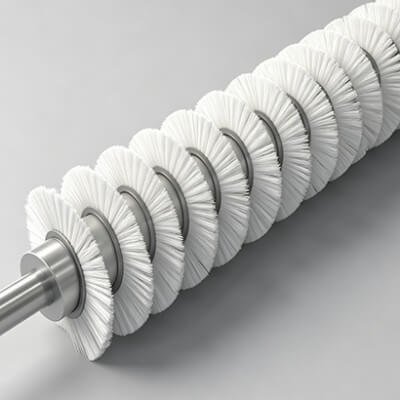
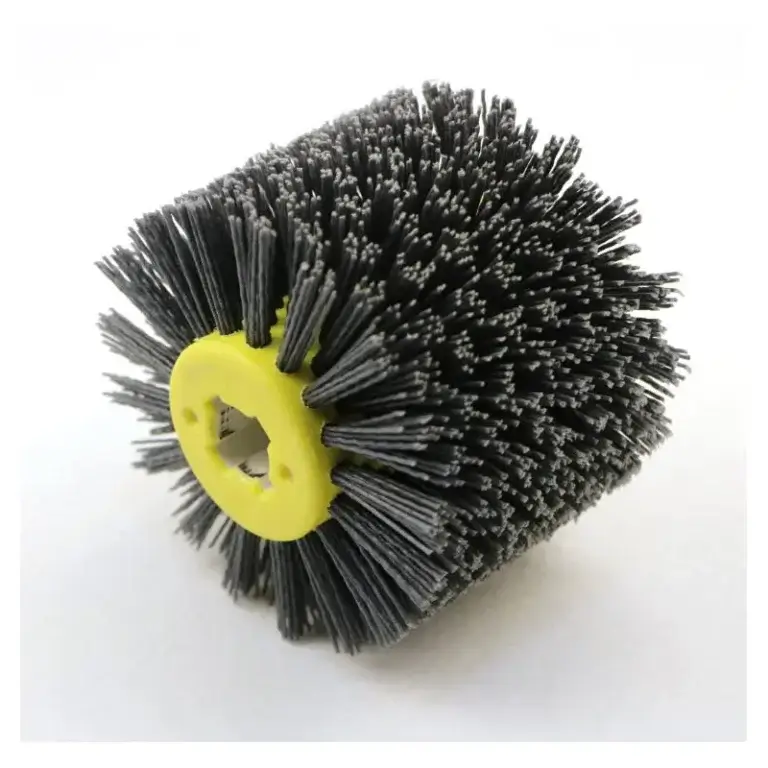
Belt conveyors move most of the bulk material handled in mining, cement, aggregate, power, and food plants, and each one leaves residue behind at the discharge point. Conveyor cleaning cylinder brushes tackle this leftover debris: what does not leave the belt rides back underneath the structure and sticks to idlers and pulleys.
A conveyor cleaning cylinder brush is a rotating cylindrical brush mounted on the return strand that sweeps off the film of fines and dust a scraper leaves behind. Bristles reach into belt texture, splice grooves, and rough surfaces that a blade rides over, and their flexible contact lifts residue without the belt cover wear that comes from pressing a blade harder.
Whether that value is realised depends on where the brush sits in the cleaning line, how it is specified, and how it is maintained.
What a Conveyor Cleaning Cylinder Brush Does That a Scraper Cannot
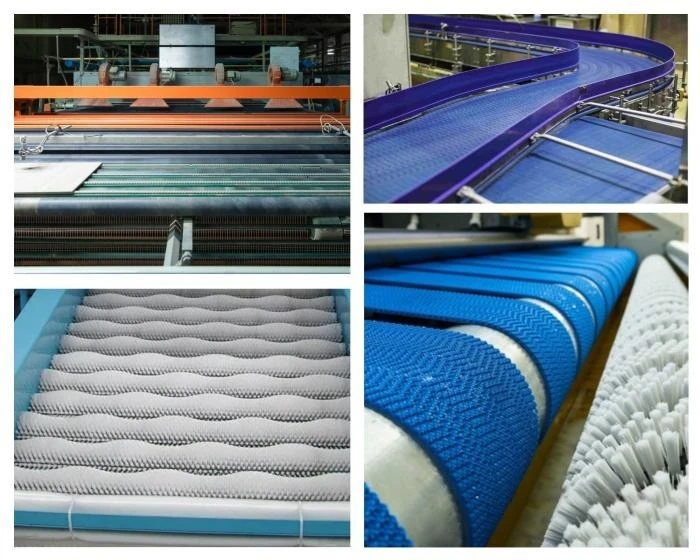
A cylinder brush removes the thin film, fine dust, and material lodged in surface texture that a scraper cannot reach. Blade cleaners take off bulk by pressure; the brush finishes the surface with thousands of light individual contacts.
Each cleaning device removes material through a different physical action, and that action decides what it can remove. It is why two products both sold as belt cleaners can behave completely differently on the same conveyor.
Bristle Contact Compared With Blade Contact
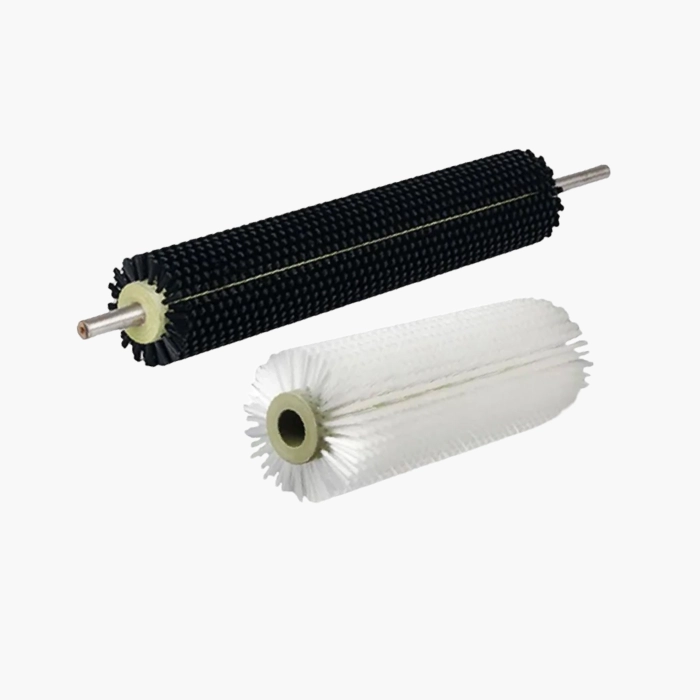
A blade removes only what stands proud of the belt above the radius of its own edge, and pushing harder wears the cover instead of the film. Each bristle is a small spring that follows the surface, so the tips enter the texture of a rough top belt, the grooves of a mechanical splice, and the shoulders of a chevron profile, and rotation throws material clear rather than smearing it. This matters because a belt is a layered structure of cover and carcass, and it is the cover surface and the splice joints that carry most of the residue.
Where the Brush Fits in a Multi-Stage Cleaning Line
A rotary brush cleaner is a finishing device, not a bulk remover. Fitting one as the only cleaner on a wet heavy load turns the bristles into a fan that flings material instead of clearing it, so blades go first, and the brush goes last.
| Stage | Device | Removes well | Where it stops working |
| Pre-cleaner | Blade at the head pulley | 70 to 85 percent of bulk, dry to damp | Patterned belts, mechanical splices, pasty material |
| Secondary cleaner | Blade 300 to 500 mm further round | Thin film left on a smooth belt | Worn or uneven belt surface |
| Finishing | Rotary cylinder brush | Fines in texture, chevron and rough top surfaces | Wet sticky clay, high heat, worn bristles |
| Return strand | V-plough | Material already fallen onto the return side | Heavy loads; it does not clean the belt |
Most plants specify conveyor cleaning cylinder brushes only after the blade stages, because the brush works best on what the blades leave behind.
Where the Payback Shows Up in Carryback, Downtime and Belt Life
The payback appears as recovered material, fewer housekeeping hours, longer idler and splice life, and less unplanned downtime. Carryback is rarely a single cost; it is the same material charged to the plant several times over.
A belt cleaning system changes four cost lines at once, and only one of them is the value of the product itself.
Material Loss and Housekeeping Labour
The Conveyor Equipment Manufacturers Association conservatively estimates carryback of about three tons per week on a 1.5 metre belt travelling at 250 metres per minute, which is roughly 150 tons a year from one conveyor. That material is handled twice, once as product and again as waste shovelled out from under the frame, which is the argument for a conveyor cleaning brush rather than for more labour.
Idler, Pulley and Splice Wear, Mistracking and Safety
Sticky material builds on return rollers and idlers until their diameter is no longer uniform, and an out-of-round roller steers the belt. Mistracking then produces edge damage, spillage and accelerated splice wear. Where staff cleans the return strand by hand, the work falls under the requirement that ingoing nip points and rotating parts be guarded, which makes it a compliance question as much as an operational one.
Choosing Filament, Diameter, Trim and Density for the Duty
Match the filament to the material and its temperature first, then size the brush so the tips reach the belt with a controlled interference of 2 to 5 mm at a speed slightly faster than the belt.
The table is the starting point for a quotation. Values outside these ranges normally mean the application deserves a trial rather than a catalogue selection.
| Parameter | What it controls | Typical starting range |
| Filament material | Chemical, temperature and abrasion resistance | Nylon 6.6 for dry fines, polypropylene for damp grain |
| Filament diameter | Flexibility and wear life | 0.5 to 1.2 mm |
| Brush diameter | Tip speed and reach across the frame | 100 to 300 mm |
| Face width | Coverage across the belt | Belt width plus edge margin |
| Fill density | Cutting force, heat build-up, loading resistance | Denser for fine dust, lighter for paste |
| Speed and interference | Tip velocity against belt wear | 200 to 1200 rpm, 2 to 5 mm at the tips |
Filament Material and Diameter
Nylon 6.6 is the default for dry fines because it absorbs little water and keeps its stiffness, while polypropylene suits damp grain and chemically aggressive products. Abrasive nylon with silicon carbide embedded in the filament handles films that smear rather than slide, and metal filament is reserved for high-temperature or mineral duty. Food and pharmaceutical lines need a declared food contact grade. Thin filaments conform better but wear sooner, while thick ones last longer and follow the surface less closely.
Brush Diameter, Face Width and Trim Length
A larger cylindrical brush roller reaches the same tip speed at a lower shaft speed, which reduces vibration and bearing load, but it needs more space under the frame. Face width should cover the full belt with a small margin so the edges are not missed. Trim length and centre distance together set the interference, so a replacement brush must match the original trim as well as the diameter.
Rotation Direction, Speed and Contact Interference
The brush rotates against the direction of belt travel, so relative speed at the contact point is the sum of the two. Tip speed is normally set slightly above belt speed, which flicks fines clear instead of folding them into the surface. Interference of 2 to 5 mm is the practical window; deeper contact raises load, heat and bristle fatigue without a proportionate gain in cleaning. Contact angle at the return run is typically 10 to 20 degrees. Set the brush conveyor belt interference once at the centre of the belt and record it on the unit.
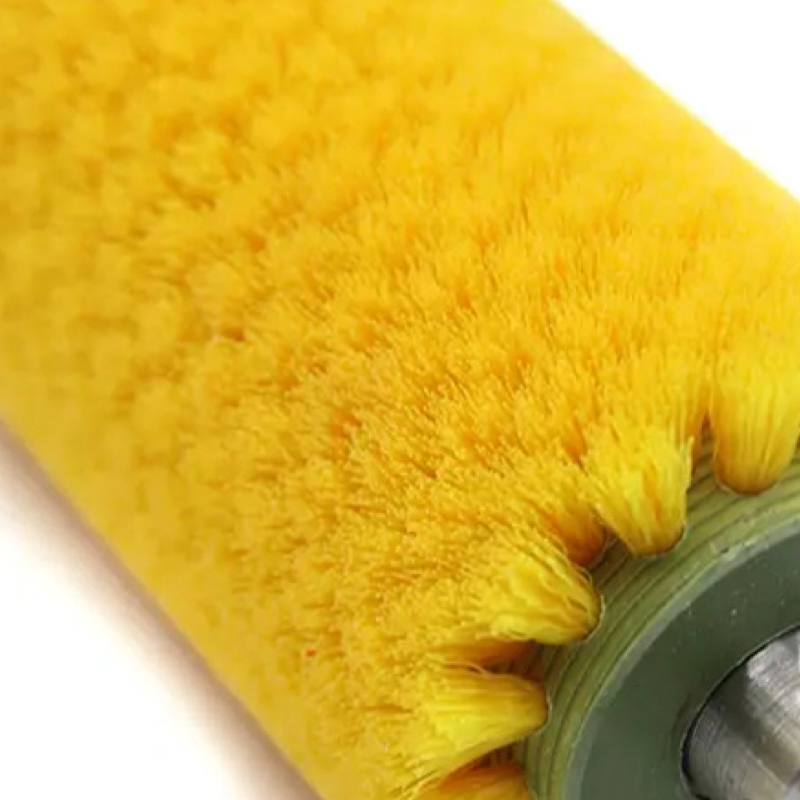
Powered or Belt-Driven, and Where to Mount the Unit
Use a motorised unit when the residue is tacky, the belt is fast, or the material changes often, and a passive belt-driven roller when the residue is light, dry dust on a slow belt. Mount either on the return strand 100 to 200 mm after the head pulley, under a hood with dust extraction.
The drive decision follows the duty rather than a preference for one design.
Motorised Versus Passive Brush Cleaners
A motorized brush cleaner spins its own brush against belt travel and can be tuned with a variable frequency drive, which makes it the option for sticky fines and higher belt speeds. A passive roller is turned by the belt itself and relies on contact alone, so it is simpler and adequate for light dry dust at moderate speed.
| Feature | Motorised brush cleaner | Passive belt-driven brush |
| Power source | Integral motor and gearbox | Belt contact |
| Best for | Tacky residues and stubborn fines | Light dry dust and powders |
| Belt speed | All speeds | Slower belts |
| Cost | Higher initial and running cost | Lower initial cost, no drive energy |
| Maintenance | Motor, bearings, electrical supply | Bristle wear and bearings |
Mounting Position, Dust Extraction and Retrofits
Mounting too close to a wet discharge point means the brush meets the full load, while mounting too far back leaves a long stretch of contaminated belt. Because the brush releases dry fines that were previously stuck to the belt, a hood and an extraction connection are normally needed to keep the material out of the air. Retrofitting a conveyor belt brush to an existing frame is usually straightforward where there is clear space on the return run, but check tracking tolerance first, because uneven bristle contact amplifies any misalignment already present.
Installation, Maintenance and Troubleshooting
Commission the brush by setting the interference, checking the contact print across the belt, and tuning the speed, then keep it running with a monthly visual inspection. Replace it when the filaments fall below the effective working length rather than when the surface simply looks worn.
Most conveyor brush problems trace back to installation rather than to the brush, so the first shift after fitting is the most informative one.
Setup Checks and Break-In
Check shaft runout and dynamic balance before the brush runs at speed, since imbalance shows up as bearing failure before it shows up as poor cleaning. Set tip interference at the centre of the belt with the belt loaded, then read the contact print, which should be even across the full face width. Re-check the fasteners after the first hours of running.
Symptom, Cause and Correction
| Symptom | Likely cause | Correction |
| Film still on the belt | Interference too low, bristles worn | Reset interference, replace the brush |
| Fast bristle wear or loss | Speed too high, interference too deep, wrong grade | Reduce speed and interference, re-grade |
| Dust cloud or material thrown clear | Brush taking the full load, no hood | Add a pre-cleaner, fit hood and extraction |
| Drive motor overload trips | Excessive interference, packed brush face | Reset contact and clean the face |
| Material caked on the brush | Wet sticky carryback reaching the brush | Restore a scraper upstream |
Inspection Intervals, Replacement and Spares
Inspect monthly and judge wear against operating hours rather than appearance, using roughly 500 to 1000 hours as the first review point. Nylon brushes commonly run six to twelve months depending on abrasiveness and duty cycle. Keep a spare brush and a set of bearings on site, and rebalance the assembly after a brush change, because a new brush on worn bearings reproduces the vibration.
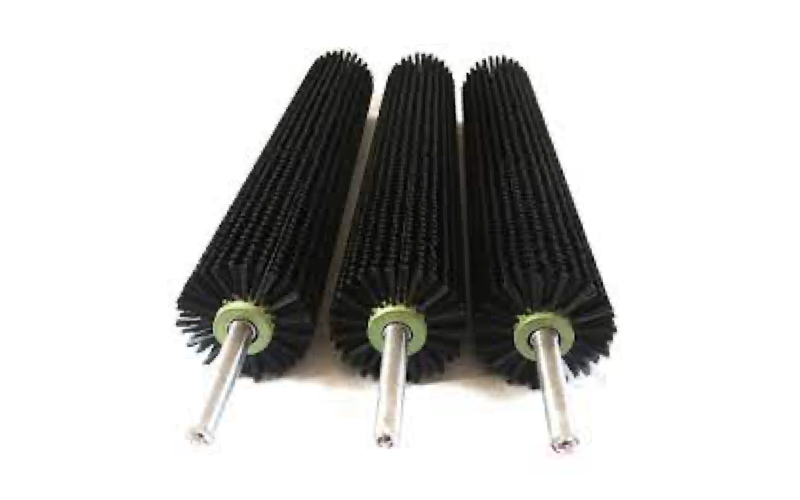
FAQ
Q1: Does a cylinder brush replace the primary and secondary scrapers?
No. Blades and brushes do different jobs. A blade removes bulk material by pressure, while a brush removes the film and fines a blade cannot reach. Fitting a brush with no blade in front of it usually makes conditions worse, because the bristles fling wet material instead of clearing it.
Q2: How do I set brush pressure so it cleans without wearing the belt?
Work from tip interference rather than pressure. Set the tips 2 to 5 mm into the belt surface, run the brush slightly faster than the belt in the opposite direction, and check the contact print across the face width. If cleaning is still incomplete, change the filament grade rather than increasing the interference.
Q3: Can one brush handle both a flat belt and a chevron or cleated belt?
Not with the same settings. A profiled or cleated belt needs bristles long enough to reach the valleys between raised features and a contact angle that lets the tips ride over the ridges instead of catching them. A brush set for a smooth belt wears unevenly and cleans poorly on a chevron belt.