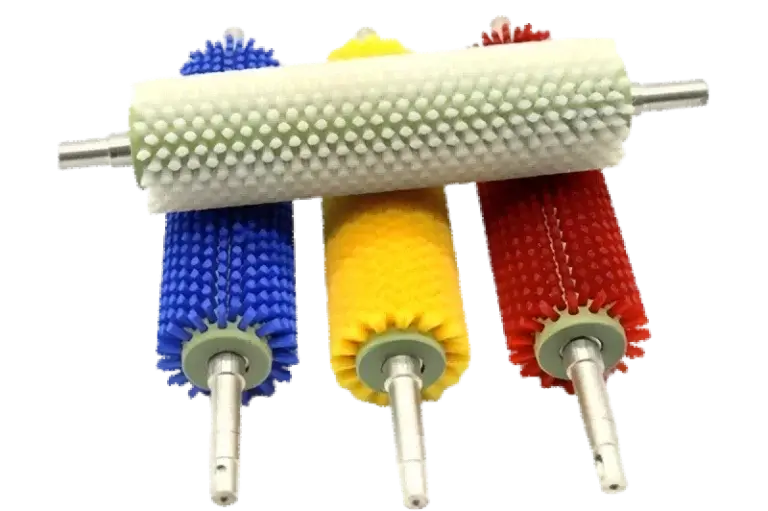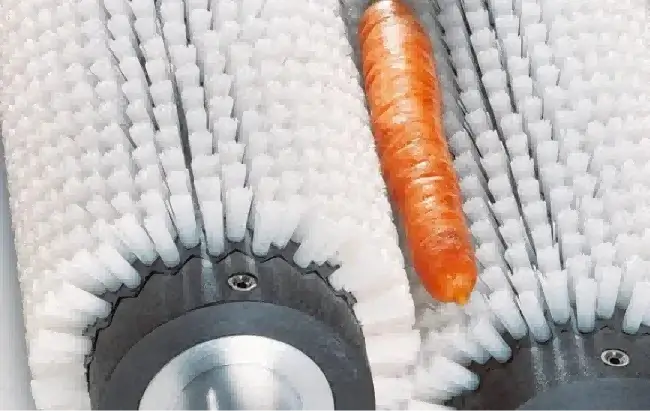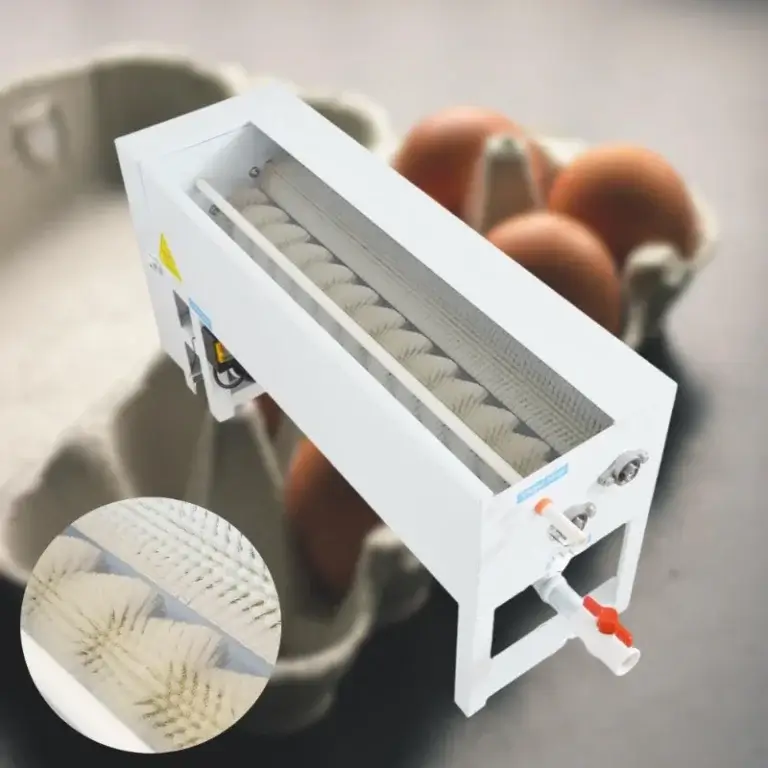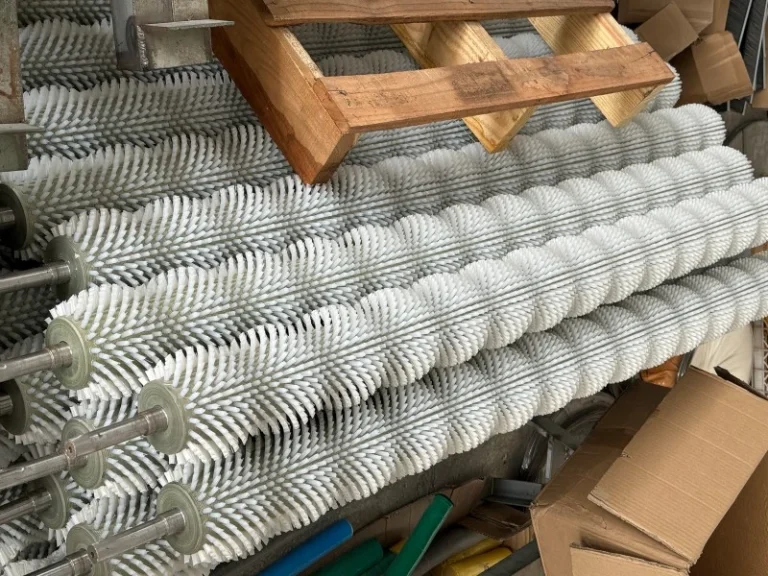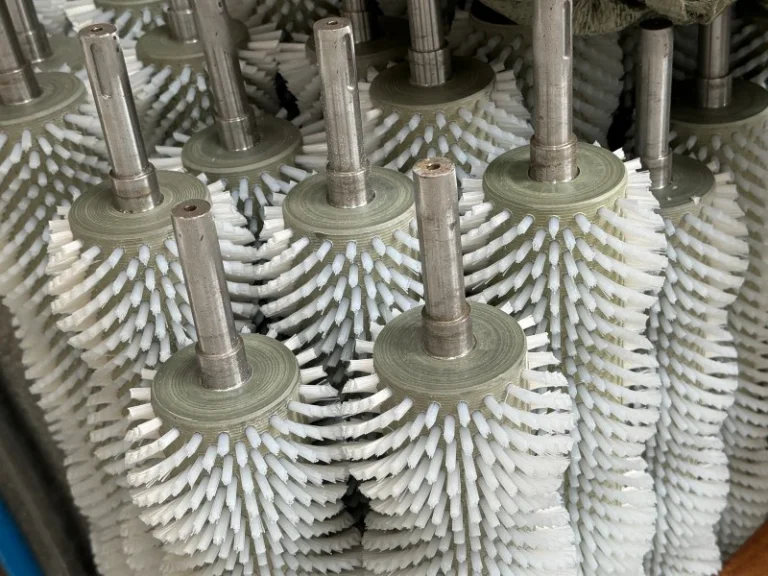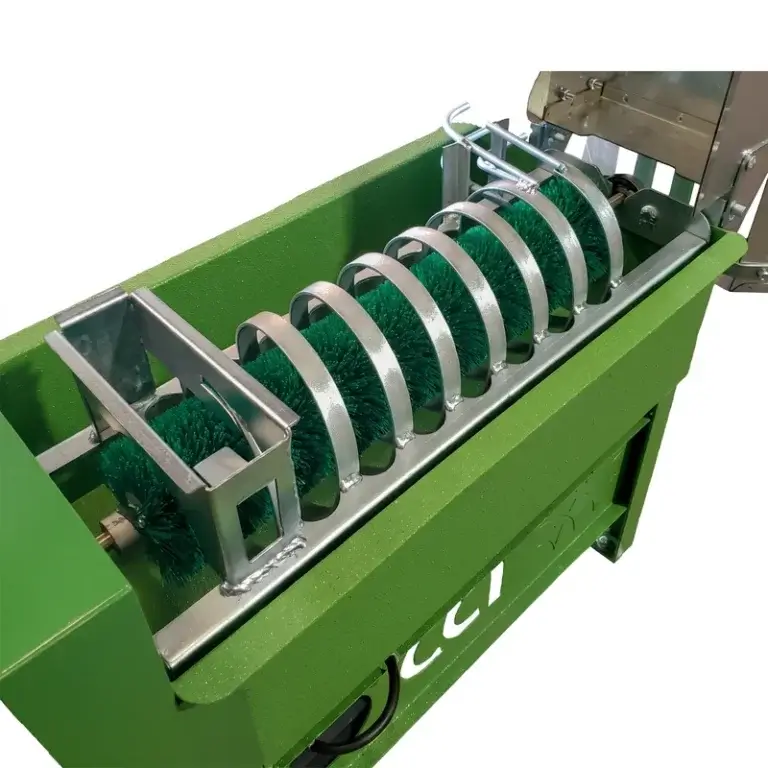
Most streaks on the fruit surface are not caused by poor wax or sloppy application. In most packing houses, the real culprit is the bristle density of the Fruit Polishing & Waxing Roller Brushes—and choosing the wrong pair for direct fruit polishing results in visible streaks, uneven coats, and a climbing reject rate that eats into your bottom line.
This article will explain how bristle density affects the quality of waxing, why “denser” does not always mean “better,” and what combination of factors truly eliminates defects of the wax line on a production scale.
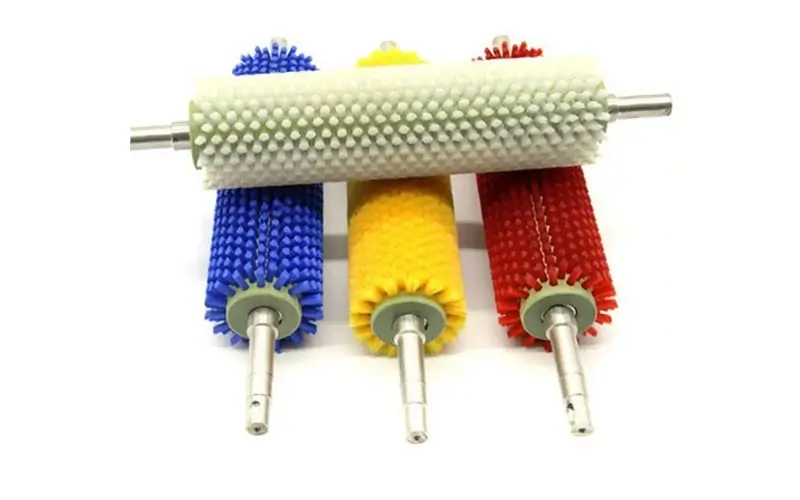
Improper Bristle Density Triggers Wax Streaks & Waste
To most fruit processing plants, the waxing roller is just another general consumable. They either choose the cheapest brush available in the market or reuse a standard fruit cleaning brush—the same one used for washing. Both shortcuts lead to the same end: uneven wax coverage, clear streaking, and lots of touch-ups.
Sparse bristle brushes and generic cleaning brushes cause most wax streaks.
Buyers are attracted by the lower unit cost of roll brushes with wide gaps between bristle tufts, but almost always, the gaps are too wide. These gaps concentrate the pressure onto narrow contact bands, which in turn push wax unevenly across the fruit skin. The result is alternate thick and thin lines, the classic “stripe” defect.
Problems that compound over time:
- Fatigue in the bristles occurs when fewer filaments share each load, so the individual bristles will bend and flatten more quickly.
- The defect rate, as the tufts deform, the gaps continue to widen further, and the streaks become more pronounced.
Hidden cost: The savings on initial investment in frequent brush replacements, increased rework labor, and higher fruit rejection rates do not pay off.
Most standard cylindrical cleaning brushes for washing fruits come with a low-density tuft pattern. They are great at scrubbing dirt and residues but do not have the close filament spacing to spread a thin wax film. This is one of the most frequent and costly mistakes regarding fruit packing lines. A wash brush for waxing is a mistake—simple, but one that comes at quite a price.
Operators need to have cleaning and waxing of brushes set as distinct line items right from the beginning to ensure proper performance at each stage.
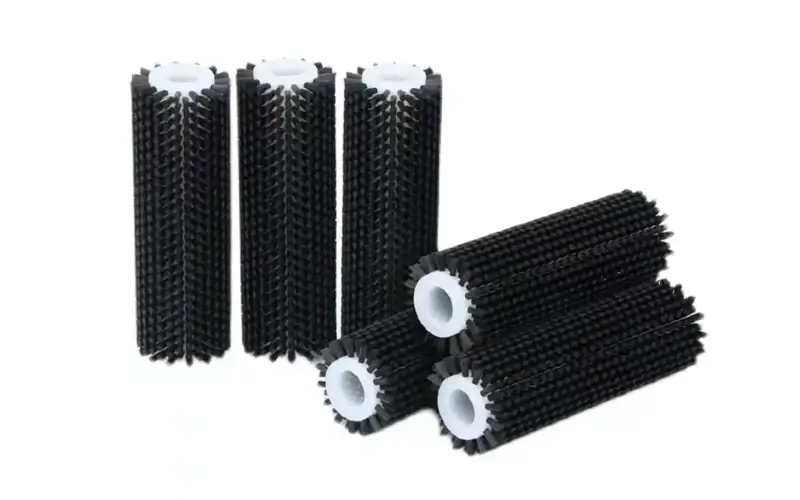
Balanced High-Density Cross Brushes Fix Streaks
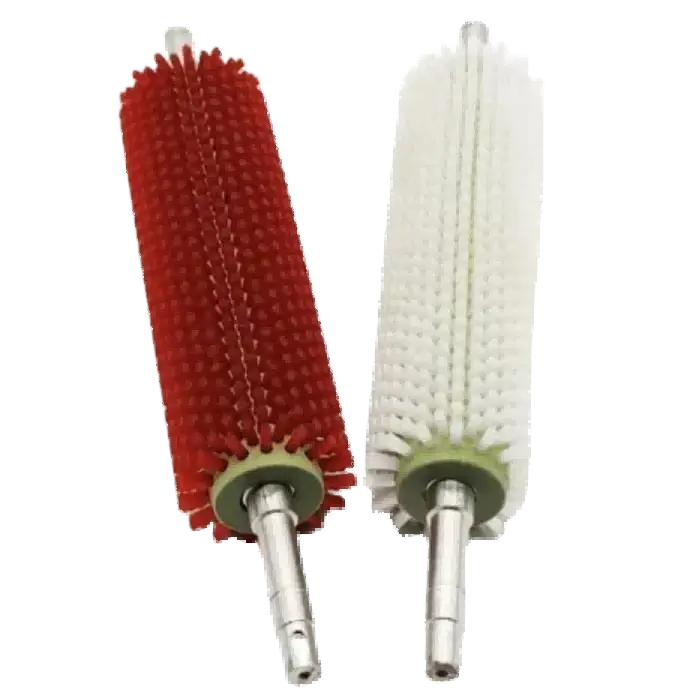
An ideal fruit polishing & waxing roller brush would have bristles arranged in a crosshatch pattern with high density so that virtually no space is left between the rows of filaments. The merits of this design are threefold:
- Even wax distribution—The bristles will be laid so close that they will spread the liquid wax as a thin, continuous layer, not in droplets.
- Pressure dispersion—More filaments come into contact with each fruit at the same time.
- No wax skipping—No gaps are left between the tufts; hence, there is no bare area where the wax does not reach the surface of the peel.
However, beyond the optimal range, more bristles pose new problems:
- Excess density traps wax between filaments—forming clumps that deposit thick, blotchy patches on the fruit.
- Overly tight packing accelerates filament-to-filament friction. It also generates more heat and wear.
- The core of the brush is clogged with wax residue, and it hardens, making it quite difficult to clean since this blocks the bristles, hence shortening the service life of the brush.
A realistic goal would be to fit into the density range of “medium-to-high,” which is tight enough to close all gaps and open enough to let wax flow and release naturally. A suitable nylon cylinder brush designed for waxing should be able to bring about this balance by using a controlled filament diameter and staggering the row angles.
Match Density, Shaft Precision & Line Speed
Even if the bristles are perfectly dense, and that is quite a big ‘if,’ if the roller shaft has some wobble, it will, of course, draw streaks. Micro-vibrations become noticeable at production speed when errors of concentricity, as tiny as 0.1 mm, exist; hence, it was decided that there should be two supporting factors for bristle density. Bristle density has two supporting factors in addition to it:
Shaft concentricity
A high-precision stainless steel shaft with tight runout tolerance will keep each row of bristles at an equal distance from the surface of the fruit. Shafts of low grade will flex under load—and that oscillation will mark a periodic streak pattern that no density setting will ever fix.
Line speed matching
Conveyors and rollers moving at faster speeds require higher density; it needs to be more proportional to ensure full contact over the surface per revolution. Running a medium-density brush too fast will open momentary gaps—and bring back the streaking.
Institutions that purchase a durable vegetable cleaning brush for their wash station—these are the places that usually comprehend the significance of good shafts. Will those same places be ready to establish a standard for the waxing station in completing the quality chain?
Standard Sparse Rollers vs High-Density Waxing Brushes
| Feature | Sparse / Generic Brush | Optimized High-Density Waxing Brush |
| Bristle gap | Wide, visible tuft spacing | Minimal, cross-pattern layout |
| Wax coverage | Uneven, streak-prone | Uniform, streak-free |
| Pressure distribution | Concentrated on a few tufts | Spread across a dense filament bed |
| Risk of clogging | Low (too open to trap wax) | Controlled (density tuned to wax viscosity) |
| Service life | Short with rapid bristle fatigue | The load is extended as it is shared across more filaments |
| Recommended use | Fruit washing only | Dedicated waxing & polishing |
| Long-term cost | Higher (rework + replacement) | Lower (less waste, longer lifespan) |
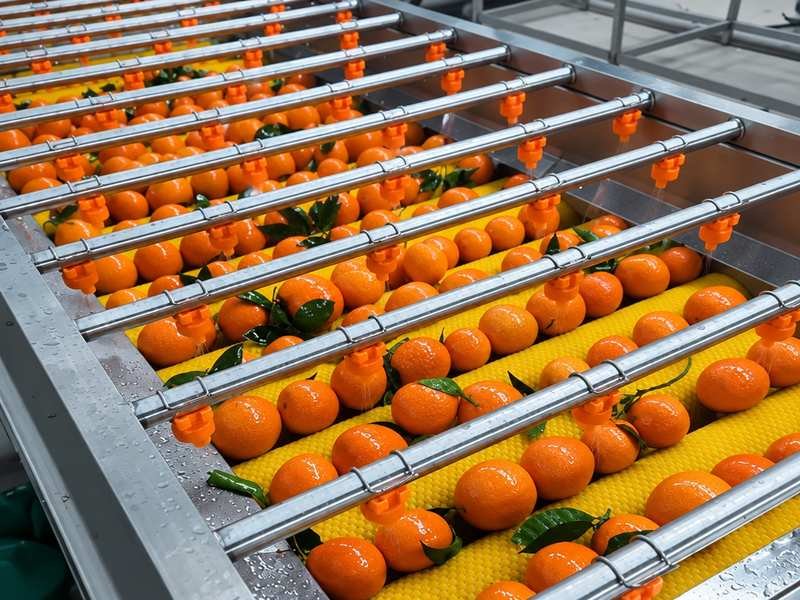
This makes the overall pass rate of a fruit packing line higher by separating wash and wax brushes and specifying the correct density for each. Units that source cylindrical cleaning brushes specifically rated for each process stage consistently report fewer quality complaints.
Frequently Asked Questions
Q1: What is the optimal bristle density range for most fruit-waxing lines?
A medium-to-high cross-pattern density, typically 80–120 tufts per row, works for standard citrus and apple waxing at moderate line speeds. A nylon cylinder brush of high quality with this specification will do the job consistently.
Q2: Can one roller brush do both washing and waxing?
No. The wash brushes use a lower density to create a scrubbing force. The fruit polishing and waxing roller brushes need tighter spacing for an even wax spread. Always keep different brush units for cleaning fruit, each designated for a specific purpose.
Q3: What is the replacement frequency of a waxing roller brush?
Regular usage will normally require replacement of high-density waxing rollers every 6 to 12 months. Check for any deformation of the bristles and wax build-up on them once a month. The premium fruit polishing & waxing and better-quality filament brush rollers may even last closer to the higher end of this range.