
Introduction
The global solar energy market has witnessed unprecedented growth over the past decade, with photovoltaic installations expanding across utility-scale solar farms, commercial rooftops, and residential properties. As solar capacity increases, so does the challenge of maintaining panel efficiency. Dust accumulation, bird droppings, pollen, and industrial pollutants can reduce photovoltaic output by 5% to 30% depending on location and environmental conditions. This has driven rapid adoption of automated PV Panel Cleaning Robots, which offer a labor-efficient and water-conserving alternative to manual cleaning methods.
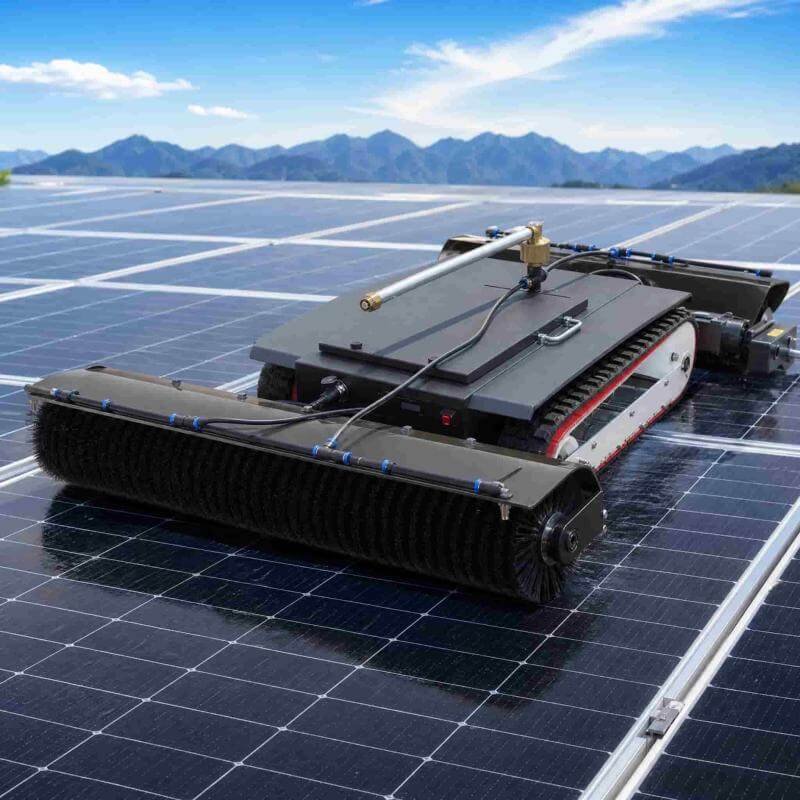
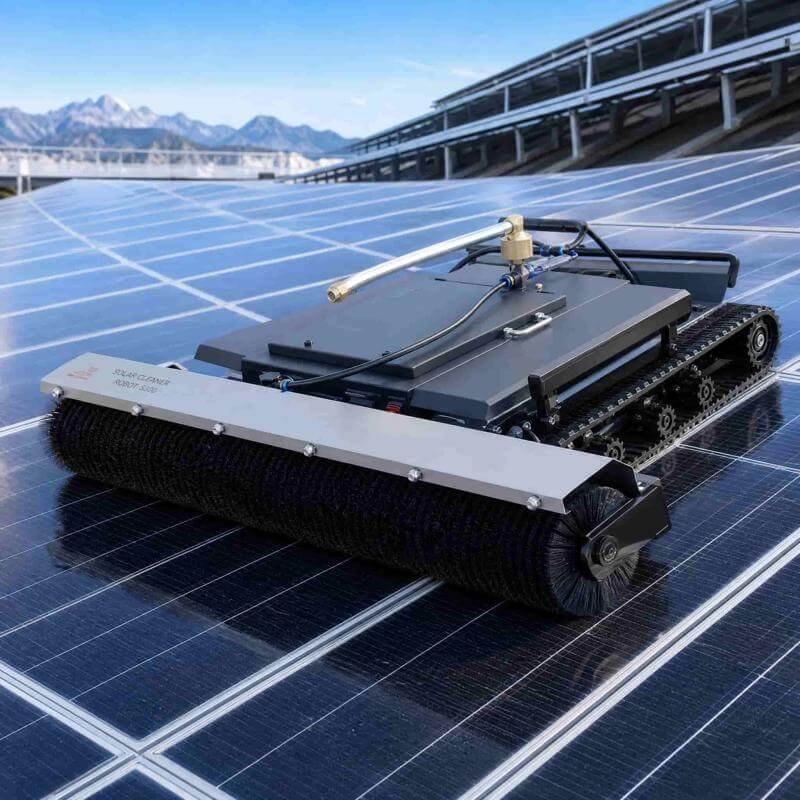
At the heart of every solar panel cleaning robot lies a critical yet often overlooked component: the cleaning brush. Whether it is a rotary solar panel brush mounted on an autonomous vehicle or a nylon cylinder brush integrated into a semi-automatic system, the material composition of the bristles directly determines cleaning effectiveness, panel surface safety, and long-term operational costs. Selecting the wrong material can lead to micro-scratches on tempered glass surfaces, accelerated bristle wear, or inadequate removal of stubborn contaminants, all of which undermine the very purpose of deploying a robotic cleaning solution.
The most widely recommended and industry-proven material for solar panel cleaning robot brushes is nylon (polyamide), specifically PA6 and PA66 grades. These materials offer the optimal balance of flexibility, abrasion resistance, and surface gentleness required for cleaning photovoltaic glass without causing damage. Polypropylene (PP) and PBT serve as alternatives for specific use cases, while advanced composite filaments address niche heavy-soiling scenarios.
For procurement managers, maintenance engineers, and solar farm operators evaluating cleaning equipment, understanding brush material science is not merely a technical detail; it is a decision with direct financial and operational consequences. The right brush for cleaning solar panels can extend equipment lifespan, reduce replacement frequency, and maintain peak energy output across thousands of modules. The wrong choice can result in panel degradation, warranty voids, and unnecessary downtime.
This article provides a comprehensive analysis of brush materials used in solar panel cleaning robots. It examines the properties of nylon, polypropylene, and specialty filaments; explores key technical parameters including bristle diameter, density, and bending strength; and offers actionable guidance for matching brush specifications to real-world operating environments.
Why Brush Material Is the Most Critical Component in Solar Panel Cleaning Robots
The brush material in a solar panel cleaning robot is the single most important factor affecting cleaning performance, panel surface safety, and total cost of ownership. Unlike stationary components such as the chassis or drive system, the brush makes direct physical contact with the photovoltaic glass surface at hundreds of rotations per minute. Any material deficiency—whether excessive hardness, poor abrasion resistance, or inadequate chemical stability—will manifest as either suboptimal cleaning or irreversible panel damage within the first few hundred cleaning cycles.
Modern photovoltaic modules feature tempered glass surfaces with anti-reflective (AR) coatings that are engineered to maximize light transmission. While tempered glass is durable, repeated mechanical contact from an improperly specified brush can generate micro-abrasions that scatter light and permanently reduce panel efficiency. This is why leading solar farm operators and EPC contractors increasingly specify brush material requirements in their procurement documents alongside robot navigation accuracy and water consumption metrics.
The cleaning mechanism of a rotary brush relies on the mechanical action of bristle tips dislodging particulate matter from the glass surface. This action involves a complex interplay of material properties. The bristles must possess sufficient stiffness to overcome the adhesion forces holding dust and contaminants in place, yet enough flexibility to deflect upon contact rather than gouge the surface. They must maintain these mechanical characteristics across a wide temperature range, as solar farms in desert regions experience surface temperatures exceeding 70 degrees Celsius during peak operation, while installations in temperate climates may encounter near-freezing conditions during early morning cleaning cycles.
Beyond mechanical considerations, chemical resistance plays a crucial role. Many solar panel cleaning robots operate with water-assisted or waterless cleaning modes. In water-assisted systems, the brush material must resist hydrolysis and maintain its mechanical properties when continuously exposed to moisture. In regions where hard water is prevalent, mineral deposits can accumulate on bristles, altering their stiffness over time. Chemical resistance also matters when cleaning solutions or detergents are introduced—a practice common in areas with oily residues from agricultural or industrial activity.
The economic dimension further underscores the importance of material selection. A typical utility-scale solar installation may contain hundreds of thousands of individual panels, each requiring regular cleaning. Brush replacement represents a recurring operational expenditure. A nylon cylinder brush made from high-grade PA66 may cost more upfront than a PP alternative, but if it delivers three times the service life while preserving panel integrity, the lifecycle cost advantage is substantial. Operators must therefore evaluate brush material not as a commodity purchase price but as a long-term investment in cleaning system reliability.
Nylon (Polyamide) as the Gold Standard for PV Cleaning Brushes
Nylon—specifically polyamide grades PA6 and PA66—is universally recognized as the optimal brush filament material for solar panel cleaning robots. Its unique combination of high elasticity, excellent abrasion resistance, and surface-friendly softness makes it the only material that reliably satisfies the dual requirements of effective contaminant removal and zero surface damage on anti-reflective coated photovoltaic glass.
The dominance of nylon in the solar cleaning industry stems from its molecular structure. Polyamide polymers feature amide groups that form strong hydrogen bonds between adjacent polymer chains, creating a material that is both tough and flexible. This translates into bristles that can withstand millions of flexural cycles without fracturing—a critical property given that a rotary solar panel brush operating at 300 to 400 RPM will subject each bristle to tens of thousands of deformation cycles per hour of operation.
Within the nylon family, PA66 offers the highest performance ceiling for demanding solar applications. With a density of 1.14 g/cm³, tensile strength of approximately 100 MPa, and elastic modulus of 3,200 MPa, PA66 filaments deliver the structural integrity needed for high-speed rotary brushes while retaining sufficient compliance to protect glass surfaces. Its heat deflection temperature—typically above 70 degrees Celsius under load—ensures that bristles maintain consistent stiffness even when cleaning panels in direct midday sunlight. Furthermore, PA66 demonstrates excellent low-temperature resilience, remaining flexible without becoming brittle in conditions as cold as minus 30 degrees Celsius, which is particularly relevant for solar installations in cold climate regions where snow removal is part of the cleaning mandate.
PA6 represents a slightly softer and more cost-effective nylon alternative. While its heat resistance is modestly lower than PA66, with a melting point around 215 to 225 degrees Celsius compared to 230 to 250 degrees Celsius for PA66, it offers superior impact strength and a smoother surface finish. This makes PA6 an excellent choice for cleaning robots deployed in moderate climates where extreme temperature cycling is less of a concern. Many brush manufacturers offer both PA6 and PA66 options, allowing solar farm operators to calibrate their selection based on environmental severity and budget constraints.
The wear resistance of nylon filaments deserves particular attention. In standardized abrasion testing, nylon consistently outperforms polypropylene and PBT by a significant margin. The self-lubricating properties inherent to polyamide chemistry reduce friction between bristles and the glass surface, which not only extends brush life but also minimizes the power draw on the cleaning robot’s drive motor. This energy efficiency aspect has grown in importance as the industry trends toward battery-powered autonomous cleaning units where every watt-hour of consumption affects operational range and cleaning throughput.
From a water exposure standpoint, nylon does absorb moisture—PA6 can absorb up to 8.5% water at saturation, while PA66 absorbs approximately 2.5%. This water absorption actually provides a benefit in the cleaning context: slightly hydrated nylon bristles become more flexible and less abrasive, further reducing any risk of surface scratching. However, brush system designers must account for this dimensional change when specifying filament length and density, as swollen bristles in fully saturated conditions will alter the effective brush diameter and contact pressure.
Polypropylene, PBT, and Alternative Brush Materials Compared
Polypropylene (PP) and PBT (polybutylene terephthalate) serve as viable alternative brush materials for solar panel cleaning robots in specific scenarios, though neither matches nylon’s comprehensive performance profile. PP offers cost advantages and excellent chemical resistance but suffers from lower abrasion resistance and a harder surface that may pose risks for delicate AR-coated panels. PBT provides intermediate performance with good dimensional stability and moderate hardness, making it suitable for lighter-duty or budget-constrained applications where the highest level of surface protection is not mandatory.
The following table provides a comparative analysis of the three primary brush filament materials used in solar panel cleaning applications:
| Property | Nylon PA66 | Nylon PA6 | Polypropylene (PP) | PBT |
| Density (g/cm³) | 1.14 | 1.13 | 0.90–0.91 | 1.31 |
| Tensile Strength (MPa) | ~100 | ~75 | ~35 | ~55 |
| Elastic Modulus (MPa) | 3,200 | ~2,800 | ~1,500 | ~2,500 |
| Heat Deflection Temperature (°C) | 70–90 | 60–75 | 50–60 | 60–70 |
| Water Absorption (%) | 2.5 | 8.5 | <0.1 | <0.1 |
| Abrasion Resistance | Excellent | Very Good | Moderate | Good |
| Surface Hardness | Medium-Soft | Soft | Medium-Hard | Medium |
| UV Resistance | Good (with stabilizers) | Good (with stabilizers) | Fair (requires additives) | Good |
| Relative Cost | High | Medium-High | Low | Medium |
| Best Use Case | Heavy-duty, all-climate | Moderate climates | Dry, low-abrasion | Light-duty, budget |
Polypropylene’s primary appeal lies in its low material cost and excellent chemical resistance. With near-zero water absorption, PP bristles maintain dimensional stability regardless of humidity or direct water exposure. This property can be advantageous in fully submerged cleaning systems or high-humidity environments. However, PP filaments are inherently stiffer than nylon and lack the elastic recovery that allows nylon bristles to spring back after deformation. Over extended use, PP bristles tend to develop permanent bends, reducing cleaning contact area and effectiveness. The harder surface of PP also warrants caution; while PP does not typically scratch tempered glass under light contact, the margin of safety is narrower than with nylon, particularly on panels with specialized nanocoatings.
PBT occupies a middle ground. Its mechanical properties fall between those of PP and nylon, offering better abrasion resistance than PP and greater dimensional stability than nylon. PBT’s lower moisture absorption and good chemical resistance make it suitable for environments where cleaning solutions or atmospheric pollutants are present. Its moderate hardness and decent flexural recovery position it as a practical choice for entry-level or intermittent-use cleaning robots where the performance premium of nylon cannot be economically justified.
Beyond these three mainstream materials, niche applications may call for specialty filaments. Composite nylon filaments embedded with abrasive particles such as silicon carbide have been developed for removing stubborn deposits like cement dust or industrial residues. These materials demand careful engineering controls to prevent panel damage and are generally reserved for heavy-soiling scenarios where conventional nylon brushes cannot achieve adequate cleaning within acceptable cycle times. Ultra-soft microfiber or natural fiber blends, conversely, are occasionally specified for experimental or high-value photovoltaic installations where absolute surface preservation takes precedence over cleaning speed.
Key Technical Specifications for Selecting a Rotary Solar Panel Brush
Selecting the optimal rotary solar panel brush requires evaluating five interdependent technical parameters: filament material grade, bristle diameter, bristle length, bristle density or fill pattern, and brush outer diameter. Each specification influences not only cleaning performance but also motor load, energy consumption, and panel surface contact pressure. A properly specified nylon cylinder brush typically features filament diameters between 0.15 mm and 0.30 mm, outer diameters ranging from 100 mm to 300 mm, and medium-density winding patterns that balance aggressive cleaning with surface gentleness.
Bristle diameter is perhaps the most consequential specification after material choice. Finer filaments in the 0.15 mm to 0.20 mm range produce a softer brush face that conforms more readily to minor panel surface irregularities, ensuring consistent contact pressure across the full cleaning width. These thinner bristles excel at removing fine dust and airborne particulate, which constitute the majority of soiling on most solar farms. However, they offer less mechanical force against caked-on contaminants. Thicker filaments in the 0.25 mm to 0.30 mm range provide greater stiffness and scrubbing power for bird droppings, pollen residue, and light mud deposits, at the cost of slightly higher surface contact pressure that must be carefully managed.
Brush outer diameter directly affects the cleaning footprint and circumferential speed at a given rotational rate. The relationship between diameter, RPM, and circumferential speed follows the equation:
Circumferential Speed (m/s) = π × Diameter (m) × RPM / 60For a typical solar panel cleaning robot operating at 300 to 400 RPM, a brush with a 150 mm diameter achieves a circumferential speed of approximately 2.4 to 3.1 meters per second. Larger diameters of 280 mm to 300 mm, commonly found on heavy-duty cleaning platforms, increase this to 4.4 to 6.3 meters per second at the same RPM. Higher circumferential speeds generally improve cleaning efficiency by increasing the frequency of bristle-to-surface contact, but they also accelerate bristle wear and increase motor current draw. System integrators must balance these trade-offs when specifying the brush and drive motor combination.
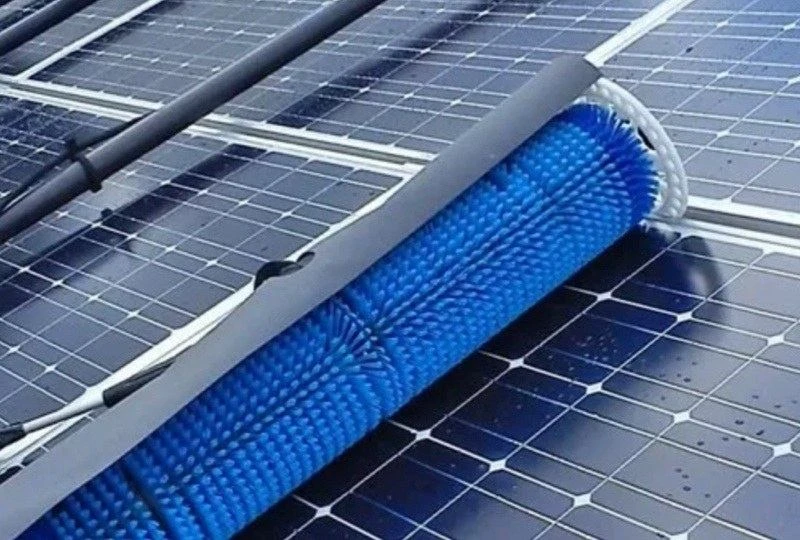
Bristle density and winding pattern represent additional design variables. The following table summarizes common configurations and their performance characteristics:
| Fill Pattern | Bristle Density | Cleaning Aggressiveness | Surface Safety | Best Application |
| Straight/Linear | Low-Medium | Low | High | Light dust, frequent cleaning schedules |
| Spiral/Helical | Medium | Medium | High | General-purpose, moderate soiling |
| Double Spiral | Medium-High | Medium-High | Medium-High | Mixed contaminants, less frequent cleaning |
| Wavy/Crimped | High | High | Medium | Stubborn deposits, stubble-resistant |
| Full-Face/Tufted | Very High | Very High | Medium | Heavy industrial soiling |
Spiral and double spiral patterns are the most common in commercial solar panel cleaning robots because they provide a good compromise between cleaning coverage, debris channeling, and bristle self-cleaning. The spiral configuration creates a natural path for dislodged dust and water to exit the brush contact zone, reducing re-deposition on cleaned panel sections.
How to Match Brush Material to Your Operating Environment
Matching brush material to the specific operating environment is the decisive factor that separates high-performing solar panel cleaning robots from those that deliver inconsistent results or cause premature panel wear. Desert installations demand maximum heat resistance and abrasion durability from nylon PA66 filaments; coastal sites require chemical resistance to salt spray; agricultural regions need brushes capable of handling sticky organic residues; and cold-climate installations prioritize low-temperature flexibility and snow removal effectiveness.
Environmental matching begins with a thorough analysis of the primary soiling types present at the installation site. The following decision framework guides material and specification selection:
Desert and Arid Environments: Solar farms in regions such as the Middle East, North Africa, and the southwestern United States face predominantly mineral dust contamination. Fine silica particles adhere electrostatically to panel surfaces and require consistent mechanical action for removal. The extreme diurnal temperature swing—from near-freezing at dawn to over 70 degrees Celsius on the glass surface at midday—demands the thermal stability of PA66 nylon. In these environments, brush specifications should favor medium bristle diameters (0.20 mm to 0.25 mm) with spiral winding patterns at moderate densities to efficiently channel dust away from cleaned surfaces. Daily or near-daily cleaning schedules are typical, meaning bristle wear accumulates rapidly; nylon’s superior abrasion resistance delivers clear economic benefits here.
Coastal and Marine Environments: Salt spray deposition creates a challenging cleaning scenario. Sodium chloride crystals not only reduce light transmission but also act as mild abrasives when mechanically agitated. Polypropylene’s inherent chemical resistance to salt and near-zero water absorption make it a plausible choice, but its abrasion resistance limitations often relegate it to secondary roles. Nylon PA66 with UV stabilizers remains the preferred primary brush material, complemented by more frequent fresh-water rinsing cycles to prevent salt accumulation within the brush structure itself. Bristle diameters at the finer end (0.15 mm to 0.18 mm) reduce the risk of salt crystal abrasion against the panel surface.
Agricultural and Rural Environments: Pollen, harvest dust, and bird droppings dominate the soiling profile in agricultural regions. Bird droppings are particularly problematic due to their acidic composition and tendency to bake onto hot panel surfaces. Here, nylon PA6 offers an excellent balance: its slightly softer nature compared to PA66 provides the conformability needed to clean around baked-on residues without excessive pressure, while its impact resistance handles the irregular loading patterns that occur when the brush encounters partially dried organic deposits. Medium bristle densities with spiral patterns allow organic debris to clear the brush path efficiently.
Industrial and High-Pollution Zones: Installations near factories, cement plants, or mining operations face heavy particulate loading, sometimes with chemically active components. Composite or abrasive-embedded nylon filaments may be warranted for initial bulk cleaning passes, followed by a secondary conventional nylon brush for finishing. This dual-brush architecture, while mechanically more complex, prevents the excessive surface contact that would result from attempting to remove heavy industrial deposits with a single brush pass.
Cold Climate and Snow-Prone Regions: Solar installations in northern latitudes or high-altitude locations often require snow clearing in addition to dust removal. The low-temperature flexibility of nylon—particularly PA66, which retains elasticity well below freezing—makes it the only viable material for brushes that must function at minus 20 degrees Celsius or colder. Bristle diameters should trend toward the upper range (0.25 mm to 0.30 mm) to provide the mechanical force needed to break and sweep light snow accumulations, while monitoring systems should ensure that the brush does not contact bare ice, which can be harder than some AR coatings.
Maintenance Best Practices for Extending Nylon Cylinder Brush Lifespan
Regular inspection and proactive maintenance of nylon cylinder brushes can extend their service life by 30% to 50% compared to run-to-failure approaches. Key practices include monthly visual inspection for bristle deformation and wear patterns, periodic cleaning of the brush to remove embedded contaminants, monitoring of brush diameter loss as a wear indicator, and scheduled rotation or swapping of brushes in multi-brush systems to equalize wear distribution.
The most common failure mode for nylon cylinder brushes in solar panel cleaning robots is not catastrophic bristle breakage but progressive diameter loss through abrasive wear. As bristle tips gradually erode, the effective brush outer diameter decreases, reducing the contact pressure and circumferential speed at the cleaning interface. Operators should establish a baseline diameter measurement for each new brush installation and track reduction over time. When diameter loss exceeds 15% to 20% of the original specification, cleaning performance degradation becomes measurable, and replacement should be scheduled.
Visual inspection provides early warning of developing issues. Technicians should look for the following indicators during each inspection cycle:
Uneven wear patterns along the brush length, which may signal misalignment between the brush axis and the panel surface. This condition concentrates wear on a narrow band of bristles, accelerating replacement frequency and potentially creating streaking patterns on cleaned panels.
Bristle tip mushrooming or splitting, which indicates that the filament material is exceeding its elastic deformation limit during cleaning cycles. This can result from excessive rotational speed, overly aggressive bristle density, or operation on panels with unusually rough surface conditions.
Entrapped debris within the bristle matrix, particularly in spiral-wound brush configurations. Sand, small stones, and hardened organic matter can lodge between bristle rows and act as secondary abrasives during subsequent cleaning cycles. Periodic brush cleaning with compressed air or low-pressure water helps prevent this accumulation.
Chemical discoloration or embrittlement of bristles suggests exposure to incompatible cleaning agents or atmospheric pollutants. If chemical damage is suspected, the cleaning solution formulation should be reviewed, and more chemically resistant filament grades should be considered for future brush purchases.
For large-scale solar installations operating multiple cleaning robots, implementing a brush management program with documented service records yields the best lifecycle outcomes. Tracking the operating hours, environmental conditions, and replacement intervals for each brush provides data that can refine procurement specifications over time. A well-documented program also enables predictive replacement scheduling, ensuring that brushes are changed during planned maintenance windows rather than after performance degradation triggers reactive service calls.
Conclusion
The brush material in a solar panel cleaning robot is far more than a commodity consumable; it is a precision-engineered component whose specifications directly determine cleaning efficacy, panel longevity, and operational economics. Nylon—particularly PA66 and PA6 grades—has earned its position as the industry standard through a compelling combination of tensile strength, elastic recovery, abrasion resistance, and surface gentleness that no alternative material has yet matched across the full spectrum of operating environments.
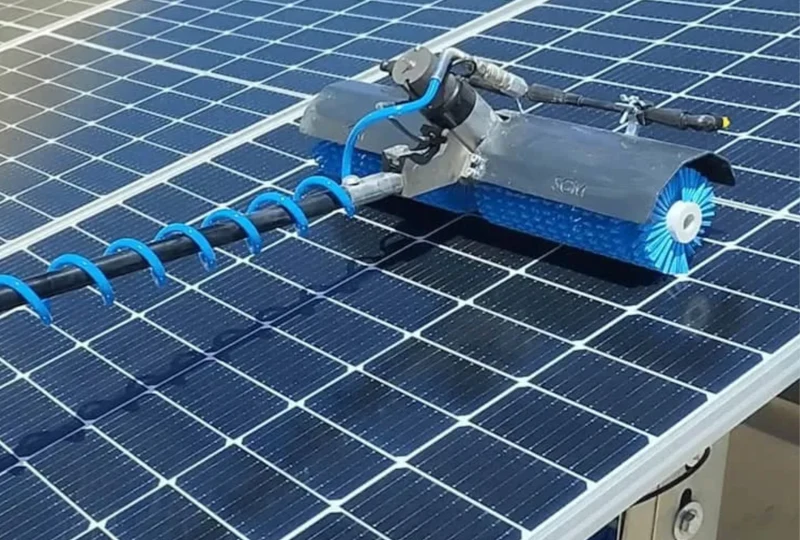
The key takeaways for anyone specifying or procuring a brush for cleaning solar panels are as follows:
First, prioritize nylon PA66 for installations in high-temperature, high-abrasion environments such as deserts and industrial zones. Its thermal stability and wear resistance justify the cost premium through extended service intervals and consistent cleaning quality. Second, consider nylon PA6 as a cost-effective alternative for moderate climates where extreme temperature cycling is not a critical factor—it delivers the majority of PA66’s benefits at a more accessible price point. Third, view polypropylene and PBT as specialized solutions for niche applications rather than general-purpose substitutes; their lower abrasion resistance and harder surface profiles introduce incremental risk that must be assessed against the specific soiling profile and panel coating type.
Beyond material selection, pay equal attention to the interdependent technical specifications of bristle diameter, brush outer diameter, fill pattern, and operational parameters such as rotational speed. A well-specified nylon cylinder brush operating at optimized RPM within a properly maintained cleaning robot will deliver years of reliable service while preserving the photovoltaic panels that represent a multi-million-dollar capital investment.
As the solar industry continues its rapid expansion, the performance demands on cleaning systems will only intensify. Panel efficiencies are rising, AR coatings are becoming more sophisticated, and operational budgets are under constant pressure. In this context, the humble rotary solar panel brush stands as a small but essential component whose careful specification yields outsized returns in energy production and asset preservation. Investing the time to understand brush material science today pays dividends in panel performance for decades to come.