Solar energy systems represent a significant capital investment for businesses and homeowners alike, yet one of the most overlooked aspects of system upkeep is panel cleaning. Research from the National Renewable Energy Laboratory (NREL) and the International Energy Agency (IEA) Photovoltaic Power Systems Programme confirms that soiling, the accumulation of dust, pollen, salt, and organic debris on panel surfaces, causes an average annual energy loss of 4 to 7 percent globally. In dust-heavy or coastal regions, individual systems can lose 15 to 25 percent of their generation capacity. Despite these well-documented losses, many system owners operate under the misconception that rainfall alone handles cleaning, when in reality seasonal and regional factors demand a far more intentional approach.
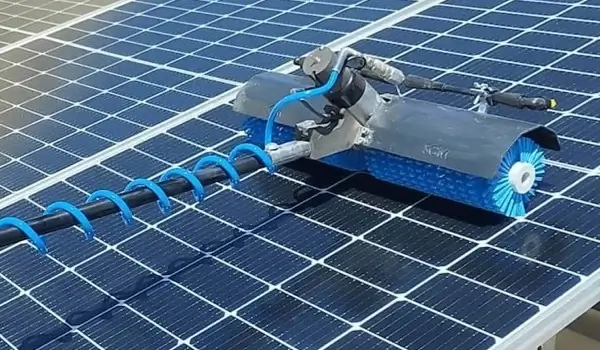
Solar panel cleaning frequency is determined primarily by your local climate. Arid desert regions require quarterly cleaning; temperate zones with regular rainfall may need only one or two cleanings per year, and coastal or high-pollen areas fall somewhere in between, at two to three cleanings annually. The right maintenance strategy using a Brush for Cleaning Solar Panels—aligned with seasonal soiling patterns—can recover 10 to 30 percent of lost output and extend system lifespan.
Every climate zone presents a unique soiling profile that shifts with the calendar. A system installed in Phoenix faces fundamentally different challenges in March than one in Seattle, and both differ dramatically from a rooftop array in Miami. Understanding these patterns is not merely academic; it is the difference between a system that operates at peak efficiency year-round and one that silently bleeds value through preventable losses. What follows is a detailed breakdown of climate-driven cleaning frequency, seasonal soiling cycles, brush maintenance best practices, cost analysis, and a practical framework for building a maintenance schedule that matches your specific environment.
How Different Climates Dictate Cleaning Schedules
Your geographic climate zone is the single most important factor in determining how often solar panels need cleaning. Arid and semi-arid regions demand quarterly cleaning due to persistent dust and minimal rainfall, while temperate maritime climates may require only annual maintenance. Coastal, agricultural, and high-pollen zones fall into an intermediate category requiring two to three cleanings per year.
Climate influences soiling through three primary mechanisms: precipitation frequency, airborne particulate concentration, and the chemical composition of local contaminants. In desert environments such as the American Southwest, the Middle East, and parts of Australia, fine dust and sand particles settle continuously on panel surfaces. A landmark study by Jan Kleissl at UC San Diego tracked 186 California solar sites and documented a 7.4 percent efficiency loss after just 145 days without rain or cleaning. In more extreme cases, research published in Nature Scientific Reports found that systems in the Atacama Desert experienced soiling losses reaching 39 percent annually. The absence of regular rainfall means there is no natural rinsing mechanism, and intense sunlight bakes accumulated dust into a hardened film that becomes progressively harder to remove.
Coastal environments introduce an entirely different challenge: salt spray. Sodium chloride crystals deposited by ocean breezes create a hazy film that diffuses incoming light and, over time, can corrode panel frames and mounting hardware. Regions such as the Gulf Coast, Hawaii, and Mediterranean shorelines see salt accumulation compounded by high humidity, which encourages mold and algae growth on panel surfaces. Industrial and urban areas add yet another variable with oily particulate matter from vehicle exhaust and manufacturing processes. This type of residue is particularly problematic because it resists rainwater rinsing and requires mechanical agitation from soft-bristled brushes to dislodge.
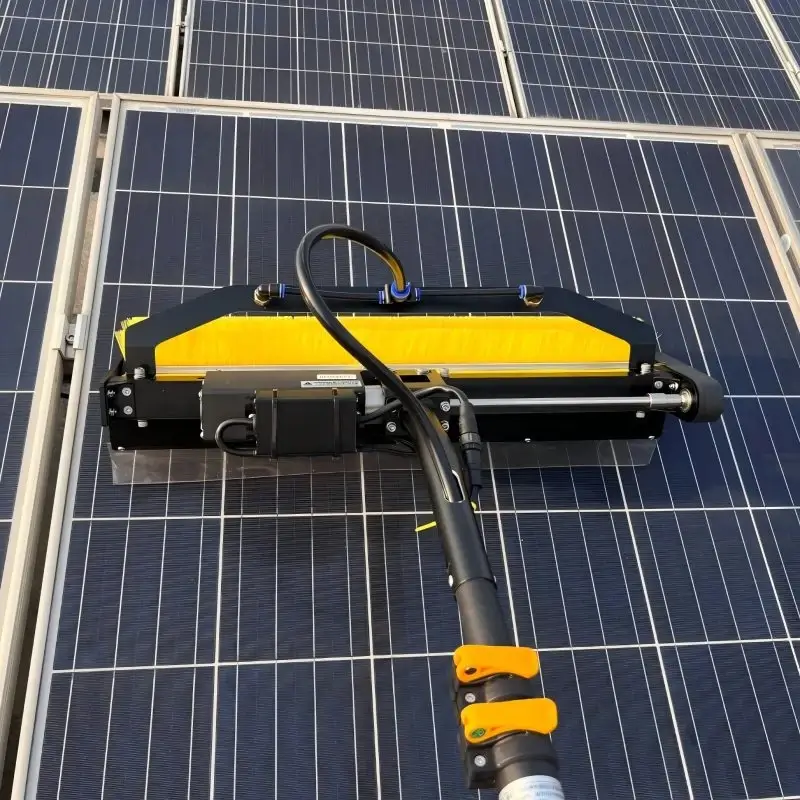
The table below summarizes recommended cleaning frequencies by climate type:
| Climate Type | Example Regions | Recommended Frequency | Primary Soiling Agents |
| Arid / Desert | AZ, NV, NM, Middle East, Australian Outback | Every 3 to 4 months | Fine dust, sand, baked mineral deposits |
| Mediterranean / Coastal | Southern California, Greece, Spain Coast | Every 4 to 6 months | Salt spray, marine layer, moderate dust |
| Humid Subtropical | Southeastern US, East Asia, Brazil | Every 4 to 6 months | Pollen, mold, bird droppings, high humidity residue |
| Temperate Continental | Midwest US, Central Europe, Northern China | 1 to 2 times per year | Seasonal dust, pollen, and agricultural debris |
| Maritime / Rainy | Pacific Northwest, UK, New Zealand | Once per year | Tree debris, moss, lichen (rain keeps dust low) |
| Tropical Volcanic | Hawaii, Indonesia, Philippines | Every 3 to 4 months | Volcanic haze, salt air, red dirt, tropical pollen |
These are starting recommendations. System owners should validate frequency against actual monitoring data and adjust upward if production drops exceed 10 percent of expected output.
The Four Seasons of Solar Soiling: What Each One Brings
Each season introduces a distinct soiling profile that demands specific cleaning responses. Spring brings heavy pollen loads, summer accelerates dust and bird dropping accumulation, autumn adds falling leaves and organic debris, and winter presents snow, ice, and low-angle sunlight challenges that make panel cleanliness especially critical.
Understanding seasonal soiling patterns allows maintenance teams to move from reactive cleaning to proactive scheduling, reducing the cumulative efficiency penalty that builds when panels sit dirty for months.
Spring: Pollen and Post-Winter Residue
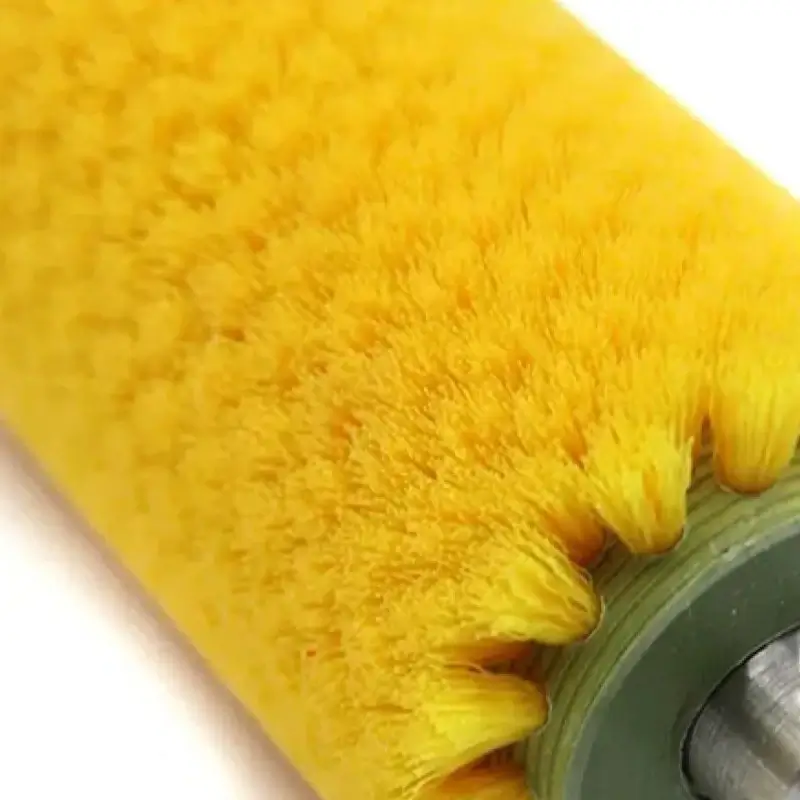
Spring is the most aggressive soiling season for many temperate and subtropical regions. Tree pollen, grass pollen, and flowering plant debris coat outdoor surfaces with a sticky yellow-green film. In the Southeastern United States, the spring pollen season can deposit enough material to block 5 to 10 percent of light transmission within a matter of weeks. This pollen crust does not rinse off with light rain; it requires mechanical scrubbing with a soft-bristle solar panel brush and purified water to fully remove. Spring cleaning should be scheduled immediately after the primary pollen peak in your region, typically late April to mid-May in the Northern Hemisphere.
Summer: Dust, Heat, and Bird Activity
Summer introduces a combination of dry conditions, construction activity, and increased bird presence. In desert and Mediterranean climates, summer is the peak dust accumulation period with virtually no rainfall to provide natural cleaning. Bird droppings become a concentrated threat during summer months; a single dropping covering only a few square inches can reduce an individual panel output by 30 to 50 percent due to the way solar cells are wired in series. Heat also bakes contaminants onto the glass surface, making them harder to remove if cleaning is deferred. A mid-summer maintenance check is strongly advised for systems in arid, agricultural, and high-bird-activity zones.
Autumn: Organic Debris and Storm Aftermath
Falling leaves, seed pods, and organic matter present both soiling and shading risks in autumn. Wet leaves that adhere to panel surfaces can leave tannin stains and promote mold growth in the damp microclimate they create underneath. In regions affected by wildfire season, such as the Mountain West and parts of Australia, autumn often brings ash deposits that contain mildly abrasive particulates. This ash must be rinsed gently rather than scrubbed aggressively to avoid micro-scratching the panel glass. Hurricane- and monsoon-prone regions should schedule a post-storm inspection to remove debris and check for any physical damage.
Winter: Snow, Ice, and Low-Angle Light
Winter presents a paradox for solar cleaning. Snow cover physically blocks all production, but melting snow can actually rinse panels clean in some cases. The real winter challenge is that low-angle sunlight makes every particle of dirt proportionally more impactful on total generation because the sun must pass through more atmosphere and strikes the panels at an oblique angle. In regions where anti-icing treatments are used on panels, mineral residue from melted snow and ice can form hard water stains that reduce transmission efficiency and become progressively harder to remove without professional cleaning equipment.
The table below shows typical seasonal efficiency loss patterns when panels go unmaintained:
| Season | Unmaintained Efficiency Loss | Primary Soiling Agent |
| Spring | 5 to 10 percent | Pollen, winter residue |
| Summer | 8 to 15 percent | Dust, bird droppings, baked contaminants |
| Autumn | 10 to 20 percent | Leaf debris, organic decay, wildfire ash |
| Winter | 10 to 25 percent | Snow cover, frost, and mineral deposits from meltwater |
Why Brush Maintenance Is the Cornerstone of Effective Solar Cleaning
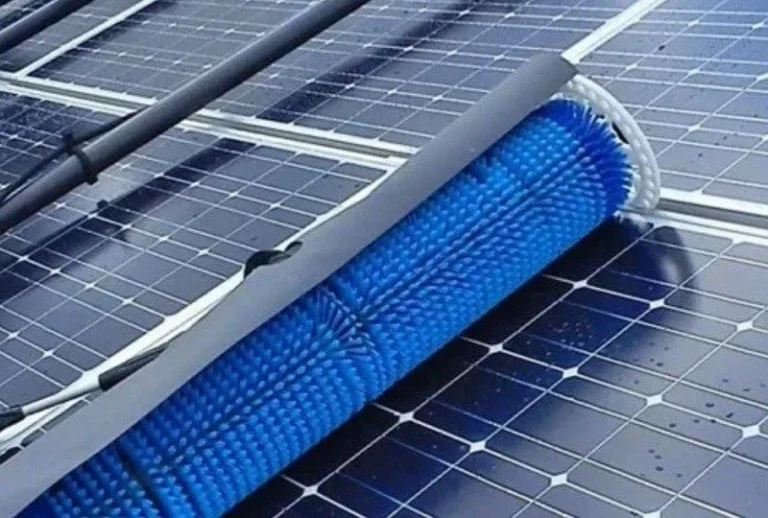
Soft-bristle brush cleaning is the most versatile and panel-safe method for removing the wide range of contaminants found across different climates. Unlike water-only rinsing, brush agitation dislodges sticky residues like pollen, bird droppings, and salt crust. Unlike pressure washing, brushes eliminate the risk of micro-crack formation and seal damage.
The choice between brush-based and water-only cleaning methods has significant implications for both cleaning effectiveness and panel longevity. Brush systems, particularly those using soft nylon or microfiber bristles paired with purified water feeds, achieve a cleaning rate of 90 to 95 percent for light to moderate soiling while preserving the anti-reflective coating on modern solar glass. In contrast, water-only methods without mechanical agitation leave behind mineral films and cannot remove adhered organic matter. Research from the IEA Photovoltaic Power Systems Programme confirms that mechanical cleaning with appropriate brush materials consistently outperforms passive rinsing across all soiling types.
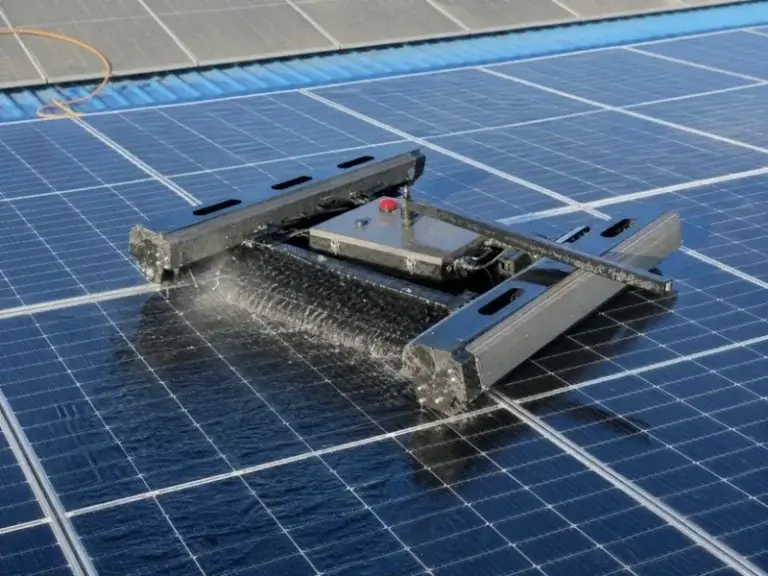
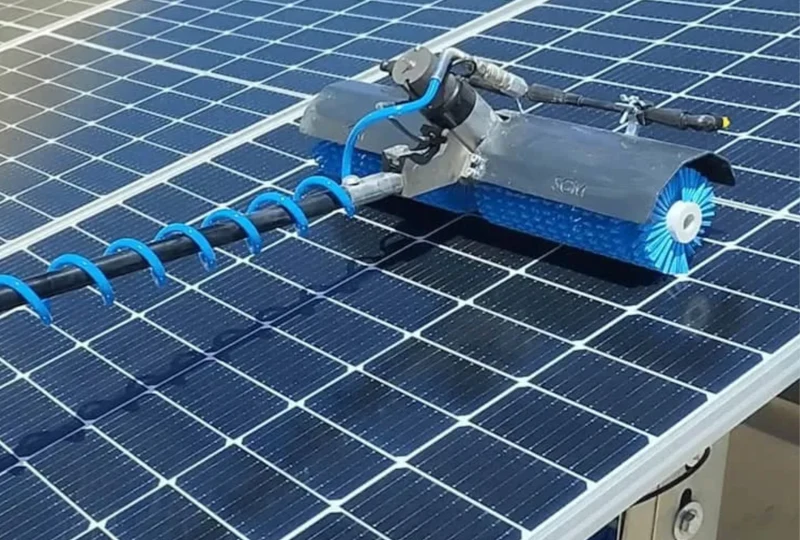
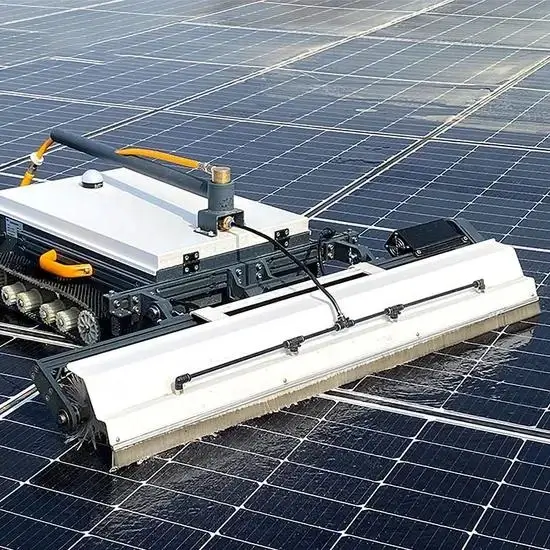
The water-fed brush pole system has emerged as the industry standard for commercial and utility-scale maintenance. These systems combine a telescoping pole (typically 5 to 10 meters for commercial applications), a soft-bristle brush head, and a purified water supply that flows through the pole to rinse as the brush agitates surface contaminants. The use of deionized or reverse-osmosis purified water is critical because it eliminates the mineral spotting that occurs when tap water evaporates on hot panel surfaces. Key rotary solar panel brush maintenance practices include:
- Inspecting bristles before each use for wear, hardening, or embedded debris
- Rinse brush heads after every cleaning session to remove mineral buildup
- Replacing brush heads when bristles show signs of splaying or stiffness, typically every 200 to 300 cleaning cycles
- Checking telescoping pole locking mechanisms for secure engagement before climbing
- Storing equipment in dry, temperature-controlled environments to prevent bristle degradation
For regions with sticky or oily residues such as coastal salt spray, agricultural dust, or urban pollution, brushing is not merely preferable; it is essential. These contaminants form chemical bonds with the glass surface that water alone cannot break. The mechanical action of soft bristles combined with purified water provides the necessary agitation to lift these deposits without abrasion. Operators should use longitudinal strokes following the panel frame direction rather than circular scrubbing, which can create micro-swirls visible under certain light conditions.
Measuring the Cost of Neglect: Efficiency Loss by Season
The financial impact of unmaintained solar panels compounds season after season. A system that loses an average of 15 percent efficiency due to soiling in a moderately dusty environment can forfeit between 3,000 and 8,000 dollars in cumulative production over its 25-year lifespan compared to a system cleaned once or twice per year. Seasonal variation means losses are not evenly distributed, with spring and autumn often the most expensive periods of neglect.
Quantifying the cost of dirty panels requires looking at both the percentage loss and the absolute value of lost production. The table below models the annual financial impact for an 8 kW residential system at a utility rate of 0.15 dollars per kilowatt-hour, a realistic scenario for many US markets:
| Soiling Level | Output Loss | Annual Energy Lost (kWh) | Annual Cost (USD) |
| Light dust film | 5 percent | 640 | 96 |
| Moderate buildup (3 to 6 months) | 15 percent | 1,920 | 288 |
| Heavy soiling (bird droppings, sap, pollen crust) | 25 percent | 3,200 | 480 |
| Severe (caked mud, lichen, moss) | 35 percent | 4,480 | 672 |
For commercial installations in the 100 kW to 1 MW range, these percentages translate to tens of thousands of dollars annually. A 500 kW commercial array losing 15 percent to soiling in a region with 0.10 dollars per kWh electricity rates forfeits approximately 9,800 dollars per year. Over a 25-year system life with a 3 percent annual electricity price escalator, the total opportunity cost exceeds 350,000 dollars.
Seasonal spikes amplify these baseline losses. Spring pollen alone can knock 5 to 10 percent off production for 6 to 8 weeks in high-pollen regions such as the Southeastern US and parts of Europe. If a system owner skips post-pollen cleaning, the accumulated crust remains throughout summer and into autumn, effectively compounding the soiling layer. The cost of neglect is not linear; it accelerates as contaminants build up in successive layers that become increasingly difficult to remove. A single annual cleaning scheduled at the right seasonal inflection point, typically late spring after pollen season in most temperate regions, can capture the majority of recoverable losses for systems in moderate soiling environments.
Building a Climate-Aware Maintenance Calendar
A climate-aware maintenance calendar aligns cleaning interventions with seasonal soiling peaks to maximize the return on each cleaning dollar. The optimal schedule for most regions includes one to two primary cleanings per year, timed to post-pollen and post-harvest periods, with additional spot checks during high-risk windows such as wildfire season or after major storms.
Designing a maintenance calendar begins with identifying your climate zone and mapping its seasonal soiling profile to the calendar. The framework below provides a starting point adaptable to local conditions:
Arid and Desert Climate Calendar
Desert systems face continuous dust loading with no natural rain-based cleaning. The recommended approach is quarterly maintenance, with dates adjusted based on local dust storm seasonality:
- March: Post-winter dust removal, inspection for any frost-related seal damage
- June: Pre-summer peak clean, critical before maximum irradiance months
- September: Post-monsoon inspection (if applicable), removal of hardened summer deposits
- December: Year-end maintenance, preparation for lower winter production months
Temperate and Humid Climate Calendar
These regions benefit from regular rainfall but face seasonal pollen and organic debris challenges:
- Late May to early June: Primary cleaning after spring pollen peak, removal of winter residue
- Late October to early November: Post-leaf-fall cleaning, removal of organic debris before winter
- Optional mid-summer spot check: Visual inspection for bird droppings and localized soiling
Coastal Climate Calendar
Salt accumulation is the primary concern, with humidity-driven mold as a secondary factor:
- Every 4 months: Regular salt film removal, with spring cleaning prioritized after winter storms that deposit maximum salt spray
- Post-storm inspections: After any named storm or severe weather event, check for debris and salt crusting
Northern and Snow-Prone Climate Calendar
Snow cover presents unique scheduling considerations:
- Late spring after final snowmelt: Primary annual cleaning to remove accumulated winter residue
- Early autumn, before the first snowfall: Pre-winter clean to ensure maximum production during low-light months
- Avoid cleaning in sub-freezing temperatures: Water-based cleaning in freezing conditions creates ice hazards and risks panel damage
The most cost-effective strategy for the majority of system owners is a twice-yearly schedule timed to the specific soiling peaks in their region. Adding a monitoring-based trigger, cleaning when production data shows a sustained 10 percent or greater deviation from expected output, provides an evidence-based override for the calendar schedule.
Selecting the Right Tools for Climate-Specific Cleaning
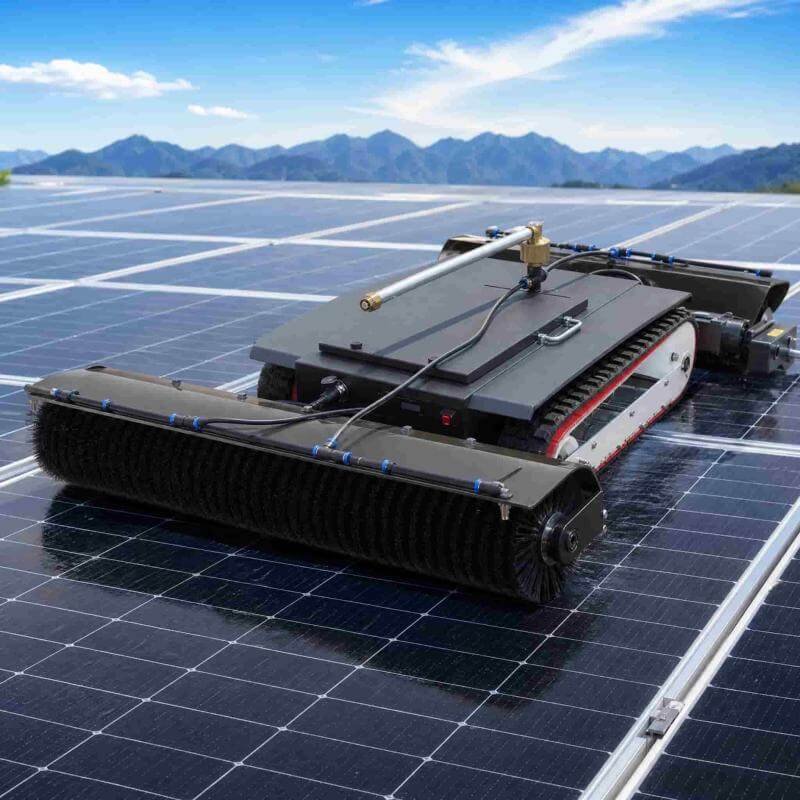
Climate-specific soiling demands climate-appropriate tools. Desert environments require dry-capable brush systems with anti-static properties to prevent re-deposition. Coastal regions need corrosion-resistant pole materials and purified water to prevent salt residue. Pollen-heavy areas benefit from microfiber blend bristles that capture fine particles rather than redistributing them.
Tool selection directly impacts cleaning effectiveness, operator safety, and panel longevity. The three critical components to evaluate are bristle material, water quality, and pole construction.
Bristle Material Selection by Climate
| Climate Type | Recommended Bristle | Key Benefit |
| Arid / Dusty | Anti-static nylon yarn | Prevents static re-attraction of fine dust |
| Coastal / Salt | Microfiber blend | Superior salt crystal capture without abrasion |
| Pollen / Organic | Soft nylon with flagged tips | Lifts sticky pollen without smearing |
| Industrial / Oily | Dense-flagged polypropylene | Breaks oil films effectively |
| General Purpose | Nylon-microfiber hybrid | Balances cleaning power with panel safety |
Water Quality Requirements
Purified water is not a luxury in solar cleaning; it is a functional necessity. Tap water contains dissolved minerals, primarily calcium and magnesium, that leave visible spotting when water evaporates on a hot panel surface. These spots are not merely cosmetic; they create micro-shadows that reduce light transmission at each spot location. The recommended water quality standard is total dissolved solids (TDS) below 30 parts per million, achievable through:
- Reverse osmosis filtration systems
- Deionization resin tanks
- Combination RO-DI units for mobile cleaning operations
Pole and Handle Configuration
For commercial and utility-scale applications, pole length and material quality determine both reach and operator fatigue. Aerospace-grade aluminum poles offer the best strength-to-weight ratio for lengths up to 7 meters, while carbon fiber poles provide superior rigidity for extended reaches beyond 7 meters with reduced operator strain. Key selection criteria include:
- Residential and small commercial: 3 to 5 meter poles, aluminum or carbon fiber
- Large commercial and utility: 5 to 10 meter poles, carbon fiber preferred for daily use
- Locking mechanisms: Stainless steel cam locks with waterproof seals prevent joint failure
- Weight: Under 2.5 kg for residential poles, under 5 kg for extended commercial poles
Regular tool maintenance is as important as initial selection. Brush heads should be rinsed after each use to prevent mineral buildup, inspected for bristle wear before each session, and replaced when fibers show visible splaying or hardening. Pole joints benefit from periodic silicone lubricant application to maintain smooth extension and retraction.
Conclusion
Solar panel cleaning is not a one-size-fits-all activity. The data is unambiguous: soiling reduces output by 5 to 35 percent depending on climate, season, and local conditions, and these losses compound into significant financial penalties over a system’s multi-decade lifespan. The right approach matches cleaning frequency to the specific climate zone, aligns maintenance timing with seasonal soiling peaks, deploys brush-based cleaning methods tailored to local contaminant types, and validates the entire schedule against production monitoring data.
The practical takeaway for system owners and facility managers is straightforward. Identify your climate category using the regional frequency table provided, schedule one to four annual cleanings based on that category, equip your maintenance team or service provider with climate-appropriate brush tools and purified water, and use production monitoring as your truth-check against the calendar. Systems in moderate climates with regular rainfall may genuinely need only one professional cleaning per year, timed to the post-pollen window. Systems in deserts, on coasts, or in agricultural zones need more frequent attention, and the cost of that attention is a fraction of the production value it preserves. A well-maintained solar array is not just a cleaner array; it is a more profitable one.
FAQ
Q1: Can rain really replace cleaning solar panels?
Not completely. Light or brief rainfall often only washes away some loose dust. For pollutants that have already adhered to the glass surface—such as pollen, bird droppings, salt spray crystals, and oily particles—rainwater struggles to remove them thoroughly. On the contrary, if the rain evaporates quickly afterward, it may leave water spots by turning dust into residue on the panel surface. Therefore, rainfall can serve as a natural supplement, but it cannot replace planned professional cleaning.
Q2: Is it okay to rinse solar panels with a regular garden hose or pressure washer?
Pressure washers are not recommended. High-pressure water streams can impact frame seals, junction boxes, and glass edges, increasing the risk of micro-cracks or water ingress. Rinsing directly with ordinary tap water can also leave calcium and magnesium mineral spots, which create micro-shadows over time. A safer approach is to use a soft-bristle brush with purified or low-TDS water, gently scrubbing and then rinsing.
Q3: Could cleaning solar panels actually scratch or damage them?
With the right tools and methods, the risk is very low. Use soft-bristle brushes, microfiber, or nylon-blend brush heads, and avoid stiff bristles, steel wool, or abrasive cleaners. When cleaning, it is recommended to brush longitudinally along the frame direction rather than scrubbing in circles or brushing dry. For stubborn stains like bird droppings or tree sap, soak them with water first to soften them, then gently brush them away.
Q4: After cleaning solar panels, will power generation recover immediately?
Usually, it recovers noticeably, but the extent depends on the level and type of soiling. Light dust may yield only a few percentage points of improvement after cleaning; moderate to heavy soiling—especially bird droppings, pollen crust, or salt spray film—may recover 10% to 30% of output after cleaning. If the panels already have permanent scratches, hot spots, or component aging, cleaning can only recover losses caused by surface soiling, not repair hardware issues themselves.
Q5: Can solar panels be cleaned in winter or cold weather?
Yes, but with great caution. Near or below freezing, water can freeze on the panel surface, frame, or ground, creating slip hazards, icicles, and panel stress risks. It is best to choose a sunny day around midday when temperatures are higher, use warm or room-temperature purified water, and avoid a large temperature difference between the water and the glass. If there is snow or ice on the panels, do not strike them with hard objects—wait for natural melting or use soft tools to gently remove it.