
The global solar energy market is projected to surpass $300 billion by 2032, driven by aggressive renewable energy targets and declining photovoltaic (PV) module costs. Yet one persistent challenge undercuts the efficiency of solar farms worldwide: dust accumulation. Research indicates that soiling can reduce solar panel energy output by 15% to 30% in arid and semi-arid regions, translating into millions of dollars in lost revenue for utility-scale installations. This is where solar panel cleaning robots have become indispensable — autonomous machines designed to traverse rows of PV panels and restore surface cleanliness with minimal water usage and labor.
The single most critical component in any solar panel cleaning robot is the brush itself. Whether you choose a standard off-the-shelf solar panel cleaning brush or invest in a custom cylinder brush tailored to your specific operating environment directly determines cleaning effectiveness, panel longevity, and total cost of ownership. The brush material, bristle configuration, and dimensional specifications influence everything from cleaning speed to the risk of micro-scratches on tempered glass surfaces.
For procurement managers, EPC contractors, and solar farm operators, the decision between standard and custom brush solutions involves balancing upfront costs against long-term performance. A standard nylon cylinder brush might serve a 50 MW plant in a moderate climate perfectly well, while a desert installation with fine abrasive sand may demand a custom-engineered solution. This article examines the technical, operational, and economic dimensions of both options, providing a structured framework to guide your purchasing decision.
Why Brush Design Matters in Solar Panel Cleaning Robots
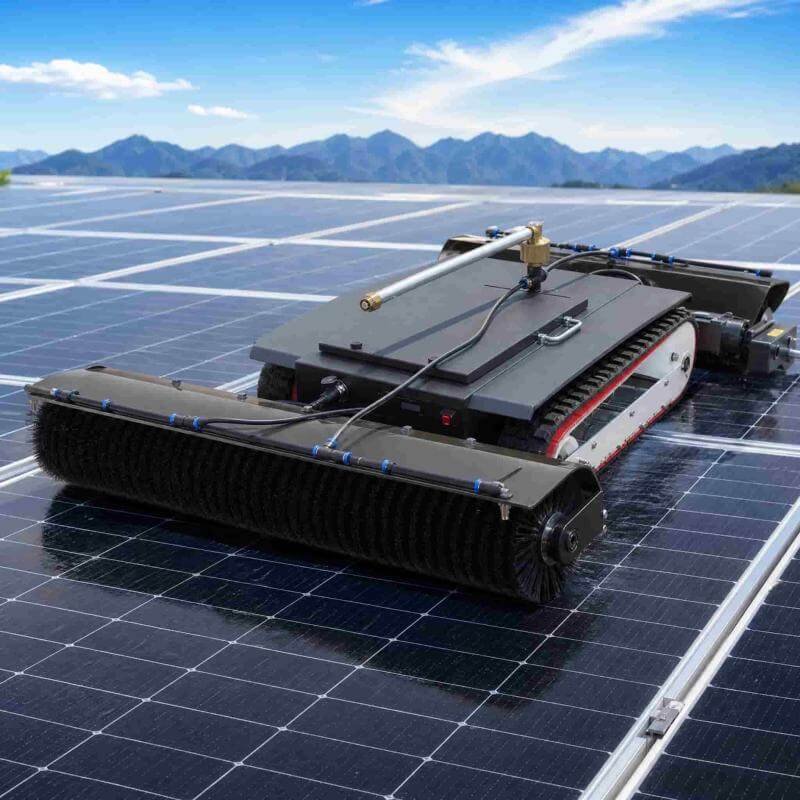
Brush design is the fundamental determinant of cleaning efficacy because it governs the mechanical interaction between the cleaning robot and the PV panel surface. A poorly designed brush either fails to dislodge contaminants effectively or, worse, introduces micro-abrasions that permanently degrade panel transmittance.
The physics of robotic solar panel cleaning involves a rotating cylindrical brush making controlled contact with the glass surface while the robot traverses the array. Three interdependent variables define performance:
- Bristle material and diameter: Filament thickness typically ranges from 0.15 mm to 0.30 mm. Thinner filaments (0.15–0.20 mm) provide gentler contact and are preferred for panels with anti-reflective coatings, while thicker filaments (0.25–0.30 mm) deliver more aggressive cleaning for stubborn contaminants like bird droppings or caked-on dust.
- Brush rotational speed: Operating RPM values generally fall between 40 and 220, depending on the drive system. Higher speeds improve cleaning throughput but increase the risk of heat buildup and accelerated bristle wear.
- Contact pressure and brush diameter: Standard diameters range from 50 mm to 150 mm. Larger diameters distribute contact force more evenly across the panel surface, reducing localized pressure points that could cause scratching.
When any of these parameters is mismatched to the installation environment, the consequences cascade through operations. A brush that is too stiff for high-temperature desert conditions may cause thermal expansion of bristles, increasing contact pressure beyond safe limits. Conversely, overly soft bristles in a humid coastal environment might fail to remove salt deposits and organic growth. The table below summarizes how environmental conditions influence brush design requirements:
| Operating Environment | Primary Contaminants | Recommended Bristle Material | Key Design Consideration |
| Desert / Arid | Fine sand, dust, silica | Nylon PA66 with anti-static treatment | Abrasion resistance, heat tolerance |
| Coastal / Humid | Salt spray, algae, bird droppings | PBT or Nylon PA610 | Chemical resistance, moisture stability |
| Agricultural | Pollen, soil, pesticide residue | Nylon with medium stiffness | Biodegradable contaminant removal |
| Industrial / Urban | Soot, hydrocarbon film, particulate | Stiffer nylon or blended filaments | Oil and chemical resistance |
| High Altitude | Snow, ice, UV-exposed dust | UV-stabilized nylon | Cold temperature flexibility |
Standard Solar Panel Cleaning Brushes: Advantages and Limitations
Standard solar panel cleaning brushes are pre-engineered, mass-produced cylindrical brushes designed to fit the most common robotic cleaning platforms. They offer immediate availability, lower unit costs, and proven compatibility with mainstream cleaning robot models, making them the default choice for the majority of utility-scale installations.
The standard solar panel cleaning brush market has matured significantly over the past five years. Manufacturers now offer a range of off-the-shelf configurations covering the most common operational scenarios. A typical standard brush specification includes:
- Filament material: Nylon PA66 or PA610, 0.20–0.25 mm diameter
- Core construction: Aluminum shaft with injection-molded plastic tube
- Brush outer diameter: 80–120 mm
- Working length: 1,000 mm to 2,000 mm
- Spiral or straight bristle pattern
- Compatible with dry and wet cleaning modes
The primary advantage of standard brushes lies in their supply chain reliability. For a solar farm operator managing a 100 MW installation, the ability to source replacement brushes within days rather than weeks directly impacts uptime. Standard brushes also benefit from cumulative field data — manufacturers have refined their designs based on feedback from thousands of installations, resulting in dependable baseline performance.
However, standard brushes carry inherent limitations. They are designed for the “average” installation scenario and may underperform in edge cases:
- Limited dimensional flexibility: If a robotic platform requires a non-standard brush length or diameter, off-the-shelf options may not exist
- Fixed bristle density: The filament count per unit length is preset, which may be suboptimal for specific contaminant types
- Material constraints: While nylon dominates the standard market, specialized applications requiring PBT, anti-static carbon-infused filaments, or hybrid blends may not be available
- Compatibility gaps: Not all standard brushes fit all robot models, especially newer or less common platforms
Nylon Cylinder Brushes: The Industry Standard for Robotic Cleaning
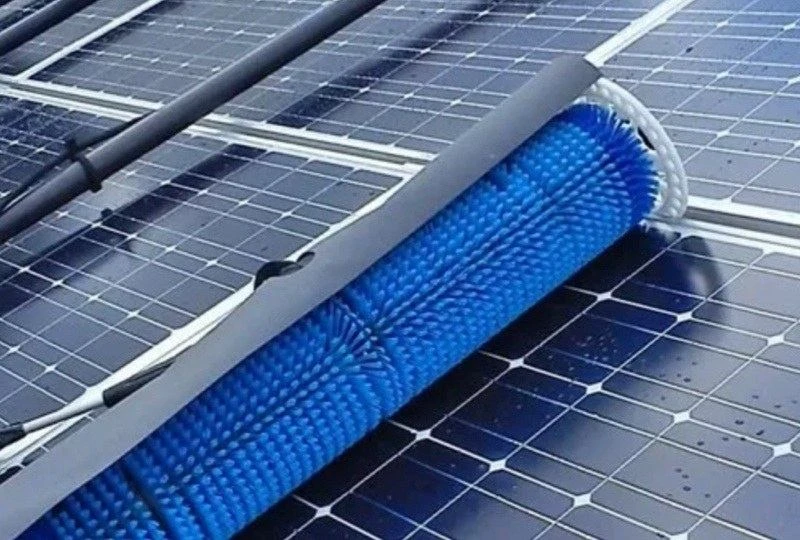
Nylon cylinder brushes have emerged as the dominant brush technology in solar panel cleaning robots due to nylon’s exceptional balance of mechanical durability, chemical resistance, moisture stability, and cost-effectiveness. Among nylon variants, PA66 and PA610 are the most widely specified grades for this application.
The widespread adoption of the nylon cylinder brush in solar cleaning applications is not accidental — it reflects decades of material science validation across industrial brushing applications. Nylon filaments offer a unique combination of properties that align closely with the demands of photovoltaic surface cleaning:
Mechanical Properties
Nylon filaments exhibit high tensile strength and excellent flexural fatigue resistance, meaning they can withstand millions of bending cycles without breaking. This is critical for a brush rotating at 100–200 RPM across kilometers of panel surface. PA66, in particular, maintains its mechanical properties at temperatures up to 120°C, making it suitable for installations in hot climates where panel surface temperatures can exceed 70°C.
Water Absorption and Dimensional Stability
One well-known characteristic of nylon is its tendency to absorb moisture. PA66 can absorb up to 2.5% of its weight in water under standard conditions, while PA610 absorbs approximately 1.5%. This absorption causes slight swelling, which can alter bristle stiffness and brush diameter. For wet-cleaning applications, PA610 is often preferred due to its lower moisture absorption rate, providing more consistent performance across wet and dry cycles.
Abrasion Resistance and Panel Safety
The tempered glass used in PV modules has a Mohs hardness of approximately 6–7, while nylon filaments have a hardness of roughly 2–3 on the same scale. This hardness differential ensures that properly specified nylon bristles clean effectively without scratching the glass surface. Independent testing has shown that nylon brushes with filament diameters under 0.25 mm, operating at recommended contact pressures, produce no measurable reduction in panel transmittance even after 10,000 cleaning cycles.
Cost Profile
The table below presents typical cost ranges for nylon cylinder brushes in the current market:
| Specification | Typical Range | Relative Cost Factor |
| 1m length, PA66, 100mm OD | $10–$25 per unit | Baseline (1.0x) |
| 2m length, PA66, 120mm OD | $20–$45 per unit | 1.5–1.8x |
| 1m length, PA610, anti-static | $15–$30 per unit | 1.2–1.5x |
| 2m length, PA610, spiral pattern | $25–$55 per unit | 2.0–2.2x |
| Replacement brush set (4 units) | $60–$150 | Bundle discount 10–20% |
Custom Cylinder Brushes: Tailored Solutions for Specialized Applications
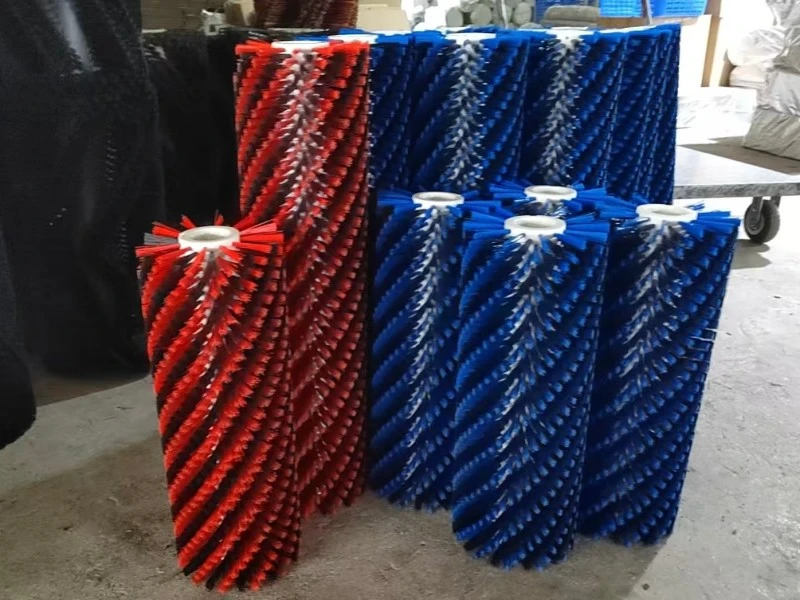
A custom cylinder brush is engineered to precise specifications — filament material, diameter, density, core construction, and dimensional geometry — to match the exact requirements of a specific cleaning robot model and its intended operating environment. Custom brushes eliminate the compromises inherent in standard solutions, delivering optimized performance for non-standard or demanding installations.
The decision to pursue a custom cylinder brush typically arises when one or more of the following conditions are met:
- The cleaning robot uses a proprietary brush mounting system incompatible with standard designs
- The installation environment presents extreme conditions (temperature, humidity, chemical exposure) that exceed standard brush tolerances
- The contaminant profile is atypical — for example, sticky industrial residue or volcanic ash
- The panel surface requires specialized treatment, such as ultra-soft contact for thin-film modules
- Operational scale justifies the engineering investment for marginal efficiency gains
Customization Parameters
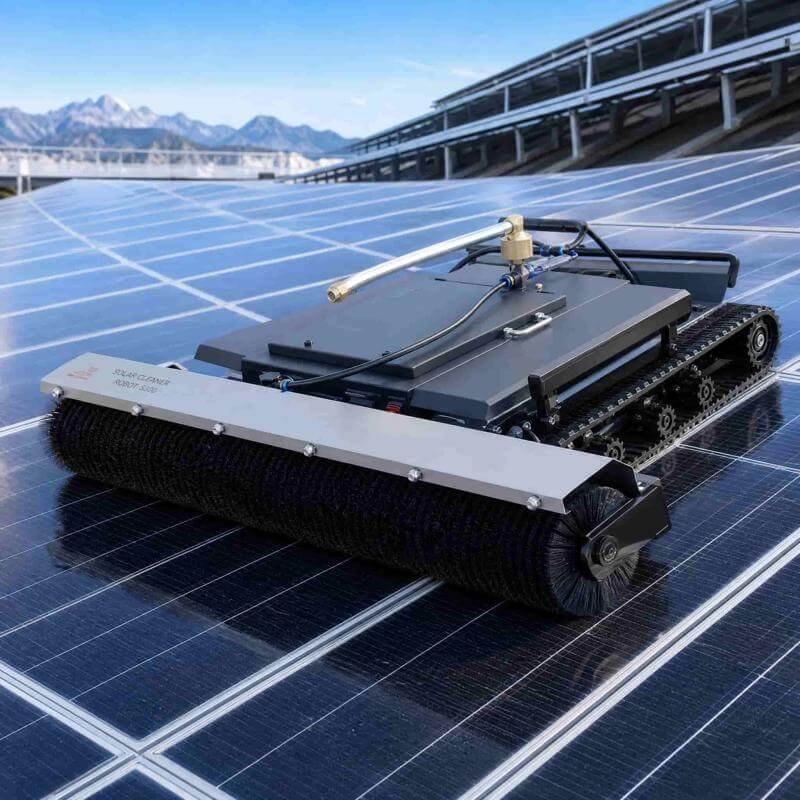
A comprehensive custom brush specification can include adjustments across multiple dimensions:
Filament selection: Beyond standard nylon, custom brushes can incorporate PBT (polybutylene terephthalate) for superior chemical resistance, PP (polypropylene) for acidic environments, or anti-static carbon-infused filaments that prevent dust re-attraction through static discharge. Some manufacturers offer blended filaments where different materials are combined within a single brush to achieve multi-property performance — for example, alternating rows of stiff PA66 for dislodging debris and softer PBT for polishing.
Core and shaft engineering: The core assembly — typically comprising a metal shaft (aluminum, stainless steel) and a plastic tube — can be customized for weight reduction, corrosion resistance, or enhanced stiffness. Stainless steel shafts are preferred in coastal installations where salt spray accelerates aluminum corrosion.
Bristle pattern and density: Standard patterns include straight, spiral, herringbone, and tufted configurations. Spiral patterns are popular because they create a sweeping action that moves debris laterally across the panel, reducing the risk of contaminants being ground into the surface. Bristle density — measured in filaments per square centimeter — can be increased for heavy soiling conditions or reduced for light dusting applications.
Dimensional tailoring: Brush outer diameter, working length, and shaft end fittings can all be manufactured to exact specifications, ensuring seamless integration with proprietary robotic platforms.
The Custom Manufacturing Process
The typical workflow for custom brush development follows these stages:
- Requirements gathering: The brush manufacturer works with the client to document operating conditions, robot specifications, cleaning frequency, and performance targets
- Material and design proposal: Based on requirements, the manufacturer proposes filament materials, brush geometry, and core construction
- Prototype production: A small batch of prototype brushes is manufactured for field testing
- Performance validation: Prototypes undergo accelerated wear testing and on-site cleaning trials, with measurements of cleaning efficacy and panel surface impact
- Production ramp-up: Upon validation, full-scale production commences with quality control checkpoints at each stage
Lead times for custom brushes typically range from 20 to 45 days from order confirmation to delivery, depending on complexity and order volume. While this represents a longer procurement cycle than standard brushes, the performance gains often outweigh the initial wait.
Key Factors to Consider When Choosing Between Standard and Custom Brushes
The decision between standard and custom brushes should be driven by a systematic evaluation of five factors: operating environment severity, robot compatibility requirements, cleaning performance targets, total cost of ownership, and supply chain considerations. Rushing this decision can lead to either overspending on unnecessary customization or under-specifying a brush that fails prematurely.
Factor 1: Operating Environment Severity
The more extreme the environment, the stronger the case for customization. Consider the following decision framework:
- Mild conditions (temperate climate, low dust, infrequent soiling): Standard brushes are almost always sufficient
- Moderate conditions (seasonal dust, occasional bird droppings, moderate humidity): Standard brushes with careful material selection (e.g., PA610 for humidity) perform well
- Severe conditions (desert dust storms, coastal salt exposure, sub-zero temperatures, chemical plant proximity): Custom brushes become strongly advisable
Factor 2: Robot Compatibility
Before sourcing brushes, verify the following compatibility points against your cleaning robot’s technical documentation:
- Shaft diameter and end-fitting type (keyed, splined, quick-release)
- Maximum allowable brush outer diameter (exceeding this can cause interference with the robot chassis)
- Drive motor torque rating (heavier custom brushes may require higher torque)
- Mounting orientation and rotation direction
Factor 3: Cleaning Performance Targets
Define measurable cleaning performance targets. Industry benchmarks suggest:
- Target cleaning efficacy: Greater than 95% dust removal in a single pass under standard test conditions
- Acceptable panel transmittance loss after 10,000 cycles: Less than 0.5%
- Brush service life: 1,500 to 2,000 operating hours for standard brushes; up to 3,000 hours for premium custom designs
Factor 4: Total Cost of Ownership
The table below breaks down the cost components that inform TCO analysis:
| Cost Component | Standard Brush | Custom Brush |
| Unit purchase price | $10–$55 | $25–$80+ |
| Tooling / NRE (non-recurring engineering) | $0 | $500–$3,000 (one-time) |
| Typical service life | 1,500–2,000 hours | 2,000–3,000 hours |
| Replacement frequency (annual, 8h/day) | 1.5–2 times | 1–1.5 times |
| Downtime per replacement | 2–4 hours | 2–4 hours |
| Risk of panel damage | Low to moderate | Low (optimized for application) |
| Cleaning efficacy consistency | Moderate decline over life | Slower decline, better consistency |
Factor 5: Supply Chain Reliability
Standard brushes benefit from multi-source availability — if one supplier faces delays, alternatives exist. Custom brushes typically rely on a single manufacturing partner, creating a dependency that must be managed through:
- Maintaining safety stock (recommended: 20–30% above annual consumption)
- Negotiating framework agreements with guaranteed lead times
- Qualifying a secondary supplier for the same custom specification (where feasible)
Cost-Benefit Analysis: Standard vs. Custom Brush Solutions
For small to medium-sized installations (under 20 MW) operating in non-extreme environments, standard nylon cylinder brushes deliver the best return on investment. For large-scale installations (50 MW and above) or those in challenging environments, custom cylinder brushes often justify their higher upfront cost through extended service life, superior cleaning consistency, and reduced panel degradation risk.
To illustrate the economic trade-off, consider a hypothetical 100 MW solar farm operating in a desert environment with daily robotic cleaning. The installation uses 20 cleaning robots, each requiring two brush units replaced every 1,500 hours (standard) or 2,500 hours (custom).
Scenario Comparison
| Parameter | Standard Brush Approach | Custom Brush Approach |
| Brush unit cost | $35 (2m, PA66) | $65 (2m, custom PA610 with anti-static) |
| Brushes per robot | 2 | 2 |
| Total brushes across fleet | 40 | 40 |
| Initial procurement cost | $1,400 | $2,600 |
| NRE / tooling cost | $0 | $2,000 (one-time) |
| Service life per brush | 1,500 hours | 2,500 hours |
| Annual replacements (8h/day, 365 days) | 78 units | 47 units |
| Annual brush spend | $2,730 | $3,055 |
| Annual downtime for replacement | ~156 hours | ~94 hours |
| Estimated energy loss from downtime (at $0.05/kWh) | ~$7,800 | ~$4,700 |
| Three-year total cost | $9,590 | $13,165 |
At first glance, the standard brush approach appears more economical — approximately $3,600 cheaper over three years. However, this analysis does not capture the value of superior cleaning efficacy. If the custom brush improves average cleaning effectiveness by just 2%, that translates to an additional 2% energy output from a 100 MW plant — potentially worth $30,000 to $50,000 annually depending on electricity prices and capacity factors.
When Standard Brushes Win
Standard brushes are the clear winner when:
- The installation environment matches the design assumptions of mainstream brush manufacturers
- Budget constraints demand minimum upfront capital expenditure
- Multiple qualified suppliers exist, ensuring competitive pricing and supply security
- The cleaning robot is a widely adopted model with ample aftermarket support
When Custom Brushes Win
Custom brushes become the economically rational choice when:
- The cost of marginal efficiency losses exceeds the premium for customization
- Standard brushes have demonstrated premature failure in the target environment
- Panel warranty terms require documented use of optimized cleaning equipment
- The scale of the installation (100 MW+) amplifies small percentage gains into substantial absolute returns
Conclusion
The brush is far more than a consumable component in a solar panel cleaning robot — it is the interface through which cleaning effectiveness, panel preservation, and operational economics are realized. Choosing between a standard solar panel cleaning brush and a custom cylinder brush is not a question of which option is universally superior, but which option best aligns with a specific installation’s environmental conditions, operational scale, and economic priorities.
For the majority of installations in moderate climates, a quality nylon cylinder brush from a reputable manufacturer provides a proven, cost-effective solution backed by extensive field data. The key is not to buy the cheapest brush available, but to verify that the standard specification matches the actual operating conditions of the site.
For installations that push the boundaries — whether through extreme temperatures, aggressive contaminants, proprietary robot designs, or the sheer financial scale that magnifies small performance differentials — a custom-engineered brush solution transforms from a luxury into a necessity. The engineering investment pays back through extended service intervals, more consistent cleaning results, and protection of the underlying solar asset.
Procurement teams evaluating brush options should begin with a thorough site assessment, engage with manufacturers who offer both standard and custom capabilities, and insist on documented performance data rather than marketing claims. A well-chosen brush keeps solar panels clean, robots running, and revenue flowing — making it one of the highest-leverage decisions in solar farm operations.