
Why Stainless Steel Rotary Wire Brushes Wear Unevenly
The Frustration Behind Uneven Wear in Production
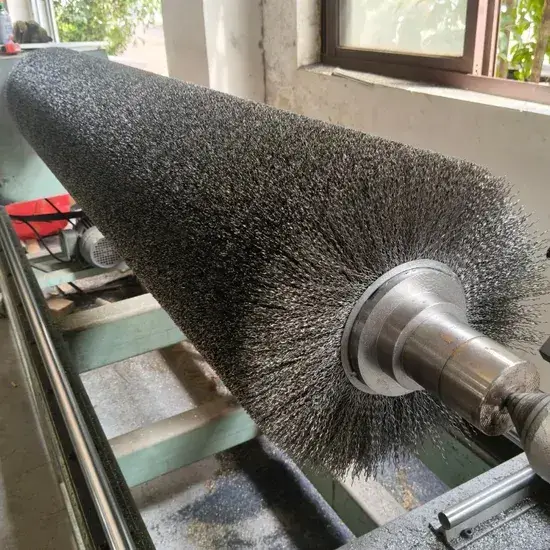
Stainless steel rotary wire brushes are standard tools in metal finishing, weld cleanup, rust removal, and surface preparation. A cylinder brush mounted on a bench grinder, floor machine, or automated line can clean thousands of parts before it needs attention, which makes the moment a brush starts wearing unevenly so frustrating. One side strips rust aggressively while the other side barely touches the surface. The brush loses its round profile, the machine starts vibrating, and every part that leaves the line shows a different finish. Operators often blame the brush itself, yet the brush is usually the last thing at fault.
Uneven Wear Follows Predictable, Controllable Patterns
Uneven wear is not a random defect. It follows a predictable set of causes, and most of them are controllable. Mounting errors, speed mistakes, uneven pressure, wrong wire construction, and contaminated or misaligned workpieces all leave different fingerprints on the wire face. Each cause produces a recognizable pattern, which means the wear signature on a used brush tells an experienced operator exactly what went wrong and how to correct it before the next brush is ruined.
Uneven wear on a stainless steel rotary wire brush is caused by five controllable factors: running the brush above or far below its rated speed, applying uneven or excessive pressure, mounting the brush off-center or with an unbalanced arbor, choosing a wire construction or gauge that does not match the workpiece, and presenting misaligned or irregular parts to the brush face. In most production cases, the pattern of wear points to one dominant cause, and correcting that single variable restores even brush life and consistent surface finish.
What This Guide Covers
This guide walks through each cause in detail, explains the wear pattern it creates, and gives practical steps for diagnosis and prevention. It also covers wire material selection and replacement timing, because a brush that is specified correctly in the first place wears evenly for far longer than one that is pushed into the wrong job. The goal is simple: get more usable life from every stainless steel rotary wire brush, reduce scrap, and keep surface quality predictable on every part that crosses the brush face.
The Main Causes of Uneven Wear on a Rotary Wire Brush
A stainless steel rotary wire brush wears unevenly when the working conditions differ across the brush face. Speed errors, pressure imbalances, mounting misalignment, wrong brush construction, and irregular workpiece geometry each concentrate the workload on a small portion of the wire, so that zone sheds wire faster while the rest of the brush stays nearly new.
The brush is designed to wear evenly because every filament should share the load. In practice, small differences in how the brush is set up or how the part is presented quickly become large differences in wear. The table below summarizes the common causes, the wear pattern each one leaves, and the typical source of the problem.
The wear pattern is the most reliable diagnostic signal available. A brush that wears on one side only is rarely a wire quality problem. It is a geometry or mounting problem. A brush that loses diameter evenly but fast is a speed or wire selection problem. Matching the pattern to the cause lets a maintenance team fix the process instead of replacing the brush every shift.
How Does Operating Speed Affect a Stainless Steel Rotary Wire Brush
Too Slow — Wires Bend Instead of Cut
Speed is the first variable to check when a stainless steel rotary wire brush wears unevenly or fails early. Every brush has a maximum safe free speed rating, and running it above that rating breaks the wires off in bunches, while running far below the recommended range bends the wires instead of cutting with them.
Wire brushes cut with the tips of the filaments, not with the sides. The tip needs enough velocity to penetrate rust, scale, or weld spatter and wipe it off the surface. When the surface speed is too low, the wire tips cannot bite, so the operator compensates by pressing harder. The wires bend under the extra load, fatigue at the bend point, and eventually snap or fold over. The result is a brush that looks crushed on the working face and loses its cleaning ability long before the wire is actually consumed.
Too Fast — Wires Break and Throw
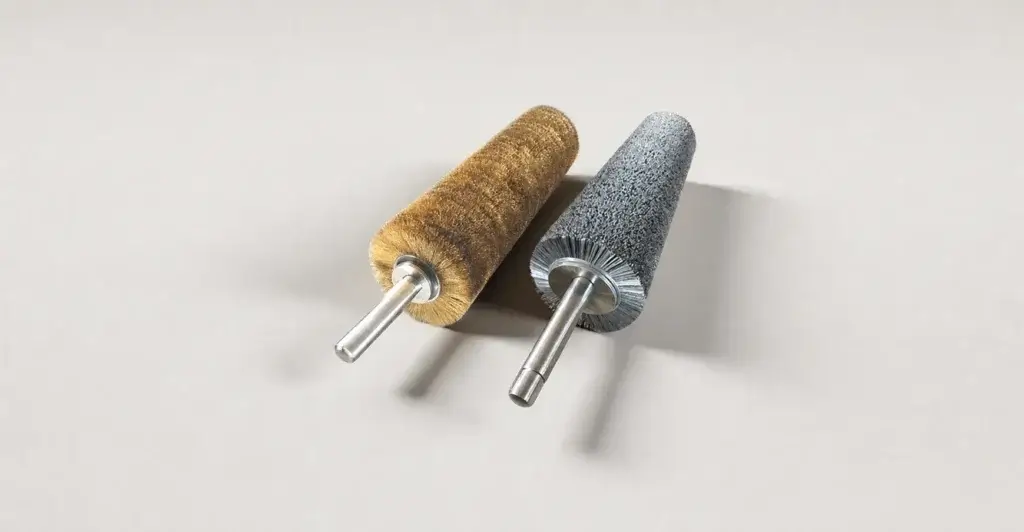
The opposite failure is just as common. A brush run above its rated speed throws filaments. The centrifugal force overcomes the strength of the wire at the anchor point, and wires release from the hub in clusters. This produces fast, uneven diameter loss, creates a vibration problem, and sends loose wire fragments into the work area. The maximum safe free speed is printed on the brush or its packaging for a reason, and it is as binding as the rating on a grinding wheel.
Operating speed also interacts with the brush diameter. A large cylinder brush has a much higher surface speed at the tips than a small one at the same RPM, so the recommended speed range on the brush already accounts for diameter. Operators who swap brush sizes on the same machine without adjusting the speed often create uneven wear on the first run. Check the brush label, match it to the machine speed, and resist the temptation to speed up a slow-feeling brush by pressing down.
Why Does Excessive or Uneven Pressure Create Uneven Wear
How Pressure Overload Damages Brush Filaments
Pressure is the second leading cause of uneven wear. Pushing a part harder into a stainless steel rotary wire brush does not make it clean faster. It bends the wires, concentrates the load on the contact zone, and creates a wear band that shortens brush life by two to three times.
A wire brush is a spring system. Each filament is designed to deflect slightly under load and spring back. Light contact lets the wire tips do the cutting work with minimal fatigue. Heavy contact over-deflects the wires, and every pass bends them closer to their yield point. The wires on the leading edge of the contact zone take the worst of the load, so they break first. Over a few hours, the leading zone wears flat while the trailing zone still has full-length wire, and the brush face is no longer round.
Uneven Pressure and Its Effects
Uneven pressure produces the same result in a different form. Operators who rock the part, feed it at an angle, or rest it on one edge of the brush face transfer most of the load to a narrow strip of wire. That strip wears out while the rest of the brush remains usable. Automated systems create the same problem when a part fixture is out of adjustment and presents the workpiece at a slight angle.
The Correct Technique for Even Wear
The correct technique is to let the brush speed do the work and keep contact pressure light enough that the wires remain straight for most of their exposed length. A practical check is to listen to the brush. A wire brush working correctly produces a crisp, continuous rasp. When the sound becomes a heavy thud or a scraping grind, the pressure is too high. Operators who switch from heavy pressure to light, repeated passes typically report two to three times longer brush life, and the wear pattern across the face stays uniform. For heavy rust layers, a rust removal roller brush removes scale in multiple light passes instead of one aggressive push, which protects both the brush and the workpiece surface.
How Do Mounting Alignment and Workpiece Geometry Cause Uneven Wear
An off-center brush and an irregular workpiece produce the same symptom: localized flat spots on the brush face. A brush that is not running true only contacts the part on one side, and a part that is not square to the brush face only contacts a narrow band of wire. Both conditions are easy to verify and easy to fix.
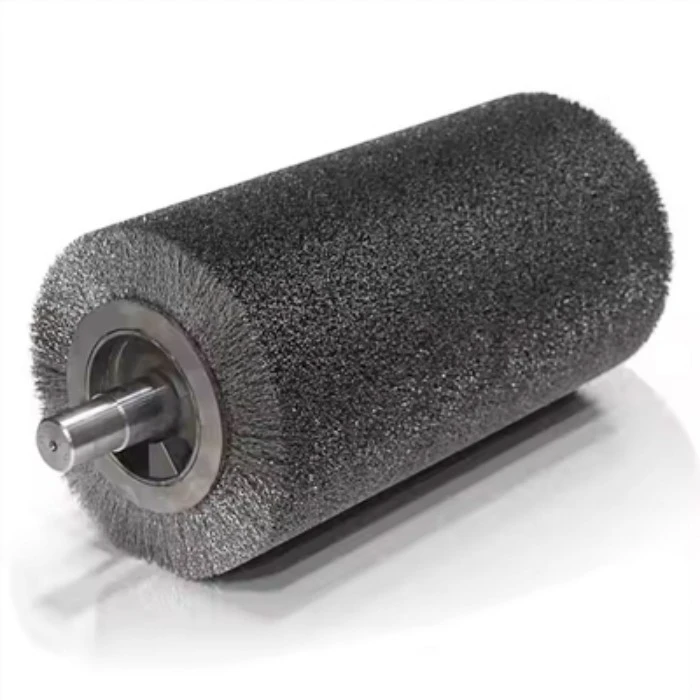
Mounting problems start at the arbor. A worn shaft, a loose adapter, a burr on the spindle, or a small piece of debris between the brush hub and the arbor puts the brush slightly off its rotational center. At operating speed, that small runout turns into a visible wobble, and the high side of the brush carries the entire workload. The wear signature is unmistakable: one side of the brush is worn flat or scalloped while the opposite side still has full wire. Vibration appears at the same time, and the vibration accelerates wear on the machine bearings as well.
Workpiece geometry creates a similar pattern from the other direction. A flat plate fed perpendicular to the brush axis contacts the full face width. The same plate fed at a 5-degree angle contacts only a fraction of the face, and the contact line sits at one edge. Stacked parts, bowed sheet metal, and parts with raised weld seams all create concentrated contact zones. The brush wears at the high points of the part, and the low areas never get cleaned, which pushes operators to increase pressure and make the problem worse.
Prevention is largely a matter of standardizing the setup. Use a pilot that fits the arbor properly, inspect the brush hub before mounting, and verify that the fixture feeds parts square to the brush face. A few minutes of setup checking prevents hours of premature brush wear and protects the finish quality on every part. Automated lines benefit most from this discipline, since a misaligned fixture wears brushes unevenly at the same rate every shift until someone checks the geometry.
How Does Wire Material and Brush Construction Affect Wear Distribution
Wire material and construction determine how a stainless steel rotary wire brush handles the job, and a mismatch between the brush and the workpiece creates uneven wear that no operating adjustment can fix. Stainless steel wire resists corrosion and suits stainless workpieces, while carbon steel wire cuts more aggressively on heavy scale. Crimped and twisted constructions also distribute load differently across the brush face.
The first decision is wire material. Stainless steel wire is the right choice when the workpiece is stainless steel, because carbon steel wire can leave embedded particles that rust and contaminate the surface. Stainless wire also holds up in wet or corrosive environments. Carbon steel wire is harder and more aggressive, which makes it faster on heavy rust and weld scale, but it corrodes and can transfer contamination. The trade-off between cutting speed and contamination risk is a genuine engineering decision, and the difference in longevity matters here as well. A comparison of stainless vs carbon steel brushes shows that the right material for the application lasts far longer than the cheapest option, and that wear tends to stay even when the wire grade matches the surface being cleaned.
Construction is the second factor. Crimped wire brushes have wavy, flexible filaments that conform to contours and produce a smoother finish. Twisted or knot-style brushes have tightly wound wires that are much stiffer, cut faster on heavy residue, and hold their shape longer. The trade-off is that twisted wire transmits more vibration and wears differently under light loads. A twisted brush used on light surface cleaning flexes less, concentrates the load on the wire tips, and can develop a hard, glazed contact zone instead of a uniformly worn face.
Brush pitch, the spacing between the wire rows on a cylinder brush, also influences wear distribution. Closed-coil brushes pack more wire per inch, cut more aggressively, and wear more evenly under heavy loads. Open-coil brushes have wider spacing, run cooler on heat-sensitive work, and are better for softer finishes. Selecting a brush whose pitch and wire gauge match the residue type prevents the localized overload that happens when a fine-wire brush is pushed against coarse scale or a heavy-wire brush is run on delicate surfaces. When the application changes, the brush should change with it, and a stainless steel wire cylinder brush matched to the actual residue load will wear uniformly instead of shedding wire in the overloaded zones.
Brush geometry affects the wear signature as much as the wire itself. A wire wheel presents a broad face for flat workpieces, while a spring brush reaches into profiles and corners that a wheel cannot touch. On heavy residue, the wrong geometry forces the operator to angle the part or increase pressure to reach the full surface, which recreates the localized overload that causes one-sided wear. A wire wheel vs spring brush comparison helps shops match the brush shape to the part profile, so the full face stays in contact and the wire wears down evenly.
How Do You Diagnose and Prevent Uneven Wear on a Rotary Wire Brush
How to Diagnose Wear Patterns
Diagnosis takes less than a minute once the wear pattern is understood. Stop the machine, look at the brush face, and identify the pattern. Flat on one side means mounting or feed angle. Notched or scalloped means speed too high. Folded or mashed means pressure too high. Glazed and shiny means wire grade or construction mismatch. Each pattern leads to a specific fix.
The diagnostic process is best done with the brush still mounted. Rotate the brush by hand and watch the gap between the wire tips and a fixed reference point. A brush running true keeps a constant gap. A brush with a bent hub or off-center mount shows the gap opening and closing as it turns. Then look at the face straight on. Even wear produces a uniform circular profile. Any flat spot, notch, or one-sided taper is a recorded history of the operating problem.
A Practical Prevention Checklist
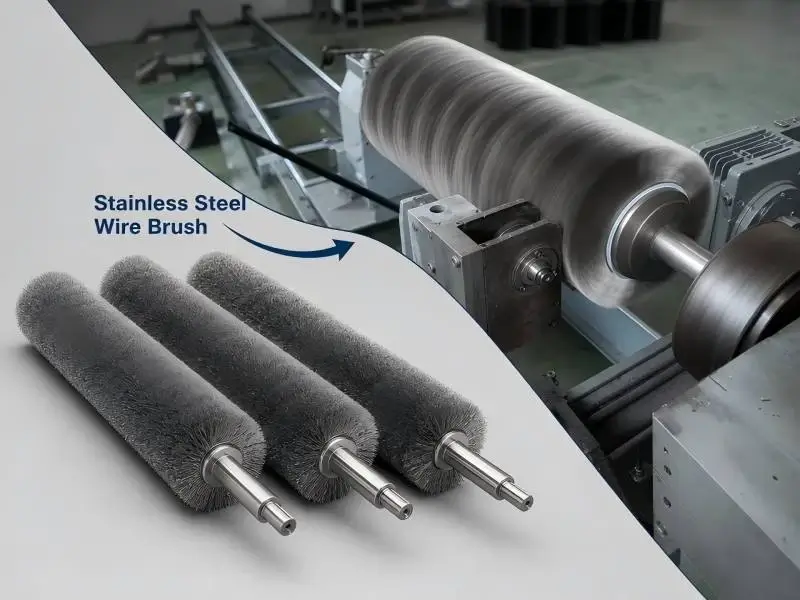
Prevention follows a short checklist that covers the most common failure points:
- Confirm the machine speed is within the brush maximum safe free speed and near the recommended range.
- Inspect the arbor, adapter, and hub for wear, burrs, or debris before mounting.
- Verify the brush runs true at idle speed with no visible wobble.
- Feed parts square to the brush face and keep contact pressure light enough that the wires stay straight.
- Match wire material, gauge, and pitch to the residue type and workpiece material.
- Replace the brush at the first sign of a one-sided wear pattern, and correct the cause before running the new brush.
Why Prevention Pays Off
These checks take minutes per shift and remove most of the variability that creates uneven wear. On automated lines, the same checklist becomes a preventive maintenance task, with the feed fixture and arbor checked on a regular interval. The cost of the checks is trivial compared with the cost of brushes that wear out in days, parts that need rework, and machine downtime for vibration repairs.
When Should You Replace a Stainless Steel Rotary Wire Brush
Key Signs It’s Time to Replace
Replace the brush when the working face no longer reaches the surface evenly, when one-sided wear has created a flat spot that cannot be corrected, or when wire loss has reduced the brush diameter to the point where it cannot achieve the required finish. Continuing to run a worn brush damages parts, overloads the machine, and masks the underlying process problem.
A brush with minor, even diameter loss is still usable. The practical limit depends on the application, but most shops replace cylinder brushes when the wire length drops to roughly half of the original exposure, because cutting efficiency falls off sharply after that point. A brush with localized wear is different. If the flat spot is the result of a fixture problem, the flat spot will grow with every pass, and the brush should be changed at the same time the fixture is corrected. Running the new brush on the same misaligned fixture repeats the failure immediately.
Wire Fatigue as a Replacement Trigger
Visible wire fatigue is also a replacement trigger. When a noticeable share of the filaments are folded over, bent at the base, or missing from a concentrated zone, the brush has already lost its even cutting action. The remaining wires carry more load, which accelerates fatigue across the whole face. In corrosion-sensitive work, a worn stainless brush can also embed inconsistent amounts of residue, and a tired brush on a steel wire cylinder brush application produces a visibly different finish than a fresh one.
Safety and Cost Considerations
Safety factors into the replacement decision as well. A brush that has lost wire in clusters is more likely to throw remaining filaments as the anchor points weaken. Vibration from an unbalanced, worn brush stresses the machine spindle and can loosen guards or fixtures over time. Replacing the brush at the right moment is cheaper than replacing bearings, reworking a batch of parts, or dealing with a thrown-wire injury. Track brush life per machine and per application, and use the history to set a replacement interval that keeps finish quality stable.
FAQ
Can uneven wear on a stainless steel rotary wire brush be reversed?
No. Once a brush has worn unevenly, the wire cannot grow back, and the face cannot be reshaped. Trimming or grinding the brush face is unsafe because it destroys the wire anchoring and balance of the hub. The correct response is to identify the cause, fix it, and replace the brush. Reversing the brush on the arbor or rotating the hub can temporarily redistribute the remaining wire, but the underlying cause will recreate the same pattern.
What is the typical service life of a stainless steel rotary wire brush?
Service life depends on speed, pressure, wire gauge, and residue hardness. A brush running at its recommended speed with light pressure on light surface contamination can last for hundreds of hours. The same brush pushed hard against heavy weld scale may last only a few shifts. Rather than relying on a fixed hour count, track the wear pattern and diameter loss, because the pattern changes before the brush becomes unusable.
Does a stainless steel rotary wire brush scratch stainless steel surfaces?
A stainless steel wire brush can scratch a stainless workpiece if the wire gauge is too heavy, the speed is too high, or the pressure is excessive. Using stainless steel wire avoids carbon contamination, but surface finish still depends on technique. For polished or furniture-grade surfaces, use a finer wire gauge, keep the speed in the recommended range, and use light, repeated passes instead of a single aggressive contact. Testing on a sample part is the reliable way to confirm the finish before running the production batch.