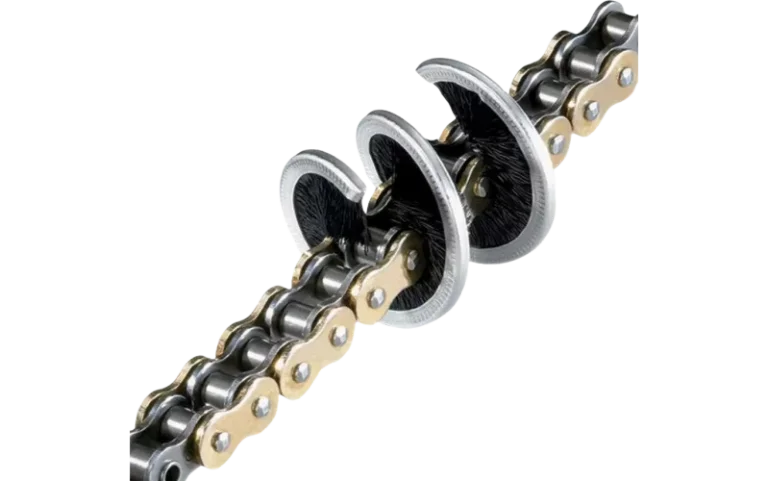
Heavy residue shows up in nearly every metalworking plant: rust crusting over stored steel, mill scale baked onto hot-rolled stock, weld slag clinging to joints, and dried grease packed into rope strands and chain links. Cleaning crews reach for a power brush, but the choice between a brush spring and a wire wheel is not always obvious. Both tools spin metal filaments against a workpiece, yet they remove contamination in completely different ways.
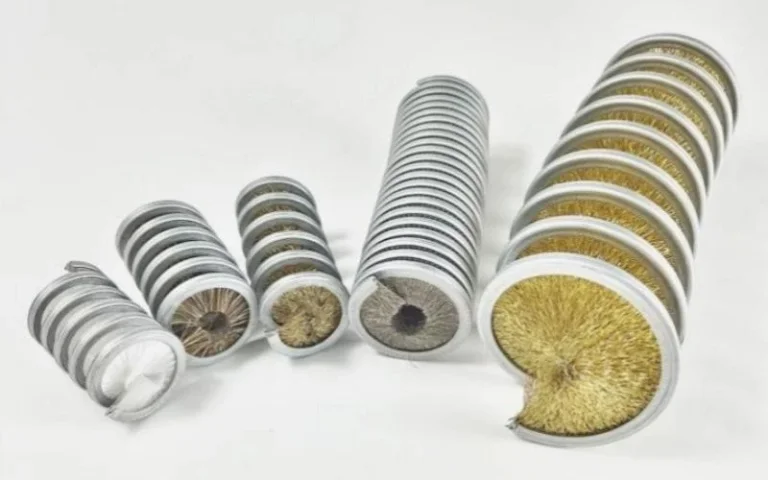
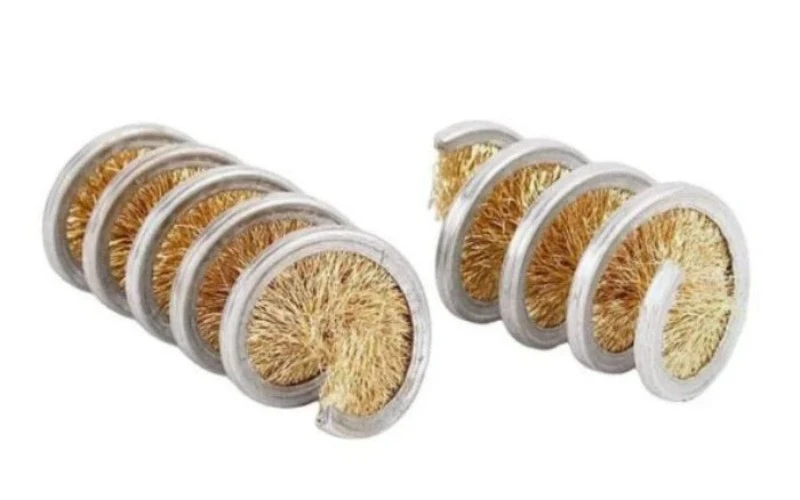
A brush spring, also called a coil brush, is built from a metal strip wound into a helical coil with filaments facing inward or outward. That shape lets it wrap around cylindrical parts, thread through bores, and conform to uneven surfaces. A wire wheel is a flat, radial disc of crimped or knotted filaments designed to hammer a broad surface at high speed. Each has a sweet spot, and picking the wrong one costs you cleaning time, damaged workpieces, and premature brush failure.
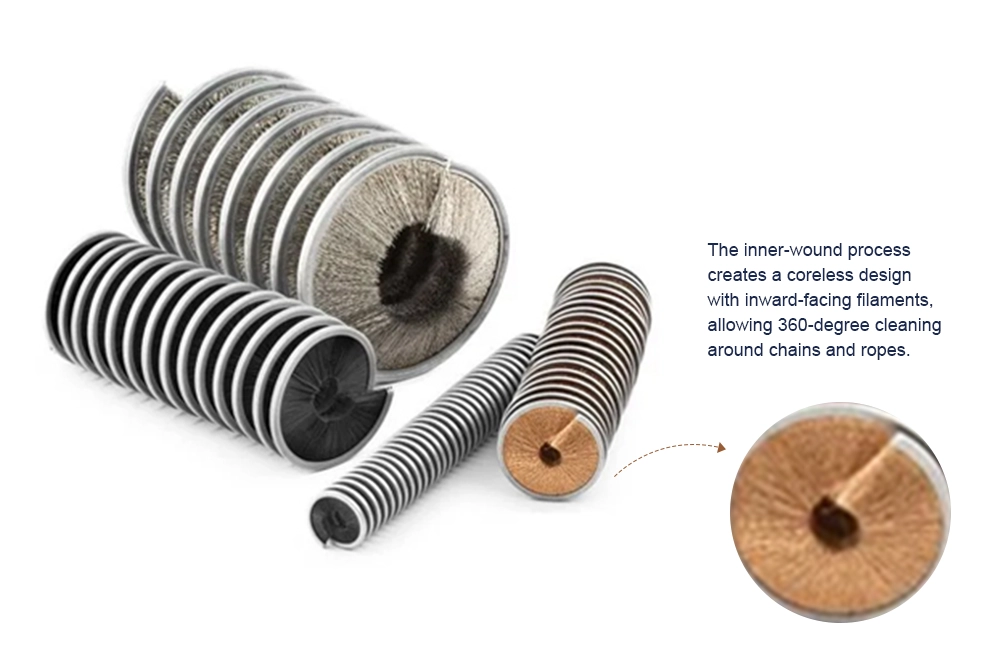
For heavy residue, the brush spring wins in most industrial cases because its helical coil delivers 360-degree contact on round and irregular parts, reaches into strand gaps and confined bores that a wire wheel cannot enter, and removes rust, scale, and dried lubricant with consistent pressure across the full surface. A wire wheel is the better choice only when you are working on large, flat, open surfaces where maximum material removal speed matters more than access or surface control.
This guide compares the two tools across construction, contact geometry, material options, and real cleaning scenarios. You will see where each tool dominates, where they overlap, and how to match the right brush to the residue you actually face on your line.
What Is a Brush Spring and How Does It Work
Design, Pitch, and Structural Advantages
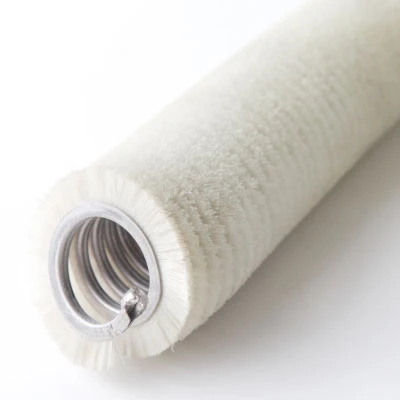
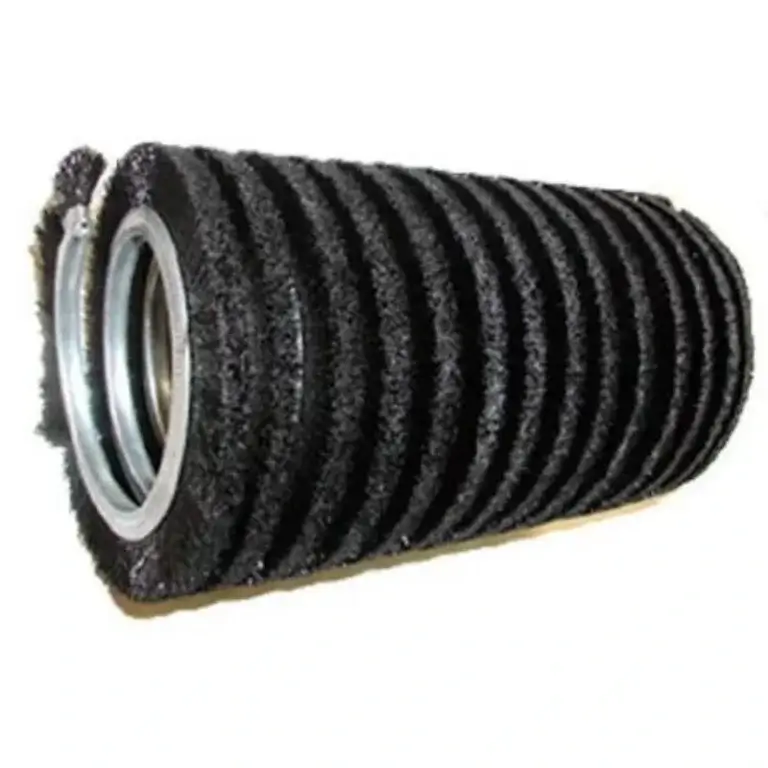
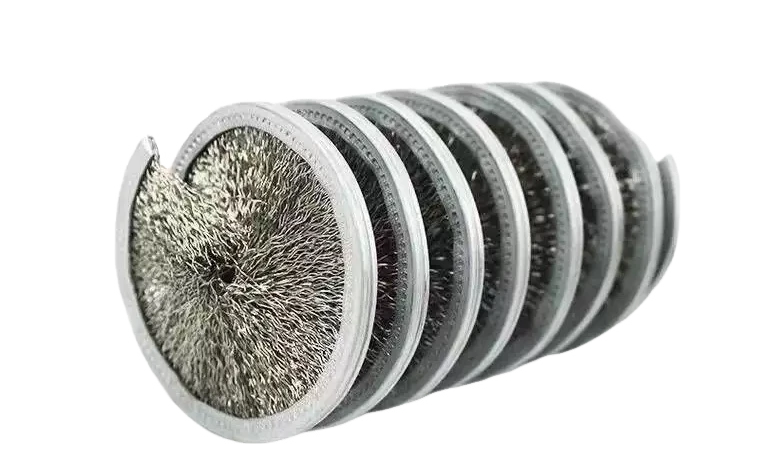
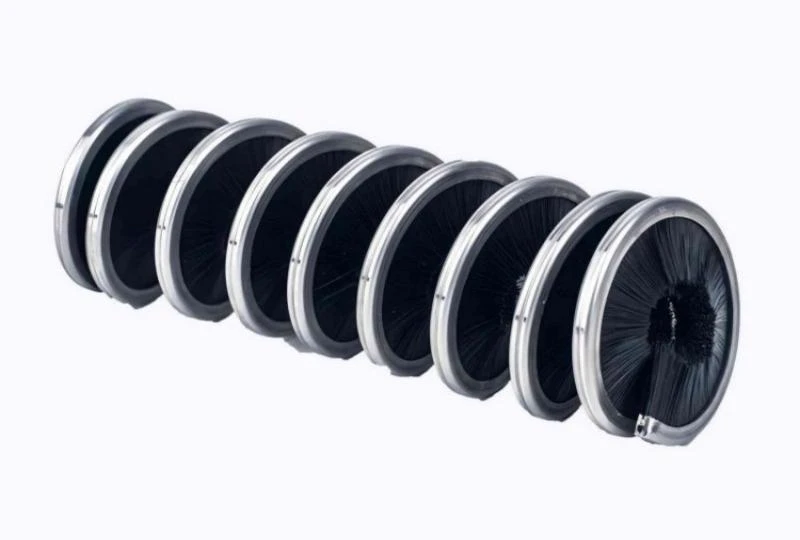
A brush spring is a helical coil brush: a continuous metal strip wound like a spring with wire filaments anchored along the strip, so the bristles form a cylindrical brush face that wraps around the workpiece and cleans it from every angle in one pass.
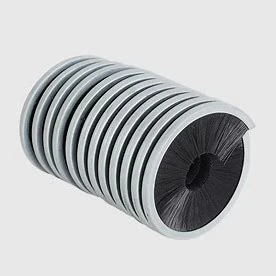
The design starts with a backing strip, usually galvanized or stainless steel, that is wound into a spiral with a fixed pitch. The pitch controls how tightly the coils sit. A closed coil leaves no gap between turns and creates a dense wall of wire for aggressive scrubbing. An open coil leaves space between turns, which lets coolant or water pass through and prevents sticky residue from clogging the brush. Filaments face inward for cleaning ropes, cables, rods, and bores, or outward for roller-style surface work. Understanding the basics of coil brush construction helps you read a specification sheet and avoid over-specifying density, which actually reduces cleaning efficiency because packed filaments smear debris instead of flicking it away.
The helical form gives the brush spring two structural advantages. First, it flexes around curved and irregular surfaces while keeping filament contact pressure even, something a rigid wheel cannot do. Second, it cleans the entire circumference of a cylindrical part simultaneously, so a 100 mm rope or shaft can be scrubbed in a single pass without rotating the workpiece.
Filament Materials and Their Limits
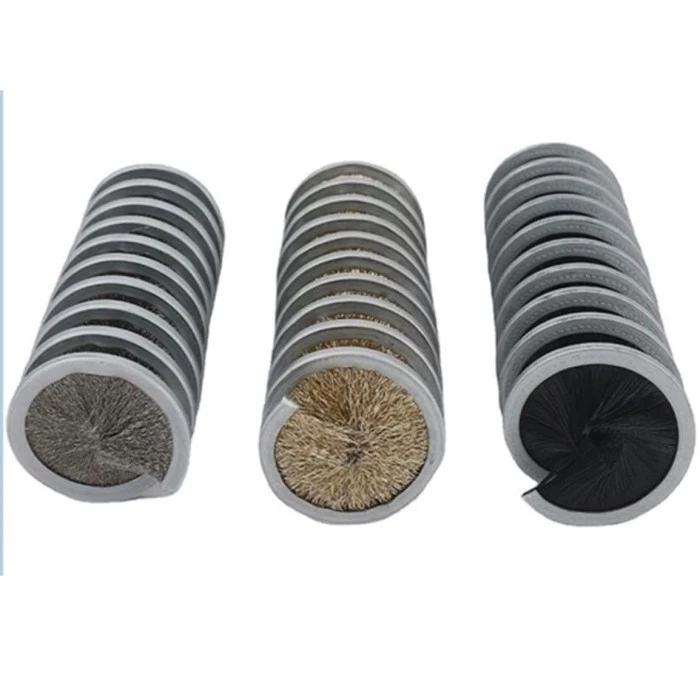
Filament choice decides how aggressive the brush is and where it can run safely. Steel wire offers the highest cutting power for heavy rust and scale, and it tolerates heat up to roughly 400°C, which matters in steel mills and foundries. Stainless steel wire adds corrosion resistance for marine and food-grade environments where rust particles cannot be allowed to contaminate the product. Brass wire sits between nylon and steel in aggressiveness, produces no sparks, and protects softer workpieces from scratching, which is why it appears in oil and gas, chemical, and elevator maintenance settings. Nylon and polypropylene filaments are gentle enough for coated or galvanized surfaces but cannot survive heavy scale removal.
Where a Wire Wheel Still Makes Sense
The wire wheel earns its place on large, flat, open surfaces where the fastest possible stock removal is the priority, such as stripping paint from steel plate, cleaning weld spatter from beams, or deburring machined faces before coating.
A wire wheel is a radial disc of crimped or knotted wire mounted on a bench grinder, angle grinder, or pedestal machine. The knotted version is the most aggressive, with twisted wire bundles that hammer the surface and quickly break through thick rust and old paint. Crimped wire wheels are softer and produce a smoother finish. Because the wheel presents a broad, flat face, it covers square metres of plate far faster than a coil brush can.
The trade-off is geometry and control. A wire wheel only contacts what its flat face touches, so it cannot reach into grooves, threads, strand gaps, or internal bores. It also throws filaments at high speed, and the risk of gouging the workpiece increases when operators apply heavy pressure. For open-surface work, the speed is worth it. For anything round, hollow, or detailed, the wheel leaves residue behind and risks damaging the part.
Brush Spring vs. Wire Wheel: Head-to-Head Comparison
The table below summarises the key differences for heavy-residue work.
Both tools remove heavy contamination, but they solve different problems. The brush spring trades a little raw speed for access, control, and full-surface coverage. The wire wheel trades finesse for raw removal rate on open ground.
Which Tool Should You Choose for Heavy Residue
The Golden Rule: Geometry First
Match the tool to the workpiece geometry first, then to the residue: use a wire wheel for flat open surfaces, and use a brush spring for anything round, stranded, hollow, or irregular, because geometry decides whether the tool can actually reach the residue at all.
Four Questions to Guide Your Choice
Work through these four questions before you buy or assign a brush.
- What shape is the workpiece? Round stock, rope, cable, chain, pipe, or a threaded part points to a brush spring. Flat plate or a large machined face points to a wire wheel.
- What is the residue? Rust, mill scale, weld slag, and dried grease all respond to steel filaments, but a steel coil brush removes them with less surface damage than a knotted wheel on cylindrical parts.
- Is the environment hazardous? For explosive atmospheres or spark-sensitive areas, use a brass coil brush instead of any steel tool.
- Do you need surface protection? Galvanised or coated workpieces need nylon or brass filaments; steel wire will strip the coating along with the residue.
Special Cases and Further Guidance
For wire rope and cable maintenance, the decision is straightforward. A wire rope cleaning brush threads over the rope and cleans between strands, removing abrasive grit that accelerates internal wear and shortens safe working life. No flat wheel can duplicate that action. When you specify the brush, match the inside diameter to the rope diameter, choose the filament by debris type, and re-lubricate the rope immediately after cleaning so its protective film is restored.
Buyers who need a structured method for matching brush dimensions, pitch, and fill material to their parts can follow a how to choose coil brushes guide that walks through inner diameter, contact pressure, and fill-material trade-offs before placing an order.
Getting the Most From a Brush Spring on Heavy Residue
A brush spring performs best when the coil pitch matches the residue type, the filament material matches the workpiece, and the operator follows a basic inspection routine, because most failures come from over-dense coils, wrong filaments, or worn brushes used past their limit.
Start with the pitch. For heavy scale and rust on round stock, a closed coil with dense steel filaments cuts hardest. For sticky residue such as dried grease or tar, an open coil lets the material release and prevents clogging. If the brush smears instead of cleaning, the coil is too dense, and the filaments cannot flick debris away.
Inspect brushes on a schedule. A practical rule used across maintenance departments is to check the brush after every 50 cleaning cycles and replace it once more than 30% of the filament material has worn away. Worn filaments reduce contact pressure and leave residue streaks while increasing the chance of filament throw, where a fatigued wire snaps and becomes a projectile. Always wear eye protection when running any power brush, keep the brush at the speed recommended by the manufacturer, and reverse the rotation periodically on outside coil brushes to balance filament wear.
FAQ
Can a brush spring be used with a drill or a bench grinder?
Yes. Brush springs are commonly mounted on handheld drills, bench grinders, and dedicated coil-brush machines. The mounting shank or arbor size must match the tool chuck, and the brush diameter should be selected so the outside of the coil runs at the recommended surface speed, typically well below the point where filaments begin to throw.
What speed is safe for a brush spring before filament breakage becomes a risk?
There is no single safe RPM because filament gauge, coil diameter, and wire material all shift the limit. As a general rule, larger coil diameters must run slower, and steel filaments tolerate higher speeds than nylon. Manufacturers publish a maximum RPM for each brush size, and staying within that number is the main defence against filament throw.
How is a brush spring different from a twist knot wire brush?
A twist knot brush is a wheel-type tool made of twisted wire bundles arranged radially, similar in mounting and use to a wire wheel. A brush spring is a helical coil that wraps around the workpiece. The twist knot cuts aggressively on flat surfaces; the coil brush reaches around round parts and into gaps. They complement each other, but they are not interchangeable for cylindrical or confined cleaning work.