Ceramic lines rarely stop. Pressed bodies run from the press through the glazing line into a kiln at roughly 1,200 °C, and any dust travelling with them becomes a defect visible only after firing.
A ceramic industry roller brush raises first-quality yield by removing contamination before glazing, cuts unplanned downtime because it lasts longer between changes, holds a consistent finish across formats, and lowers cost per square meter through less scrap and labor. It also captures ceramic dust at the point of contact.
This guide covers what the brush contributes, where those benefits are lost, and what decides the size of the gain.
What a Ceramic Industry Roller Brush Does on the Line
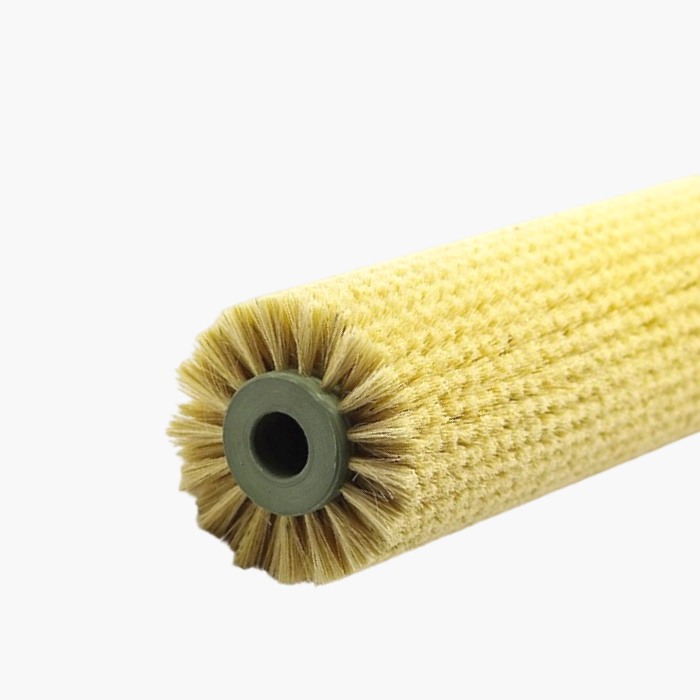
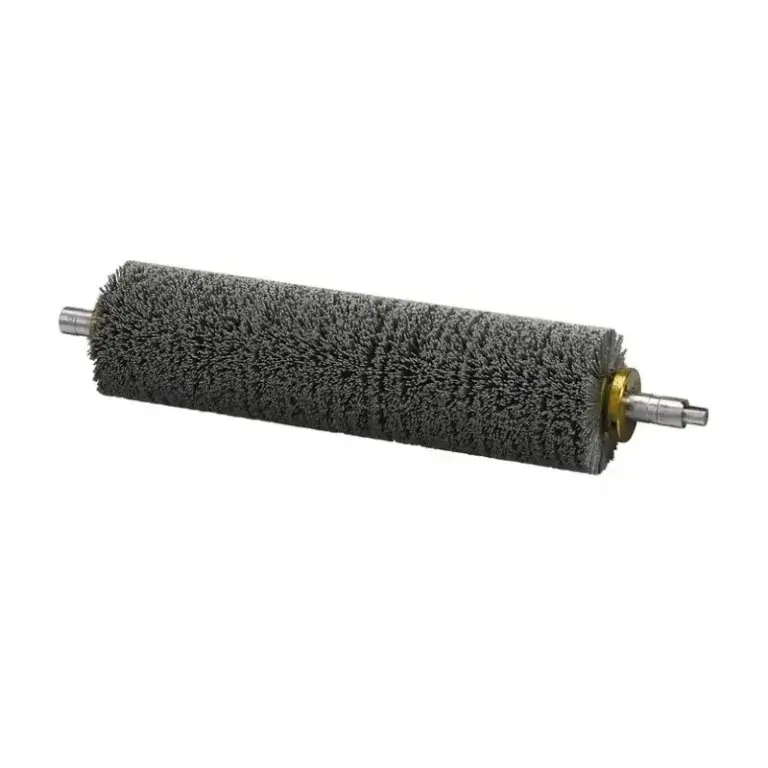
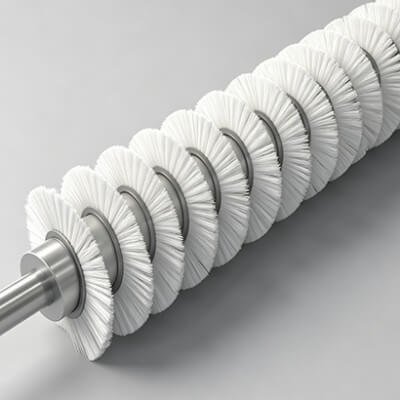
It is a rotating cylindrical brush that contacts ceramic material continuously as the product moves, handling dust removal, surface cleaning, texturing, glaze distribution, and edge finishing.
Unlike a hand tool, the cylindrical rotary cleaning roller brush spans the full width of a tile in one pass, applying identical force to every piece and making glaze adhesion predictable.
Where It Sits in a Ceramic Production Line
| Stage | Task | Why consistency matters |
| Press | Mold surface clearing | Carries into the next cycle |
| Before glazing | Greenware dust removal | Particles cause pinholes |
| Glaze line | Glaze leveling, edge cleaning | Film thickness sets appearance |
| After firing | Texturing, edge rounding | Finish drives inspection |
| Transfer | Part guiding | Damage is unrecoverable |
The Production Benefits You Can Measure
The benefits appear as numbers rather than impressions: yield, uptime, finish consistency, cost per square meter, and air quality. Each can be measured before and after a brush change, which is why the tools are justified on operating data. ISO 13006:2018, which defines ceramic tile classifications and first-quality characteristics, is the reference plants use when quantifying defect reduction.
Higher First-Quality Yield
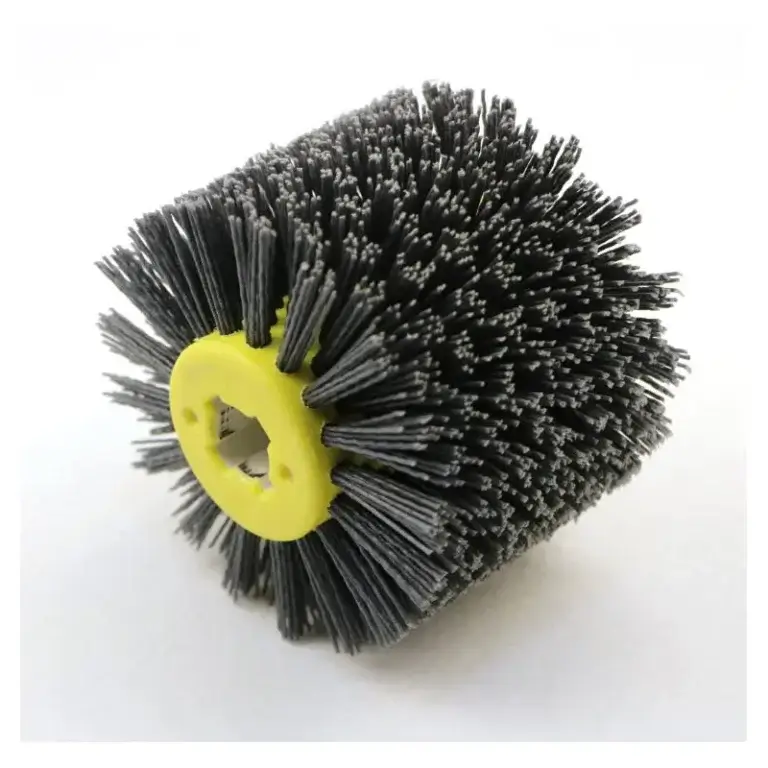
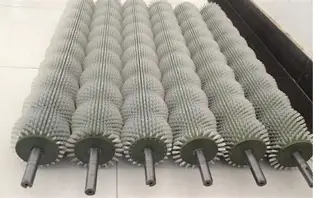
Pre-glaze contamination causes pinholes, specking, and glaze crawling, and removing dust rather than redistributing it prevents those defects early. Dust that is simply blown across a body settles again further down the line, so a single particle can mark several pieces before it finally leaves the process. An abrasive nylon brush roller lifts abrasive ceramic dust away without embedding fibers, and because the contact force comes from the machine rather than from an operator, the cleaning result holds steady from the first hour of a shift to the last.
Less Unplanned Downtime and Longer Tool Life
Stoppages trace back to worn tools and the re-setting that follows each replacement. A changeover costs more than the tool itself, since the line stops, the new brush has to be aligned, and the pieces produced until the setting settles are inspected or discarded. Filaments that resist heat and abrasion hold stiffness longer, so changeover intervals stretch, and a brush that keeps its shape also keeps its setting, which removes much of the trial and error that normally follows a swap.
Consistent Finish Across Formats and Batches
Plants running mosaics through large slabs need a finish that does not drift when the format changes. A narrow mosaic and a wide slab present different contact areas, so any wobble in the tool reads as a visible difference between the two. Dynamic balancing keeps rotation free of vibration, so the first tile matches the last, and the same setting can be carried from one format to the next without recalibrating the line at every size change.
Lower Cost Per Square Meter
Scrap, labor, tooling, and lost output all feed into unit cost. Scrap found late is the heaviest of the four, because the piece has already passed through pressing, drying, glazing, and firing before it is rejected, and the energy and handling spent on it are lost with it. Cutting glazing-line defects removes the most expensive rework route, since defects found after firing are already processed, while a glaze line roller brush that keeps its setting also holds labor and tooling consumption steady instead of absorbing the cost of repeated stoppages.
Cleaner and Safer Working Environment
Ceramic manufacturing is a recognized source of respirable crystalline silica exposure, and OSHA links that dust to silicosis, lung cancer, and COPD. Research on the ceramic industry finds that dust concentrates in grinding and finishing, so capturing particles at the source cuts exposure. A tool working at the point where dust is released takes those particles out of the air before they spread across the shop floor, which reduces the load on extraction and on manual housekeeping. Less airborne dust also means fewer particles settling back onto freshly glazed surfaces, so the health gain and the quality gain come from the same measure at the same point in the line.
When the Benefits Disappear: Common Problems and Practical Fixes
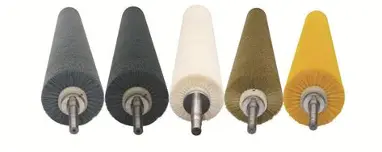
Most lost benefit traces back to three causes: filaments wearing unevenly, filaments leaving the brush, and rotation losing its balance. All three show up as defects well before the brush looks worn out, so they are diagnosed from the tile.
Industrial roller brushes rarely fail outright; they drift out of adjustment first. Checking each symptom against its likely cause is faster than replacing parts on suspicion, since most fixes are pressure, alignment, or cleaning adjustments.
| Symptom | Likely cause | Practical fix |
| Uneven filament wear | Imbalance, uneven mounting height | Rebalance, reset height across the width |
| Filament shedding | Weak anchoring, excessive pressure | Reduce pressure, verify tuft depth |
| Cleaning fades early | Dust packed between filaments | Clean with compressed air |
| Gloss or texture drift | Heat softening the filament tips | Use a higher-temperature filament |
| Shaft drag in wet lines | Corroded core, dried slurry | Use a sealed core, flush after wash-down |
What Decides How Big the Benefit Is
Five specifications decide how much of that benefit you keep: filament material, filament diameter and trim length, density, dynamic balance, and core construction.
- Filament material. Nylon for cleaning, abrasive nylon for surface work, stiffer media for scrubbing.
- Diameter and trim length. Fine, long filaments act gently; heavy, short ones aggressively.
- Density. Denser fill cleans better but adds friction and heat.
- Dynamic balance. Imbalance becomes vibration that marks product.
- Core construction. Corrosion-resistant cores suit wet lines.
Matching only outside dimensions when replacing a worn tile production line roller brush is a common mistake: identical diameters can behave differently in rotation.
FAQ
Q1: How often should a ceramic industry roller brush be replaced?
Inspection is commonly scheduled every four to six months, but the interval is driven by wear rather than the calendar: once filament height has fallen by around 25 percent from its original value, the brush is due for replacement. That threshold is used because shorter filaments change both contact pressure and reach, so cleaning and finishing results start to drift while the tool still looks serviceable. Measuring filament height at every inspection and comparing it against the original dimension lets the schedule correct itself, since lines handling abrasive bodies or running higher speeds reach the limit sooner than the standard window suggests.
Q2: Can one roller brush handle both greenware dusting and post-kiln finishing?
Usually not. Greenware needs light contact while fired porcelain is hard, so most plants use separate tools per stage. An unfired body is still fragile and releasing moisture, so the brush has to lift dust without marking the surface, which calls for fine filaments at low pressure. A fired tile is dense and vitrified, so post-firing work such as texturing or edge rounding needs a stiffer or more abrasive filament under a heavier contact load. Covering both stages with one tool forces a compromise on pressure, and that usually shows up either as marked greenware or as a finish that never reaches the texture the format requires.
Q3: How should a spare roller brush be stored between changeovers?
Hang or rack it so filaments stay straight and unloaded, rather than letting the brush rest on its filaments in a corner. A brush left under its own weight for weeks takes a set, and filaments that stay bent no longer contact the product evenly when the brush goes back on the line. Damp storage corrodes the core, and a pitted or swollen shaft loses the balance that keeps rotation smooth, so keep spares in a dry area clear of wash-down spray.