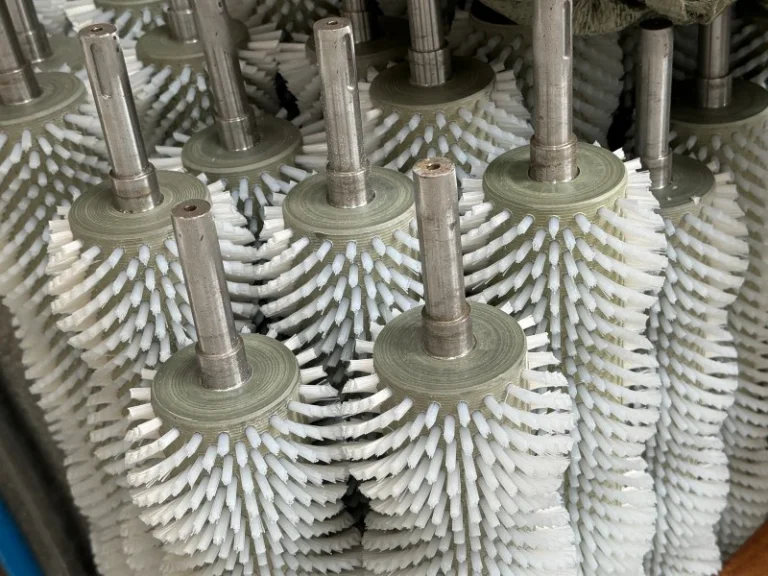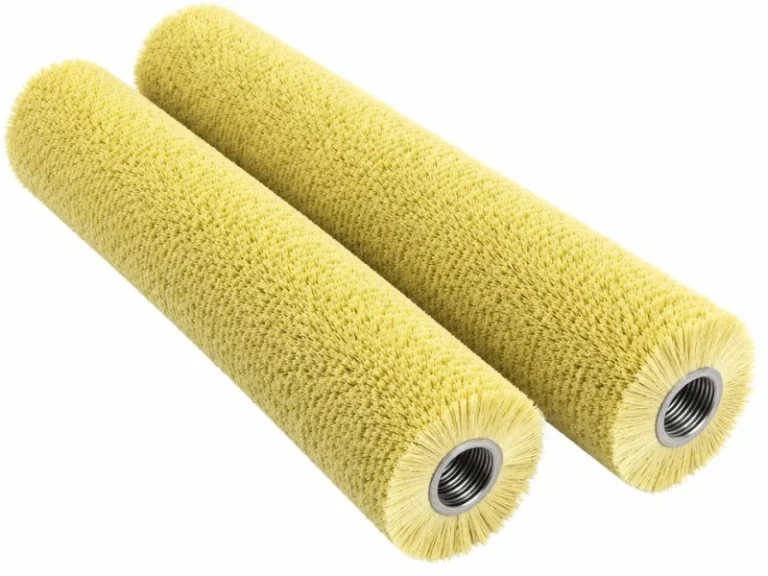
Determine the optimal settings of RPM (150–280) and pressure (3–5 mm) for an industrial cylinder brush in root vegetable washing to avoid damage and ensure efficiency. The following step-by-step guide will help you set the perfect RPM and pressure for an industrial cylinder brush used in a commercial line for cleaning root vegetables:
At a line where root vegetables are washed, getting RPM and pressure wrong can cost the processor real money through damaged produce, contaminated batches, and premature failure of the brushes. The ideal operating window for an industrial cylinder brush is much narrower than most people would assume—150 to 280 RPM with a contact depth of only 3-5 mm. This article will break down how to hit those targets, thus articulating what happens when you miss them.
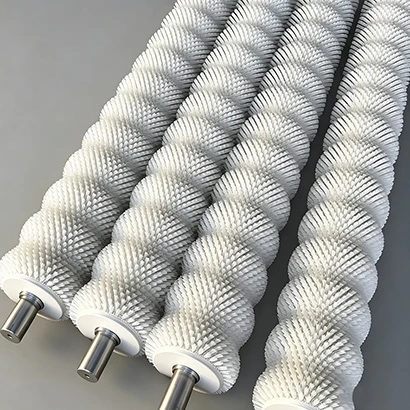
The Core Pain Points of Poorly Tuned Brush Parameters
Before dialing in the numbers, let’s see what bad calibration does on the production line, in fact. Three failure modes keep recurring in operations for washing carrots, potatoes, beets, and turnips.
Excessive RPM: Filament Softening from Frictional Heat
The brush roller should not spin too fast because too much heat is formed by the friction between the tips of the filaments and the surface of the vegetables. In this case, the filaments, which are made of nylon, shall start to soften, become tacky, and shed micro-particles on the produce. This is secondary contamination, and it is precisely what the brush was supposed to remove. In fact, most of the operators who push the speed beyond 280 RPM in their attempts to increase the throughput usually discover that the cleaning quality drops, not rises.
Uncontrolled Contact Pressure: Residue or Skin Damage
Light pressure leaves soil, sand, and fibrous root hairs at the surface. Heavy pressure strips the peel, bruises the flesh, and shortens shelf life. Both extremes increase rejection rates at the packing stage. The margin between “clean” and “damaged” is surprisingly small on soft-skinned roots like new potatoes or young carrots.
Insufficient Brush Body Rigidity: Axial Deflection Under Load
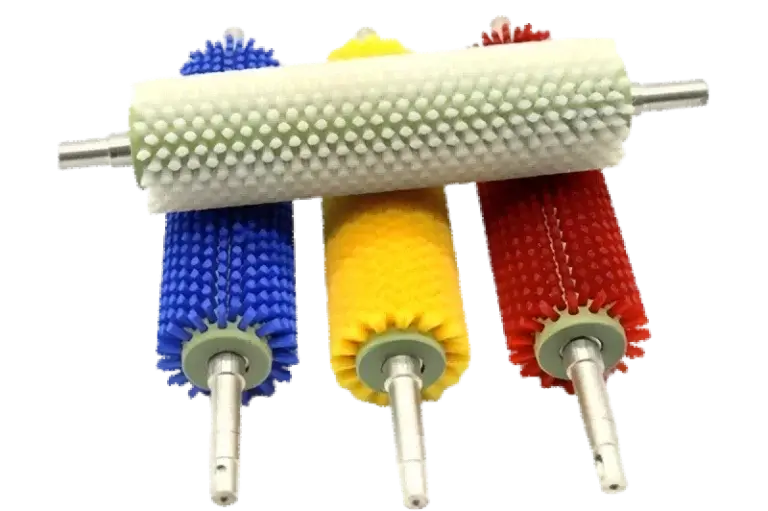
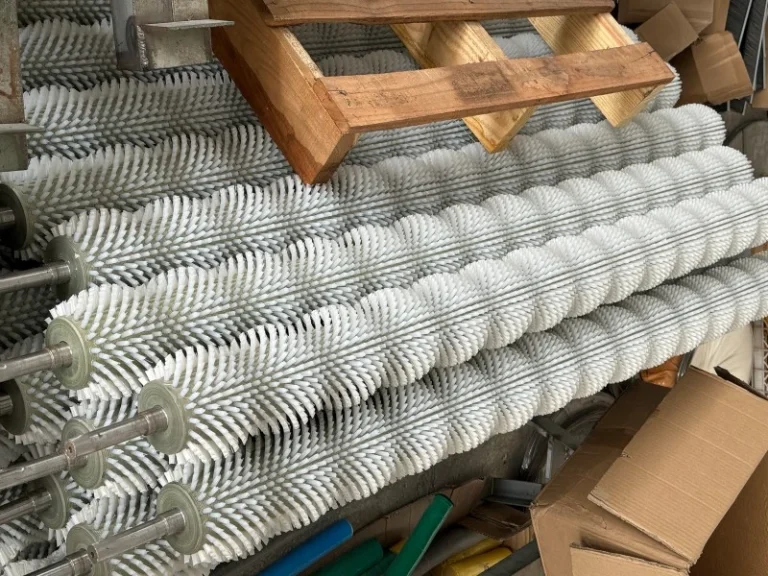
In other words, a brush core that flexes under sustained pressure will create uneven filament contact across its length. The center will press too hard while the ends barely touch the produce—and that’s how it feels for weeks until this deflection becomes permanent. The whole machine gives inconsistent washing results. A brush body that is injection molded in one piece of high rigidity with a hardened shaft will also eliminate this risk. Anyone evaluating hardware options can find a deeper comparison in the cylinder cleaning brush selection guide.
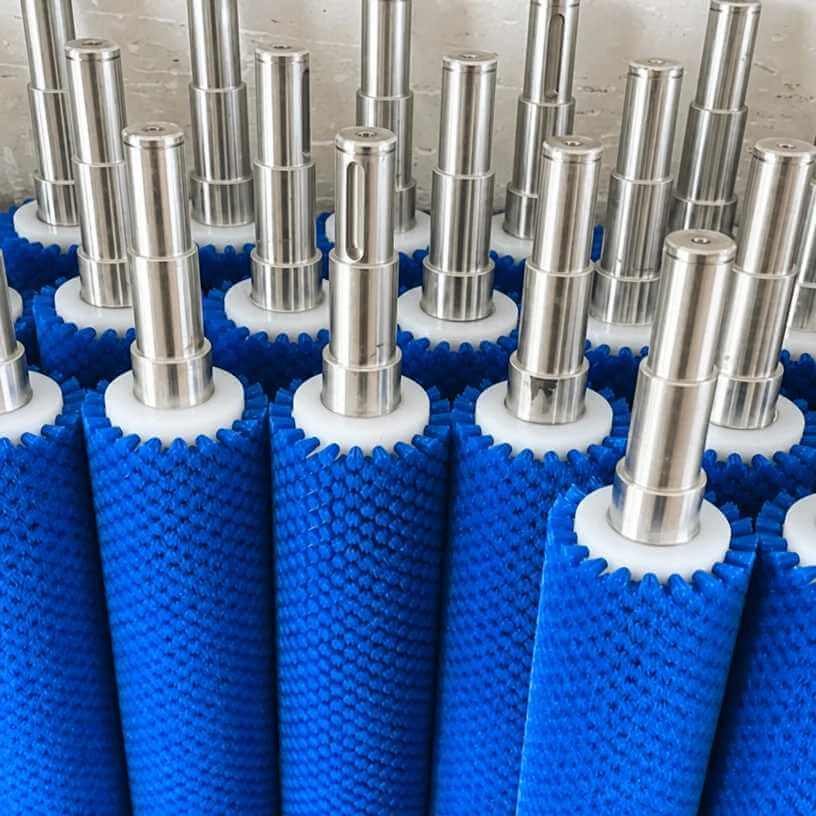
Optimal RPM Settings for Root Vegetable Cylinder Brushes
The Recommended Speed Window: 150–280 RPM
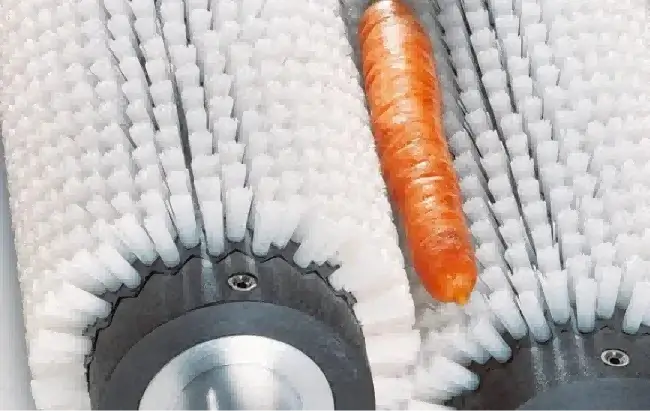
Industry testing and field experience have always found the sweet spot for washing root vegetables between 150 and 280 RPM. In this range, the filaments bear enough tip velocity to dislodge clay and debris without creating heat that could be damaging.
Factors that would move the target within the range are
- Vegetable hardness—Heavy roots such as those of celeriac will take up towards the higher end; tender new potatoes will set it towards the lower end.
- Soil type—Heavy clay will set it spinning faster; light sandy soil will clean at lower speeds.
- Filament diameter—Thicker filaments mean less speed is needed to deliver the same mechanical action. Brush diameter—Larger rollers create higher tip speed at the same RPM. So the operators should reduce the set point.
What Happens Above 280 RPM
This would set an industrial cylinder brush over 280 RPM, and it would cascade problems that could not be reversed; by then, the temperatures at the tip of the filament would be such that standard nylon (PA6/PA66) would have softened. Gentle tips are wiped over the surface of the vegetable, leaving behind a polymer film. The elastic recovery of these filaments is lost; they get flattened permanently. This process reduces the working life of the brush by 30-50%, increasing both the frequency and the cost of replacements.
Filament Material That’s Right for Fast Conditions
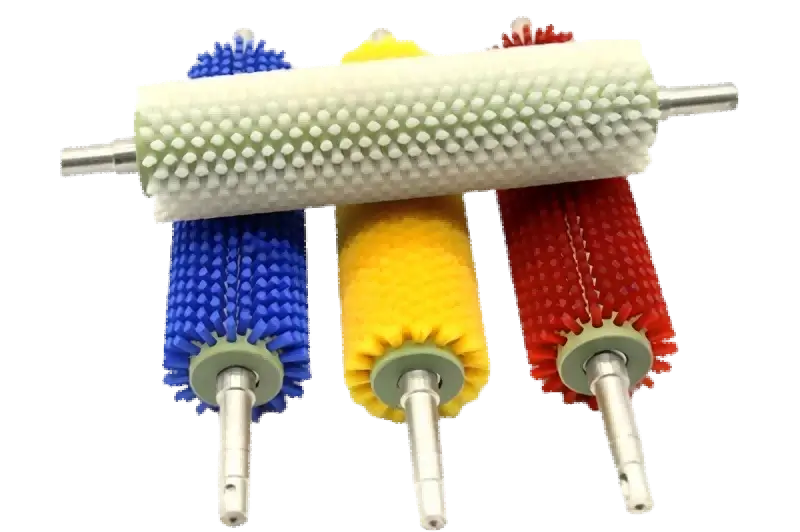
When production demand pressures operations near the top of the range, standard nylon just doesn’t cut it. Heat-modified PA12 or PA612 filaments offer much higher thermal resistance, maintaining stiffness and elasticity well above temperatures that wreck conventional nylon. For any line running consistently above 220 RPM, you have to specify PA12/PA612 filaments in the Vegetable Cleaning Brush roller—it’s a practical necessity, not an upgrade.
Precision control of contact pressure (penetration depth)
The standard: 10–15% of total filament length (3–5 mm)
Contact depth, or how far the filament tips compress against the vegetable, should stay between 10% and 15% of the free filament length. On a typical brush with 35–40 mm filaments, that translates to 3–5 mm of penetration.
| Parameter | Minimum | Optimal | Maximum |
| Penetration as % of filament length | 8% | 10–15% | 18% |
| Actual penetration depth | 2.5 mm | 3–5 mm | 6 mm |
| Typical result | Soil residue remains | Clean surface, no damage | Peel stripping/bruising or injury |
| Brush lifespan impact | Neutral | Normal wear | Accelerated fatigue |
Two Mistakes to Avoid in Pressure Calibration
< 3 mm Under-compression:
The filaments move across the surface without going into the embedded soil. The throughput looks fine, but the final inspection at the end of the line rejects a high percentage of the produce.
> 5 mm Over-compression:
The filaments bend further than the intended flex of the design and push to the side, tearing skin tissue. That is a direct erosion of profit margins on high-value items such as washed-and-packed baby carrots.
Hardware That Holds the Setting: Rigid Core Construction
Precision in pressure is moot if the bristle body cannot maintain its form under load. A core of high rigidity, one piece, and injection molded with a shaft of hardened steel will ensure a uniform set contact depth from end to end, day in and day out. Such structural integrity is one of the most overlooked features when choosing a new industrial cylinder brush. This defines what a cylinder cleaning brush is in full detail and how its performance is impacted by core construction. This is the kind of background that really helps.
Parameter Comparison at a Glance
| Operating Condition | RPM | Penetration | Filament Type | Expected Outcome |
| Light soil, delicate roots | 150-180 | 3 mm | Standard PA6 | Gentle, clean, minimal peel loss |
| Medium soil, standard roots | 200-250 | 4 mm | PA612 | Balanced, clean, good throughput |
| Heavy clay, dense roots | 250-280 | 5 mm | PA12 (heat-modified) | Aggressive clean, full soil removal |
| Over-limit (not recommended) | > 280 | > 5 mm | Any | Surface damage, filament failure |
The right combination has to be selected from this matrix depending on the specific vegetable, the soil conditions, and the target throughput. A detailed framework for matching brush specifications to the application is provided in the “How to Choose a Cylinder Cleaning Brush” article to help operators who want step-by-step guidance.
Frequently Asked Questions
Q1: What Is the Recommended Frequency for Recalibration of RPM and Pressure on a Vegetable Brush Line?
Recalibrate every 200-300 hours of operation, or when processing a different type of vegetable, whichever comes first, to maintain consistent cleaning quality.
Q2: Is It Possible to Use One Industrial Cylinder Brush for Potatoes and Carrots?
Yes, if the filament material and diameter are suitable for both. You can make adjustments between runs instead of changing the whole brush.
Q3: What Is the Main Sign That Contact Pressure Is Set Too High?
If more than 3-5% of the output shows visible peel removal or flesh bruising, it’s a clear sign that pressure is too high, and depth must be reduced on the spot.