
Choosing the wrong brush will lead to a waste of money and time in the production process. A good cylinder cleaning brush will enhance the cleaning process, reduce unplanned downtime, and increase service life. You can learn all the details from this guide to know the most important factors for selection that an experienced procurement team and an engineer would check before ordering.
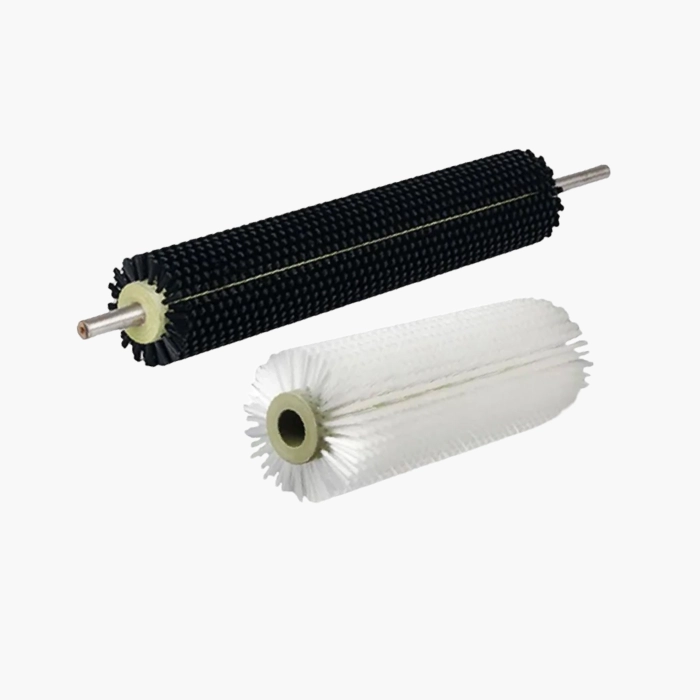
Understanding Cylinder Cleaning Brush Basics
Right, let’s talk about the primary variance of this brush type first before we get into the selection criteria. The cylinder cleaning brush is mounted on a central shaft; it operates with a rotary motion and provides continuous and uniform contact over the entire width, which is available for cleaning. This sort of rotary motion makes it far more effective than any stationary or handheld unit in automated production lines.
The two types of construction that are most commonly used in industrial applications are as follows:
- Wound brushes: Filaments spiraled around a wire core. Typically used for light to moderate cleaning
- Tufted brushes: Filament clusters anchored into drilled holes on a solid roller. Generally built for heavier-duty tasks
A tufted cylinder brush holds filaments better and can take more aggressive contact pressure; most manufacturers therefore prefer this type for their demanding applications.
Considerations When Choosing: Filament Material
The cleaning performance, chemical compatibility, and brush longevity directly depend on the filament chosen. Most common options are listed in the table below:
| Filament Type | Best Applications | Durability | Chemical Resistance |
| Nylon (PA6 / PA6.6) | Food processing, general cleaning | High | Moderate |
| Polypropylene (PP) | Wet environments, light debris | Moderate | High |
| Steel Wire | Scale removal, heavy deburring | Very High | Low |
| Natural Fiber | Polishing, delicate surfaces | Low | Low |
The nylon cylinder brush is pretty much an all-rounder favorite across industries. It has good resistance to abrasion, maintains flexibility, and FDA grades for food contact are available. Most buyers kick off with nylon unless the application calls for something different.
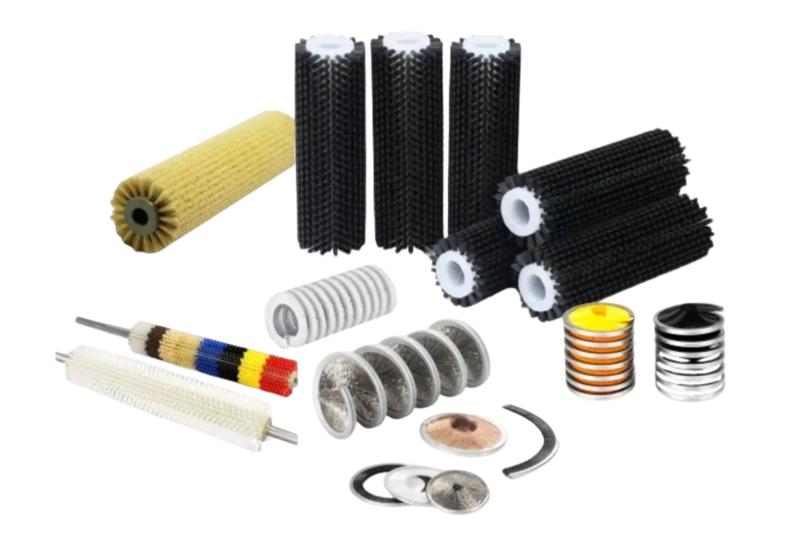
Oversized brushes mean excessive pressure and rapid wear. Undersized ones result in incomplete cleaning. The perfect size would solve both problems. Buyers about to ask for a quote should have the following information on hand:
- Shaft bore diameter or arbor size
- Overall brush length (face width)
- Outside diameter (OD) of the brush body
- Required filament trim length
More aggressive cleaning will mean higher motor drag and more energy consumption. Thicker filaments are for stubborn dirt; thinner ones won’t hurt delicate surfaces.
Experienced engineers balance density and stiffness with two primary factors: debris type and line speed. Faster lines generally require stiffer filaments to maintain effective contact.
Design of Brushes for Specific Applications
Cleaning of Conveyor Belts
Carryback is picked up by return-side conveyor belts — this is how tracking problems begin, and it accelerates wear on the belt. A conveyor belt cleaning brush goes on the return side to clear away leftover dirt before it has a chance to pile up.
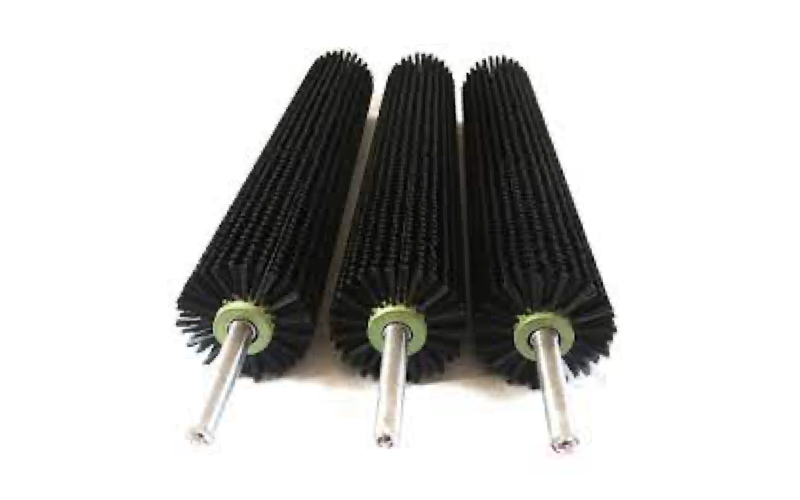
Critical specifications in conveyor applications are:
- Belt speed and direction of travel
- Type of carryback (wet, dry, or abrasive)
- Available mounting space and shaft configuration
- Operating temperature range
Plants having non-standard conveyor installations should opt for OEM solutions. Custom-engineered conveyor belt cleaning brushes fit exact equipment dimensions and eliminate the performance compromises that come with generic options.
Vegetable and Food Processing
The brush must be able to remove dirt and foreign materials from the product without causing any damage or injury to the product itself. A typical vegetable cleaning cylinder brush will have filaments of soft nylon or polypropylene, moderately packed to allow gentle but effective cleaning.
Different produce types require different settings:
- Root vegetables (potatoes, carrots): medium-stiff nylon, higher density
- Soft fruits (peaches, tomatoes): soft polypropylene, lower density
- Leafy greens: ultra-soft filaments, minimal contact pressure
Buyers in food processing lines can refer to a special article on how to choose a vegetable cleaning brush in the surface cleaning and finishing section.
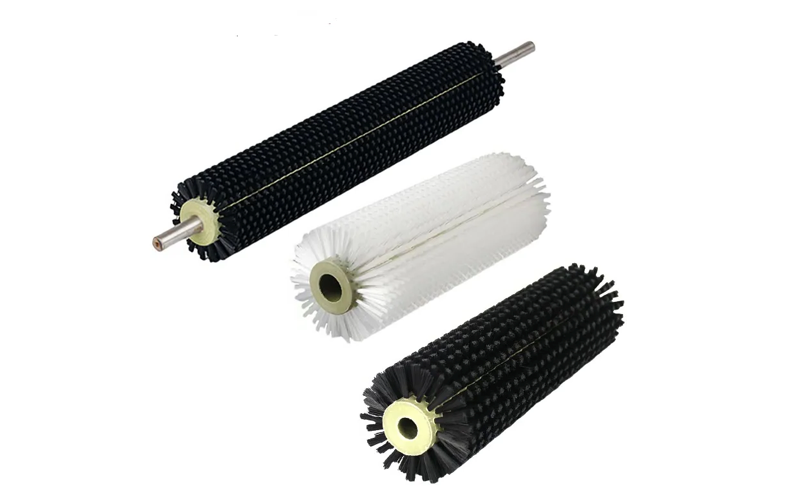
These brushes are used not only in food and conveyor systems but also in various surface preparation applications, such as deburring metal parts and cleaning textured panels. A tufted cylinder brush can perform these tasks because its anchored filament clusters will not pull out under high rotational force.
Common Mistakes to Avoid
Inadequate results are often associated with first-time buyers due to the following mistakes:
- Choosing filament diameter based on price rather than application requirements
- Forgetting to consider operating RPM when selecting filament stiffness
- Failing to determine chemical exposure conditions in the working environment
- Placing an order without first verifying the shaft and mounting compatibility
All of these, more often than not, lead to premature wear, inconsistent cleaning, and costly unscheduled replacements.
How to Work with a Brush Manufacturer
A good supplier will help simplify the entire selection process. At the start of cooperation, the buyer should provide the following details:
- Description of the application and target cleaning surface
- Equipment specifications (shaft type, RPM, mounting method)
- Operating environment (temperature, humidity, chemicals)
- Expected service life and replacement frequency
All this information will help the manufacturer recommend the best configuration of cylinder cleaning brushes and will reduce trial-and-error as well as lead time.
Frequently Asked Questions
What filament material is best for food-grade cylinder cleaning brushes?
FDA-compliant nylon filaments are best for food applications because they offer the best performance. They do not absorb moisture, remain flexible, and can withstand many cycles of high-temperature sanitation without degrading.
Can one brush be used with different types of conveyor belts?
No. Different belt materials and speeds require specific filament stiffness and trim configurations. Custom OEM brushes provide the most consistent and reliable performance for each application.
How often should facilities replace industrial cylinder cleaning brushes?
Replacement frequency depends on operating hours, debris abrasiveness, and filament type. Most facilities conduct monthly inspections and replace brushes when filament trim length falls below the effective contact range.