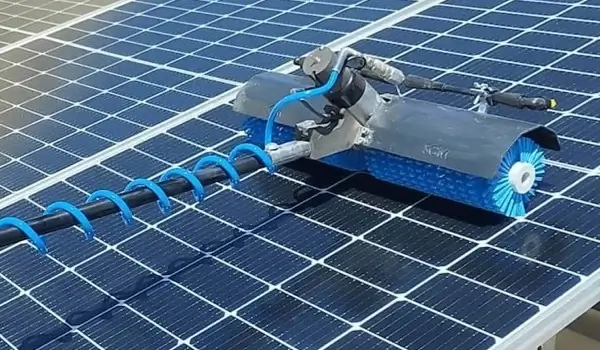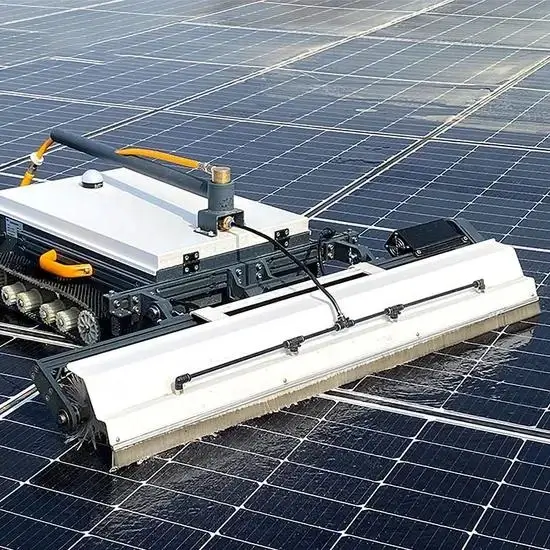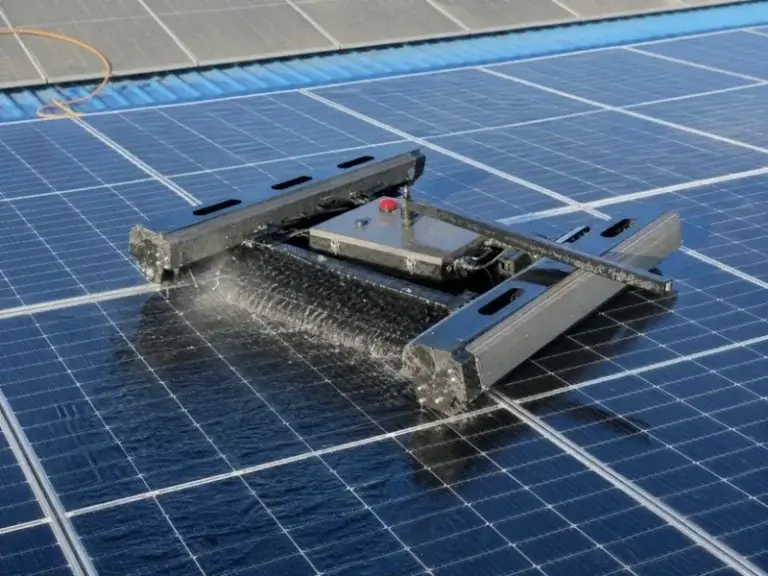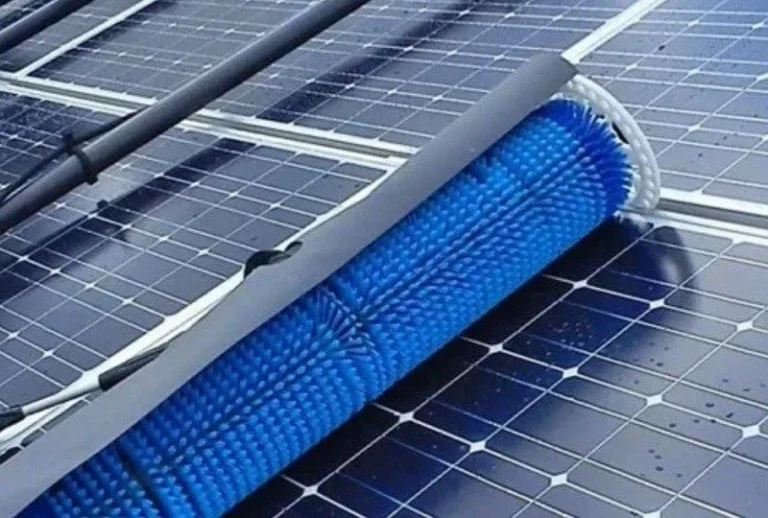
Choose a solar panel cleaning brush with anti-static PA612 soft bristles and a diameter of 0.06-0.10 mm to ensure the prevention of AR coating micro-scratches and thus ensure long-term output.
The AR coating is optimized for light absorption and, therefore, it is the most delicate layer of the module. Mistakes in the choice of bristles on the solar panel cleaning brush can result in thousands of invisible micro-scratches per cleaning cycle, each one capable of degrading the power output by 2-5% or more over just a few years. The paper makes it obvious which bristle material, diameter, and performance properties can put a stop to that— and why serious PV operators should never ignore bristle specs.
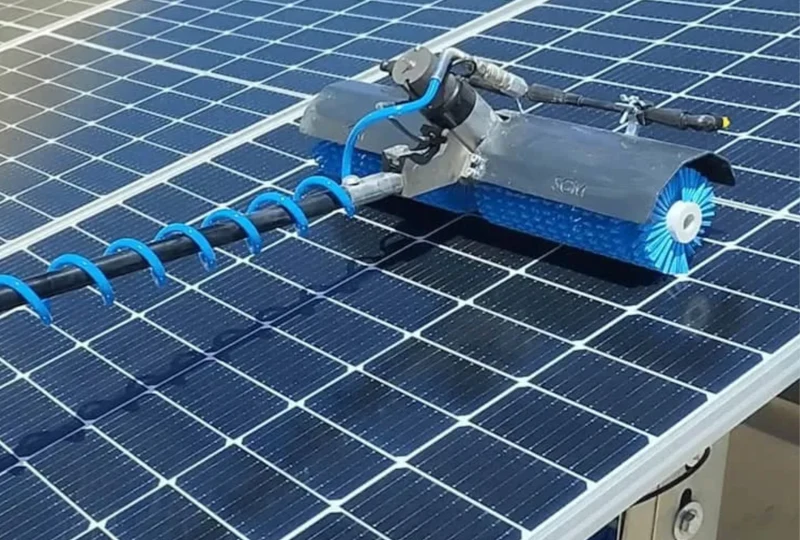
Micro-scratches Reduce Solar Panel Output
Most managers think that once the board is clean after brushing, that’s okay. In reality, the glass surface is always left with micro-scratches by coarse or stiff bristles, which can’t be seen with the naked eye. Such scratches will scatter any incoming light rather than allowing it to pass through the AR layer—hence steadily lowering module transmittance.
It’s after dozens of cleaning cycles in a year that micro-damage starts to add up enough to measure. From field reports at large PV farms, it was seen that panels cleaned with the wrong brushes show a noticeably faster efficiency decline than those cleaned with properly specified tools. Bristle filament is almost always the root cause that traces back to one component.
Procurement should understand how filament and brush weight relate to scratch resistance so that they can buy cleaning equipment without incurring a long-term, expensive loss.
Soft Bristles Prevent Coating Damage
The major and direct cause of scratches to AR coatings is hard bristles. Most cleaning brushes on the market come with budget cleaning equipment and hence have standard PA6 (Nylon 6) filaments, which are relatively high in surface hardness. When these hard bristles come into contact with the panel under roller weight, they tend to drag any dust or sand particles trapped over the coating, just like fine sandpaper does.
This problem would be solved at the source with the use of an anti-static PA612 filament. In its characteristics, PA612 is moderately flexible: it is of a nature soft enough to conform gently to the glass surface yet resilient enough to sweep dust effectively. It bends on contact, not gouging— which means the force of cleaning is spread over a wider area. The pressure of contact stays well below the threshold for scratching the AR coating.
The main advantages of PA612 over PA6 in terms of softness are: it has lower moisture uptake, so it will deliver more constant stiffness at different levels of humidity; and the filaments have better elastic recovery, meaning they will return to their original shape without forming rigid kinks.
These filaments have a smoother surface against the coated glass, so there is less friction coefficient.
For anyone looking to choose a solar panel cleaning brush for daily operations, this would be the number one spec to prioritize above all others: PA612 or a low-hardness filament type.
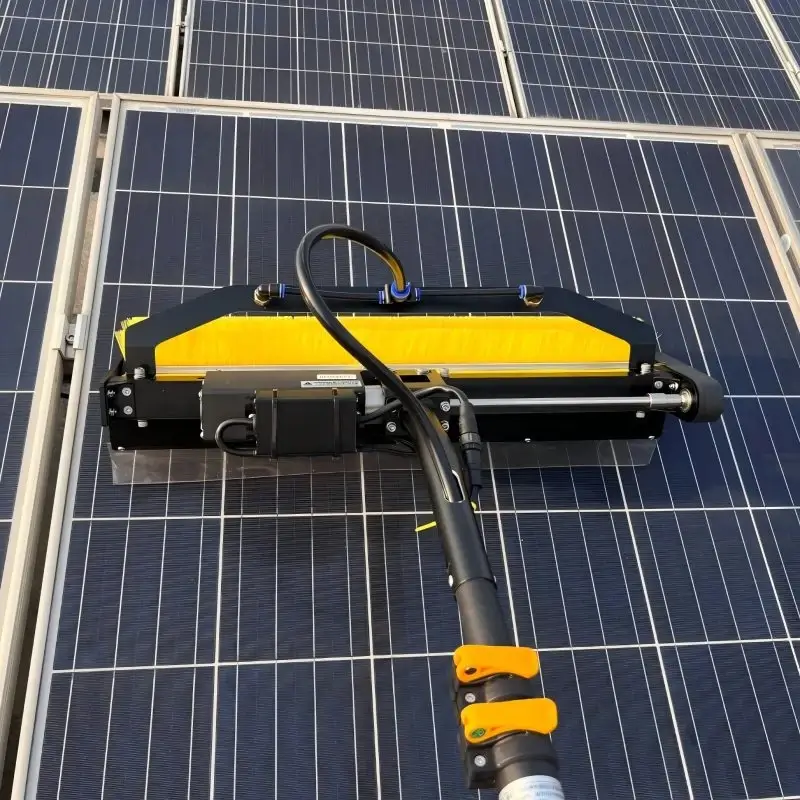
Proper Bristle Diameter Avoids Abrasion
Consider also the softness of the bristle. It is actually the diameter of the filament that will directly determine the force that each strand will be able to transmit to the surface of the panel. Bristles will enable them to concentrate pressure on a small contact point. Thin ones will spread it broadly.
The industry has seen that brush bristles, which are safe for cleaning PV, fall within a diameter range of 0.06-0.10 mm. Filaments in this range are quite soft and very flexible to the touch, so they make good dust lifters without posing any risk to the layers of AR.
The same applies to static. In dry cleaning, we have the bristles and the glass that create an electrostatic charge. That charge is what draws those fine sand grains back over the freshly swept surface, and, of course, the next pass of the brush grinds those particles into the coating. This cycle of “secondary abrasion” does as much harm as direct scratching.
The anti-static filaments of PA612 dissipate the surface charge quickly, so it breaks the cycle as:
- Bristles touch the panel, and dust is raised.
- Inherent anti-static properties release the charge before the sand can re-adhere.
- The glass should be self-cleaning or not get dirty, allowing dirt to fall off.
- The bristles should have a reduced ability to scratch when moving over a clean surface.
This is for teams that write detailed specifications — the guide on what to specify for a custom solar panel cleaning brush. It covers diameter, conductivity, and other critical filament parameters.
UV-Resistant Bristles Stop Hardening Damage
Soft bristles do not last very long, especially with outdoor PV cleaning brush applications, as they are mostly exposed to UV rays, varying temperatures, and occasional contact with chemicals. In such conditions, low-grade filaments simply biodegrade, turning brittle and losing flexibility until they behave just like the hard, aggressive bristles they were meant to replace in the first place.
The solar panel roller brush bristles are of the high-quality outdoor type. UV stabilizers are also included in their polymer structure, which makes them resistant to weathering. These filaments keep constant softness throughout their working life, which means that the last cleaning cycle is as safe for the AR coating as the first.
Yellowing or chalky surface texture, increased stiffness when bending filaments by hand, and splitting of bristle tips are some of the key parameters that can be used to ascertain degradation. With these in mind, the maintenance team can set a replacement schedule for the solar panel cleaning brush before the degraded bristles start damaging the panels.
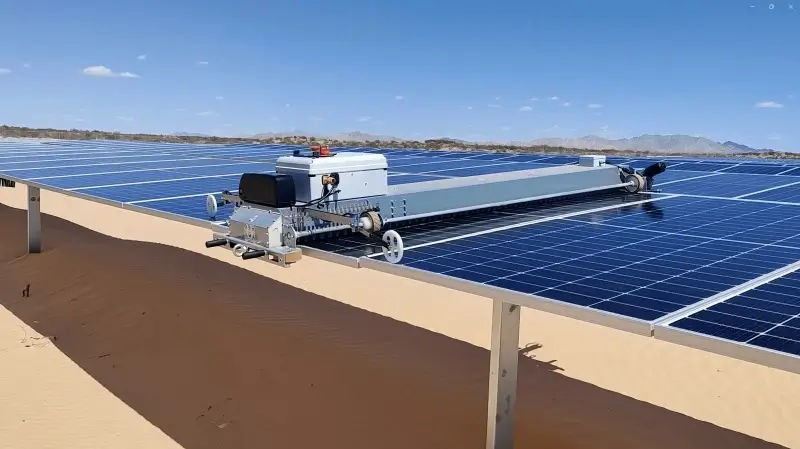
Standard PA6 vs Anti-Static PA612 Bristles
The following table brings out the major practical differences that matter in the bristle specifications of solar panel roller brush bristles for AR-coated modules.
| Property | Standard PA6 | Anti-Static PA612 |
| Hardness | High risk of scratching the coating | Low—safe for AR layers |
| Typical Diameter | 0.15–0.30 mm | 0.06–0.10 mm |
| Moisture Absorption | High stiffness varies at different humidity levels | Low stiffness remains nearly constant |
| Static Dissipation | Poor: it draws sand back to the glass | Excellent: prevents secondary abrasion |
| UV / Weather Resistance | Moderate: it hardens over months | High: it stays soft for years |
| Cost | Lower upfront | Higher upfront, lower long-term panel loss |
Economical per unit, perhaps, but it’s the cumulative AR coating damage that actually results in measurable revenue lost over the 25 years of a solar farm. More expensive per brush, the anti-static PA612 bristles protect the asset that actually generates income—the panel itself.
More detailed costs can be located by the party that reviews the total ownership costs in the article, including the weight of cleaning brushes for solar panels and savings on filaments.
FAQ
Q1: Do Micro-Scratches from a Solar Panel Cleaning Brush Really Lower Power Output?
Yes. Every scratch will make the light move away from the cell. The total small damage over hundreds of cleaning cycles will measurably reduce module transmittance and annual energy yield.
Q2: What’s the PV Cleaning Brush Bristles Replacement Cycle for B2B Operators?
Replace the bristles after you notice that they have become hard, discolored, or split at the ends, which typically occurs after every 12-18 months of regular outdoor use, depending on exposure to UV and frequency of cleaning.
Q3: Do AR-Coated Panels Use Bristles Made of PA612 Only?
PA612 is the most commonly used. A few manufacturers have special blended polymers — but to clean AR coatings, all filaments must meet softness, diameter, and anti-static benchmarks.