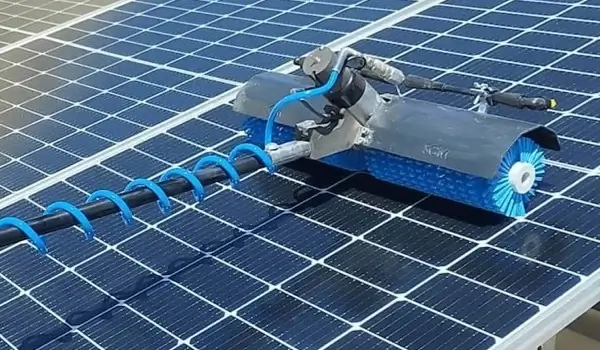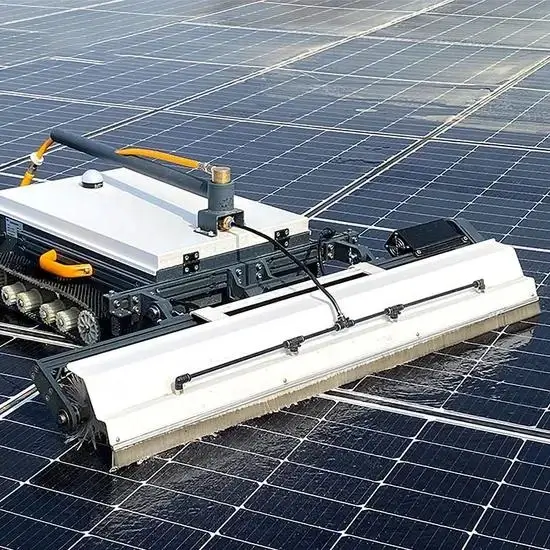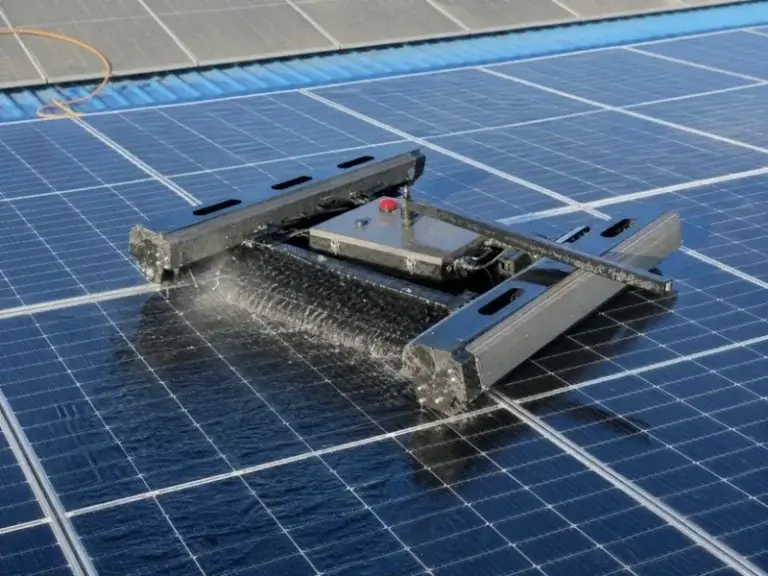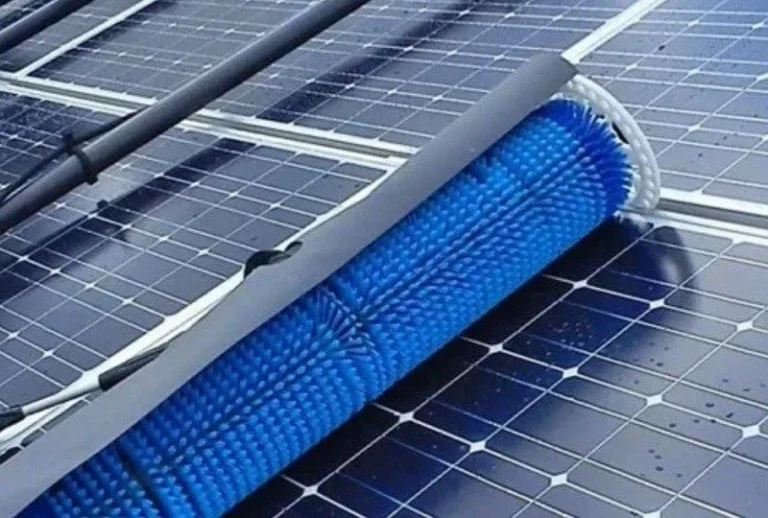
Dust isn’t the only concern at desert solar farms. There’s also a silent killer: static electricity. Friction between a normal nylon brush and a solar panel while cleaning creates thousands of volts of electrostatic charge. Dusting off with the same brush does more harm than good, as these charges, if not dissipated, can travel into the system’s internal components, attract more sand, and wear away delicate coatings.
An anti-static solar panel cleaning brush takes care of all three at once. This is why procurement managers and O&M teams should place the anti-static brushes as a priority — and how the right choice safeguards equipment and budgets.
Static Damages Solar Panels Permanently
The static electricity risk is deceptively small but compounds in dry, sandy climates. The standard brushes pick up in everyday use are quite high. This silently degrades panel performance over time in ways that are difficult and expensive to reverse.
Avoid ESD Damage to Panel Circuits
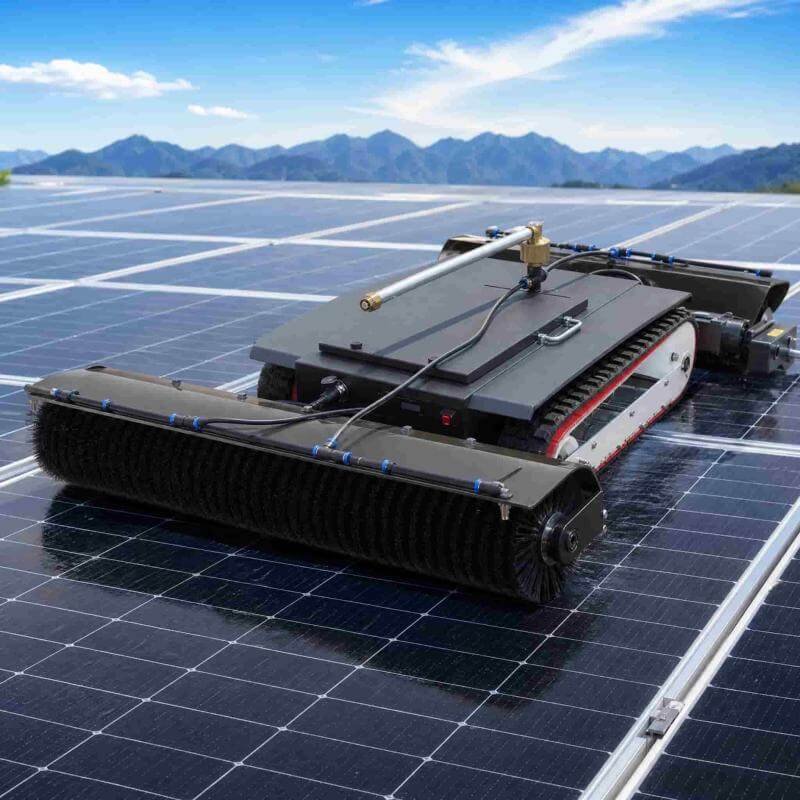
Friction between a high-speed conventional cylindrical solar cleaning brush and the glass creates a very high electrostatic charge. If this charge finds its way to the internal bus bars or junction box of the panel, it can puncture the thin insulation layers and permanently damage the bypass diodes or cell interconnects.
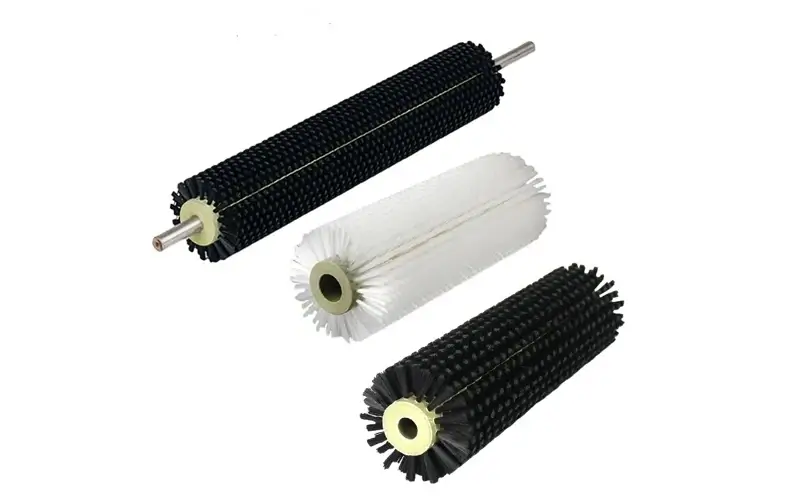
This problem is solved at the material level by the anti-static modified PA612 nylon roller brushes. Conductive anti-static masterbatch is directly blended with PA612 resin by the manufacturers before extruding filaments. This gives each and every bristle a permanent ability for dissipation of charge, unlike surface coatings, which wear off within weeks.
Benefits of Anti-Static PA612 Filaments:
- The resistance remains best for the whole life of the brush.
- Soft tips that will not scratch tempered solar glass.
- Complete compatibility with automated cleaning robots and gantry systems
Anti-static brushes eliminate a possible hazard in large-panel operations. Even one ESD-related cell failure for the operators who handle thousands of panels will result in high string-level power loss. Therefore, anti-static brushes eliminate this risk at the very beginning.
Remove Static, Improve Efficiency, Lower Costs
What’s more, it puts the circuits at risk by transforming the brush into a dust magnet. The fine sand particles will be attracted by a charged brush and pushed back onto the panel surface instead of being swept away. Such a situation forces the cleaning crew to run multiple passes, wasting water, time, and labor.
One solar cleaning brush against static will make this whole loop go away. The brush shall release particles neatly on the first pass as it continuously dissipates charge while rotating. Anti-static brushes cut the number of cleaning passes by 30-40%, which is immediately observable in field practices with arid-region plants, hence reducing water use and labor hours.
This makes the savings even greater in the large-scale farms where brush weight and filament selection already influence total operating costs.
For the large-scale farms where brush weight and filament selection already affect total operating costs, the addition of an anti-static feature further enhances these savings.
Protect Coatings & Extend Brush Life
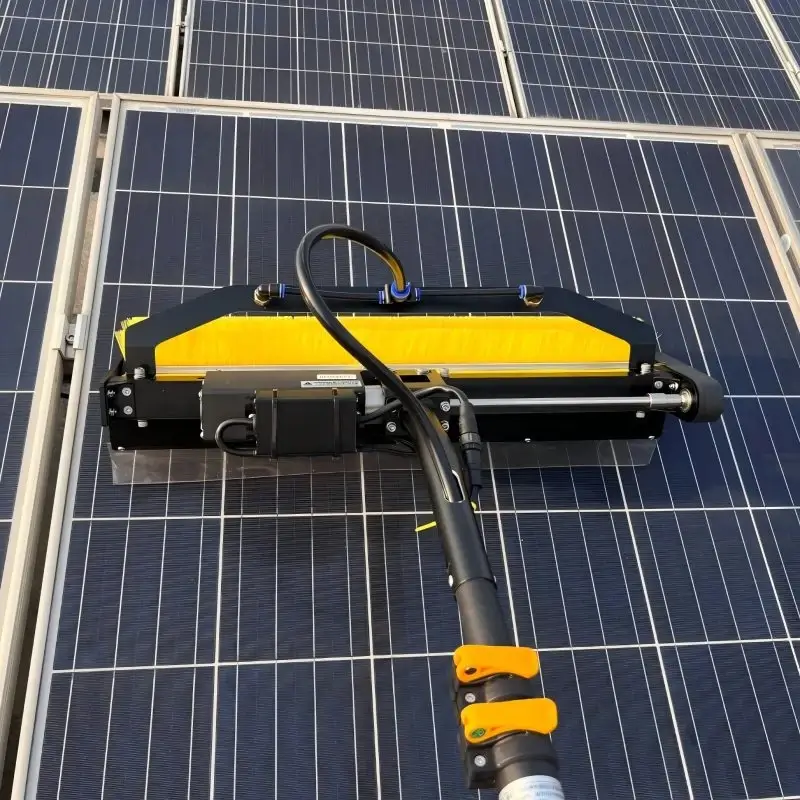
Current solar panels have ultra-thin AR coatings, which increase light absorption by 2–3%. Dust particles are another source of soiling; when deposited on the panel surface, they form a layer, which can be considered a combination of a binder and an abrasive grit. By all means, sand grains, when statically charged, may be termed embedded abrasive grit; they stick to filaments and grind against the coating with every turn. Over months, transmittance gradually reduces, and thus energy yield also reduces.
The nylon filaments are anti-static and release the sand particles immediately; grit never embeds in the brush.
The anti-static PA612 brushes will have similar core dimensions and mounting specs as the standard nylon cylinder brush in procurement. No equipment modification is needed; it’s just a roller swap. For any team that is already reaping the benefits of a nylon cylinder brush system, the changeover will be very easy.
Standard vs Anti-Static Solar Cleaning Brushes
Feature Comparison: Standard Nylon Brush vs Anti-Static Solar Cleaning Brush
| Feature | Standard Nylon Brush | Anti-Static Solar Cleaning Brush |
| Filament Material | PA6 / PA66 | Anti-static modified PA612 |
| Surface Resistivity | >10¹³ Ω | 10⁶ – 10⁹ Ω |
| ESD Risk to Panels | High | Negligible |
| Dust Re-adhesion | Significant | Minimal |
| AR Coating Wear | Accelerated by static cling | Greatly reduced |
| Lifespan (Desert Use) | 4 – 6 months | 8 – 12 months |
| Robot Compatibility | Standard roller mounts | Same standard roller mounts |
| Cost per Cleaning Cycle | Higher (requires multiple passes) | Lower (single-pass efficiency) |
Data tells a clear story: anti-static brushes may have slightly higher unit prices, but across every metric, their total cost of ownership is noticeably lower.
For a more in-depth look at material and structural considerations, the guide on key features of a solar panel cleaning brush discusses filament diameter, brush density, and roller balance in detail.
Key Questions to Ask Brush Suppliers
- Masterbatch Integration – Confirm that the additive is conductive and that it gets blended with the resin, not just coated on the surface.
- Surface Resistivity Certification – Request test reports that prove the resistivity falls within the range of 10⁶ to 10⁹ Ω.
- Filament Softness Rating – Make sure the profile of the bristle tip meets the requirements for AR-coated glass.
- Dimensional Compatibility – Roller length, outer diameter, and bore size should be the same as those of the current nylon cylinder brush setup.
These four checkpoints will help the purchasing team avoid inferior substitutes and ensure good long-term performance.
FAQs
Q1: Fit Anti-Static Brushes With Cleaning Robots?
Yes. The anti-static PA612 brushes come with standard roller dimensions, so they can be mounted on most robotic and gantry cleaning systems directly without any modification.
Q2: Service Life of Anti-Static Performance
Since the manufacturers add conductive masterbatch inside the core of the filament, this makes the anti-static property permanent; therefore, it does not degrade even with UV exposure or use over time.
Q3: Is an Anti-Static Brush Worth the Extra Cost for Small Solar Farms?
Absolutely. Lower cleaning passes, longer brush life, and no ESD repair cost make anti-static brushes more economical at almost any size of plant. The right selection of a solar cleaning brush with anti-static properties from the beginning achieves ROI from the first cleaning cycle.