Fruit packers and processors face two interconnected challenges the moment harvested produce enters the line. First, field debris, soil, pesticide residues, and natural contaminants must come off the fruit surface without bruising or puncturing delicate skin. Second, after washing strips away the fruit’s natural protective wax, a replacement food-grade coating needs to go on evenly. Uneven wax application creates a patchy appearance on retail shelves and leaves spots where moisture escapes faster, shortening shelf life. Both steps happen back-to-back on high-speed sorting and packing lines that can process thousands of pieces per hour. Getting either step wrong means lost grade quality, rejected shipments, and wasted product.
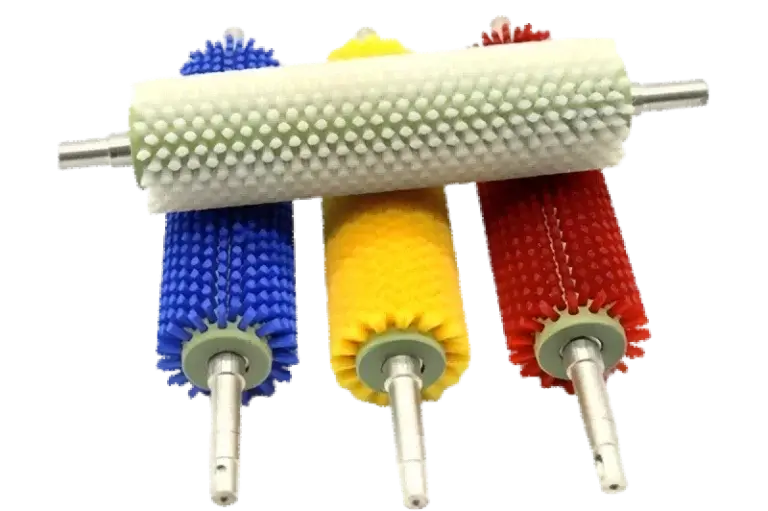
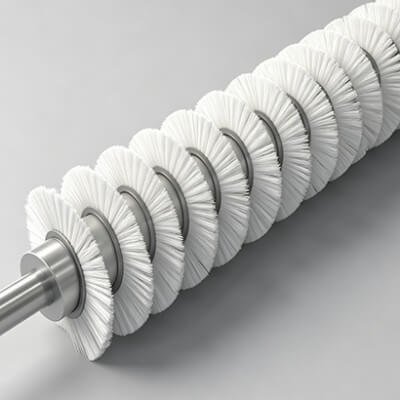
Cylindrical cleaning brushes address both needs through controlled rotary contact. As fruit moves across a series of rotating brush rollers, the filaments scrub away field dirt and residues from the entire surface, including crevices around stems and calyxes. In the waxing stage that follows, a separate set of cylindrical brushes picks up food-grade wax from a delivery system and spreads it in a thin, uniform layer. The brush rotates against the fruit surface at a calibrated speed that transfers the wax without streaks or pooling. The result is consistent coverage that restores gloss and slows moisture loss.
Packing line operators and equipment specifiers who understand the mechanics behind these two stages can make better choices about brush materials, diameters, densities, and mounting configurations. Each variable changes how the brush contacts fruit, how aggressively it cleans, and how evenly it distributes wax. This article walks through the cleaning stage first, then the waxing stage, and concludes with the specifications, food safety requirements, and maintenance practices that keep both stages running reliably at production speed.
What Happens During the Fruit Cleaning Stage
The Mechanics of Brush Cleaning
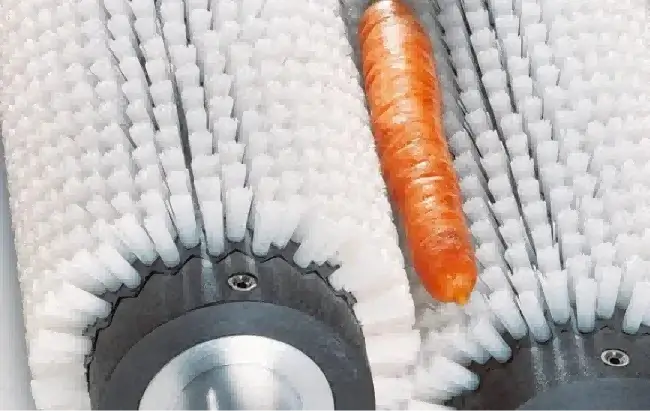
During the cleaning stage, fruit passes over a bed of rotating cylindrical brushes while overhead spray bars deliver water or sanitizing solution. The brush filaments make mechanical contact with the fruit surface, dislodging dirt, field debris, and residues. The rotation of the brush rollers also turns the fruit continuously so that every part of the surface receives contact, including the stem cavity and calyx end.
How Brush Variables Affect Cleaning Performance
The cleaning action comes from the combined effect of filament stiffness, brush rotation speed, and the weight of the fruit pressing against the bristles. As each brush roller spins, individual filaments deflect against the fruit surface and then snap back to their original position. This repeated deflection and recovery creates a scrubbing motion that breaks the bond between contaminants and the fruit skin. The water spray flushes loosened debris away from the brush bed and into a collection trough or drain.
Roller Spacing and Configuration for Different Fruit Sizes
Brush roller diameter and spacing between rollers determine how many points of contact the fruit experiences along the cleaning bed. Standard configurations place brush rollers 3 to 6 inches apart center to center, depending on fruit size. Smaller fruit like cherries or blueberries need tighter roller spacing to prevent pieces from falling between rollers. Larger fruit like apples or citrus can span wider gaps without risk of dropping through. The cleaning bed typically contains 6 to 12 brush rollers arranged in series, giving each piece of fruit multiple cleaning contacts before it exits the stage.
Using Brush Density to Clean Irregular Surfaces
For fruit with irregular shapes or deep stem cavities, brush density plays an important role. Higher filament density, meaning more bristles per square inch of brush face, increases the probability that filaments will reach into crevices and clean areas that flat washing surfaces miss. Some processing lines alternate brushes with different filament densities, using coarser brushes first for bulk debris removal and denser brushes downstream for final surface finishing. This approach parallels methods used in uneven surface cleaning applications where varying brush characteristics across a cleaning sequence improves overall results.
How Does Brush Filament Material Affect Cleaning Performance
Why Nylon Dominates Fruit Cleaning Brush Applications
Filament material is the single most influential variable in fruit cleaning brush performance. Nylon, particularly PA6 and PA66 grades, dominates fruit processing applications because it combines the right balance of stiffness for cleaning with enough flexibility to avoid damaging fruit skin. Food-grade nylon also resists moisture absorption, tolerates washdown chemicals, and meets FDA requirements for food contact surfaces.
Choosing Filament Diameter by Fruit Type
Nylon filaments for fruit cleaning brushes come in diameters ranging from 0.15 mm to 0.50 mm. Finer filaments in the 0.15 to 0.25 mm range work well for soft-skinned fruit like peaches, plums, and tomatoes where aggressive scrubbing would bruise or tear the surface. Mid-range diameters of 0.30 to 0.40 mm suit apples, citrus, and pears, providing enough stiffness to remove field dirt and wax residues without surface damage. Coarser filaments above 0.40 mm are reserved for thick-skinned produce like potatoes, squash, and melons that can tolerate more aggressive cleaning.
Straight vs. Crimped Filaments: How Shape Affects Cleaning
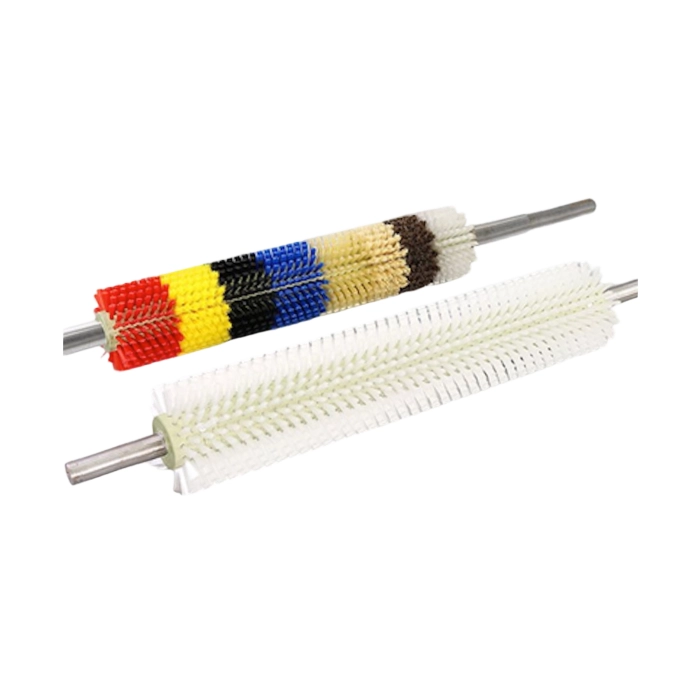
The choice between straight and crimped nylon filaments affects cleaning behavior. Straight filaments provide consistent tip pressure and work well for light cleaning and polishing. Crimped filaments, with their wavy profile along the length, create a softer contact because the crimp acts as a spring that absorbs some of the impact energy. Crimped brushes are often specified for delicate produce or for waxing stages where gentle, uniform contact matters more than aggressive scrubbing.
Specialty Filaments for Specific Cleaning Needs
Beyond nylon, some fruit brush applications use natural fibers or blended filaments. Horsehair or tampico fiber brushes appear in specialty lines for highly delicate fruit, though their shorter service life and higher cost limit widespread adoption. Abrasive nylon filaments, which contain silicon carbide or aluminum oxide particles embedded in the nylon, are used for heavy soil removal on root vegetables. These abrasive filaments are not suitable for thin-skinned fruit because they can score the surface. A cylindrical brush roller with abrasive nylon can remove tough residues, but the filament grade must match the produce type to avoid damage.
What Brush Specifications Matter for Fruit Processing Lines
Core Material: Why Stainless Steel Is the Standard
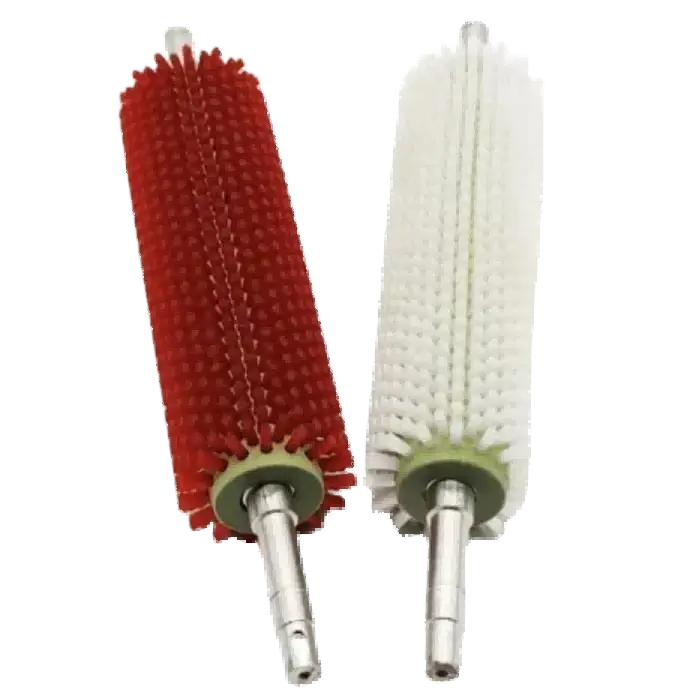
Four specifications determine whether a cylindrical brush performs reliably on a fruit processing line: core material, bearing setup, overall dimensions, and filament retention method. Food-grade stainless steel cores, sealed bearings rated for washdown, and staple-set or wound filament construction are the standard configuration for fruit applications.
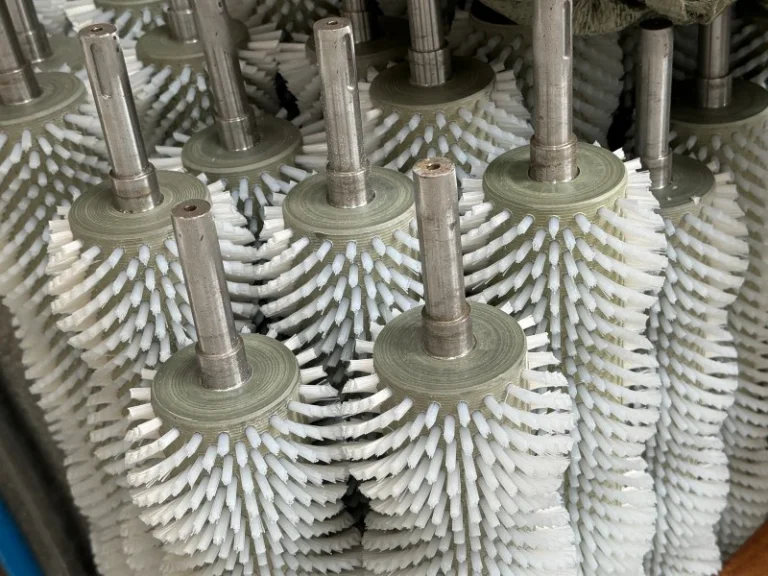
The brush core carries the mechanical load and resists the wet, chemically active environment of a packing line. Stainless steel, typically 304 or 316 grade, is the standard core material for food processing brushes because it does not corrode under continuous exposure to water, sanitizers, and fruit acids. Plastic and composite cores exist but are limited to lighter-duty applications where flexing or weight savings matter more than long-term durability. The core diameter must be large enough to prevent deflection under load, especially on wide brushes spanning 48 inches or more.
Bearings: Choosing Washdown-Rated Sealed Bearings
Bearings support the brush shaft at each end and must handle the radial load from fruit pressing against the brush plus the rotational load from the drive system. Washdown-rated sealed bearings prevent water and cleaning chemicals from entering the bearing race and washing out the lubricant. Some installations use pillow block bearings mounted outside the wet zone with shaft seals at the housing penetration points. This configuration keeps bearings dry while allowing the brush body to operate in the washdown area.
Dimensions: Matching Brush Size to Conveyor and Mounting Space
Brush dimensions, including overall length, face width, and outer diameter, must match the conveyor width and the available mounting space. The face width should equal the conveyor width with allowance for side clearance. Outer diameter affects the brush’s contact arc with the fruit and its surface speed at a given RPM. Larger diameters produce a longer contact arc, which helps with even cleaning and waxing but requires more mounting clearance and higher torque to drive.
Filament Retention: Staple-Set vs. Wound Construction
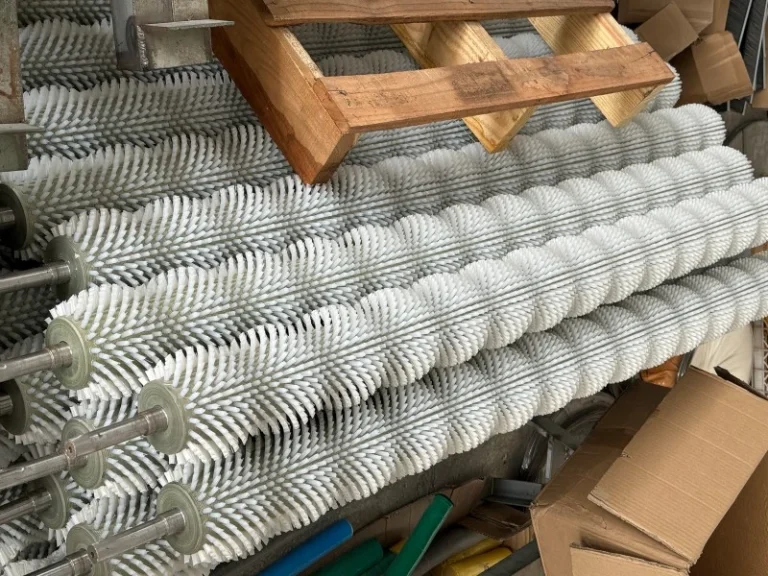
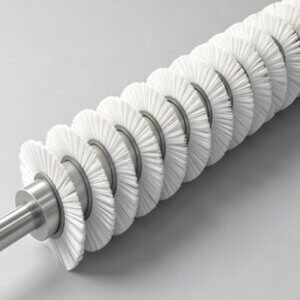
Filament retention, how the bristles are anchored in the core, affects brush life and food safety. Staple-set construction anchors individual tufts of filament in drilled holes using metal staples. This method is common for nylon brushes and allows replacement of individual tufts if damaged. Wound construction wraps a continuous strip of filament around a central core wire, creating a spiral brush pattern. Wound brushes distribute filament evenly along the core and are less likely to shed individual bristles into the product stream. Either method is acceptable for fruit processing when properly manufactured, but wound construction is often preferred for fruit cleaning brushes because it reduces the risk of staple corrosion and bristle loss over time.
Food Safety and Compliance for Fruit Processing Brushes
Regulatory Frameworks Governing Brush Construction
Fruit processing brushes must comply with food safety standards that govern materials, design, and cleanability. FDA 21 CFR for food contact substances, EU Regulation 1935/2004, and 3-A Sanitary Standards are the primary regulatory frameworks that apply to brush construction in fruit handling environments. Compliance means the brush materials are approved for food contact, the brush design allows thorough cleaning and sanitation, and the brush does not introduce physical or chemical hazards into the product stream.
Material Compliance: Approved Components for Food Contact
Material compliance requires that all brush components that touch fruit, including filaments, core, and mounting hardware, are made from materials listed for food contact. Nylon filaments must be formulated without restricted substances and manufactured under conditions that prevent contamination. Certificates of compliance from filament suppliers document that the raw material meets applicable standards. Brush manufacturers then provide their own compliance documentation covering the finished brush assembly.
Cleanability: Designing Brushes for Effective Sanitation
Cleanability is a design requirement as much as a material requirement. Brushes operating in fruit packing lines accumulate wax residue, fruit debris, and microbial growth over time. The brush design must allow sanitation crews to clean between filament rows and around the core without disassembling the brush from the machine. Open filament patterns with adequate spacing between tufts improve cleanability by giving sanitizer spray access to the core surface. Some brush designs incorporate removable end plates or split-core construction that allows the brush to be disassembled for deep cleaning during scheduled maintenance windows.
Physical Hazard Prevention: Filament Retention and Detection
Physical hazard prevention focuses on filament retention and wear monitoring. A brush that sheds bristles into the product stream creates a foreign material contamination risk. Wound filament construction reduces this risk by forming a continuous filament strip that is less likely to release individual bristles. Staple-set brushes require regular inspection of staple integrity because a corroded or loosened staple can release a tuft. Metal-detectable filaments, which contain additives that trigger metal detectors and X-ray inspection systems, provide an additional safety layer. If a bristle does break off, downstream detection equipment can identify and reject the affected product. Custom cylinder brushes built for critical applications use similar contamination prevention strategies that translate well to food processing environments.
Wear Monitoring and Scheduled Replacement
Wear monitoring and scheduled replacement are part of food safety programs. As filaments wear down, cleaning and waxing effectiveness decline. A brush with filaments worn to half their original length may not maintain consistent contact with fruit surfaces, leading to incomplete cleaning or uneven wax coverage. Maintenance schedules typically call for brush inspection at weekly intervals and replacement when filament length drops below 50 to 60 percent of the original specification. Documenting replacement dates and visual inspection results supports audit readiness and demonstrates due diligence to regulators and third-party auditors.
Conclusion
The two stages of the fruit packing line that rely on cylindrical brushes, cleaning and waxing, are mechanically simple but specification-sensitive. Cleaning effectiveness depends on filament material and diameter, brush density, roller spacing, and rotation speed working together to remove field contaminants without damaging the fruit. Wax coating uniformity depends on softer, denser brush sets, controlled wax delivery, and precise speed matching between the brush surface and the conveyor. Both stages share common requirements for food-grade materials, stainless steel cores, washdown-rated bearings, and filament retention methods that prevent contamination.
For packing line operators and equipment buyers, the practical takeaway is that off-the-shelf brush specifications rarely match a specific line’s exact requirements. Fruit size, skin sensitivity, throughput speed, and wax type all affect the optimal brush configuration. Working with a manufacturer that builds brushes to order based on documented line parameters produces better results than adapting standard catalog brushes to a line they were not designed for. The upfront work of specifying core material, filament type and density, diameter, face width, and bearing configuration pays back in longer brush life, more consistent fruit quality, and fewer line stoppages for adjustment or replacement.
Frequently Asked Questions
What is the difference between a cleaning brush and a waxing brush on a fruit packing line?
Cleaning brushes use thicker, stiffer filaments, typically nylon in the 0.30 to 0.50 mm diameter range, to scrub away field dirt and residues. Waxing brushes use finer, softer filaments, usually 0.15 to 0.25 mm nylon, often crimped, to pick up liquid wax and spread it in a thin layer. Cleaning brushes operate at higher rotational speeds for aggressive scrubbing, while waxing brushes run at speeds matched to the conveyor for controlled transfer. The two brush types are mounted on separate sections of the line and are not interchangeable.
How often should fruit processing brushes be replaced?
Replacement timing varies with hours of operation, fruit type, and cleaning chemical exposure. A nylon brush on an apple line running single shifts may last 6 to 12 months. A line running 24 hours on abrasive-surfaced produce like potatoes may need replacement every 3 to 4 months. The reliable indicator is filament length: when bristles have worn to 50 to 60 percent of their original length, cleaning or waxing performance drops noticeably and replacement is due. Visual inspection during weekly maintenance checks catches wear before it affects product quality.
Can cylindrical brushes handle multiple fruit types on the same line?
A single brush specification can handle multiple fruit types if the fruits have similar skin characteristics and size ranges. A brush set sized for apples typically works for pears and citrus as well. Switching between soft-skinned fruit like peaches and thick-skinned fruit like oranges on the same line usually requires changing to brushes with different filament diameters and densities. Some facilities keep two brush sets and swap them when the fruit type changes. The brushes mount on quick-change bearing housings that allow swap-out during a scheduled line changeover without extended downtime.