
Cleaning a production line sounds straightforward until you stand next to one. The open surfaces are easy. The hard part is everything below, behind, and inside: the underside of a conveyor belt, the gap between guide rails and a frame, the interior wall of a duct or a drying tunnel. Residue collects in these places, hardens over time, and forces maintenance crews into awkward positions with scrapers, rags, and compressed air that never quite get the job done.
Those hidden areas are not just a housekeeping nuisance. Built-up material can drag against moving parts, cause premature wear, create uneven surfaces on rollers, and contaminate product that passes nearby. In food processing, packaging, woodworking, and metalworking operations, the cost of a poorly cleaned line shows up as downtime, rejects, and safety inspections that fail.
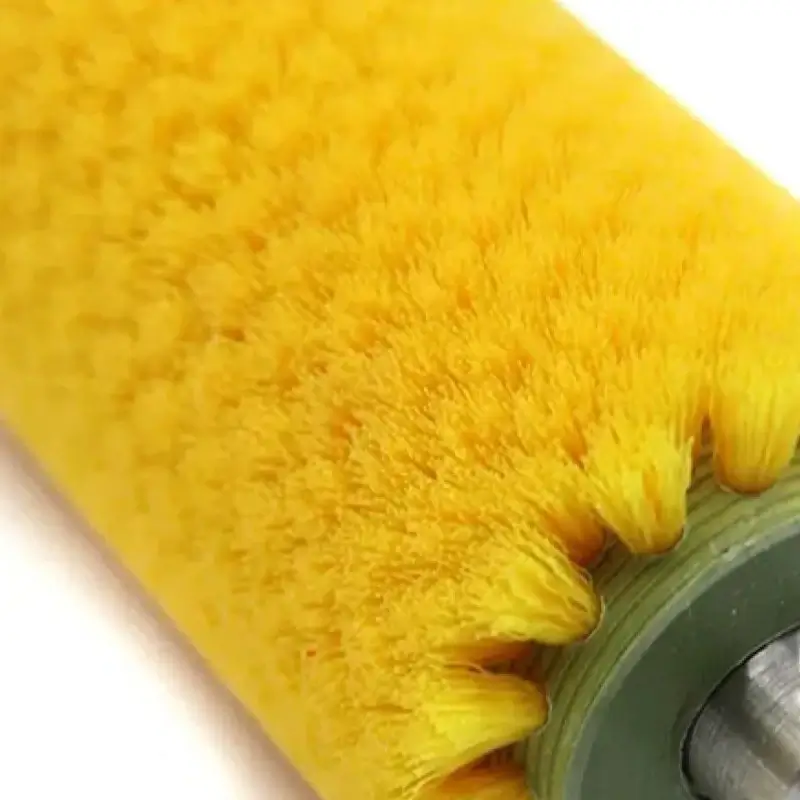
Custom designed cylinder brushes solve hard-to-reach cleaning problems by matching the exact shape of the application instead of forcing the application to fit a standard tool. A rotary brush built to a specific diameter, bristle material, density, and mounting arrangement can reach into tight spaces, scrub continuously while the line runs, and remove residue that manual tools simply cannot access.
That is the core difference between buying a brush off a shelf and having one engineered for your equipment. Off-the-shelf brushes work well when the geometry of your machine happens to fit a standard size. When it does not, you improvise, and improvisation costs time, product, and maintenance hours.
This article walks through why standard tools fall short, what actually changes when a cylinder brush is custom designed, how to choose between nylon and metal bristles, and where these brushes deliver the biggest return in real production environments. You will also find practical guidance on specifying a brush so you can work with a manufacturer efficiently and avoid the common mistakes that turn a simple replacement into a month-long headache.
Why Standard Cleaning Tools Fail in Hard-to-Reach Areas
Standard brushes and manual cleaning methods fail in confined areas because they cannot maintain consistent contact, adequate pressure, or continuous operation where access is limited.
Manual Tools Require Space and Time
Think about what a hand-held scraper requires: someone to hold it, enough room to move, and enough time to do the job properly. None of these conditions exist in a narrow gap under a conveyor or inside a closed channel. Even when a worker can reach the area, the pressure applied by hand varies, the stroke is slow, and the line usually has to stop.
Rigid Brushes Cannot Adapt to Machine Variations
Rigid industrial brushes have a different problem. A standard-length brush with fixed dimensions cannot adapt to variations in the machine. Clearance that looks tight on the drawing can be off by a few millimeters after years of wear, thermal expansion, or installation tolerances. A brush that is too large jams or deflects the belt; one that is too small leaves a gap where residue keeps building.
The Cost of Guesswork in Cleaning Schedules
The practical result is a cleaning schedule based on guesswork: frequent stops, repeated passes, and surfaces that stay contaminated for most of the shift. The alternative is a brush engineered to the actual conditions, which is where custom design earns its place.
What Makes a Cylinder Brush “Custom Designed”
A custom-designed cylinder brush is a rotary brush whose core dimensions, bristle material, trim length, density, and mounting method are specified for a particular machine and cleaning objective rather than selected from a catalog.
Starting with the Application
Design starts with the application. The manufacturer needs to know what the brush must clean (dust, oil, adhesive, dried slurry), what surface it will contact (steel, rubber, fabric, painted metal), and how it will be driven (shaft-mounted, flange-mounted, motorized, or free-spinning against a moving surface). Each answer changes the design.
Calculating Dimensions for Optimal Performance
From there, several dimensions are calculated rather than guessed. The brush diameter determines how deeply the bristles reach into the area and how much interference, or compression, the bristles will have against the surface. Trim length controls stiffness and flex. Bristle density controls how much material contacts the surface per revolution. Core and shaft design determine how the brush withstands load without vibration.
Accounting for Environmental Factors
A well-executed custom design also accounts for the environment. A brush used in a washdown zone needs corrosion-resistant cores and bristles that tolerate chemicals. A brush near a heat source needs bristles rated for that temperature. A brush on a fast-moving line needs a balance that prevents wobble at operating speed. These details are exactly why the specification process matters.
Core Design Parameters That Define a Custom Cylinder Brush
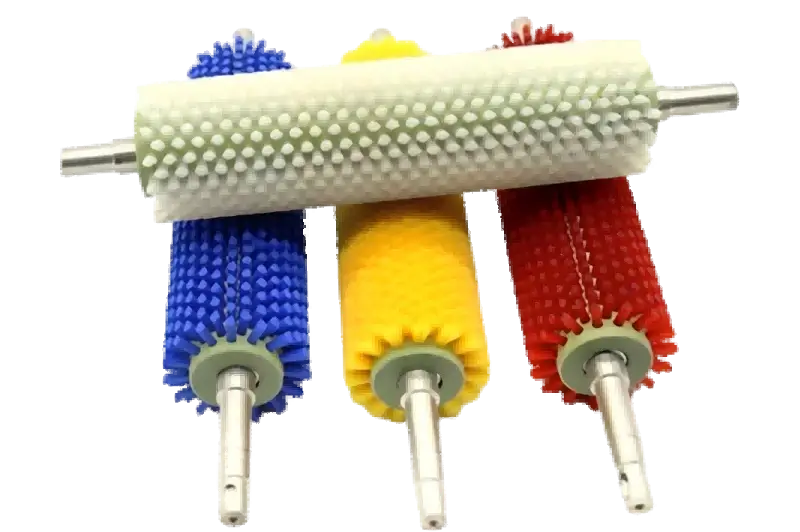
Five parameters do most of the work: core diameter, overall diameter, bristle material, trim length and density, and mounting arrangement. Change any one of them and the brush behaves differently in your application.
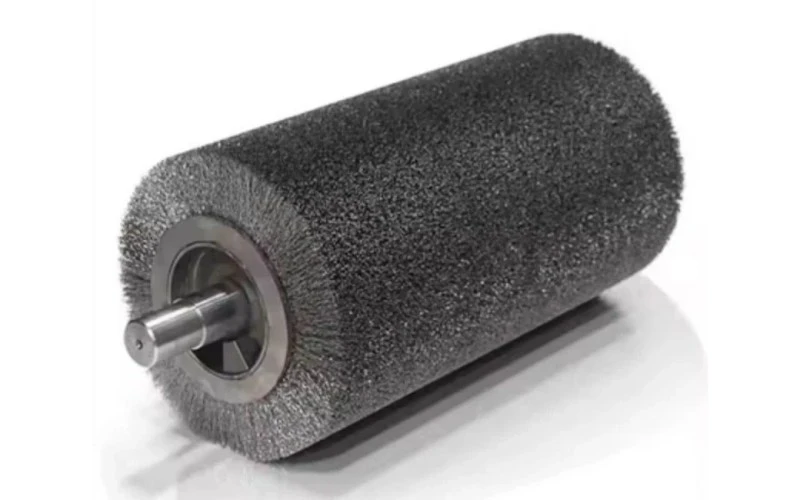
The choice is not always binary. Abrasive nylon blends sit between the two, combining nylon flexibility with embedded abrasive grain for scrubbing power without metal’s risk of scratching. Some applications also mix rows, using nylon for bulk cleaning and wire for stubborn spots, though this complicates the design and is only worthwhile when one material genuinely cannot do both jobs.
Matching the material to the surface is as important as matching it to the residue. A metal brush that cleans a rubber belt cleanly can also shred it if run with too much interference. A soft nylon brush that is gentle on painted panels may wear out in a week on rough castings. The right answer comes from knowing both sides of the contact pair.
Custom Conveyor Cleaning Brushes in Action
A conveyor belt cleaning brush works by rotating against the belt surface, often counter-rotating at a higher speed, to strip material before it can be carried into idlers, pulleys, or product zones. Custom sizing is what makes this practical across different conveyor widths and belt types.
Why Conveyors Demand Custom Sizing
Belt cleaners are one of the most common applications for custom cylinder brushes because no two conveyors are alike. Belt widths vary from a few hundred millimeters to two meters. Belt materials differ: rubber, PVC, modular plastic, fabric. The residue differs too: grain dust, adhesive, wood chips, metal fines, sticky food paste. A brush sized for one combination can be useless on the next.
How Conveyor Belt Brushes Are Set Up
The usual arrangement puts the brush across the belt near the head pulley or a return section, driven by a small gearmotor. The brush rotates against the direction of belt travel so its bristles flick material off the surface rather than riding over it. The interference, or how far the bristles are compressed against the belt, is typically set between 5 and 20 mm depending on bristle length and belt hardness.
Key Steps for Specifying the Right Brush
- Measure the belt width and the available mounting space around the pulley.
- Identify the residue type and whether it is dry, sticky, or abrasive.
- Select bristle material: polypropylene or soft nylon for dry dust, stiffer nylon for sticky buildup, wire for heavy crust.
- Determine brush diameter so the bristles reach the belt with the required interference.
- Confirm the drive side: shaft extension, sprocket, pulley, or direct coupling.
The Value of Standardizing on Custom Brushes
The same reasoning applies when conveyors of different sizes run in one plant. Rather than stocking a range of compromise sizes, a plant can standardize on a conveyor belt cleaning brush engineered for each belt while sharing the same drive components. This reduces spare-part variety and makes replacement predictable.
For operations with unusual belt widths or tight clearances, custom conveyor cleaning brushes are not a luxury. They are the difference between a cleaner that actually contacts the full belt width and one that misses the edges where carryback always accumulates.
Where Custom Designs Pay Off Beyond Conveyors
Beyond belt cleaning, custom cylinder brushes earn their cost in finishing, surface preparation, and automated cleaning stations where consistent contact is critical.
Deburring and finishing are good examples. Rotary brushes with the right grit and density can remove burrs from machined parts, smooth edges, and condition surfaces in a pass, replacing multiple manual steps. The results depend heavily on bristle material, speed, and interference, all of which are easier to control when the brush is designed for the specific part geometry.
Automotive component lines use this approach to keep parts within tolerance while handling complex shapes. Precision deburring brushes show how tightly a brush can be matched to a process: same part, same machine, same cycle time, brush after brush.
Other productive uses include:
- Cleaning the interior of pipes, tubes, and channels with long-trim brushes mounted on rotating shafts.
- Scrubbing rollers and calender rolls without disassembling the machine.
- Removing dust and static from sheets, films, and panels before coating or printing.
- Cleaning slats, flights, and pockets on specialized conveying and processing equipment.
In each case, the common thread is the same: a fixed, repeatable cleaning action that runs while the line runs, eliminating the manual step.
How to Specify a Custom Cylinder Brush
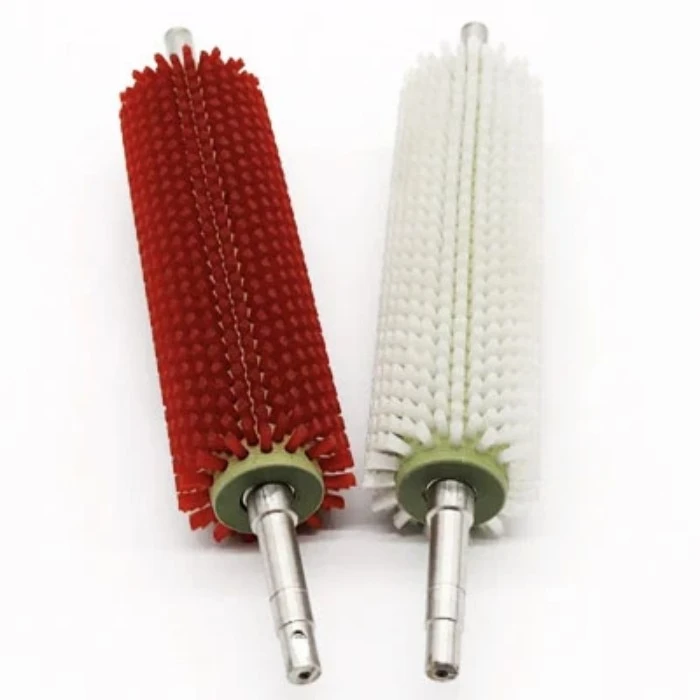
The fastest way to get the right brush is to give the manufacturer six pieces of information: the cleaning target, the surface, the space available, the operating speed, the environment, and the current failure mode.