
Rust is one of the most persistent problems in metal fabrication, automotive repair, and industrial maintenance. Left untreated, it weakens structural integrity, compromises coating adhesion, and accelerates material degradation. Up to 80% of all coating failures can be traced directly to inadequate surface preparation, according to industry coating manufacturers. That number alone tells you where most projects go wrong—before the paint or coating ever touches the metal.
For professionals and serious DIYers, the fastest and most effective way to remove rust at scale is a power-tool-mounted wire brush. Among the available options, the abrasive wire cylinder brush has become a go-to choice for shops that need consistent results on cylindrical parts, pipe interiors, bores, and contoured surfaces. The global wire brush market reached USD 765 million in 2024, driven by demand across industrial and household applications, and is projected to grow at a CAGR of 4.1% through 2033. This steady growth reflects a simple reality: wire brushes remain one of the most reliable tools for surface preparation, and new high-speed-compatible designs are making them faster and more durable than ever.
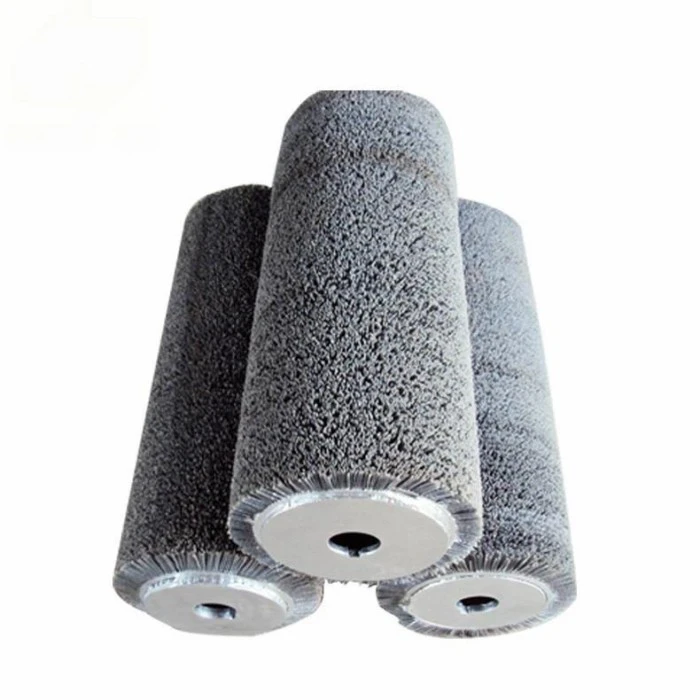
A high-speed-compatible wire brush for rust is a power tool attachment engineered with crimped or knotted steel wire filaments arranged in a cylindrical configuration. It is designed to operate safely at elevated RPMs—typically up to 4,500 RPM for angle grinders and 18,000 RPM for smaller CNC-mounted brushes—while removing rust, mill scale, paint, and weld slag from metal surfaces without altering the base material dimensions.
Selecting the right brush involves understanding wire material, filament configuration, brush geometry, and speed ratings. A mismatched brush can throw wires, wear prematurely, or fail to clean effectively. This guide breaks down what you need to know about high-speed-compatible cylinder brushes for rust removal, how to match them to your power tools, and how to extend their service life across production runs.
What Makes a Wire Brush High-Speed Compatible
High-speed compatibility in a wire brush is determined by its maximum RPM rating, filament bonding method, and balance characteristics. A brush rated for high-speed operation uses precision-trimmed wire tips, reinforced hub construction, and knots or crimps engineered to maintain structural integrity under centrifugal force at elevated RPMs—typically between 2,500 and 18,000 RPM depending on brush diameter and mounting configuration.
Understanding RPM Ratings
Every wire brush carries a maximum RPM rating stamped on its packaging or hub. Exceeding this limit is the fastest way to ruin a brush and create a safety hazard. When a brush spins beyond its rated speed, centrifugal force pulls wires outward, weakening the filament roots near the hub. The result is thrown wires—sharp metal fragments ejected at high velocity.
The rating is not arbitrary. It accounts for wire diameter, knot tightness, hub material, and overall brush diameter. A 4-inch cup brush might be rated for 8,500 RPM on an angle grinder, while a 6-inch wheel brush on a bench grinder may top out at 4,500 RPM. Smaller CNC-mounted cylinder brushes with 6mm shanks can safely run at 18,000 RPM because their reduced diameter generates less centrifugal stress per wire.
Before mounting any wire brush, compare the brush’s maximum RPM to your tool’s no-load speed. The tool speed must not exceed the brush rating. If you are using a variable-speed grinder, set it within the brush’s safe operating window.
Filament Configuration and Speed Tolerance
How wires are arranged inside the brush directly affects speed tolerance. Two primary configurations dominate the market:
Crimped wire: Individual filaments are crimped into a wavy pattern, creating a flexible, self-supporting brush face. Crimped wire brushes produce a finer finish and conform well to irregular surfaces. They are rated for moderate RPMs and suit light-to-medium rust removal on softer metals or contoured parts. The flexibility that makes them gentle also limits their top-end speed—too fast, and the crimped structure loses rigidity.
Twist knot (knotted wire): Filaments are twisted together into rigid, cable-like bundles. This construction withstands higher RPMs and delivers aggressive cutting action. Knotted brushes are the choice for heavy rust, thick mill scale, and multi-layer paint. Their tightly wound structure resists centrifugal deformation, which is why they dominate high-speed industrial applications.
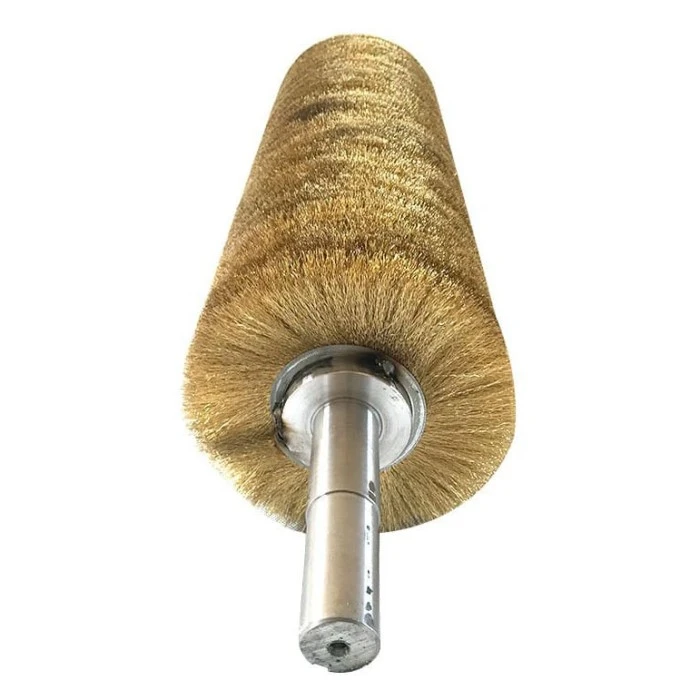
For cylinder brushes specifically, crimped configurations are more common because the cylindrical shape already provides excellent surface contact. The crimp adds the flexibility needed to wrap around pipe exteriors and conform to bore interiors without gouging.
Material and Wire Gauge Considerations
Wire material affects both rust removal performance and high-speed durability:
Carbon steel wire: The most aggressive option. Hard, stiff bristles cut through heavy rust quickly. Carbon steel is the default for general-purpose metal cylinder brushes used on iron and steel workpieces. However, carbon steel wire fragments left on stainless steel surfaces cause after-rust—a secondary corrosion problem that appears within days of cleaning.
Stainless steel wire: Corrosion-resistant and slightly softer than carbon steel. Stainless steel abrasive wire cylinder brushes are mandatory when working on stainless steel, aluminum, or other non-ferrous metals. They leave no ferrous residue, eliminating the risk of galvanic corrosion. Stainless wire also resists rusting during storage, so the brush itself lasts longer in humid shop environments.
Brass wire: Considerably softer. Used for delicate surfaces where scratching is unacceptable. Brass is non-sparking, making it suitable near flammable materials.
Wire gauge—the diameter of individual filaments—is the other critical variable:
Using too fine a gauge on heavy rust means the brush must be pressed harder, which bends filaments and accelerates wire fatigue. Using too coarse a gauge on light surface rust unnecessarily roughs up the base metal. The right gauge lets the wire tips do the work at moderate pressure.
Selecting the Right Cylinder Brush for Your Power Tool
Choosing the correct cylinder brush starts with matching three factors: brush arbor or shank size to your tool’s mount, brush diameter to your workpiece geometry, and wire configuration to your rust severity. For angle grinders, M14-threaded or 5/8-inch-11 arbor brushes are standard. For drills and die grinders, 6mm or 1/4-inch shank brushes are the norm. Bench grinders typically use brushes with 20mm or 32mm center bores and reduction bushings.
Tool Compatibility by Mount Type
Different power tools use different mounting interfaces. Getting the wrong arbor size means the brush will not fit—or worse, will mount loosely and become a projectile.
Angle grinders (4-inch to 7-inch): The most common rust removal platform. Cup brushes and wheel brushes with M14 (European standard) or 5/8-inch-11 (North American standard) threaded arbors screw directly onto the spindle. Cylinder brushes designed for angle grinders typically use a threaded arbor or a shank adapter. Check your grinder’s thread pitch before ordering.
Electric drills and cordless screwdrivers: Accept brushes with 6mm (1/4-inch) straight shanks. These are the most accessible platform for DIY rust removal. Drill-mounted cylinder brushes work well for spot treatment, pipe interiors, and small-batch work where an angle grinder is overkill. RPMs on drills are lower (typically 1,000–2,500), which limits removal speed but improves control.
Die grinders and rotary tools: Use 6mm or 1/8-inch shank brushes. These compact tools spin at 15,000–25,000 RPM, making them compatible with the smallest cylinder brushes designed for precision work. Die grinder brushes excel at cleaning weld seams, deburring edges, and reaching tight corners that larger tools cannot access.
Bench grinders: Accept wheel brushes with 20mm or 32mm bores, often with reduction bushings included. These are stationary setups ideal for high-volume rust removal on smaller parts that can be held against the wheel. The operator controls contact pressure and angle manually, which takes practice but yields consistent results once dialed in.
CNC machines and automated lines: Use precision-balanced cylinder brushes with tight-tolerance shanks. These are typically stainless steel abrasive cylinder brushes rated for sustained high-speed operation. Automated brushing stations run at consistent RPM and feed rates, so brush life and dimensional consistency are the primary selection criteria.
Brush Diameter and Workpiece Geometry
Cylinder brushes come in diameters ranging from under 10mm to over 100mm. The right diameter depends on what you are cleaning:
Small diameters (under 25mm): Pipe interiors, threaded holes, narrow bores. These brushes reach where cup brushes and wheel brushes cannot fit. Mounted on a die grinder or drill, they clean rust from the inside of tubes and cylinders without requiring the part to be disassembled.
Medium diameters (25–75mm): General-purpose rust removal on flat stock, angles, and channels. These brushes offer a balance of surface coverage and maneuverability. They are the most commonly stocked size in fabrication shops.
Large diameters (over 75mm): Broad surface cleaning on plate steel, ship hulls, structural beams. Large-diameter brushes cover more area per pass but require more powerful tools to maintain speed under load. An underpowered grinder will bog down and overheat when driving a large brush through heavy rust.
Matching Brush Aggression to Rust Severity
Rust severity falls into three broad categories, and each calls for a different brush setup:
Light surface oxidation: A fine-gauge crimped stainless steel brush at 2,500–3,500 RPM. This removes the orange patina without scratching into the base metal. Light pressure, overlapping passes. The goal is to expose clean metal without altering dimensions or creating deep scratch patterns.
Moderate rust and scale: Medium-gauge crimped or light knotted wire at 3,000–4,000 RPM. Rust that has begun pitting the surface requires more aggression, but not so much that the brush digs into softened metal around the pits. A stainless steel wire cylinder brush in this gauge range balances removal speed with surface quality.
Heavy rust, mill scale, and weld slag: Coarse-gauge knotted wire at 3,500–4,500 RPM. These conditions call for maximum cutting action. Knotted cylinder brushes or aggressive cup brushes strip thick corrosion layers in fewer passes. Expect a rougher surface finish—this is preparation for welding or heavy coating, not final finishing.
Operating Techniques for Safe and Effective Rust Removal
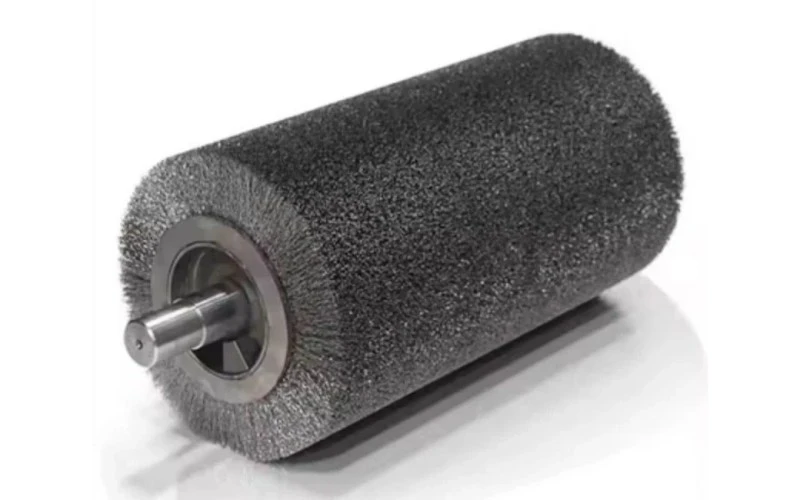
Effective rust removal with a wire brush depends on three technique variables: contact angle, applied pressure, and pass pattern. The optimal contact angle is 10 to 15 degrees between the brush face and the workpiece surface—enough to engage the wire tips without flattening them. Pressure should be light to moderate, allowing the wire tips to strike the surface and rebound rather than being forced flat. Passes should overlap by roughly 30 percent to avoid creating bands of cleaned and uncleaned metal.
Getting the Angle Right
Wire brushes cut with the tips of their filaments, not the sides. When the brush face sits flat against the workpiece, the wire tips slide rather than strike, which generates friction heat without removing material. Tilting the brush 10 to 15 degrees off the surface engages the tips at the correct attack angle. The wires flex on contact, release, and spring back—this cycle produces the cutting action.
For cylinder brushes specifically, the curved brush face already presents wires at varying attack angles as it rotates. The operator controls the effective angle by adjusting how much of the brush circumference contacts the workpiece. More contact area means higher removal rates but also greater tool load. Less contact area improves control and extends brush life, especially on thin-gauge metal.
Pressure: Less Is More
The most common mistake with wire brushes is pressing too hard. Excessive pressure bends filaments past their elastic limit, permanently deforming them against the hub. Once flattened, the wires lose their ability to cut. The operator feels the brush stop working and presses even harder, compounding the problem and dramatically shortening brush life.
A useful rule: if you feel the need to lean into the tool, the brush is either too fine for the job or already worn out. Switch to a coarser gauge or a fresh brush rather than compensating with pressure. Properly matched brushes clean effectively with light, guiding pressure—the operator’s role is to steer, not to force.
Industry data supports this approach. Industry sources note that over-pressing causes filament over-bending, heat buildup, and rapid dulling. Leading abrasive manufacturers recommend using the finest wire diameter that can do the work without requiring excessive force, since finer diameters pack more wire tips per brush and actually clean faster at the right RPM.
Pass Patterns for Even Results
Random scrubbing leaves visible bands of cleaned and uncleaned metal. A structured pass pattern produces uniform results and helps the operator track coverage.
For flat surfaces, work in parallel overlapping passes, moving the brush in one consistent direction. Each pass should overlap the previous one by roughly a third of the brush width. For cylindrical parts, rotate the workpiece against the brush direction or move the brush along the part’s axis in a spiral pattern. For pipe interiors, work from the center outward, pulling the brush toward you in controlled strokes.
After completing a full pass, inspect the surface under good light. Rust that reflections hide under shop lighting will show up later, after coating, as adhesion failures. Run a clean rag over the surface—if it snags, there is still scale or rough rust to remove.
Extending Brush Life in High-Volume Applications
Wire brush life can be extended by up to 50 percent through proper storage, correct RPM selection, material-matched brush assignment, and regular inspection. The fastest way to kill a brush is running it above its rated RPM, pressing too hard, or using carbon steel wire on stainless steel workpieces. Brushes that are stored hung rather than resting on their bristles maintain filament shape and cutting effectiveness over more operating hours.
Storage and Handling
Wire brushes are consumables, but they do not have to be short-lived consumables. How a brush is stored between shifts directly affects how it performs on the next run.
Hang brushes by their arbors or shanks. Storing a brush resting on its wire face gradually bends the filaments in one direction, creating an uneven wear pattern the next time it spins up. The imbalance causes vibration, reduces cutting efficiency, and accelerates wire fatigue. A simple pegboard with arbor-sized holes costs almost nothing and preserves brush geometry across dozens of brushes.
Keep carbon steel brushes and stainless steel brushes physically separated. Carbon steel dust settling on a stainless brush transfers to the next stainless workpiece, causing the exact cross-contamination the stainless brush was chosen to prevent. Label storage locations clearly and enforce the separation as shop policy.
Dry storage is non-negotiable. Carbon steel wire rusts in humid environments. A brush stored damp on a bench will develop its own rust within days, and rusty wire filaments are brittle and prone to breaking. If your shop has high humidity, store brushes in sealed containers with desiccant packs.
Rotation and Replacement Strategy
In production environments, track brush hours the same way you track cutting tool life. A brush that has run for its rated service life on heavy rust may still look functional—wires intact, hub solid—but the wire tips have rounded off and lost their cutting edges. Continuing to run a dull brush slows throughput and increases operator fatigue.
Some shops rotate brushes through a staged system: new brushes handle heavy rust removal, mid-life brushes handle general cleaning, and end-of-life brushes are relegated to light deburring or polishing before being retired. This approach extracts maximum value from each brush while ensuring the right tool is always on the right job.
Replace brushes when:
- Wire tips appear rounded or polished under magnification
- More than 10 percent of filaments are broken or missing
- The brush vibrates noticeably at speed
- Cleaning time per part increases measurably
- The hub shows cracks or deformation
Avoiding Cross-Contamination
This is one of the most expensive mistakes in a multi-metal shop. Carbon steel wire leaves microscopic iron particles embedded in the surface of stainless steel and aluminum workpieces. Those particles oxidize within days, creating rust spots on metal that is supposed to be corrosion-resistant.
The fix is simple but requires discipline: dedicate brushes by metal type. Label them. Store them separately. Never grab a stainless brush to finish a carbon steel job because it is closer to hand. Industry experts emphasize that even storing carbon steel and stainless brushes adjacent to each other can cause problems, as airborne carbon steel dust settles on stainless wire.
For shops that process both ferrous and non-ferrous metals, maintaining two complete sets of brushes—one carbon steel, one stainless—is a modest investment that prevents costly rework and customer rejections.
Cylinder Brushes vs. Other Brush Types for Rust Removal
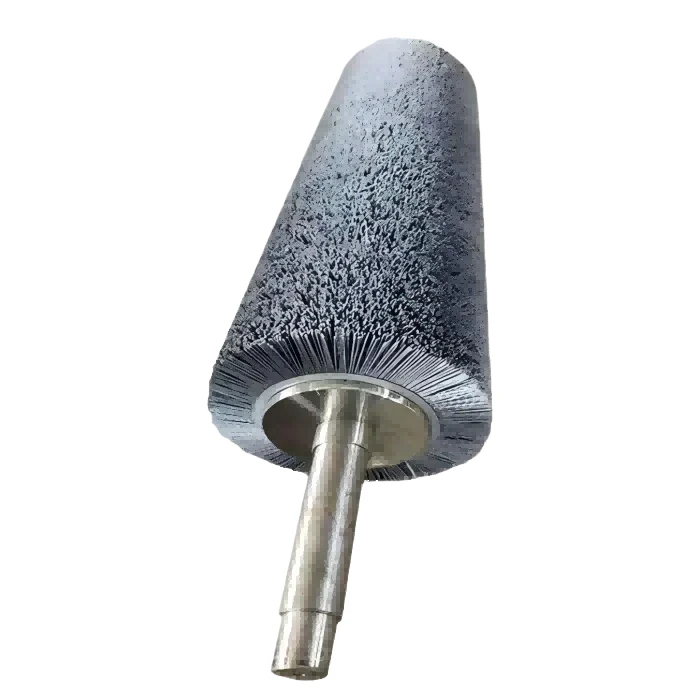
Cylinder brushes outperform cup brushes and wheel brushes when the workpiece geometry is curved, tubular, or has internal surfaces. Their elongated brush face provides continuous contact along cylindrical profiles, making them the preferred choice for pipes, shafts, bores, and rounded edges. For flat surfaces, cup brushes generally cover more area per pass, while wheel brushes excel at edge work and narrow welds.
Geometry-Driven Selection
Every brush shape has a strength. The table below maps common rust removal tasks to the most efficient brush type: