Why Cylinder Brushes Deserve More Attention
The Hidden Cost of Neglect: Downtime, Wear, and Safety Risks
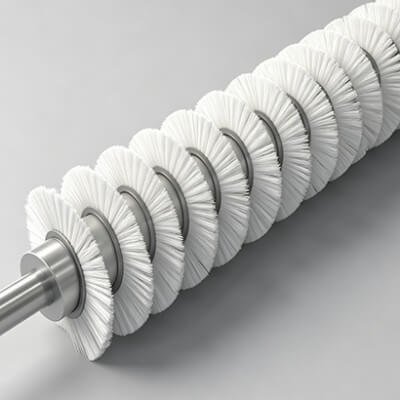
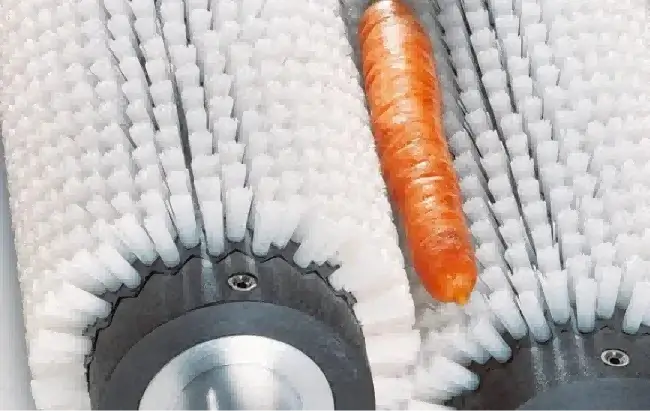
Material handling lines depend on one piece of equipment that rarely gets the attention it deserves: the cylinder brush. These rotating brushes sit against conveyor belts, scraping off dust, debris, sticky residue, and product fragments before they harden into layers that slow down the line and wear out the belt surface. When they work, nobody notices. When they stop working, the whole operation feels it.
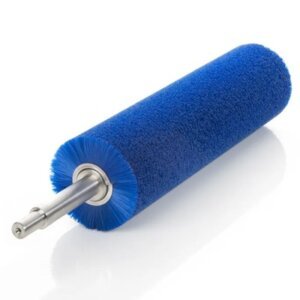
In food processing, aggregate handling, packaging, and bulk material transport, a fouled or worn brush creates a cascade of problems. Belt tracking drifts off center. Carryback builds up on return rollers and pulleys. Motors draw more current to overcome the extra friction. The cost of ignoring brush maintenance shows up in unplanned downtime, replacement belts ordered months ahead of schedule, and safety incidents caused by spillage around the line. A plant that runs 24 hours a day cannot afford to treat its conveyor cleaning cylinder brushes as an afterthought.
A Simple Routine: Weekly Inspections + Monthly Deep Cleaning
A weekly inspection combined with a monthly deep clean keeps cylinder brushes in working condition for their full design life. The cleaning method depends on the brush material: nylon brushes tolerate water and mild solvents, while natural fiber and steel brushes need dry cleaning or specialized treatments. Replace the brush when bristle length drops below 60 percent of the original trim length, when bristles become matted or melted, or when the brush core shows visible damage that affects rotational balance.
Practical Maintenance Without Specialized Training
Getting the most out of your brushes does not require specialized training or expensive tools. What it takes is a consistent routine, the right cleaning supplies matched to your brush material, and a clear set of wear indicators that tell your team exactly when to swap in a replacement. The sections below cover the cleaning steps, the maintenance checks that catch problems before they spiral, material-specific care instructions, and the decision framework for repair versus replacement.
Some facilities replace brushes twice as often as necessary because they skip the cleaning step and jump straight to ordering new ones. Others run brushes long past their useful life because nobody on the shift knows what a worn-out brush actually looks like. Both mistakes drain money. The goal here is to give you a practical, no-fluff guide that sits at your maintenance station and earns its keep.
Why Regular Cleaning of Cylinder Brushes Matters
A dirty brush cannot clean a belt. Debris packed between bristles turns the brush into an abrasive drum that scratches the belt surface and accelerates wear on both components. Regular cleaning restores the brush to its designed contact pressure and material removal rate.
When a cylinder brush first goes into service, the bristle tips make uniform contact with the belt surface at a specific pressure determined by the mounting depth and spring tension. After a few shifts of operation, the spaces between bristles start filling with whatever the brush is scraping off the belt. Fine dust compacts into a hard cake. Oily residue coats individual filaments and causes neighboring bristles to stick together in clumps. Wet material dries in the bristle rows and forms crusts that deflect the tips away from the belt.
The physics is straightforward. A bristle that cannot flex and rebound independently loses its scraping action. The brush rides on the packed debris instead of on the belt. Contact pressure drops, cleaning efficiency falls, and the operator compensates by increasing the mounting pressure, which flattens the bristles permanently and shortens the brush life. A brush that should last six months fails in two because nobody spent ten minutes cleaning it during the weekly inspection.
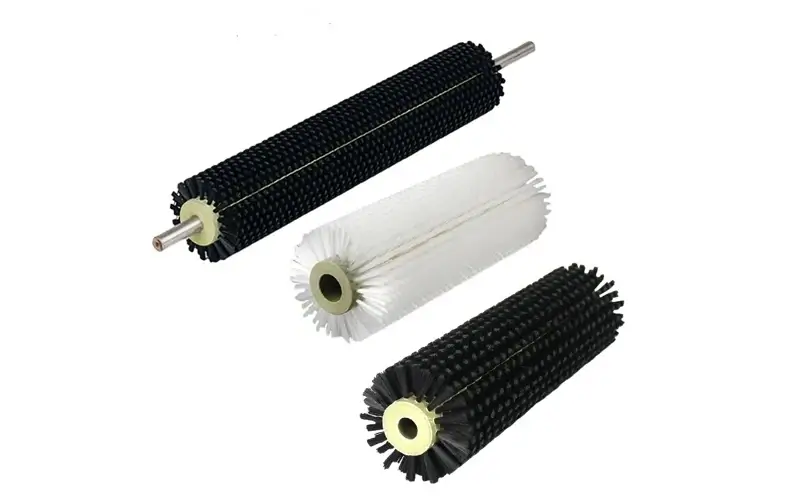
The secondary benefit of a clean brush is that it makes the inspection process faster and more accurate. A technician looking at a dirty brush cannot see cracks in the core, loose end rings, or bristle rows that have pulled out of the channel. Dirt hides the early warning signs. A clean brush reveals them immediately. This is why a cylinder rotary brush used in dusty environments needs cleaning more often than one in a relatively clean packaging line.
Step-by-Step Cleaning Process for Cylinder Brushes
The cleaning method must match the brush material. Nylon and polypropylene brushes handle water, mild detergent, and compressed air without damage. Natural fiber brushes need dry brushing and vacuum extraction only. Steel wire brushes need rust prevention after any wet cleaning. Always consult the brush specification sheet before applying any cleaning agent.
Start by locking out and tagging out the conveyor drive. A cylinder brush that rotates during cleaning is a serious safety hazard. Once the line is secured, remove the brush assembly from its mounting brackets according to the manufacturer’s removal procedure. Most designs use either a shaft-pull system or end-bearing release. Do the removal on a flat work surface, not while balancing the brush over a running belt.
Dry Cleaning (All Brush Types)
This is the first step for every brush, regardless of material. Use compressed air at a maximum of 30 psi and hold the nozzle at least six inches from the bristle surface. Higher pressure can bend bristles permanently or drive debris deeper into the bristle pack. Work in the direction of bristle lay, not against it. Rotate the brush by hand while blowing air across the full face width. After the air passes, use a stiff nylon hand brush to loosen any remaining packed material in the bristle rows. A vacuum with a crevice attachment works well for pulling loose debris out of deep-channel brushes.
Wet Cleaning (Nylon and Polypropylene Brushes Only)
Nylon cylinder brushes tolerate water and most mild industrial cleaning solutions. Fill a shallow tray with warm water and a neutral-pH detergent. Do not use acidic or alkaline cleaners unless the brush manufacturer explicitly approves them. Soak the bristle section of the brush in the solution for 10 to 15 minutes. Agitate gently by hand to release embedded material. Use a soft-bristled hand brush to clean between rows, working in the direction of the filament lay. Rinse thoroughly with clean water and shake off excess moisture. Let the brush air-dry completely in a horizontal position before reinstalling. Installing a damp brush invites mold growth in the core and can cause the shaft to rust.
For a nylon cylinder brush handling sticky food residues, a warm-water pre-soak followed by a food-grade detergent wash works well. Some processors use a dedicated brush-washing station with a rotating fixture that turns the brush slowly while it soaks. This approach cuts cleaning time by half and gives more consistent results across shifts.
For facilities processing wet or tacky materials, the approach to cleaning becomes even more critical. A brush that handles dry powder all day behaves very differently from one that fights wet, sticky buildup. The cleaning frequency and technique must adjust accordingly. Our team has written about how to handle wet, sticky material, and the central lesson is that you cannot clean a brush designed for dry material using a dry-only protocol after it has been exposed to moisture and adhesive debris. Match the method to the material the brush actually encounters on the line.
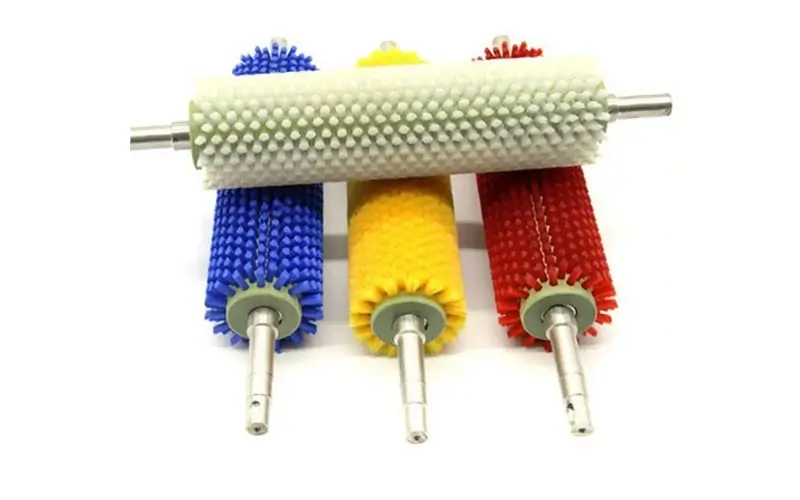
Weekly Maintenance Checks That Extend Brush Life
Five checks once a week prevent most unexpected brush failures: bristle length measurement, visual inspection for missing rows, rotational balance check, bearing condition assessment, and mounting alignment verification. Each check takes less than five minutes once the brush is accessible.
Bristle Length and Wear Pattern
Measure bristle length at three points along the brush face: both ends and the center. Compare to the specified trim length on the brush data sheet. A difference of more than 20 percent between the highest and lowest reading signals uneven wear that needs investigation. Uneven wear usually points to a mounting alignment problem, belt tracking issues, or uneven material distribution on the belt. Fix the root cause before installing a new brush, or the wear pattern will repeat.
Below 60 percent of the original trim length, the brush has lost most of its designed cleaning effectiveness. At this point, the bristle tips lose the stiffness needed to scrape effectively, and the backing channel or core body starts getting dangerously close to the belt surface.
Bristle Condition
Walk the full face of the brush and look for melted or fused bristle tips, which indicate friction heat from excessive mounting pressure or belt speed mismatch. Check for bristles pulled out of the channel, which usually means the mounting pressure is too high or the brush is contacting a belt splice too aggressively. Look for matted areas where bristles have tangled together. A brush with 10 percent or more of its bristles matted, melted, or missing needs replacement.
Rotational Balance
Spin the brush by hand on its bearings. It should rotate smoothly without a heavy spot that causes it to settle in one position. A brush that always stops with the same side down has a balance problem from uneven wear, moisture absorption, or debris buildup inside the core. An unbalanced brush vibrates, wears bearings faster, and produces an uneven cleaning pattern on the belt.
Bearings and Mounting
Check bearing housings for heat and noise. A bearing that runs hot or growls during rotation needs replacement. Verify that mounting bolts are tight and that the brush sits parallel to the belt surface across its full width. Use a feeler gauge to check the gap between brush face and belt at both ends. The gap should match the specification on the installation sheet, typically within a 1 mm tolerance end to end.
When to Replace vs. Repair Your Cylinder Brush
Replace the brush when bristle wear exceeds 40 percent of original trim length, when more than 10 percent of bristles are damaged or missing, or when the core shows cracks, corrosion, or deformation. Repair by re-trimming is only viable when wear is even and below the 40 percent threshold, and the core remains in perfect condition.
The replacement decision is not always clear-cut. A brush that looks worn on the ends because of belt tracking issues may have a pristine center section with plenty of life left. Re-trimming the ends to restore a uniform diameter is possible if the overall diameter reduction stays under 20 percent and the core material can handle the re-trimming process without compromising structural integrity. Steel cores tolerate re-trimming. Plastic or composite cores generally do not.
The table below gives a decision framework based on what the inspection finds:
We have covered the early warning signs in more detail before. If you are on the fence about whether a brush can go another cycle, these signs that your brush needs replacement offer a practical checklist that maintenance teams can use during inspections.
A conveyor belt cleaning brush configured correctly for its application reaches the 60 percent wear threshold in a predictable timeframe. If the same brush position needs a replacement brush every three months, look upstream: the brush material may be wrong for the application, the mounting pressure may be set too high, or the belt surface may have changed in a way that accelerates brush wear. Throwing more brushes at the problem without fixing the root cause is the most expensive maintenance strategy in any plant.
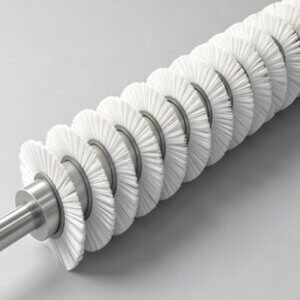
Material-Specific Care: Nylon, Polypropylene, and Abrasive Brushes
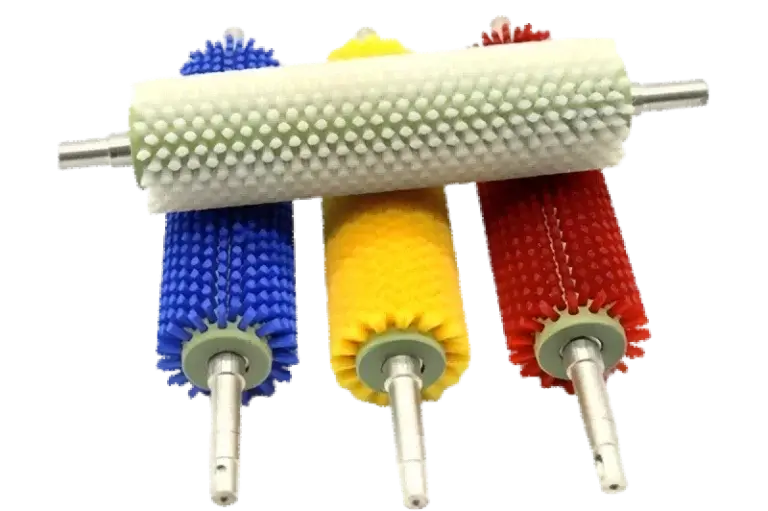
Nylon cylinder brushes are the most common in conveyor cleaning and the easiest to maintain. They tolerate water, resist most industrial chemicals, and hold their shape across a wide temperature range. Polypropylene brushes work better in wet and acidic environments but are less heat-tolerant. Abrasive-impregnated nylon brushes wear differently and require different care.
Nylon Brushes (Standard and Heat-Stabilized)
Standard nylon 6/6 bristles work up to about 93°C continuously and 120°C intermittently. Heat-stabilized nylon 6/12 extends the continuous range to roughly 120°C. Both types clean well with warm water and neutral detergent. Avoid solvents like acetone or MEK unless the manufacturer specifies compatibility. After wet cleaning, always dry nylon brushes completely. Water trapped at the bristle root near the core causes the filament to weaken over repeated wet-dry cycles.
Polypropylene Brushes
Polypropylene bristles resist acids, alkalis, and continuous moisture better than nylon. They are the material of choice for wet food processing lines and chemical handling conveyors. The trade-off is lower heat tolerance: polypropylene softens above 80°C and loses stiffness gradually as it approaches that temperature. Cleaning polypropylene brushes follows the same steps as nylon, but the temperature of the wash water needs to stay below 60°C to avoid deforming the filaments.
Abrasive-Filled Nylon Brushes
Some cylinder brushes use nylon filaments loaded with silicon carbide or aluminum oxide grit for aggressive cleaning or surface preparation. These brushes are not typically used for conveyor belt cleaning, but they appear in downstream processing stations where the belt deposits material on a transfer roller. Water cleaning is fine for the nylon base material, but the abrasive grit can trap fine particles that are hard to flush out. Compressed air is more effective than water for these brushes. Abrasive brushes do not “wear out” in the traditional sense. They shed grit and filament simultaneously, and the decision to replace depends on whether the remaining grit still produces the required surface finish.