Wire Rust Brushes for Threaded Surfaces
The Thread Cleaning Challenge: Why Standard Tools Fail
Threaded fasteners, pipe fittings, and machined components accumulate rust in ways that flat surfaces never do. The helical geometry of a thread creates dozens of narrow crevices where moisture collects, oxide layers build up, and standard cleaning tools cannot reach. A flat wire wheel or sanding disc skims across the peaks of the thread profile, leaving rust packed into the valleys untouched. Chemical rust removers seep into the gaps but often require hours of soak time, introduce disposal headaches, and can attack the base metal if left too long. For maintenance crews, machine shops, and production lines that handle threaded parts regularly, the gap between “mostly clean” and “fully clean” threads is the difference between a reliable assembly and a seized connection six months later.
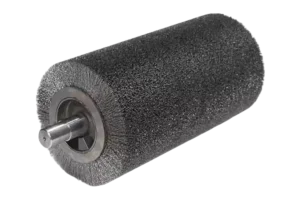
The Precision Wire Brush Solution: Cleaning Threads Without Dimensional Change
A precision wire rust brush solves this problem. Its flexible wire filaments follow the thread profile into the root of each groove, mechanically removing oxidation without altering thread dimensions. When matched to the correct filament material and gauge, a wire rust brush cleans threads to near-original condition in seconds per part, with no chemical residue and no risk of dimensional change.
Key Selection Criteria: Material, Diameter, Construction, and Speed
That said, not every wire brush delivers precision results. Filament material, wire diameter, brush construction style, and operating speed all influence whether the brush cleans threads or damages them. The wrong combination turns a maintenance task into a scrap-and-replace event. The right combination turns a rusted fastener into a reusable component. This article breaks down what to look for in a wire rust brush for threaded surfaces, how to match brush specifications to thread geometry, and what operating practices separate surface-safe cleaning from accidental metal removal.
Why Standard Rust Removal Tools Fail on Threaded Surfaces
The Geometry Mismatch: Thread Roots That Standard Tools Cannot Reach
Standard rust removal tools fail on threaded surfaces because they are designed for flat or gently curved profiles. Wire wheels, sanding discs, and needle scalers contact only the outer diameter of the thread, leaving rust in the root and on the flank untouched. The result is a part that looks clean but retains hidden corrosion that spreads after reassembly.
The geometry mismatch is the core issue. A thread is a spiral groove with a defined pitch, depth, and flank angle. The root of the thread, where the minor diameter sits, is the most confined space on the part. Moisture settles there first and evaporates last. In a 3/8-inch UNC bolt, the thread root is roughly 0.020 inches wide at its narrowest point. A standard crimped wire wheel with filaments that flare outward at speed cannot penetrate that gap. The wire tips glance off the thread crest, polishing the high points while the rust in the root remains untouched.
The Hidden Cost of Partial Cleaning: Rust Progression and Seized Fasteners
This partial cleaning creates a false sense of progress. The part looks better than before, so it goes back into service. But the residual rust in the thread root continues to expand, generating compressive stress between the mating threads. Over weeks or months, what started as surface oxidation becomes a seized connection that requires cutting or drilling to remove. The labor cost of extracting a seized fastener dwarfs whatever time was saved by skipping a proper cleaning step.
Why Chemical Dipping Is Not a Viable Alternative for High-Strength Fasteners
The alternative approach, chemical dipping, has its own set of problems for threaded parts. Acid-based rust removers work into the thread root effectively but leave hydrogen ions embedded in the metal surface. In high-strength fasteners above Grade 8 or Class 10.9, this hydrogen embrittlement risk is a documented cause of sudden brittle failure under load. For shops that work with certified fasteners, chemical rust removal is often prohibited by the quality control plan, making mechanical brushing the only permitted method.
How Filament Material Affects Thread Cleaning Results
Brass Wire: The Safe Choice for Protecting Steel Thread Substrates
Filament material is the single most important specification when choosing a wire rust brush for threads. The wire must be hard enough to shear rust from the thread surface but soft enough to deform before it cuts into the base metal. Brass, stainless steel, and carbon steel each serve distinct roles depending on the thread material and the required finish quality.
Brass wire is the default choice for cleaning steel threads without substrate damage. Brass has a Brinell hardness of approximately 65 to 85 HB, compared to 150 to 300 HB for most carbon steel fasteners. When a brass filament strikes a rusted steel thread at operating speed, the brass tip fractures the rust layer but deflects before it can cut into the steel underneath. This hardness differential is what makes brass wire safe for threads where dimensional accuracy matters, such as aerospace fasteners, hydraulic fittings, and injection mold ejector pin threads.
The trade-off with brass is brush life. Because the brass filaments sacrifice themselves to protect the steel substrate, brass wire wears faster than steel wire under the same operating conditions. For high-volume production where thread cleaning is a continuous operation, this shorter service life needs to be weighed against the cost of scrapping a single part due to thread damage. In aerospace and medical device applications, the math almost always favors brass.
Stainless Steel Wire: The Standard for Corrosion-Resistant Thread Cleaning
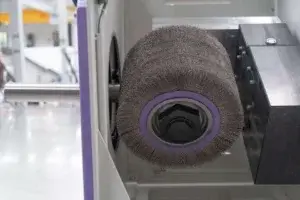
Stainless steel wire fills the gap when brass is too soft to remove heavy rust and carbon steel is too aggressive for the substrate. Stainless filaments in the 302 or 304 grade have a hardness range of 150 to 200 HB, placing them between brass and carbon steel in aggressiveness. They are the standard choice for cleaning stainless steel threads, where carbon steel wire would leave embedded iron particles that create galvanic corrosion sites. Stainless-on-stainless brushing requires finer filament diameters, typically 0.005 to 0.008 inches, to keep the individual wire tips flexible enough to deflect before gouging. For shops specifying a metal cylinder brush for automated thread cleaning lines, stainless wire with the correct gauge delivers consistent results across thousands of parts.
Carbon Steel Wire: Aggressive Rust Removal for Heavy-Duty Threads
Carbon steel wire is reserved for heavy rust on large-diameter carbon steel threads where aggressive cutting is acceptable and minor surface texture changes are not a rejection criterion. Structural bolts, anchor rods, and pipe threads above 1 inch in diameter are common applications. Carbon steel wire cuts faster than stainless or brass but also sheds fragments that embed in the workpiece. On stainless or aluminum threads, those embedded particles become rust initiation points that defeat the purpose of cleaning. Carbon steel wire should never be used on a workpiece alloy different from the wire itself unless the part is going straight to coating afterward.
The table below summarizes the material-to-thread matching logic for common industrial scenarios.
Wound vs. Knotted Wire Brushes for Threaded Applications
Wound wire brushes are the correct choice for threaded surfaces in almost every case. Their individual filaments flex independently into thread grooves without concentrating impact force. Knotted brushes, which twist filaments into rigid cable-like bundles, apply too much localized pressure for thread geometry and risk flattening thread crests on smaller fasteners.
The structural difference matters because threads are not solid surfaces. A knotted brush has filaments twisted together into tight clusters. When the knot strikes the thread, the impact energy concentrates on a small contact area. On a flat steel plate, this is an advantage: the concentrated impact breaks heavy scale faster. On a thread, the knot cannot conform to the groove profile. It hits the thread crest, bounces over the root without cleaning it, and then hits the next crest. After repeated passes, the thread crests begin to round over. For threads under 1/2 inch in diameter, knotted brushes can cause measurable pitch diameter reduction in fewer than ten passes.
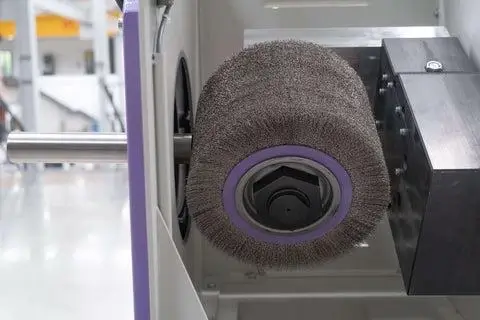
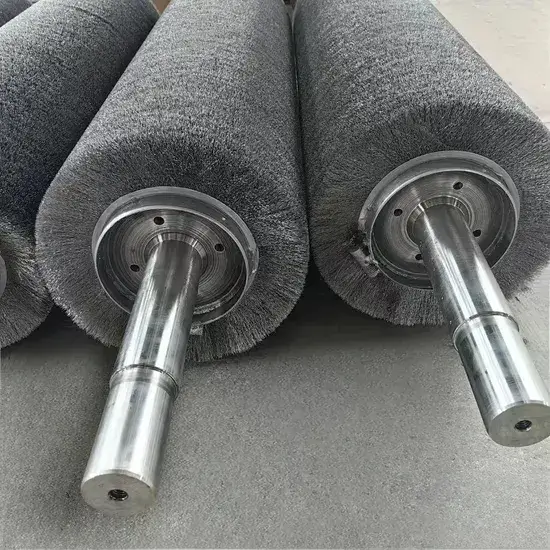
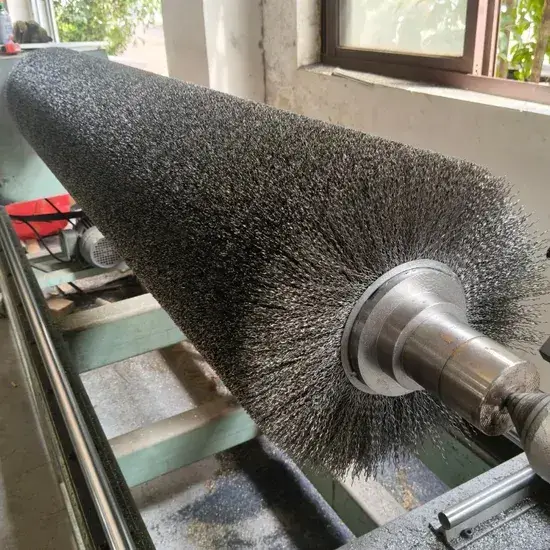
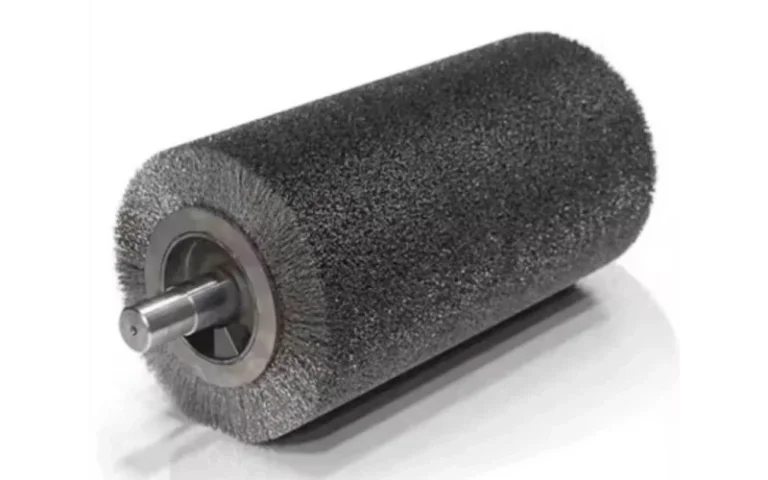
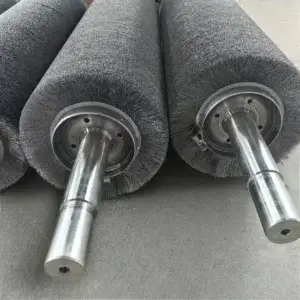
A wound brush, sometimes called a crimped wire brush, has individual filaments that act independently. As the brush rotates over a threaded surface, individual wires deflect into the thread root, sweep across the flank, and spring back as they pass the crest. This independent flexing creates a cleaning action that follows the thread profile rather than fighting against it. Engineers selecting rust remover brushes for metal processing should specify wound construction as the baseline for any application involving threaded, grooved, or recessed surfaces.
There is one exception where a knotted brush may be appropriate for threads: large-diameter Acme or square threads on structural components, where the thread root is wide enough to accept the knot diameter and the thread flanks are robust enough to handle the impact. Even in these cases, a trial on a sample part should confirm that thread dimensions remain within tolerance after cleaning before the brush goes into production use.
Operating Parameters That Protect Thread Integrity
Thread-safe rust removal depends on four operating parameters: surface speed, feed rate, brush conditioning, and inspection frequency. Control these four variables, and the brush cleans threads without altering dimensions. Let any one of them drift, and parts start coming back from quality control with red tags.
Surface speed, measured in surface feet per minute (SFM), is the linear speed at which the filament tips contact the workpiece. It is calculated from brush diameter and RPM. A 4-inch diameter brush at 2,500 RPM generates approximately 2,618 SFM. A 6-inch brush at the same RPM generates roughly 3,927 SFM, a 50 percent increase that can turn a gentle cleaning action into an aggressive cutting action on smaller threads. When changing brush diameters, match SFM rather than RPM to keep the cleaning action consistent.
For brass wire on carbon steel threads up to 1/2 inch in diameter, a surface speed range of 1,800 to 3,000 SFM typically provides effective rust removal without thread damage. For stainless wire on stainless threads, the range tightens to 1,500 to 2,500 SFM because stainless-on-stainless contact generates more friction heat and requires more conservative speeds to avoid galling at the thread tip.
Feed rate control is equally important. Feeding the brush too slowly overheats the thread and accelerates filament wear without improving rust removal. Too fast, and the brush skips over the root without cleaning it. A feed rate that allows visible rust removal per pass without raising the thread temperature above hand-touch tolerance is the practical benchmark. For most thread cleaning operations, a linear feed of 2 to 4 inches per second works well for brush diameters between 3 and 6 inches.
Brush conditioning before first use is a step that many operators skip. A new wire brush has sharp filament tips and uneven projection from the hub. Running it at operating speed against a piece of scrap material or a dressing stone for 15 to 30 seconds rounds the tips slightly and establishes a uniform working face. This conditioning step prevents the first production part from receiving an uncharacteristically aggressive brushing that no subsequent part will experience. When evaluating a new brush specification or considering a custom rust remover brush for non-standard thread profiles, sample testing should always begin with a conditioned brush so that the results represent sustained production conditions, not first-use break-in behavior.
Matching Brush Geometry to Thread Dimensions
Scaling Brush Diameter and Trim Length to Thread Size
Brush diameter, trim length, and fill density must all be scaled to the thread size being cleaned. A brush that is too large for the thread skips over the root. A brush that is too small requires multiple passes that increase cycle time. The filament trim length should be long enough for the wire tips to reach the thread root without the brush hub contacting the crest.
For external threads on fasteners and pipe fittings, a brush diameter that is 3 to 5 times the thread major diameter provides a good starting point. A 1/2-inch thread pairs well with a 2- to 3-inch diameter brush. This ratio allows the filament tips to wrap partially around the thread circumference on each pass, cleaning the root and both flanks in a single rotation. A brush that is too large relative to the thread, such as a 6-inch brush on a 1/4-inch bolt, makes contact over too narrow an arc and effectively polishes the crest while skipping the root.
Internal Threads: Special Considerations for Brush Geometry and Reach
Internal threads present a different challenge. The brush must physically fit inside the minor diameter of the threaded hole. A rust removal brush designed for internal threads typically uses a smaller core diameter with longer trim length to reach into blind holes and clean the entire thread depth in one pass. For holes deeper than twice the brush diameter, a brush with a shaft extension or a flexible core may be necessary to prevent the brush hub from bottoming out before the filaments reach the deepest threads.
Fill Density: Balancing Cleaning Action with Filament Flexibility
Fill density, the number of wire filaments packed into the brush face area, also matters for threads. A medium fill density provides a balance between cleaning action and filament flexibility. High-density fills work well on flat surfaces where uniform contact is the goal, but on threads, too many filaments packed together reduce the independent flexing that allows each wire to follow the thread profile. A medium fill with a longer trim length produces more filament deflection per wire, which translates to better thread root penetration without higher contact pressure.
Preventing Flash Rust After Thread Cleaning
Freshly brushed steel threads begin to re-oxidize within hours if left unprotected. The period between brushing and coating must be as short as practical. For parts that cannot be coated immediately, a vapor corrosion inhibitor or controlled-humidity storage prevents flash rust from undoing the cleaning work.
The freshly exposed steel surface is chemically active. Atmospheric moisture initiates new oxide formation almost immediately, starting from the microscopic grooves left by the wire filaments. This flash rust layer is thin enough to be invisible at first but thick enough to interfere with coating adhesion if a primer or paint is applied over it. In threaded applications, flash rust concentrates in the root where moisture lingers longest, creating the same localized corrosion pattern that the brushing was meant to eliminate.
The most reliable solution is scheduling. Brushing should take place within the same shift as coating, priming, or assembly. If a phosphate treatment or primer follows the brushing step, the gap between operations should be measured in hours, not days. Operations that use a metal brush to remove rust on parts destined for paint lines often position the brushing station immediately upstream of the pretreatment booth so that cleaned parts see coating within minutes.
For parts that must remain bare after cleaning, controlled storage is the only reliable defense against flash rust. Desiccant dehumidifiers that maintain relative humidity below 40 percent inside the storage enclosure prevent new oxide from forming. Vapor corrosion inhibitor (VCI) paper or film, which releases molecules that form a monomolecular protective layer on the steel surface, protects for up to 24 months in sealed packaging. Neither method replaces coating or oiling, but both buy the time needed to move parts from the brushing station to the next processing step without rework.
Frequently Asked Questions
Q1: Can the same wire rust brush clean both metric and imperial threads?
Yes. Thread geometry, not the measurement system, determines brush compatibility. A brush that cleans a 1/2-inch UNC thread effectively will also clean an M12 thread with similar results, provided the filament material and gauge are matched to the substrate. The key factor is whether the filament diameter is fine enough to penetrate the thread root, which is a function of pitch rather than the unit system.
Q2: How do I verify that thread dimensions are still within tolerance after brushing?
Use a thread plug gauge for internal threads or a thread ring gauge for external threads. The go gauge should pass freely after brushing. If the no-go gauge enters at all, the brushing process has removed too much material. For critical applications, a three-wire measurement on external threads or a pitch micrometer provides quantitative data on pitch diameter before and after cleaning.
Q3: What surface speed range is safest for cleaning fine-pitch threads under 1 mm?
For fine-pitch threads where the root width is below 0.015 inches, reduce surface speed to 1,200 to 2,000 SFM and use brass wire with a diameter of 0.005 inches or finer. The lower speed reduces impact energy per filament strike, and the fine gauge ensures enough wires fit into the narrow root to achieve full cleaning coverage. A conditioning pass on a scrap part before production confirms the parameters are safe for the specific thread.